











Gjør som tusenvis av andre bokelskere
Abonner på vårt nyhetsbrev og få rabatter og inspirasjon til din neste leseopplevelse.
Ved å abonnere godtar du vår personvernerklæring.Du kan når som helst melde deg av våre nyhetsbrev.

Ein Leben mit unserem Anspruch an Lebensqualität, Sicherheit und Gesundheit erfordert es, hochentwickelte Technologien anzuwenden und vielfältige Ressourcen zu nutzen: Energie, Rohstoffe, Umwelt, Wissen, menschliche Arbeit und Kreativität. Ressourcen sind aber limitiert, entweder weil sie nicht in beliebiger Menge verfügbar gemacht werden können oder weil ihre Nutzung sich auf Umwelt und Klima auswirkt. Ein verantwortungsvoller, effizienter Umgang damit liegt im Interesse aller Menschen.Bei professionellen Anwendern von Technologien ¿ etwa bei Unternehmen ¿ spielt die Wirtschaftlichkeit eine entscheidende Rolle. Effizienztechnologien weiterzuentwickeln stellt daher ein wichtiges Anliegen der Wirtschaft an die angewandte Forschung dar. Ressourceneffizienz ist ein primäres Ziel der Entwicklungsarbeit bei Fraunhofer. Das vorliegende Buch gibt einen Einblick in die wichtigsten aktuellen Projekte und Initiativen der Fraunhofer-Gesellschaft im Bereich der Effizienztechnologien, zu denen auch die Elektromobilität zählt.
For over 100 years the world's best motorcycle racers have pitted themselves against the grueling 373/4 -mile Isle of Man Mountain Course at the annual event known worldwide simple as "The TT". The Tourist Trophy meeting represents perhaps the greatest challenge that the sport of motorcycle racing can offer. The top names in road racing--Collier, Wood, Duke, Hailwood, Agostini, Hislop, Jefferies, McGuinness, Hutchinson and the Dunlop dynasty--have all considered the pursuit of a Tourist Trophy to be the ultimate goal. From riding the earliest single-cylinder, belt-driven machines with outputs of under 10bhp, to coping with today's sophisticated four-cylinder machines giving well over 200bhp, generations of riders have risked their lives to satisfy the desire to go faster than the next man and to win a TT. In the process, they have lifted lap speeds by almost 100mph. Exactly how that huge increase has been achieved is told within these pages, set against the background of the triumph and the tragedies of the TT history.
The book covers seventy defunct British airlines that have disappeared from our skies since 1946. They ceased trading for various reasons, from financial difficulties to industrial takeovers. It looks at both international and domestic airlines, and has a whole host of famous names, who are gone, but not forgotten.
Nick Ardley, an eccentric anachronism from a simpler age, sails his clinker sloop between Rochester and Richmond to look at a century of change. The acrid-belching chimneys have evaporated, refineries closed, but the banks remain alive. He dips and dabbles along the way, exploring salt marshes, graves, industrial ruins, and renewal.
Unique and previously unpublished photographs of Cuba's classic American and European automobiles, trucks and station-wagons, from Cadillacs and Buicks to Chevys and Fargos. It is a colourful insight into Cuban culture that features people, places, and cigars.
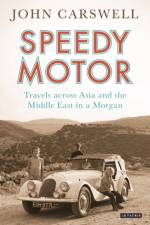
Enticing account of a 1970s expedition across Middle East and South Asia
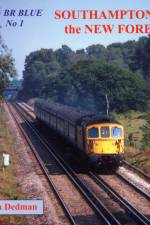
Following the demise of steam, there was for a while the impression that the contemporary railway scene would be of little interest to the enthusiast. This book is an exercise in nostalgia featuring the early diesel area, which is now as much a part of history, as the steam age.
This book details all the milestones of the Lynx's career since its entry into service in 1976 to the present day, whilst simultaneously offering a unique cockpit perspective on events.
Focuses on the flying boat operations of Aquila Airways between Southampton and Madeira between 1949 and 1958 and includes photographs and items of ephemera.
Saloon & Estate (ΓÇÿB7ΓÇÖ Series) with 1.6 litre (1598cc) & 2.0 litre (1968cc) turbo-diesel engines Does NOT cover petrol models, 4WD (ΓÇÿAlltrackΓÇÖ) versions or ΓÇÿCCΓÇÖ body style Does NOT cover new VW Passat range (ΓÇÿB8ΓÇÖ Series) introduced January 2015
The book shows how the basic design of goods sheds evolved early in the history of railways, and how the form of goods sheds reflected the function they performed.
In the 1950s and 1960s, luxury car buyers, from government ministers to captains of industry, almost invariably bought British. These were stately, dignified, and grand vehicles, with many featuring leather interiors and wood trim. Unfortunately, that market has now largely disappeared and, with it, so have the car-makers themselves. The book covers cars in the over-3-litre class from the biggest names in British luxury motoring including Alvis, Daimler, and Lagonda, and high-end models from Austin, Rover, and Jaguar. It examines the features and characteristics of these classic cars, as well as explaining why they fell from prominence in the 1970s. Replete with beautiful photography throughout, this book is a loving portrait of the British luxury car, a dearly missed saloon defeated by foreign imports.
The first five Kestrel Railway Books volumes by David Larkin looked at the revenue-earning wagon fleet operated by British Railways and its successor, British Rail. These were followed by a series of three books looking at the specially-designed wagons that were used for track maintenance, and then three volumes covering the parcels and passenger-rated stock. This is the first of a series covering the ex-private owner fleet.When BR was created, it was intended that it should own all railway rolling stock, but legal action by some of the larger wagon-owning companies delayed things until 1951. Non-Pool wagons were defined as privately-owned wagons allowed to run over railways owned or operated by the British Transport Commission. This series sets out the types of wagon eligible to be classified as Non-Pool and lists them individually with details of numbers carried, capacity and registration details where known. Volume 1 covers owners with initials A to H, and Volume 2 (expected to be published in October 2016) deals with the remaining owners alphabetically.
Supplementing the quarterly ''Southern Way'' series, the ''Southern Way Special'' books are published approximately annually to supplement the series and expand on the most popular themes. The latest addition to the ''Southern Way Special'' series is No.13 and appropriately it deals with railway accidents and incidents - a subject that continues to enthral local historians as well as railway enthusiasts, historians and modellers. Illustrations and descriptions of what went wrong lean heavily towards the South Eastern lines and David Monk-Steele, a former BR Manager, combines a comprehensive and varied collection of images with informative text to provide an real insight into this absorbing subject. Looking mainly, but not exclusively, at railway accidents and incidents which occurred during the British Railways period; ''Southern Way Special No.13'' looks set to repeat the ongoing success and popularity of both the ''Southern Way'' and ''Southern Way Special'' series.
The name of Tony Atkins will need no introduction to followers of the Great Western Railway. In Part 2 of this monumental work on Great Western Goods working, the story is taken forward starting with 20th Century goods train on the GWR working to the various types of special traffic handled. This heavily illustrated volume looks at perishable traffic: flowers, fruit and vegetables, banana workings, as well as livestock, refrigerated and fish traffic. There are also sections on dangerous goods and exceptional loads, the movement of the latter often requiring considerable planning to avoid structures and other trains from a load which was outside the standard loading gauge. The culmination of several decades of painstaking research this complex and detailed subject is split into two volumes, both rightly deserving a place on the bookshelf of the enthusiast and historian.
Explains how the RAF developed their transport force from the late 1960s to today's precision delivery of equipment to forward operating bases in Afghanistan and beyond. Illustrated throughout.
Very few men or women have had the opportunity to serve their country and excel in their chosen field as did Bud Moore has. Now a gentleman farmer, he tells it all here; the danger and the daring, the heartbreak and the triumph, and the winning the ultimate honour that his sport can bestow.
London Transport was created in 1933 to coordinate the shambolic, overlapping transport systems of the capital, and for decades has striven to meet the challenges of organising London travel. This book presents the story of the organisation from its origins, through the upheavals of the Second World War, to TfL's biggest project - Crossrail.
Abonner på vårt nyhetsbrev og få rabatter og inspirasjon til din neste leseopplevelse.
Ved å abonnere godtar du vår personvernerklæring.