




Gjør som tusenvis av andre bokelskere
Abonner på vårt nyhetsbrev og få rabatter og inspirasjon til din neste leseopplevelse.
Ved å abonnere godtar du vår personvernerklæring.Du kan når som helst melde deg av våre nyhetsbrev.

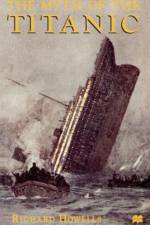
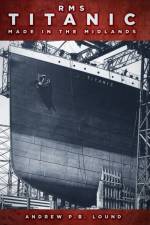
The first critical analysis of the Titanic as modern myth, this book focuses on the second of the two Titanics. It provides an insight into the particular culture of late Edwardian Britain and beyond this draws far greater conclusions about the complex relationship between myth, history, popular culture and society as a whole.
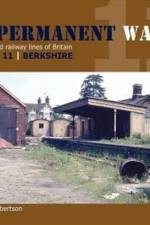
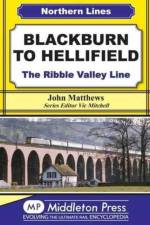
The change from a red circle to a white circle on an old OS map is indicative of a station closed to passengers but very often open for freight. This was generally a temporary state of affairs being a prelude to ultimate closure of the line. In this, the eleventh in the series, we examine the railways of the pre-1974 county of Berkshire, travelling west to east with a few necessary detours north and south where relevant lines (used to) exist. The date 1974 is particularly important for this volume, as the Local Government Act 1974 which came into force on 1 April 1974 (we will not comment on the choice of this specific day), meant many closed stations and lines were ''moved'' overnight. Branch line changes to Windsor & Henley are considered together with an insight into Berkshires industrial lines. Newbury is spotlighted and, amongst others, Radley - Abingdon is discussed providing a local insight into a bygone age.
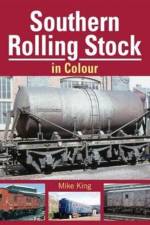
This book contains much material seen for the first time; with colour images from both existing and new sources. With a huge variety of photographs, from pre-grouping stock that survived into the 1950s and 1960s to Southern built vehicles, all the photographs are in colour, and nearly all were taken to show the actual vehicle. Milk tanks feature in detail for the first time as well as horse boxes, ballast wagons and even a locomotive tender still lettered ''Southern''. Thought you knew everything there was about Southern rolling stock? Then stand by to be amazed...!''
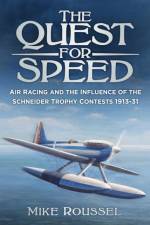
Year by year, dramatic improvements in the winning speeds - often breaking records - charted the progress made, and this eventually had a great impact on the development of fighter aircraft in the Second World War and the future of the air industry alike.
The E-Type Jaguar has been described on countless occasions as one of the most beautiful cars in the world. This manual takes you through the full nut-and-bolt restoration of a very early example, E-Type Jaguar Chassis No 60. Each chapter gives you a first-hand account of the process.
The first five Kestrel Railway Books volumes by David Larkin looked at the revenue-earning wagon fleet operated by British Railways and its successor, British Rail. These were followed by a series of three books looking at the specially designed wagons that were used for track maintenance, and then three volumes covering the parcels and passenger-rated stock. This is the second of two covering the ex-private owner fleet.When BR was created, it was intended that it should own all railway rolling stock, but legal action by some of the larger wagon-owning companies delayed things until 1951. Non-pool wagons were defined as privately-owned wagons allowed to run over railways owned or operated by the British Transport Commission. This series sets out the types of wagon eligible to be classified as Non-Pool and lists them individually with details of numbers carried, capacity and registration details where known. Volume 1 covered owners with initials A to H, and Volume 2 deals with the remaining owners alphabetically.
This album contains a second selection of stunning colour photographs of tugs that have visited ports in the Bristol area over the last fifty years. Each photograph is accompanied by an informative caption.
The 56th volume in this growing series taking a nostalgic look at Britain's road transport heritage... In this volume: We travel back to the year 1971: * BBC Open University broadcasts begin * End of Morris Minor production * Daily Sketch ceases publication * Spaghetti Junction opens * Terms of British membership of the EEC agreed
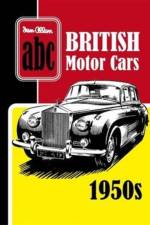
As the appetite for nostalgia remains undiminished, this delightful compilation of modern facsimile 'abc' road titles will provide a startling reminder of how dramatically car design and road culture has changed since the 1950s.
For more than 30 years the Nile river gunboat was an indispensable tool of empire, policing the great river and acting as floating symbols of British imperial power. They participated in every significant colonial campaign in the region, from the British invasion of Egypt in 1882 to the Battle of Omdurman in 1898, when Britain finally won control of the Sudan. After that, the gunboats helped maintain British control over both Egypt and the Sudan, and played a key role in safeguarding British interests around the headwaters of the Nile - a region hotly contested by several European powers. Featuring specially commissioned artwork, this comprehensive volume offers a detailed analysis of the Nile river gunboats' entire career, from policing British colonial interests along the great river to defending Egypt against the Ottoman Turks in World War I.
As Europe plunged into World War II, Hitler ordered the development of a hi-tech secret weapon capable of taking the war across the Atlantic - the Messerschmitt Me 264. Chosen from designs for an 'Amerika Bomber' tendered by Messerschmitt, Junkers and Focke-Wulf, this ultra-long-range aircraft would be capable of attacking cities in the United States. Just one month before the attack on Pearl Harbor and the American entry into World War II Hitler was promising, privately, to wage a 'new war' against the USA after his victories in Europe. Dazzling digital artwork and 50 rare archive photographs perfectly complement the detailed analysis offered by Robert Forsyth as he examines the development, intended role and influence of the aircraft that Hitler planned to use to bomb New York City.
In 1947, no one knew if it was possible to break the 'sound barrier'. The Bell X-1 was the tiny, rocket-powered craft that finally broke it. It was the result of innovative designers and engineers turning their attention from the pioneering jets of World War II to a new task - an aircraft designed purely to fly faster than sound. Legendary pilots rallied to the cause, with World War II ace Chuck Yeager piloting the X-1 when it finally achieved supersonic flight in 1947, the first manned craft to reach such speeds. With historical photographs and meticulously researched digital art, Peter Davies traces the whole career of the pioneering Bell X-1, from its early development through to the influence it had on military and civilian jets in the second half of the 20th century.
The F-4 Phantom II is perhaps the most famous post-war fighter. This title examines the unique aspects of the Phantom that made it so crucial to US Navy pilots during the Vietnam War - its massive engine power, long range, speed, and, the most powerful airborne search and fire-control radar installed in a fighter at the time.
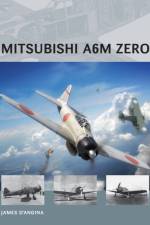
Unquestionably the most iconic Japanese fighter of World War II, the Mitsubishi A6M Rei-Sen, Type Zero fighter was used from the initial raid on Pearl Harbor up to the Kamikaze attacks at the end of the war. Facing off against the likes of the Wildcat, Corsair and even the Spitfire, the Zero gained a legendary reputation amongst Allied pilots due to its incredible manoeuvrability. Detailed analysis of its technical qualities show why the Zero was so feared, but also pinpoints the weaknesses that would eventually be its downfall as Allied pilots learned how to combat it.A selection of historical photographs and unique artwork accompany the analysis as James D'Angina delves into the history of the premier Axis fighter of the Pacific Theatre, exploring the design and combat effectiveness of the Zero as well as the tactics developed by Allied pilots to counter it.
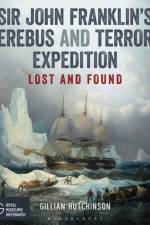
In 1845, British explorer Sir John Franklin set out on a voyage to find the North-West Passage - the sea route linking the Atlantic Ocean to the Pacific. The expedition was expected to complete its mission within three years and return home in triumph but the two ships, HMS Erebus and HMS Terror, and the 129 men aboard them disappeared in the Arctic. The last Europeans to see them alive were the crews of two whaling ships in Baffin Bay in July 1845, just before they entered the labyrinth of the Arctic Archipelago. The loss of this British hero and his crew, and the many rescue expeditions and searches that followed, captured the public imagination, but the mystery surrounding the expedition's fate only deepened as more clues were found. How did Franklin's final expedition end in tragedy? What happened to the crew? The thrilling discoveries in the Arctic of the wrecks of Erebus in 2014 and Terror in 2016 have brought the events of 170 years ago into sharp focus and excited new interest in the Franklin expedition. This richly illustrated book is an essential guide to this story of heroism, endurance, tragedy and dark desperation.
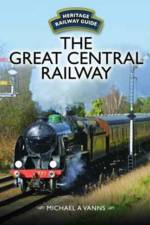
This compelling book centres on the Great Central Railways early history
A celebration of Gresley's A4 Pacific locomotives, including Mallard, holder of the world speed record for a steam locomotive.
Rolls-Royce is one of Britain's legendary car brands, representing the pinnacle of engineering quality and luxury like no other manufacturer. Since 1904, when Charles Stewart Rolls and Frederick Henry Royce began their collaboration, the Rolls-Royce name has earned respect and admiration the world over. This is the full story of Britain's premier luxury car-maker, from the early experimental models through the 40/50 Silver Ghost, the Twenty, the Phantoms, the Wraiths and their post-1945 successors, with evocative names such as Silver Shadow and Silver Seraph. It celebrates more than 110 years of car manufacture under the Rolls-Royce brand, revealing how careful management and simple dedication have ensured that the Rolls-Royce name remains a byword for the best of the best.
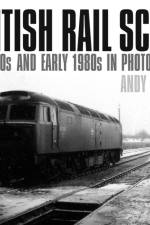
From his lens to the pages of this book, this is a unique look at an oft-overlooked period of British railway history.
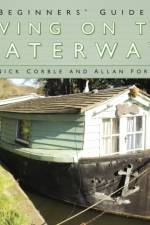
Fully updated this new edition of A Beginners' Guide to Living on the Waterways covers different types of liveaboard craft suitable for canals, rivers and estuaries, and the good and bad points of the different options.
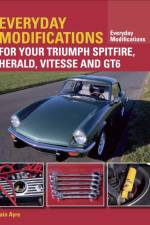
Part of the Everyday Modifications series that are designed to guide classic van and car owners through the workshop skills needed to make their vehicles easier to use and enjoy, this book is concerned with improving the 4-cylinder Spitfire and Herald, and the 6-cylinder Vitesse and GT6, with engines ranging in size from 948cc to 1998cc.
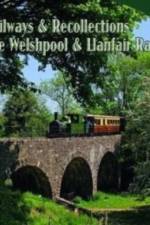
This photographic album captures the essence of the Welshpool & Llanfair Railway which whilst having a decidedly foreign feel to it, continues to retain the traditional atmosphere of a Welsh rural light railway.
Abonner på vårt nyhetsbrev og få rabatter og inspirasjon til din neste leseopplevelse.
Ved å abonnere godtar du vår personvernerklæring.