




Gjør som tusenvis av andre bokelskere
Abonner på vårt nyhetsbrev og få rabatter og inspirasjon til din neste leseopplevelse.
Ved å abonnere godtar du vår personvernerklæring.Du kan når som helst melde deg av våre nyhetsbrev.

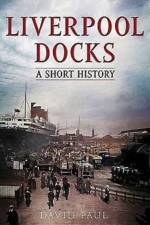
Liverpool Docks: A Short History, traces the birth, growth, strategic importance of the port both in times of peace and war. The book gives a complete timeline from the very earliest days right up to the present-a time when both a new and even larger container dock is being built together with the development of the new cruise liner terminal.
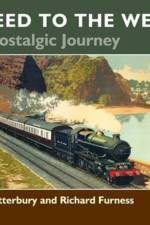
Nothing is more evocative of the golden age of travel than the railway poster. Speed to the West shows some of the best railway posters used to promote holiday travel to the West Country.
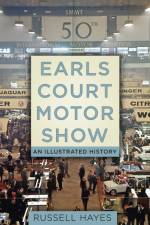
For decades the Earls Court Motor Show was the annual pilgrimage for car idolaters, dreamers and even the odd buyer.
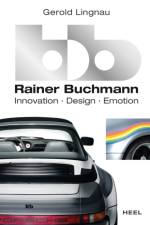
This comprehensive book, produced in close cooperation with Merck Group - one of the world's leading chemical companies, for whom Buchmann popularized a new and special kind of bright enamel varnish - presents the complete history of Rainer Buchmann's technical and entrepreneurial achievements.
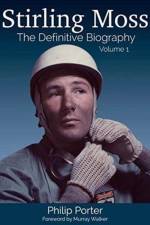
Volume 1 of this all inclusive biography of the legendary Striling Moss covers his early life and career. Starting as a youth with incredible skill, young Stirling Moss quickly caught the eye when racing the 500cc cars invented just after the WWII. He soon ventured abroad and was laughed at for his tiny car – until he beat them. He became the British Champion at 21, something most drivers achieve in their 30's, 40's, or even 50's. Patriotically, Moss insisted on driving British cars, even when outmatched by more powerful, foreign vehicles. He often won. Admirable patriotism nearly ruined his promising career until he was forced to compromise, and quickly revived his career; showing he could beat the very best at the highest levels. In the final year covered by Vol 1, he won his first Grand Prix and such sports car classics as the Tourist Trophy, the Targa Florio, all amazing achievements, but Moss winning the Mille Miglia has gone down as one of the greatest feats in all sport.
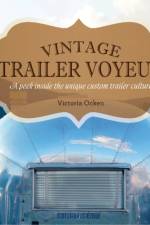
The newest architectural trend: rolling houses in the most literal sense of the word. If not built on wheels, other forms of mobile home can easily be carried on a truck and moved to the places their owners desire. These tiny houses include main spaces that function as both kitchen and living room, tend to have a small loft for the bedroom, and are best used to store only those items with an essential use.
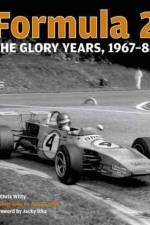
A true feast of nostalgia, this title celebrates the wonderful era of the European Formula 2 Championship, from 1967-84, on the 50th anniversary of its beginnings.
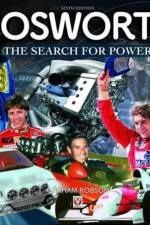
This book covers the entire history, life and times of the famous British high-performance engineering company, from its 1958 foundation by Mike Costin and Keith Duckworth, through its often-exciting and always fascinating evolution, to its expansion and worldwide success in both motorsport and high-performance road car production.
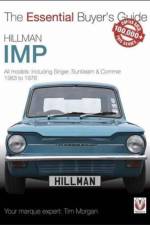
Having this book in your pocket is just like having a real marque expert by your side.
There are lots of books about the classic BMW Boxers; their history, performance, lineage, and the minutiae of its specification. But none of them concentrate entirely on telling you what to look for when buying one secondhand. That's what this book is about - it is a straightforward, practical guide to buying a used Boxer twin. It doesn't list all the correct colour combinations for each year or analyse the bike's design philosophy - there are excellent books listed at the end of this one that do all of that - but it will help you avoid buying a dud. Point by point, it takes the reader through everything that needs looking at when buying a Boxer, plus spares prices, which is the best model to buy for your needs, and a look at auctions, restorations and paperworkThe last of the 'classic' air-cooled Boxer twins, these bikes are now collector's items, and many have been saved, restored and continue to be ridden - this book tells the reader how to be part of the Boxer's ongoing story.
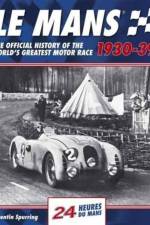
Officially endorsed by the ACO, the organisers of the annual Le Mans 24 Hours race, this sumptuous book is part of a decade-by-decade series of acclaimed books of unrivaled quality, depth and authority.
Associated Motor Cycles (AMC) produced some of the most iconic British bikes of the 1940s and 1950s. Illustrated with over 200 photographs, this book looks at the history and development of the single and twin-cylinder ranges; the racing bikes; technical details of all major models, and owning and riding AJS and Matchless bikes today.
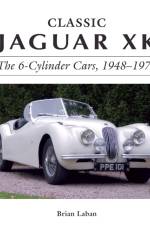
There have been other generations of Jaguar XK since, but the definitive incarnation is the family of 6-cylinder sports cars that stretch from the late 1940s to the mid-1970s, from XK120 to the E-Type. This is the complete story of the whole 6-cylinder XK generation, the circumstances, the people and the events that created it.
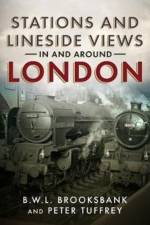
With photographs spanning c.1946 to c. 1962 and using the M25 motorway as a perimeter boundary, 250 photographs have been selected for inclusion, featuring the main-line railway stations belonging to the big four railway companies illustrating this last gasp of steam at the capital's termini and other intermediate halts.
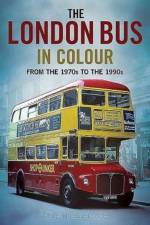
The last decades of the 20th century saw dramatic changes in the bus industry with deregulation in October 1986. Visually London seemed to stay the same with the buses still operating in the red liveries. This book shows how the industry moved from traditional layout of rear platform and open half cab to one man buses with their front entrances.
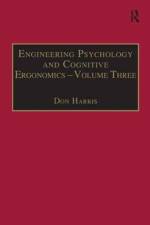
This book is the fourth in the series and describes some of the most recent advances and examines emerging problems in engineering psychology and cognitive ergonomics. It bridges the gap between the academic theoreticians, who are developing models of human performance, and practitioners in the industrial sector, responsible for the design, development and testing of new equipment and working practices.
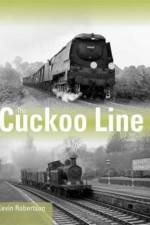
Serving the Sussex countryside from Rotherfield through to Polegate, the ''Cuckoo Line'' was a fine example of a cross-country railway branch line which failed to survive into the modern era. Serving Sussex towns including Mayfield and Heathfield, a single line of rails provided a service to the local community for over 80 years before falling casualty to the axe of Dr Beeching, with the last passenger trains running in 1965. Half a century later the opportunity has come to take a new look at this railway. The course of the ''Cuckoo Line'' has now all but disappeared from the landscape - replaced by roads, housing and industrial development, but this important new book records the line, its stations and rolling stock through-out its history. Using three new sources of previously unpublished photographs and descriptive notes on train and locomotive working, The Cuckoo Line presents a vivid portrait of the line and a way of life lost in the half century since closure
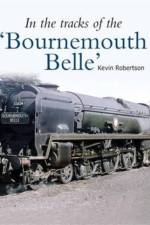
Luxury train travel - Pullman style - was a feature of the railways until the 1970s and in the south several regular services bore the name Pullman. One, the ''Bournemouth Belle'' was destined to become the last regular steam hauled train of its type to operate. As the name implies the service served the Dorset town, running a daily service each way from Waterloo. This was also an all-Pullman train with no ordinary coaches where smartly dressed stewards would welcome the passengers, show them to their seats with aplomb and no doubt also hope for the occasional gratuity. To travel on the service an additional supplementary fare applied whilst meals were similarly extra. On the basis of the additional cost alone it might be thought the service would hardly survive but far from it, and apart from an interruption due to war, the train operated daily from the 1930s until the end of steam in the south in July 1967. Packed with fascinating facts and a plethora of images we see the service at its peak and in its decline and well as recording its passage throughout the route from Waterloo to Bournemouth and return.
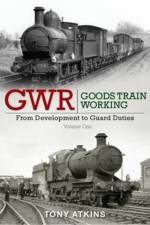
Great Western Goods Train Working is a truly remarkable book providing - for the first time - a comprehensive guide as to how that most important of commodities ''goods'' were handled, marshalled, and moved by rail from despatch to destination. Railways including the Great Western were founded upon the basis of goods movement - passengers would come later - which goes to explain why the GWR Goods Manager was for many years senior to even the Chief Mechanical Engineer, because the Goods Department brought in more revenue! In this all new book rolling stock is depicted for the first time in the context of how it was used, the train formations and where and how freight services operated. The culmination of several decades of painstaking research this complex and detailed subject is split into two volumes both rightly deserving a place on the bookshelf of the enthusiast and historian.
This book provides a general account, with more breadth and depth than usual for a general book, of how some aspects of aviation will develop in the next few decades.
This book describes some of the most recent advances and examines emerging problems in engineering psychology and cognitive ergonomics, bridging the gap between the academic theoreticians, who are developing models of human performance and practitioners in the industrial sector, responsible for the design, development and testing of new equipment and working practices.
Abonner på vårt nyhetsbrev og få rabatter og inspirasjon til din neste leseopplevelse.
Ved å abonnere godtar du vår personvernerklæring.