














Gjør som tusenvis av andre bokelskere
Abonner på vårt nyhetsbrev og få rabatter og inspirasjon til din neste leseopplevelse.
Ved å abonnere godtar du vår personvernerklæring.Du kan når som helst melde deg av våre nyhetsbrev.

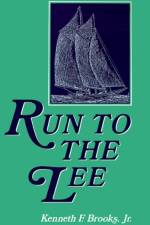
As a fictionalized account of life on the Chesapeake Bay at the turn of the century, Run to the Lee has the same appeal to all ages as Gilbert Byron's own beloved novel, The Lord's Oysters.
Auto shows have become a big hobby here in the middle western United States. I personally know of over seven hundred annual auto shows within three hundred miles of Kansas City. I believe the sport is growing throughout the United States at a rapid pace. My wife and I have competed in enough auto shows that we have seen what will and will not work. It is always a big disappointment when we attend an auto show that makes major mistakes. We never repeat a show that makes major blunders. We feel it is obvious they don't know what they are doing. Most people feel that way. Once a show makes major errors, the word circulates and the show's future is doomed. I am constantly contacted by people who want to produce an auto show but don't know how to do it. People are always wanting me to give them some pointers on some aspect. I decided to write this book and include the knowledge I have gained in over thirty years of showing automobiles. I believe it will be of help to those who know little of the subject and to those others who want to fine tune some areas of their show. Producers that follow the guidelines contained in this book will have the best chance for a perpetually successful auto show.
The 20 buses featured in this book were home-converted by individual owners. Some converters wrote lengthy, often funny accounts of their experience, while others chose to let the photos speak for themselves.
On September 11, 2001, long before anyone was aware of the impending attack, members of the United States air traffic control system knew something was wrong--bad wrong. Through their radars, they saw the erratic actions of airplanes in the sky and through their radios they heard strange voices giving orders. Ground Stop tells the story of the FAA's first responders on 9/11. Unsung heroic actions were taken and now the story can be told. Stories of lightning quick decisions that saved lives. Airplanes were grounded all over the nation and managers searched the sky, determined that no other attacks would be made on "their" towns and cities. Finally, everything went quiet and then the hard part began; righting the aviation industry as soon as possible.
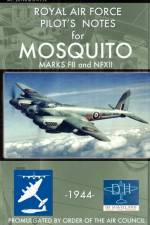
When Britain's brilliant aircraft designer Geoffrey de Havilland first proposed the Mosquito, the Air Ministry greeted the idea with skepticism. Powered by twin Merlin engines, the bomber would be constructed almost entirely of wood and handle like a fighter. Stripped of heavy defensive weapons and armor,its advantage was its light weight and high speed, which would allow it to escape pursuing enemy aircraft. De Havilland's critics were silenced when the prototype flew in November of 1940. The plane quickly proved itself one of the fastest and most versatile military aircraft in existence, and production of the type commenced immediately. The "Wooden Wonder" (or "Mossie" as it was sometimes referred to) entered widespread service in 1942 and flew as a fast bomber, fighter-bomber, night fighter, path-finder, maritime strike aircraft, and fast photo-reconnaissance aircraft. The plane became particularly famous for set-piece attacks including a raid on Gestapo HQ in Oslo, an attack on a power station in Holland, and Amiens Prison. It also participated in the Normandy Campaign and D-Day.Created by the R.A.F., these notes were standard issue circa 1944. They contain fascinating information about aircraft operation, handling, and emergencies.
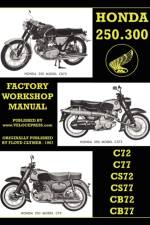
188 pages, 245 illustrations, size 8.25 x 11 inches. A faithful reproduction of the 1967 Floyd Clymer publication of the official 1960 Honda Factory Workshop Manual for the 250-305 series C72, C77, CS72, CS77, CB72, CB77 (Hawk). This series of motorcycles were introduced in 1960 and the last year for manufacture was 1967 however, some models were sold and titled in the US during 1968 and 1969. There are exhaustive tables of technical data, tolerances and fits and all of the expected data from a factory publication for the repair and overhaul of all major and minor mechanical and electrical components, making it an invaluable resource for collectors and restorers of these classic Honda motorcycles. There are 245 illustrations and each procedure is explained in a step-by-step method using an appropriate illustration. The translation from Japanese to English is, at times, a little quirky but the profuse illustrations make up for any difficulty in understanding what needs to be done! There are separate sections that deal with the repair and overhaul procedures for the engine, transmission, wheels and brakes, front forks, frame and carburetor, plus a detailed electrical service section. This is a - must have - reference for any Honda enthusiast and would certainly assist in helping any potential purchaser better understand the inner workings prior purchasing of one of these classic motorcycles. Out-of-print and unavailable for many years, this book is highly sought after on the secondary market and we are pleased to be able to offer this reproduction as a service to all Honda enthusiasts worldwide.
CONTENTSThe Vanderbilt LinesThe Pennsylvania SystemThe Harriman LinesThe Hill LinesThe Fight for PittsburgThe Gould LinesThe Rock Island SystemThe AtchisonThe Chicago, Milwaukee and St. PaulThe Chicago and NorthwesternThe Rebuilding of an American RailroadThe First Transcontinental RailroadThe Early Day in Railroading
Authors Lewis J. Poteet and Aaron C. Poteet, father and son, also wrote Hockey talk, a dictionary of Hockey slang. This book was born out of the son's lifelong fascination with Police, crime and justice and his father's love of language.Lewis has written or co-authored numerous slang word and phrase books including Plane Talk, Car Talk, and The South Shore Phrase Book. Lewis taught English for 32 years at Concordia University in Montreal and in winter 2000, was adjunct instructor in English at Austin (TX) Community College.Aaron holds a bachelor's degree in criminal justice from Northeastern University in Boston. As a sometime wayward youth, he walked the city streets at night as neighborhood patrol, Guardian Angel, even vigilante. His near obsession with the street led to work in the most thankless profession known to man's law enforcement (and he loved almost every minute of it!) working for the better part of a decade as a Special Police Officer in Boston and then briefly with the Austin Police Department. He now works for a large corporation in field collections.Gathered from live conversation and printed sources, this book presents the lively language of car and motorcycle fans, with entries also from car parts men, mechanics, car salesmen and ordinary drivers. Drawn from California, Canada, Texas, Boston, England, Belize, and other places it evokes the terror, the joy, the pride, the troubles that come from these Rube Goldbergish unholy alliances of fire and water, gasoline, steel, and rubber, designed to drag our bodies down the highway at unlawful speeds and get us caught in horrendous traffic jams, or travel freely in the land of the free and the home of the brave. This informative guide is definitely a must-read book for car and motorcycle enthusiasts. This will help you familiarize with the lingo-from greasy motor engines to racing cars!
The years 1921-31 saw U.S. aviation marking its first quarter century with record after record demonstrating the speed and reliability of aircraft and the developed skill of pilots who flew them. By 1929, the technology was greatly advanced beyond the fragile craft and the sputtering engine of the Wright Brothers. The ultimate tribute to them was the fact their aircraft, its engine and its controls proved to be the foundation for aviation. In 1932-35, technology and pilot skill breached weather's wall with the ability to fly instruments. A breakthrough flight control system, first demonstrated in 1929, had to be deconstructed to put the pilot into the knowledge loop. The result was a trio of pilot flight instruments that serve aviation to this day.
In 1881, the railroads came to the dusty West Texas town of El Paso bringing drummers, lawmen, gunmen, gamblers, ladies of the evening, miners, and untold others. They did not all have horses or buggies and the town fathers soon recognized the need for a mule-powered streetcar system. This is the story of how those mule cars carried the colorful characters of El Paso around town and across the Rio Grande to Mexico.It is also the story of the spoiled town pet, Mandy the Mule, and the remarkable survival of the car Mandy pulled, No.1. The author takes extraordinary care to separate popular legend from documentable evidence.The story of early day mass transit would not be complete without the sad tale of Tobin Place and its railroad after the turn of the century as well as the intriguing tale of the much anticipated, but little used, plush electric interurban to Ysleta.
Abonner på vårt nyhetsbrev og få rabatter og inspirasjon til din neste leseopplevelse.
Ved å abonnere godtar du vår personvernerklæring.