













Gjør som tusenvis av andre bokelskere
Abonner på vårt nyhetsbrev og få rabatter og inspirasjon til din neste leseopplevelse.
Ved å abonnere godtar du vår personvernerklæring.Du kan når som helst melde deg av våre nyhetsbrev.

The book was written for anyone interested in the subject. It should be specially helpful to designers and builders of ships, marine engineers, operators, shippers, managers, government officials, lawyers, and underwriters. It will also appeal to others, including nuclear scientists and engineers, scientists and engineers in other fields, teachers, students, and writers. The first two chapters furnish orientation on the subject of nuclear ships, and the third provides technical background for readers with no background in nuclear science. Logically, the longest chapter in the book (Chap. 4) is devoted to the Savannah herself. Several succeeding chapters cover precautions taken in design, construction, and operation to ensure safety. In this aspect of the ship development, the history of nuclear central-station plants seems to be repeating itself: in unknown areas it is better to take many precautions that later will be found unnecessary than to run the risk of not taking the one safety measure that might prove essential. Fueling nuclear ships, very different from taking on fuel oil, is covered in Chap. 7, and the extensive training of the crew in nuclear technology and reactor operation is described in Chap. 8. Concluding chapters cover international aspects of nuclear merchant-ship propulsion such as handling in other ports, safety standards, and insurance; the suitability of different reactors; and economics. The last two chapters are devoted to nuclear tanker design, since it appears that the first economic application may be for large tankers operating long distances, and to nuclear ship activities elsewhere in the world including the Russian icebreaker Lenin.
"Sew another stripe on the arm of Captain Brian Power-Waters as the Conscience-in-Chief of America's flying industry. In 93 Seconds to Disaster, the story of the tragic post-9/11 crash of American Airlines A-300 Airbus flight 587 in Queens, NY, he takes us inside the cockpit on the fateful morning of November 12, 2001 as the plane gets caught in bone-jarring wake turbulence from the 747 in front of it. Stacking up facts, figures, black box transcripts, and his own profound expertise, Power-Waters criticizes the NTSB for its rush-to-judgment conclusion that the co-pilot caused the breakup of the plane. The author cites reports of 'popping noises' and shedding of plane parts after takeoff, and believes the Airbus either was not airworthy before takeoff or there was an explosive device on board. Power-Waters' probe flatly concludes that Airbus covered up evidence of the extreme sensitivity of the plane's rudder. He hammers at airlines, accuses the FAA of 'sleeping with the airlines', and once again tests the air industry's commitment to safety. A must read!"--Alex Michelini, former Chief Investigative Reporter, New York Daily News"If you think your airline captain is trained to recover from any position that the airplane might encounter, you'd be wrong."--Carl T. Butterworth, Senior Captain, American Airlines, Ret. Brig. Gen. (ANG)
A book for and about truck drivers and driving. Information about what it is like, how to get a commercial drivers license to drive. Has useful information on what a person has to go through as a commercial over the road driver. It is not only good for those wanting to know how to become a truck driver and what it is really like but also for the ordinary drivers on how to drive around commercial trucks.
The progressive buffet that this debut publication presents is not for the faint of heart. The rule of thumb quite simply put breaks down like this:If you can't roll with the Progressive Negotiators, stay in the slow lane!With more than a million miles on American roadways, having faced travel conditions from extreme to delightful, he makes this book difficult to put down because he says how we all have felt at one time or another while behind the wheel. This publication will inform, arrest, educate, alleviate, and indoctrinate the masses of folks who desperately need a 'Drive-By' guide for the new millennium. This is IT! This book needs to be placed in the hands of anyone about to start driving, anyone who has been driving, and anyone thinking about driving one day in the future. This 'How To, What Is, and What Isn't' book is for all those folks, and several million more. Test drive this book like no other. It'll MOOOVE your heart, mind, body and Soul!!
Presents a history of motor-racing from the early 1970s onwards. This work interweaves the lives and deaths of drivers such as Gilles Villeneuve and Ayrton Senna and gives accounts of the fights between the top drivers - like the Alain Prost and Senna or Damon Hill and Michael Schumacher - matched by the ferocious rivalry between the top teams.
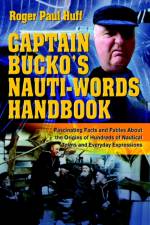
Do You Know The Nautical Origins Of:"A Stitch In Time Save Nine""A Couple Of Shakes""As The Crow Flies""Chewing The Fat""The Devil To Pay""Feeling Blue""Pooped"Or perhaps one of you "old salts" would like to know the actual definitions of nautical terms such as garboard, lagan, or larboard.You Need Captain Bucko's Nauti-Words Handbook!
Here's aviation humor with a twist of fun! Sift through a flight attendant's logbook. Discover what really goes on in the cockpit of a major airline. Learn the real differences between male and female pilots. Enjoy an aviation fashion show featuring funny black and white photos. There's even jokes about CFI's and student pilots and ATC!Keller brings a refreshing style of humor to the world of aviation.First officer: "Captain, do you think we can break the sound barrier with all of this luggage?"
Horsepower War shatters nostalgic myths about musclecars and provides historical perspective on today's SUV craze. It proves efficiency and pollution regulation didn't kill the musclecar and that current regulation, which picks winners by favoring SUVs is the real threat. Harless has mined auto literature from the 1960s to the present to reveal granular detail on specific models, while at the same time providing broad perspective on the tectonic shifts in domestic auto making. He approaches political issues as an auto enthusiast, but instead of being an apologist for industry, he offers principles that embrace market rationality, and enhance the long-term sustainability of cars through rational transportation and energy policy. Harless re-discovers the principles of "conspicuous waste" and "conspicuous consumption"--phrases coined by economist Thorstein Veblen, author of Theory of the Leisure Class--to unmask the unacknowledged assumptions of both U.S. consumers and automakers.
This story begins with James Watt the inventor which voluntarily created a separate condenser for steam engines. However it had been Richard Trevithick of England who was solely responsible for producing high-pressure steam through a smokestack. The initial setting takes place during 1829 near Liverpool at a historical site known as Rainhill. A competitive race was strategically won by the Rocket locomotive lucidly built by the aspiring George Stephenson and his ambitious son.During the earlier part of that nineteenth century internal improvements had played a major role in our country, and also for the coming of railroads. The monumental building of its Erie Canal in New York greatly contributed to these navigable rivers and steamboat vessels at this time. In fact there were many evident evolutions being rapidly unfolding for example air brake system, steel rails, electric telegraph as well as coal for supplying fuel. Dinning cars and sleeping cars were formally introduced by George Pullman and had certainly provided luxurious accommodations for the steam locomotive.Those public domain lands were vigorously brought to a more richer and prodigious development by its conglomerate railroads which had prudently expanded the acquisition of unfamiliar territories. An indispensable number of railroad charters were favorably issued by the State legislation in addition to land grants being actually permitted by the federal government. Moreover that quest of railroad achievement in the east was magnificently accomplished by the New York Central Railroad. Primarily the mighty and potent project of building a transcontinental railway across North America was successfully consummated as the Iron Horse became popular and evolved from its origin.
"Bus Conversion Floor Plans" includes photographs and floor plans from more than 50 bus conversions, and excerpts from such resources as "Galey's Bus Converter's Bible" and "Plachno's Beginner's Guide To Converted Coaches."
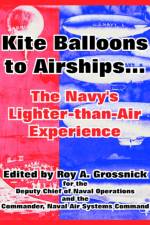
The dawn of aviation began with lighter-than-air craft and gliders. They were in the forefront of what eventually led to the Wright brothers' activities at Kitty Hawk. The Navy's early use of lighter-than-air craft may be traced back to the American Civil War. However, it was a short-lived affair and these LTA possibilities were not pursued after the war. With the advent of airplanes in naval service, the Navy again turned its interest to lighter-than-air craft. The Navy's lighter-than-air program blossomed and its fleet of airships became the largest the world has ever seen. During the era of the giant rigid airships, the Navy built some of the largest airships in the world. Many achievements were recorded by the Navy's LTA branch and new records were set, records which still remain unbroken today. This monograph is intended to provide an overview of the Navy's involvement with balloons, airships and their operations, which shows their failures and accomplishments and their contributions to the Navy's mission of guarding the sea lanes of America. It is not an in-depth study of the LTA program, but provides an overall look at the history of LTA in the Navy. Various aspects of the LTA program have had extensive coverage, especially the rigid airship era; however, the entire history of LTA in the Navy has not been told under one cover. The Navy's LTA program technically ended in the 1960s. But the evolutionary trends that can be seen in history could possibly bring back certain functions of LTA and make them viable in today's world of supersonic flight and space travel.
Abonner på vårt nyhetsbrev og få rabatter og inspirasjon til din neste leseopplevelse.
Ved å abonnere godtar du vår personvernerklæring.