












Gjør som tusenvis av andre bokelskere
Abonner på vårt nyhetsbrev og få rabatter og inspirasjon til din neste leseopplevelse.
Ved å abonnere godtar du vår personvernerklæring.Du kan når som helst melde deg av våre nyhetsbrev.

106 pages, 51 black & white illustrations, size 5.5 x 8.5 inches. Originally published under the title The Book of the Honda Twins by John Thorpe, this book is one of The Motorcyclist's Library series published in the USA by Floyd Clymer by arrangement with the original publishers, Pitman Ltd. of London, England. It includes complete technical data, service and maintenance information and detailed instructions for the repair and overhaul of the major mechanical and electrical components for all models of Honda twin cylinder motorcycles through 1968 (with the exception of the CB250 Super Sports). There is adequate detailed text and diagrams to assist in major refurbishing such as an engine rebuild or even a complete renovation. Applicable to all twin cylinder variations including the C92, CB92, C95, CB160, CD175, C72, C77, CB72, CB77 & CB450 models. This publication has been out-of-print and unavailable for many years and is becoming increasingly more difficult to find on the secondary market. We are pleased to be able to offer this reproduction as a service to all Honda enthusiasts worldwide.
This is a 1950s story of a young man, Freddie Allard who leaves school at 15 to start a career on British Railways. Freddie has watched trains from an early age and has always wanted to work on the railway, now his dream has come true and he will be paid for it too!Freddie and the Steam Trains, Early Days, is the first book in the series that tells the story of the Authors early career starting as a steam train Cleaner.The oldest of two lads, post war, Freddie is used to hard work helping his Mother and Gran make the most of food rationing, and is striving to overcome a difficult relationship with his Father. However, having arranged to start on the Southern Region at Ashford he has a setback when his Father's work takes them away to Hertfordshire. His Father is opposed to him working on the railway, and wants Freddie to join him at as an apprentice at the De-Havilland Aircraft Factory. Freddie loves his Father but goes against his wishes as a friendly railway Clerk helps him to go to Watford Junction where he starts as a Cleaner on the London Midland Region.Follow Freddie's adventures as he starts work, is coached and nurtured, gains skills, knowledge and experience, overcomes mistakes, meets many railway characters, settles into the cleaning routine and other dirty jobs, learns the harsh discipline of railway life and overcomes his Father's opposition to his chosen career. During the next year he slowly learns about the railway and steam engines and, as he approaches 16, prepares for promotion to Passed Cleaner. The next book sees Freddie beginning training as a Fireman on the footplate, but that is another story.
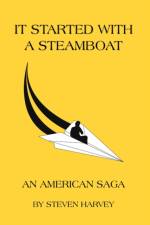
In little over a hundred years America went from a country that lacked a national road system to become a world leader in all forms of fast transportation. It was from 1807 to 1909 that the foundations of cheap fast travel forever changed us as a people and a nation. It all started with a steamboat trip up the Hudson which brought about a mechanical transportation revolution that came ashore and finally took to the air. Our story is about transportation starting with the steamboat, the development of New York's Finger Lakes, and how this helped bring about the modern business world we take for granted. It took only a century for the magical formula of fast transportation speeding up local development and business growth to transform our nation and the world we live in. The reader should always keep in mind the endless cycle of speed, development and business that keeps the ball rolling as time and distance continue to shrink in this ever changing world. Speed changed our lives to the point that we needed to escape it as the Excursionist Age of lakeside resorts, fine wines and dance halls came to life for the working weary and high rollers of the land. New York's Finger Lakes were the crown jewels of this age, having fine wineries and some of the best railroads and steamboats in the land. Out of all of this energy emerged the "Wizard of Hammondsport," Glenn H. Curtiss! He would go on to become the fastest man on earth and in the air! Because of these events we no longer think in terms of distance, but instead in the time it takes to get there. We now think in sound bits, eat on the run, as our children live fast pace lives. Here is the story of how this came to be.
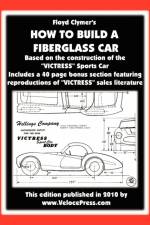
The original contributors, W. I. Boyce-Smith, Edmond Kelly and Hugh Jorgensen, all played a significant role in the design, development and construction of the fiberglass bodied VICTRESS sports car. While the technology of constructing impact resistant lightweight automobile bodies has advanced considerably since this book was first published, many of the exotic materials and composites in use today are beyond the capabilities available to the average home-based "special" builder. However, this comprehensive and informative book, written in easy to understand language, puts the capability of designing and building a custom bodied special within reach of the home-based enthusiast. The principles it contains are just as relevant today as they were some 50 years ago when this book was first written. The design process is clearly explained, the raw materials required are described, and the construction process is presented in an easy-to-follow step by step procedure. Obviously, this book would also be a valuable reference for anyone contemplating repairing, refurbishing or restoring a fiberglass bodied automobile. This edition also includes a 40 page bonus section featuring reproductions of VICTRESS sales literature. Out-of-print and unavailable for many years, this book is becoming increasingly more difficult to find on the secondary market and we are pleased to be able to offer this reproduction as a service to all those automotive "special" builders and enthusiasts worldwide.
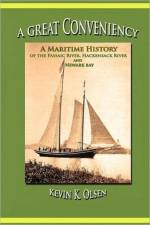
"A Great Conveniency, a Maritime History of the Passaic River, Hackensack River, and Newark Bay" describes the role that riverine and coastal navigation played during the development of northern New Jersey. Commencing in the early 1600s with the European exploration of the local waterways, it relates how rivers facilitated early settlement and expanded the highway network into the hinterlands. Landings developed at Acquackanonck (Passaic), Bound Creek, New Bridge (New Milford), and Old Bridge (Oradell), and the towns of Belleville, Hackensack, Little Ferry, and Paterson depended on river traffic for commerce. River proximity allowed British forces to raid the area during the American Revolution, and Americans used whaleboats and other local craft to retaliate. There is a detailed examination of nineteenth century cargoes such as bricks, coal, fertilizers, and lumber. The exports from the Meadowlands - cedar logs, hay, and wild game are also cited. River craft used on the waterways are also part of the story, and locally built ships and boats, dugouts, canal boats, galleys, schooners, sloops, steamboats, periaugers, and tugboats are all explained, with numerous accompanying illustrations. The changes that urbanization brought to the rivers and bays are investigated in sections devoted to the expansion of New York s harbor and the rise of Port Newark and Elizabethport. Other chapters explore how suburban growth created new opportunities for canoeing and yachting. Carried to the present day, the book describing the efforts by the EPA and other environmental agencies, including river clean, landfill capping, and development of riverside parks."
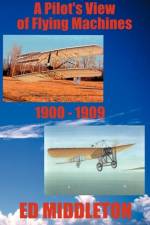
This book chronicles the beginning of heavier-than-air flying machines. These human-controlled machines carried both pilots and passengers into the sky. Today, this concept is taken for granted, but the process of discovering just how to perform this seeming miracle required much thought and courage by its developers. There were heroes and villains, entrepreneurs and opportunists, as there are in any venture. But know this: Each of them contributed to the miracle of flight in his own way. They were indeed amazing men in their flying machines . . . no matter how long they were actually airborne.
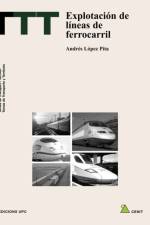
En los ultimos treinta anos, los servicios interurbanos de viajeros del ferrocarril europeo han adquirido un nuevo protagonismo con la construccion de nuevas infraestructuras y la implementacion de servicios de alta velocidad. Gracias a ello, se ha avanzado en el conocimiento de los diversos ambitos que configuran el ferrocarril como modo de transporte. Paralelamente, se han realizado interesantes aportaciones en publicaciones tecnicas, a las que los profesionales del sector y los nuevos ingenieros no siempre pueden dedicar el tiempo que desearian. Sin embargo, cada dia es mas imprescindible conocer las nuevas posibilidades que ofrece una ingenieria tecnicamente mas factible y economicamente mas interesante. A titulo indicativo, en la actualidad han adquirido una gran relevancia temas que hace apenas dos decadas no requerian atencion: la senalizacion en cabina, el sistema ERTMS, la contribucion del ferrocarril a la sostenibilidad o la nueva organizacion entre gestores y operadores, por citar algunos ambitos. El libro es fruto del interes de la comunidad cientifica por disponer de una obra que refleje el estado actual de conocimientos acerca de la explotacion de lineas de ferrocarril. Sus destinatarios son, por un lado, los profesionales que desarrollan su actividad en el dia a dia y, por otro, quienes deseen formarse en esta disciplina. No se trata de una mera reproduccion de los conocimientos existentes, sino de una publicacion estructurada y ordenada conforme a un criterio innovador que, por su originalidad y la aportacion que contiene, puede ser de interes para el sector del ferrocarril.
A faithful reproduction of the 1970 Floyd Clymer publication of the official Suzuki Factory Workshop Manual for the T20 and T200 series of motorcycles including the 250cc Super Six and X6 Hustler and TC250 Scrambler and the 200cc X5 Invader and TC200 Stingray.
Abonner på vårt nyhetsbrev og få rabatter og inspirasjon til din neste leseopplevelse.
Ved å abonnere godtar du vår personvernerklæring.