



















Gjør som tusenvis av andre bokelskere
Abonner på vårt nyhetsbrev og få rabatter og inspirasjon til din neste leseopplevelse.
Ved å abonnere godtar du vår personvernerklæring.Du kan når som helst melde deg av våre nyhetsbrev.

Rollins Pass....The Ski Train....Moffat Tunnel....names from Colorado''s railroad heyday.This book tells a gripping story. It is about the building of Colorado''s most famous railroad, and how the state became what it is today. Power, greed, tragedy and back room maneuvering are the background to the lives of the workers who built the road.In 1903, Denver banker David Moffat formed the Denver, Northwestern and Pacific Railway Company. Its mission was to lay tracks through Colorado''s mountains, over or through the continental divide and all the way to Salt Lake City. There were many skeptics and some who simply didn''t want the railroad to succeed. Mik Mas, a Denver water lawyer, finds himself a visitor to that year, 1903. Many of the people he meets are doppelgangers for friends - and enemies - he knows in twenty first century Denver. Mik is a dead ringer for a local man who is missing in a jobsite accident. No one but Mik knows that, which makes his blending in, well, an adventure. An accidental and unwilling time traveler, he decides to make the best of it. He embeds himself into daily life in the railroad construction camps. Soon he finds himself embroiled with people he knows but doesn''t know. Some are working for Moffat and helping to build the railroad. Some are helping people who are hostile to the road.Disputes arise over the railroad''s right of way, it''s legal right to use land to scrape grade and lay track. These disputes soon come to a head. Mik is drawn in despite his desire and attempt to return to the twenty first century.
Reinhold Werner war in den 80er Jahren des vorigen Jahrhunderts ¿Königlich-Preußischer Corvetten-Kapitän¿ und somit einer der damals wenigen privilegierten Protagonisten der Seefahrt. Sein umfassendes Handbuch der praktischen Seemannschaft und Steuermannskunst diente seinerzeit als universelle Handlungsanleitung für Schiffsoffiziere im Einsatz. Hierbei ging es Werner in erster Linie um die Darstellung der praktischen Seemannschaft an Bord der Schiffe. Dies gelingt ihm in atemberaubender Weise und hebt sein Werk deutlich von den althergebrachten Darstellungen zeitgenössischer Seemannschaft ab.
Der Schiffbau-Ingenieur Professor Bohnstedt, seines Zeichens Oberlehrer an der Kgl. Höheren Schiff- und Maschinenbauschule in Kiel, schuf 1907 aus seiner beruflichen Praxis heraus ein Grundlagenwerk zum Thema ¿Praktischer Schiffbaü, das an den Schiffbauschulen binnen kurzem als Standartwerk des angehenden Schiffbauingenieurs etabliert war. Entsprechend umfangreich und vollständig ist das Werk, das den gesamten Schiffbau mit 246 Abbildungen und 12 Tafeln detailliert und lehrreich dokumentiert. Insgesamt ein unentbehrliches Werk für den Liebhaber klassischer Schiffe.
The photos in this edition are black and white.Offers complete results from over 2000 dyno pulls, and provides literally tens-of-thousands of dollars worth of dyno test results from all popular Honda performance parts. From air intake systems to exhausts, cams and cylinder heads to nitrous, turbos, and superchargers, it's all in here! There's even a chapter on engine build-ups along with the results from the author's tests on nearly every Honda model, from the single-cam DX to the 2.2L Prelude. Acura models are covered as well, from the 1.8L LS through the GSR and type R, all the way up to exotic NSX.
The following is an 'anecdotal' snapshot of my time at sea through the eyes of a 'first-tripper' as an Asst. Electrical Engineer, Cableship Officer, under the auspices of British Telecomm (Marine). This 'aide-memoir/novellette', came about by members of my family continually telling/cajoling me to write down the events and incidents which I was involved in or happened to me.This book is a technical but also an amusing tale of the author's job on one of the Cableships keeping telecommunication channels open all around the world. Answering questions like "So, how do you find a broken cable at the bottom of the Atlantic"? etc."The Engine Room" is an interesting and enlightening story of life on a working vessel as well as recording lighter adventures ashore.The reader should note that what transpired was in the days before certain legislation became as rigorous as it is in today's working environment.The author wishes to thank his wife, primarily for putting up with my periods of absenteeism whilst raising our family very much single-handedly all those years ago......With hindsight, which is the one thing everyone has a PhD in. This book should really never have come about. Some people might regard me as being selfish to leave my wife and baby at a time when I was most needed; with the need to provide, then, now and the future beckoning, I just couldn't ignore that aspect.The nature of the 'job' could be seen as 'episodic', what follows is the good, the bad, does that mean I'm the ugly?-John Prince
NASA SP 4206. NASA History Series. Study of the development of the Saturn launch vehicle for the Apollo Moon Missions. Recounts the exploits of the Saturn vehicle's operational life from orbital missions around Earth testing Apollo equipment to the Moon and back. First published in 1980, this superior quality reprint contains photographs and illustrations.
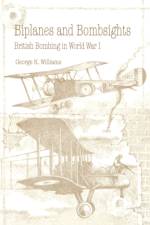
Originally published in 1999. Colonel Williams presents a comprehensive study of British bombing efforts in the Great War. He contends that the official version of costs and results underplays the costs while overplaying the results. Supported by postwar findings of both US and British evaluation teams, he argues that British bombing efforts were significantly less effective than heretofore believed. Colonel Williams also presents a strong argument that German air defenses caused considerably less damage to British forces than pilot error, malfunctioning aircraft, and bad weather. That we believed otherwise supports the notion that British bombing raids had forced Germany to transfer significant air assets to defend against them. Williams, however, found no evidence that any such transfer occurred. Actual results, Colonel Williams argues, stand in strong contrast to claimed results.
126 pages, 63 black & white illustrations, size 5.5 x 8.5 inches. Originally published under the title The Second Book of the Royal Enfield by W.C. Haycraft, this book is one of The Motorcyclist's Library series published in the USA by Floyd Clymer by arrangement with the original publishers Pitman Ltd. of London, England. It includes complete technical data, service and maintenance information and detailed instructions for the repair and overhaul of the major mechanical and electrical components for the entire series of Royal Enfield Crusader type 250cc & 350cc singles constructed from 1958 through the 1966 models. There is adequate detailed text and diagrams to assist in major refurbishing such as an engine rebuild or even a complete renovation. Applicable to the Crusader 250, Crusader Sports, Crusader Super 5, Continental, 250 Clipper, 350 Bullet, Continental GT and Olympic models. This publication has been Out-of-print and unavailable for many years and is becoming increasingly more difficult to find on the secondary market and we are pleased to be able to offer this reproduction as a service to all Royal Enfield enthusiasts worldwide.
What really downed the Aer Lingus Viscount at Tusker Rock? Was the US Globemaster which vanished off the Irish coast really carrying an atom bomb? Written by an aviation writer, this book explores the causes, traces the lives, tragedies, skill, bravery, heroism and possible human error involved in some of the mysterious air disasters.
80 pages, 33 black & white illustrations, size 5.5 x 8.5 inches. Originally published under the title The Book of the Ariel Leader and Arrow by W. C. Haycraft, this book is one of The Motorcyclist's Library series published in the USA by Floyd Clymer by arrangement with the original publishers Pitman Ltd. of London, England. It includes complete technical data, service and maintenance information and detailed instructions for the repair and overhaul of the major mechanical and electrical components for all 247cc parallel twin two-stroke models of the Ariel Leader and Ariel Arrow constructed from 1958 through 1966. There is adequate detailed text and diagrams to assist in major refurbishing such as an engine rebuild or even a complete renovation. This publication has been Out-of-print and unavailable for many years and is becoming increasingly more difficult to find on the secondary market and we are pleased to be able to offer this reproduction as a service to all Ariel Leader and Ariel Arrow enthusiasts worldwide.
Abonner på vårt nyhetsbrev og få rabatter og inspirasjon til din neste leseopplevelse.
Ved å abonnere godtar du vår personvernerklæring.