























Gjør som tusenvis av andre bokelskere
Abonner på vårt nyhetsbrev og få rabatter og inspirasjon til din neste leseopplevelse.
Ved å abonnere godtar du vår personvernerklæring.Du kan når som helst melde deg av våre nyhetsbrev.

The compelling story of Max Reisch and Helmuth Hahmann's journey across Asia in 1935 in a Steyr 100. It is a story of adventure and discovery, revealing the countries, people and problems that they encountered along the way. With stunning period photographs, this book provides a historic and fascinating insight into a pre-WW2 world.
Britain has a wealth of museums of all sizes, all with incredible exhibits, yet the ''big'' collections tend to get the limelight. All over the UK are amazing aircraft collections, containing aircraft of world, national or regional importance, many of which the curators of the national institutions would love to have. With region-by-region coverage, the backgrounds of the formative museums of Great Britain are highlighted along with the pedigrees of their most significant exhibits. Included are such icons as the de Havilland Aircraft Museum - home of the Mosquito; the Brooklands, Museum - headquarters of Sopwith, Hawker and Vickers; the Helicopter Museum - the world''s largest rotorcraft collection and Solent Sky - shrine to flying-boats and the Spitfire. Across Britain are many local collections that helped to pioneer this country''s incredible aviation heritage and the role of enthusiasts is highlighted with a profile of the first of them all - the Northern Aircraft Preservation Society and its lineage. Among the ''regionals'' are the Dumfries and Galloway, Solway, North East, Newark, Norfolk and Suffolk, Yorkshire and Berkshire museums. Smaller collections have incredible stories to tell, for example the Martlesham Heath Control Tower Museum - the home of British flight test; the RAF Air Defence Radar Museum - devoted to the vital ''magic eye'' of the Battle of Britain, the Glenn Miller Museum - at the airfield from which the band leader departed to his doom and Fort Paul Armouries - dominated by the enormous Beverley airlifter. Over 150 museums and their most important exhibits are profiled with over 250 photographs, both archive and in full colour. Like the other titles in the series, Britain''s Local Aviation Treasures is a unique reference for anyone interested in Britain''s aviation heritage and it provides inspiration for a tour of discovery of the ''unknown'' gems of the UK.
The second part of John Stretton's sixty trainspotting years features his forays into the world of railways and other areas of interest during the period 1985 to 2015.
This highly illustrated book features a wide range of aircraft that served in the Korean War, the Vietnam War, the Cold War, conflicts in the Middle East, and the Falklands. Spanning such famous planes as the Lockheed Blackbird and the MiG-21, Modern Military Aircraft also includes lesser-known examples such as the South African Atlas Cheetah and the EH101 Merlin helicopter.
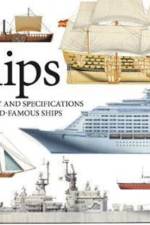
Fully illustrated in a pocket landscape format, Ships contains 300 vessels arranged in chronological order from ancient times to the present day. Each ship entry has a colourful artwork, concise service history and a specification box giving comprehensive technical data, including displacement, dimensions, machinery, armament, speed and complement.
This attractive and cleverly structured guide gives walkers ten of the finest walks to the ten most spectacular lighthouses in Wales in a popular pocketable format.
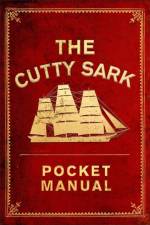
Constructed on the Clyde in 1869 for the Jock Willis Shipping Line, Cutty Sark was one of the last tea clippers to be built and one of the fastest. Cutty Sark spent just a few years on the tea routes before the opening of the Suez Canal and the increasing use of steamships made clippers unprofitable on shorter routes. It was turned to the trade in wool from Australia, where for ten years she held the record time for a journey to Britain. After finishing her time in service as cargo ship, and then a training and cadet ship, it was transferred to permanent dry dock at Greenwich, London, for public display. This handy and illuminating pocket manual collates original documents to tell the fascinating story of how the legendary Cutty Sark was commissioned, her design and building, life on board and her notable journeys.
For over 50 years myths have abounded about the closure of the Westerham branch line. This explosive new account investigates how British Railways managers went about closing a well-loved branch line. Using official papers and documents kept hidden for many years, the book reveals how users of the line almost managed to keep it open and that BR had even started to electrify it only for Ernest Marples, the controversial Minister of Transport, to insist that closure must go ahead. Starting with a history of the branch line from Westerham through Brasted and Chevington to Dunton Green, we learn of the difficulties experienced before it opened for traffic in July 1881. However, by 1960 competition from buses meant that the railway was reportedly losing £26,000 a year and the last public services ran in October 1961. Pressure persuaded British Railways to grant a local interest group permission to lease the railway, a decision later rescinded in view of plans for what would become the M25 motorway.This unhappy story is now laid bare: warts and all. The book exposes how, when local people and enthusiasts tried to bring their railway back to life, civil servants and BR managers were panicked by the prospect that a preserved Westerham line might prove local railways could be run more efficiently, at the time when the government was determined to sacrifice the rail network upon the altar of an upgraded road system. It describes the deception and increasingly underhand methods that were used to block the scheme and how the truth of the closure
The first title in this new Recolleections theme looking at preserved locomotives
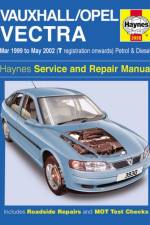
Saloon & Estate, including special/limited editions. Does NOT cover Coupe*Petrol: 1.8 litre (1749 & 1761cc) & 2.0 litre (1997cc) 4-cyl. Does NOT cover 2.0 litre Turbo, 2.0 litre direct injection (HPi), 2.2 litre (4-cyl) or 3.0 litre (V6) petrol engines. Turbo-Diesel: 2.0 litre (1997cc) & 2.2 litre (2179cc)
An important historical record of life at sea during the last quarter of the 20th century, a way of life now vanished. A tale of a highly charged and turbulent life written in a captivating and arresting style. A unique travel story, which paints the world in a way where even the mundane becomes strangely compelling.
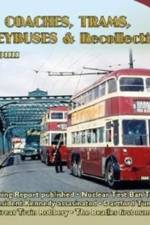
Cardiff, once one of the world's busiest ports, has a long and fascinating heritage. Here, transportation expert Peter Waller explores its long-closed tramway, and probes the significance of these vanished modes of transport and the world where they were in regular use. Rigorously researched and photo-documented throughout, this series makes for essential reading for all enthusiasts of British heritage.
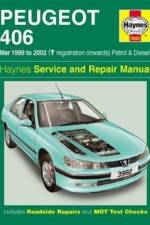
Saloon, Hatchback & Estate, inc. special/limited editions *Petrol: 1.6 litre (1598cc), 1.8 litre (1796 & 1799cc), 2.0 litre (1998cc) & 2.2 litre (2198cc) 4-cyl. Does NOT cover 2.5 or 2.6 litre V6 or dual fuel engines. Turbo-Diesel: 2.0 litre (1994cc) & 2.2 litre (2171cc)
Probably best-known for its starring role in the Hollywood movie Top Gun, the variable geometry two-seat carrier-based Grumman F-14 Tomcat was the US Navy's primary maritime air superiority fighter and fleet defence interceptor between 1974 and 2006. Tony Holmes reviews the design, construction and use of the Tomcat, as well as its combat career in Operation Desert Storm (1991), Deliberate Force (Bosnia-Hertzegovina, 1995), and Allied Force (Bosnia and Kosovo, 1999). In 2001, F-14s led some of the first strikes into Afghanistan (Operation Enduring Freedom), and in Iraq in 2003 (Operation Iraqi Freedom)
A look back in time to what life on the railways in Yorkshire was really like when steam was King.
The Range Rover's designers intended it to be a more comfortable and road-friendly passenger-carrying Land Rover, but customers quickly saw something much more in it. During the 1970s, while its immense practicality and capability were appreciated and acknowledged, a Range Rover became a sought-after and prestigious possession. It went on to change the face of Land Rover for ever. The book covers the full development story; the changes made during twenty-six years of production; custom and utility conversions; Range Rovers for the US market; full technical specications and finally, Range Rovers assembled overseas. If ever a car deserved the over-used epithet 'iconic', the first-generation Range Rover is it.
The friendly signalman in Birdswood box, near Weaver Junction, introduced the author, a young trainspotter, to the mysteries of mechanical signalling on a busy main line. This work includes a detailed description of the railways of the area, maps, track diagrams and photographs.
Canadian Pacific Steamships was a worldwide travel network that included great passenger ships. Their highpoint for that arm might have been in the Twenties & Thirties. First, they had a superb transpacific service, Vancouver to and from the Orient, with four splendid ships providing twice-monthly service. It all hinted of far-off, exotic travel--grand salons, midnight sailings from Shanghai and an Asiatic steerage below decks. On the Atlantic, Canadian Pacific provided a fine service, largely between Liverpool and the St Lawrence, to Quebec City and Montreal. This culminated with the debut, in 1931, of one of the finest liners of the twentieth century, the giant 'Empress of Britain'. An exquisite ship both inside and out, she made luxurious world cruises in winter--like a big yacht! The stories of these ships on both oceans is told in this new book. Some were scrapped prematurely, others casualties of war and still others restored and reactivated for Canadian Pacific liner services in the late Forties and into the Fifties. Altogether, it is a fascinating group of ships, well deserving of another review.
Although flying is one of the safest modes of transportation, accidents dohappen, and when they do, the aftermath is devastating. With today's 24-hour media access, we are bombarded by images of twisted metal, debrisand personal belongings, smoldering away in a seemingly endless nightmare.Aviation disasters are like no other. The sudden loss of life gives rise toemotions that are both powerful and unfamiliar. How do survivors and familymembers blend this horrific experience into their lives? Each person is differentin how they handle their grief, but in the end, they all share one commondistinction - RESILIENCE. As an Emergency Response Manager involved ineight high-profile aviation accidents, I have been forever changed by thecompassion and empathy of the survivors, family, and fellow responders.
This book provides over 700 exercises with answers covering all aspects of small-craft navigation. These are practical problems that all navigators should know how to solve. Topics include: Piloting, Chart reading and plotting, Voyage planning, Dead reckoning, Compass use, Waypoint selection, Special publications, Rules of the road, Route design, Lights and buoys, Tides and currents, Electronic fixes, Depth sounding navigation The level of the exercises is comparable to that used in the USCG 100-Ton masters exam, which in turn is about the same used in the navigation certification programs of US Sailing, ASA, CYA and RYA. These practice problems are, however, designed to be practical and instructive, not just training exercises for certification exams. This Workbook is used by several navigation schools around the country. Selections are provided from each of these special publications along with exercises to insure their full use is mastered: NOAA Tide Tables, NOAA Current Tables, US Coast Pilot, USCG Light List, USCG Notices to Mariners, NOAA Chart Catalog The exercises that require a chart use nautical training chart No. 1210 Tr, available in print at reduced price from NOAA chart dealers and other outlets listed in the Appendix. You can also work the chart problems with an electronic chart (Raster Navigation Chart, RNC) number 1210 Tr. This custom echart is available as a download from www.starpath.com/1210Tr. The echart can be viewed by any of several free echart viewer programs. Sources for free echart viewers and guidelines for their use are included in the Appendix. You can also use any full echart navigation program of your choice. We encourage navigators to solve the chart problems with both traditional paper plotting as well as electronically, using route tools, electronic bearing lines, and range rings.
Abonner på vårt nyhetsbrev og få rabatter og inspirasjon til din neste leseopplevelse.
Ved å abonnere godtar du vår personvernerklæring.