










Gjør som tusenvis av andre bokelskere
Abonner på vårt nyhetsbrev og få rabatter og inspirasjon til din neste leseopplevelse.
Ved å abonnere godtar du vår personvernerklæring.Du kan når som helst melde deg av våre nyhetsbrev.

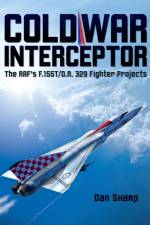
The West was stunned when the Soviet Union dropped its first atomic bomb in August 1949 and a year later the Korean War showcased Russia's incredible technological progress in the form of the MiG-15 - a fighter capable of besting anything the RAF had to offer at that time. In the wake of the Second World War, funding for the RAF's Fighter Command had fallen away dramatically but now there was an urgent need for new jet fighters to meet the threat of Russian bombers head-on. Britain's top aircraft manufacturers, including Hawker, English Electric, Fairey, Vickers Supermarine, De Havilland, Armstrong Whitworth and Saunders-Roe, set to work on designing powerful supersonic aircraft with all-new guided missile systems capable of meeting a Soviet assault and shooting down high-flying enemy aircraft before they could unleash a devastating nuclear firestorm on British soil.The result was some of the largest, heaviest and most powerful fighter designs the world had ever seen - and a heated debate about whether the behemoths should be built at all as guided weapons became ever more advanced. This is the story of Britain's secret cold war fighter jet designs, fully illustrated with a host of drawings, illustrations and photographs.
This is the story of how Britain¿s railway disasters, horrific though they may be, change the network for the better through the crucial lessons that are learned.It starts with fatalities on early mining tramways before the dawn of the steam age and takes the story up to the present day. While many of Britain¿s worst tragedies are covered in depth, such as Quintinshill in 1915 and Harrow & Wealdstone in 1952, the book also looks at others that had resounding consequences for safety.
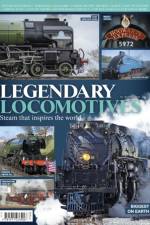
It is 200 years since the small town of Darlington emerged as the cradle for a rail industry that transformed travel around the globe. 19th April 1821 saw Royal Assent given for the Stockton and Darlignton Railway to be built. The single line officially opens four years later, 27th September 1825.As preparations begin for the Stockton & Darlington Railway's bicentenary in 2025, this special publication examines the important role played by the town in the invention of the railways and how, two centuries on, the nearby Hitachi factory ensures the North East is still at the heart of rail engineering technology.Despite looking to the future, Darlington has not forgotten its rail heritage. Thanks to the commitment of 21st century enthusiasts, a number of steam locomotives - the most famous of which is 60163 Tornado - are being built and preserved for future generations, putting the town well and truly back on the railway map.
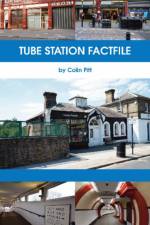
This full colour book looks at the Bakerloo line, the Central line, the Circle and Hammersmith & City lines, the District line, the Jubilee line, the Metropolitan line, the Northern line, the Piccadilly line and the Victoria line. Stations by Leslie Green, Charles Holden and Charles Walter Clark feature throughout and many Grade II listed stations are also featured.
A history of motor coach design from the early days of open-top charabancs, to modern WiFi and built-in toilets.The coach--distinguished from the bus by its use for longer-haul and more comfortable trips--has a long and august history. Its origins lie in the charabanc, a long open-topped vehicle used to transport passengers on works outings and pleasure excursions. Over time, coaches came to be enclosed and fitted with more comfortable seating and higher-quality bodywork than the charabancs and the buses used on shorter routes. By the 1960s and 1970s on-board toilets began to be fitted, and despite a decline due to private car ownership, coach travel remains popular, with WiFi, electric sockets and even video screens now built in. This colorful introduction explains the development of motor coach design and the main coach manufacturers, models and operators, offering a fascinating insight into the history of the nation's most popular vehicles.
Each Haynes manual is written for the do-it-yourselfer and provides step-by-step instructions based on a complete disassembly of the vehicle. This hands-on experience provides the reader with specific and detailed instructions for performing everything from basic maintenance and troubleshooting to a complete engine overhaul. The models and model years covered in this title are as follows: Chrysler 300, 2005-2018 Dodge Charger, 2006-2018 Dodge Magnum, 2005-2008 Dodge Challenger, 2008-2018 Exclusions: Does not include information specific to diesel engine, all-wheel drive models or Hellcat/Demon models. This Haynes automotive repair manual includes 700+ photos and the following chapters: Introduction Introduction Chapter 1: Tune-up and routine maintenance Chapter 2: Part A: 2.7L V6 engine Chapter 2: Part B: 3.5L V6 engine Chapter 2: Part C: 3.6L V6 engine Chapter 2: Part D: V8 Engine Chapter 2: Part E: General engine overhaul procedures Chapter 3: Cooling, heating and air conditioning systems Chapter 4: Fuel and exhaust systems Chapter 5: Engine electrical systems Chapter 6: Emissions and engine control systems Chapter 7: Part A: Manual transmission Chapter 7: Part B: Automatic transmission Chapter 8: Clutch & driveline Chapter 9: Brakes Chapter 10: Suspension and steering systems Chapter 11: Body Chapter 12: Chassis electrical systems Wiring Diagrams
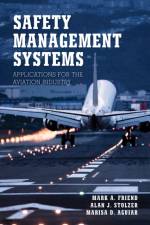
Safety Management Systems: Applications for the Aviation Industry provides an in-depth review of specific applications of an aviation-related Safety Management System(SMS) by following it from design through application.
This much-updated second edition of the Maserati 300S by Walter Baumer, includes many corrections and additions to the original text that have been uncovered in the last ten years. Almost all the photographs are new and previously unpublished. A bonus volume of additional photographs of the four factory cars completes the package.
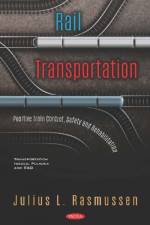
The Rail Safety Improvement Act of 2008 (RSIA08) requires implementation of positive train control (PTC) on railroads which carry passengers or have high-volume freight traffic with toxic- or poisonous-by-inhalation hazardous materials. Chapters 1 and 2 discuss passenger railroads'' PTC progress and FRA''s steps to assist them, and how passenger railroads and FRA plan to approach the 2018 and 2020 deadlines. Chapter 3 reports on the FRA''s passenger equipment safety standards using a performance-based approach to adopt new and modified requirements governing the construction of conventional and high-speed passenger rail equipment. Chapter 4 examines key characteristics of FRA''s and FTA''s rail safety oversight programs and strengths and limitations of FRA''s and FTA''s rail safety oversight programs. Crashes at highway-rail grade crossings are one of the leading causes of railroad-related deaths. Chapter 5 examines the focus of FRA''s grade-crossing-safety research, how states select and implement grade-crossing projects and what data are available from FRA to inform their decisions, and the challenges states reported in implementing and assessing projects and the extent to which FHWA assesses the program''s effectiveness. When a train is not moving but its engines are running, it can present risks and disruptions for the surrounding community as reported in chapter 6. Railroad bridges carry heavy and potentially dangerous loads over busy roadways and important waterways. Many of these bridges are a century old or more. However, unlike road bridges, which are the responsibility of public entities, railroad bridges are the responsibility of the private railroad companies that own or operate them. Congress has acted in recent years to improve oversight of railroad bridge safety, but incidents have prompted concerns about whether enough is being done to protect the public as discussed in chapter 7. Train derailments or collisions are often well-publicized events and receive significant attention from policymakers seeking to reduce their reoccurrence. Less attention has been devoted to trespassing, although it is a much greater cause of rail-related fatalities than derailments and collisions combined. As reported in chapter 8, over three-fifths of deaths in rail incidents have been pedestrian trespassers, and vehicle-train accidents at railroad grade crossings account for nearly one-third Congress created the Railroad Rehabilitation and Improvement Financing (RRIF) program to offer long-term, low-cost loans to railroad operators, with particular attention to small freight railroads, to help them finance improvements to infrastructure and investments in equipment. This program is the focus of chapter 9. Chapter 10 examines how WMATA spent its capital funds from fiscal years 2011 through 2017, how WMATA''s new capital planning process addresses weaknesses it identified in the prior process, and WMATA''s progress toward its track preventive maintenance program''s goals and how the program aligns with leading program management practices.
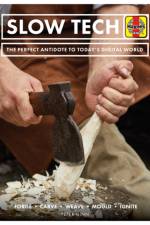
Highly readable and hugely practical this book is a valuable guide to creating something useful as you discover the art of slow technology. Create steam, weave cloth, purify water, make salt, bake bread, distil perfume, dye cloth, puddle clay and in doing so reconnect with your own practical and creative abilities.
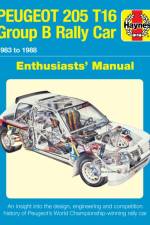
The 205 T16 is the legendary Group B turbocharged four-wheel-drive rally car used by Peugeot to win 16 World Championship rallies between 1984 and 1986, and World Championship doubles in 1985 and 1986. This manual chronicles the design, anatomy, operation and rally record of the 205 T16, with input from many of the drivers and engineers involved.
Traces the history and development of the American bicycle, observing its critical role in the fight for gender equality. The bicycle radically changed the face of fashion, health, and even morality and propriety in America. This thorough history traces the sweeping social advances made by women in relation to the development of the bicycle.
In a mid-life moment, Paul Morison travels from America to England to discover his mother's roots. A chance encounter and uncanny resemblance leads him to agree to assume the identity of a famous singer for a while. But it's not just the unnerving attentions of the adoring public that he must deal with.
After a spur-of-the-moment day out with his boss' daughter in celebration of his 21st birthday, Polycarp Jarvis decides to quit his Bristol-based junior government worker job. Newly emboldened, he embarks on an erratic, engaging and not always strictly legal course through life. But what kind of person will he be by the end?
Best known for founding international haulier, Trans UK, Bob Carter was involved in the ground-breaking changes occurring in British transport of the 60s and 70s. Beginning in the army where he witnessed nuclear testing on Christmas Island in the 1950s, he went on to be a driver, office worker and finally company owner.
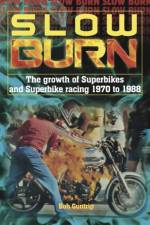
Slow Burn tells how the big names of the motorcycle industry used superbike racing to test their street bike designs. The book features the biggest riders: Wayne Gardner, Mick Doohan, Wayne Rainey, Kevin Schwantz and Eddie Lawson, who started out on big, unruly superbikes, and learned how to powerslide their way around the world's toughest tracks.
Network Greater Manchester chronicles the historic, diverse, busy railway and tram systems that serve 493 square miles of North West England. Ongoing changes to operations, rolling stock and infrastructure since the 1970's are illustrated with high-quality, previously unpublished colour images.
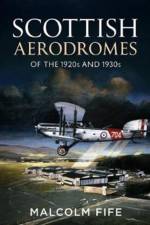
A history of aviation in Scotland in the 1920s and 1930s related through its airfields and landing grounds. All aspects of flying are covered including seaplane operations and gliding. There is also a chapter on aerodromes that were planned for a number of towns but never built. All the topics are illustrated with numerous photographs and plans.
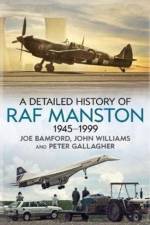
After the War Manston became a Transport Command staging post. Between 1950 and 1958 Manston was under the control of the USAAF. The 60s were dominated by aircraft using the Foam Landing system which became operational in 1964. Until it closed in 1999 RAF Manston remained an important front-line station with a long history going back to 1916.
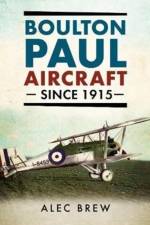
Boulton Paul has been one of the great innovators of British aviation. They built more Camels than Sopwiths, the first all-steel airframe, the largest aircraft ever built in Britain, the first with a power-operated gun turret, the famous Defiant, the first single-engine turboprop, and are now world leaders in power control units and fly-by-wire.
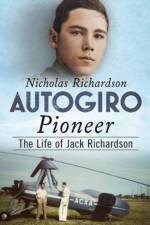
'Autogiro Pioneer' is an account of the life of Jack Richardson (1899-1987), based on his memoirs, edited by his son. In the 1930s he worked for Juan de la Cierva, the inventor of the Autogiro. He was the first person to obtain a commercial pilot's licence as an Autogiro pilot, and later the first fully-trained helicopter pilot in the British Army.
A fresh assessment of five of the most compelling unresolved aviation mysteries
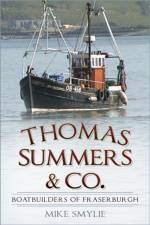
The first history of a well-known and prolific Scottish boatbuilder
Abonner på vårt nyhetsbrev og få rabatter og inspirasjon til din neste leseopplevelse.
Ved å abonnere godtar du vår personvernerklæring.