


Gjør som tusenvis av andre bokelskere
Abonner på vårt nyhetsbrev og få rabatter og inspirasjon til din neste leseopplevelse.
Ved å abonnere godtar du vår personvernerklæring.Du kan når som helst melde deg av våre nyhetsbrev.

Terror by Rail is a must-read, featuring the tell-all true story of the unknown facts surrounding Amtrak 188, what could have happened that day, and why readers and their loved ones should be aware and educated in rail safety.
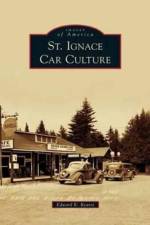
St. Ignace hosted its first car show in 1976 as part of the bicentennial celebration. Over the years, the annual gathering has grown into one of the largest collector-vehicle events in the country. This lakeside community overlooking the mighty Mackinac Bridge and historic Mackinac Island boasts a spectacular waterfront--the perfect backdrop for a stunning array of eye-catching vehicles. In the early years, media referred to this show as "dessert." As the numbers of participants and attendees grew, it became known as the "main course." For teenagers growing up in the 1950s it was all new--cruisin', drive-ins, drag strips, the country's intense love affair with the automobile, and the birth of rock 'n roll. Over 34 years, the St. Ignace Car Show has brought hundreds of automotive legends to town, and car-show traffic set crossing records on the Mackinac Bridge that are unlikely ever to be broken. So fire up the hot rod and cruise back to a simpler time . . . all these cars and still no traffic light!
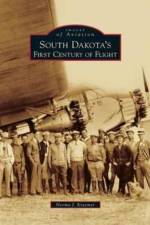
The first aircraft heavier than air took to the skies in South Dakota in 1911. Since that time, pilots, mechanics, and dreamers have used aviation in innovative ways to shrink the large distances between the prairies and the mountains of the state. The start of the U.S. Space Program began at the Stratobowl in the 1930s and evolved into today's modern hot air balloons. People have used aircraft, not only for transportation, but also for controlling varmints, from grasshoppers to coyotes. Firefighters routinely use aircraft to put out forest fires, and many a tourist has seen Mount Rushmore from a helicopter. South Dakota has also served the military since World War II with the major bombers of the U.S. Air Force's arsenal. Perhaps best of all, South Dakotans enjoy flying for pure enjoyment.
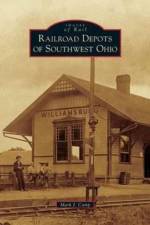
Springfield was the original destination of the two oldest railroad companies to lay rails in Ohio, the Mad River and Lake Erie Railroad and the Little Miami Railroad. This would form the first rail link between Lake Erie and the Ohio River. Other routes became more important as rails eventually spread like spokes of a wheel from Cincinnati, and connections were made to Akron, Chicago, Cleveland, Columbus, Dayton, Indianapolis, Lexington, Louisville, Marietta, Pittsburgh, St. Louis, and Toledo as well as many other cities by the late 1800s. Hundreds of depots were erected to serve train travelers, ranging from the smallest shelter to the standard combined passenger-freight building to the major city passenger terminal. Cincinnati, Dayton, and Springfield became railroad centers, and towns like Blanchester, Hamilton, Loveland, Middletown, Morrow, Wilmington, and Xenia, served by more than one line, became busy transfer points. With the decline of rail passenger service, depots became unnecessary--many were demolished. Railroad Depots of Southwest Ohio presents a pictorial look at a sampling of these grand structures when they were in their prime.
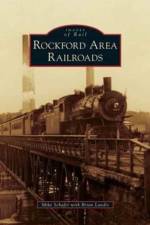
Railroads were key to Rockford's rise as a thriving manufacturing and commercial center. With an area population of over 200,000 residents and a reputation for manufactured goods, Rockford had a critical need for railroads into the bust years of the 1970s. Eventually four railroads rose to prominence in Rockford, all of them Class 1 carriers: the Chicago and North Western; Chicago, Burlington and Quincy; the Chicago, Milwaukee, St. Paul and Pacific (the Milwaukee Road); and Illinois Central. For nearly a century, these four roads--all of them esteemed Midwestern railroads--carried the bulk of freight and passengers arriving and departing Rockford, Davis Junction, and Loves Park by rail. Two other smaller railways, the Chicago, Milwaukee and Gary and the Rockford and Interurban, also played a part in Rockford's railroad history and are spotlighted in this volume.
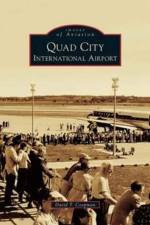
In 1922, three men were so captivated with flying they leased 30 acres of cow pasture south of Moline to serve as a landing field. Other early aviators and barnstormers began using Franing Field, and it soon became known as Moline Airport. The field hosted the Ford Reliability Tour four times, served as part of the original New York to Dallas airmail route, had passenger service as early as 1927, became one of Illinois's largest Works Progress Administration projects, weathered financial struggles and a battle with neighboring Davenport, Iowa, over which community would possess the area's commercial airport, and has enjoyed constant growth and updates for both airline and general aviation traffic. This collection of historical photographs and images will present the people, planes, events, and development of that former pastureland into today's modern Quad City International Airport, the third largest airport for passenger traffic in the state of Illinois.
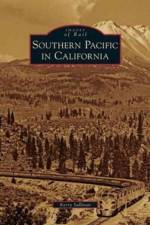
The Southern Pacific Railroad is California's railroad. As the Central Pacific, it bored and blasted its way east from Sacramento, across the towering High Sierra, meeting with the Union Pacific at Promontory, Utah, completing the Transcontinental Railroad in 1869, and profoundly changing the growing United States. By the early 20th century, the Southern Pacific was a rail colossus, stretching from San Francisco Bay to the Gulf of Mexico. Yet the Southern Pacific remained essentially Californian. Its rail lines gave muscle to the lovely California coast, the fertile San Joaquin and Imperial Valleys, and the timber industry of the north coast. Yet for all its might and majesty, for many Californians the Southern Pacific was a smaller, more intimate part of the fabric of their daily lives.
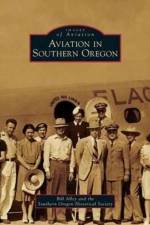
Medford, Oregon, pioneered aviation in Southern Oregon and has long enjoyed a reputation for being an air-minded city. When the City of Medford built Newell Barber Field in 1920, it established the first municipally owned airfield in the state. In 1926, Pacific Air Transport selected Medford as a station for the West Coast airmail route. While Portland's airmail service was located across the river at Vancouver's Pearson Field in Washington, Medford's Newell Barber Field was Oregon's only airmail stop. The 1920s secured Medford's position as a leader in the growth of both civil and commercial aviation. When technology rendered the original field obsolete, the voters handily approved a new, state-of-the-art field that has continued to expand and grow into a major international airport and free trade zone, capable of accommodating some of the world's largest aircrafts.
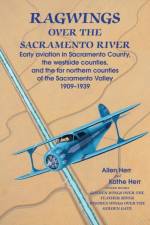
Historical accounts of the first successful flight in California's capital city and other notable Northern California flights that followed over three decades, the courageous aviators, and development of long forgotten airports from which they flew. Among them is the story of aviatrix Blanche Stuart Scott's 1912 flights and Sac Muni female pilots twenty years later. Included is the first accurate history of early ag-flying in the north state revolutionizing the farmers. Part of a three-book series of Northern California's early aviation history.
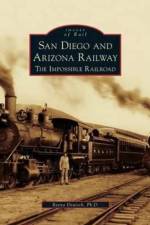
"With the cooperation of the Pacific Southwest Railway Museum Association."
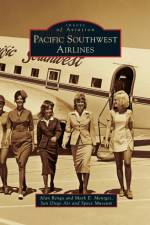
With its low fares and friendly service, Pacific Southwest Airlines (PSA) was one of the most successful regional airlines in American history. Its distinctive orange, red, and white planes, complete with a beaming smile were immediately recognizable to those living on the West Coast. The airline was also known for employing beautiful and sociable flight attendants. Kenny Friedkin, the founder of PSA, started in 1949 with one leased DC-3 and expanded his fleet to serve millions of passengers each year. Although PSA is no longer in operation, its successful business model of low-priced, efficient service was copied by other airlines and today is considered the norm. In addition, former PSA employees still gather annually to relive the camaraderie they experienced as being a part of one of the most unique airlines of all time.
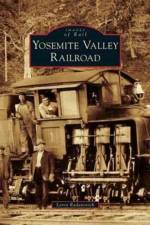
The Yosemite Valley Railroad was constructed as a badly needed conveyance to Yosemite Valley in the days before the automobile. Visitation to Yosemite had been small, and the federal government wished to introduce the new park system to the public. A railroad through the Merced River Canyon from Merced was the answer to the challenging terrain. Thousands of acres of virgin timber forest and other natural resources along the way supported the building and operation of this rail line. From l906 until World War II, timber, gold, barium, limestone, freight, and visitors rode the rails to Yosemite National Park on this line.
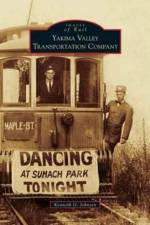
The National Register of Historic Places lists the Yakima Valley Transportation Company (YVT) as the last intact early 20th century electric interurban railroad in America. From its beginning in 1907, the YVT was no quitter, surviving a takeover by the Union Pacific, large financial losses as the last trolley railroad in Washington state, attempts at dieselization, and a concerted effort to put the company in its grave. Thanks to the efforts of local preservationists, YVT trolleys are still in operation. The railroad and its infrastructure never changed. What is seen today is what was built 100 years ago--a living slice of history. Images of Rail: Yakima Valley Transportation Company is the most authoritative chronicle of the famous YVT yet compiled.
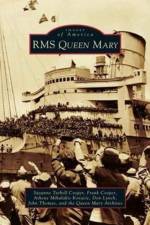
Launched in an era when speed and grandeur went hand in hand, the RMS Queen Mary is the last survivor of the golden age of ocean liners. From the time of her maiden voyage in 1936, passengers crossed the North Atlantic cocooned in luxury. Movie stars, tycoons, politicians, and royalty shared a ship with everyday people, for whom this was a once-in-a-lifetime experience. During World War II, the Queen Mary ferried countless soldiers safely across the sea and, at war's end, carried their brides and babies home to America. Refurbished and polished to her previous glory, the Queen Mary continued to carry passengers until her final voyage to Long Beach in 1967. The RMS Queen Mary now serves as a floating hotel and tourist attraction, a living testament to her glamorous history, a generous showcase of art, and a magnificent example of a time when oceans could be crossed in both comfort and beauty.
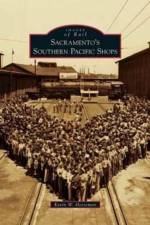
In 1862, the Central Pacific Railroad was founded and began building eastward from Sacramento as part of the transcontinental railroad. This required a shop capable of keeping the railroad's equipment in running order. So in 1867, in the swamps just north of town, the Sacramento shops were born. For well more than a century, this massive complex kept the Central Pacific and its corporate successor, the Southern Pacific, operating smoothly. For many decades, the shops were the largest employer in the Sacramento area, employing carpenters, painters, draftsmen, boilermakers, electricians, clerks, upholsterers, and others. The shops' forces designed, built, and maintained locomotives, freight and passenger cars, and other railroading equipment. The complex closed in 1999. Most of the area, popularly known as the Railyards, is set for redevelopment. The California State Railroad Museum handles maintenance and restoration of its collection in two of the shops buildings and plans to develop a Railroad Technology Museum on the site.
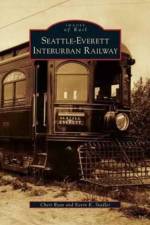
Operating for 29 years, the Seattle-Everett Interurban Trolley traveled over 29 miles of rail carrying passengers and freight to nearly 30 stops along its line. In the first decade of the 1900s, the Boston electrical engineering firm of Stone and Webster had designs of building an interurban electric railway system that would eventually connect Olympia, Washington, and Vancouver, British Columbia. To start the Seattle north link, they purchased the existing Seattle-Everett Interurban Railway Company from Fred E. Sander in 1908. On the early morning of April 30, 1910, the Seattle-Everett Interurban Trolley made its inaugural run, starting in Everett. On February 20, 1939, the trolley left Everett for its last run.
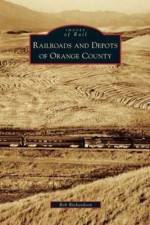
Railroads have been a part of Orange County for over 130 years. The great names of American railroading--Atchison, Topeka, and Santa Fe; Southern Pacific; and Union Pacific--were firmly planted here by the early 1920s and linked with the largest interurban rail system in the United States, the famed Pacific Electric Railway. Thousands of people passed through Orange County's depots during the 1940s as they came to serve at the many military bases located here during World War II. The names have since changed, and yet the county's rail scene remains as dynamic as ever, with Amtrak, Metrolink, and amusement park railroads joining the Burlington Northern Santa Fe and Union Pacific. Railroad depots, new and old, are located across Orange County and continue on both as vital parts of history and the future of transportation for America's fifth most populated county.
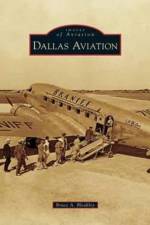
Since Otto Brodie's airplane flight at Fair Park in 1910, the city of Dallas has seen over 100 years of rich and diverse aviation activity. Many of those years were spent on a long and complex road to a consolidated airport for the Dallas-Fort Worth area, an impasse finally resolved with the dedication of Dallas-Fort Worth Regional Airport in 1974. Central to Dallas aviation history is Love Field, established as a military base in 1917. A waypoint for famous flights such as the first round-the-world flight in 1924, a venue for colorful characters like barnstormer and bootlegger "Slats" Rodgers, and the site of World War II's largest Air Transport Command base--Love Field was all this and more. Although no longer the region's primary commercial airfield, Love Field remains a major aviation facility as the home of Southwest Airlines and several internationally recognized business aircraft operations.
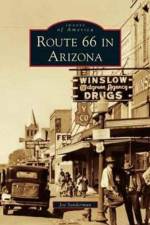
Route 66 in Arizona is a ribbon tying together spectacular natural attractions such as the Grand Canyon, the Petrified Forest, the Painted Desert, and the Meteor Crater. There were plenty of man-made diversions along the way, too. Roadside businesses used Native American and Western imagery to lure travelers to fill up their gas tank, grab a meal, or spend the night. Roadside signs featured shapely cowgirls and big black jackrabbits, or warned of killer snakes and prehistoric monsters. Between wails of "Are we there yet?" children pleaded to stay at motels shaped like wigwams, explore the Apache Death Cave, or pick up a rubber tomahawk at a trading post.
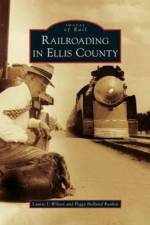
The Houston and Texas Central Railroad made its way through eastern Ellis County in 1871 and played an integral role in the founding of Ennis, Texas. Eventually, that community would be designated as a division point along the line. The H&TC's arrival also brought growth and prosperity to other communities on the line, including Alma, Garrett, Palmer, and Ferris. It made its mark on the area. The Waxahachie Tap was the vision of many of that city's earliest settlers. Within a decade of its completion in September 1879, Waxahachie's cotton production multiplied and the town would soon earn the moniker "Where Cotton Is King." Midlothian and its surrounding communities would never be the same once connected by the Chicago, Texas, and Mexican Central Railroad in 1881. The rail had arrived and Ellis County was transformed.
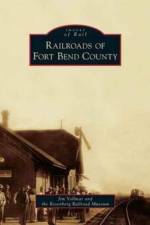
Fort Bend County was formed in the early 1820s by members of Stephen F. Austin's "Old 300." Traders utilized barges and steamboats running along the Brazos River to transport cotton and other products from the lower Brazos Valley to the port at Galveston. In 1853, railroads began to play a larger role in the county's transportation system. Transportation facilities were greatly improved when the first railroad in Texas, the Buffalo, Brazos, and Colorado Railroad Company, completed its first 20-mile segment to Stafford's Point in Fort Bend County from Harrisburg (Houston). As many as eight separate railroads were chartered and operated in Fort Bend County by 1900. Today some of the names have changed but most of the original rail lines remain in operation. The Union Pacific, Burlington Northern Santa Fe, and Kansas City Southern rail companies have picked up where their predecessors left off and are keeping Fort Bend County one of the busiest and fastest-growing counties in the United States.
Abonner på vårt nyhetsbrev og få rabatter og inspirasjon til din neste leseopplevelse.
Ved å abonnere godtar du vår personvernerklæring.