










Gjør som tusenvis av andre bokelskere
Abonner på vårt nyhetsbrev og få rabatter og inspirasjon til din neste leseopplevelse.
Ved å abonnere godtar du vår personvernerklæring.Du kan når som helst melde deg av våre nyhetsbrev.

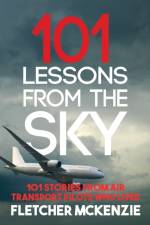
The companion book to the best selling General Aviation book '81 Lessons From The Sky'.101 Lessons From The Sky focusses on commercial and air transport aviation, and is possible thanks to the pilots who shared their failings and misadventures. Read 101 true stories from pilots with hundreds and thousands of hours of flight experience between them. The flight simulator has nothing on learning from actual stories straight from the pilots who lived to tell the tale. 101 stories about the Boeing 737, and the 767, the CRJ-700, the Beech 99, the ERJ-145, the Airbus A320, a Learjet and a Gulfstream, the CRJ-200, the Airbus A319, and others.Read about airline checklists, complacency, maintenance issues, poor load planning, limitations with dipsticks and fatigue, and dozens more easy-to-read true accounts of potentially catastrophic incidents narrowly averted. And the lessons the pilots, the cabin crew, the ground crew, the engineers, and the co-pilots learnt. And the airline companies and air cargo companies...Learn from the experiences of other pilots so you don't become another air incident statistic. An essential read for all current and future pilots. And remember, safety first. Order now.
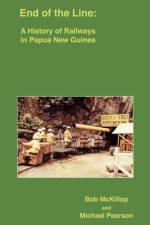
Papua New Guinea is commonly thought to be a land without railways. At the very least, railways do not immediately come to mind as a topic for historical research in Papua New Guinea. Nevertheless, we set out to document and record something of the history of local railways in 1971, initially as individual projects. Inevitably, our interest in the topic of railways brought us together and we have been working collaboratively on our research since 1980.At first the task was to identify and document the railways which have operated in Papua New Guinea. To our surprise, we now have records of some 150 railway lines, many of them small hand-pushed operations from a jetty to a copra store or around a sawmill. Others have yielded fascinating stories of more substantial enterprises and the endeavours of colonial pioneers at the frontier.As we brought the material together we began to realise that we not only had stories about small railway operations around the country, but we also had the basis for a new look at some basic elements of Papua New Guinea economic history. Through the story of railways we had identified important themes which helped us learn about the economic conditions of today from the experience of the past.
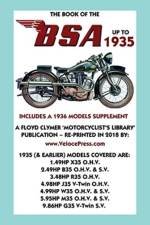
Originally published under the title The Book of the BSA, by F.J. Camm this book is one of The Motorcyclist's Library series published in the USA by Floyd Clymer by arrangement with the original publishers, Pitman Ltd. of London, England.
This re-print of the 'Book of the BSA Three Wheeler' by Harold Jelley includes maintenance, repair and overhaul information for both the air cooled OHV twin Cylinder Standard, DeLuxe, Family De Luxe & Special Sports and the water cooled SV four Cylinder Standard and Deluxe BSA Three Wheelers.
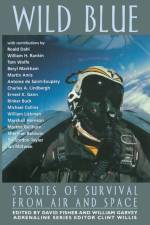
"Wild Blue" collects the most gripping accounts of what some would call the greatest achievement of the century: controlled flight. From the soaring to the harrowing, these accounts put readers right in the cockpit. 16 photos.
The history of the north-shore railways provides a case study in the complexities of industrial development in nineteenth-century Quebec. As this study so clearly demonstrates, Quebec paid a high price in making its contribution to linking Canada by steel a mari usque ad mare.
"Oil is the problem. Cars are the solution." Those two simple sentences by the authors of Zoom define the scope of their illuminating and important book, an examination of a transformation in business and culture that is occurring before our eyes. We are living in the midst of a Great Awakening. People are seeking environmentally-sound alternatives to gas guzzlers. Detroit's reign is over. Oil companies, despite their billion-dollar profits, could be on the brink of extinction if they don't adapt. And citizens, all too aware that these industries have lobbied politicians into gridlock over energy policy, are mobilizing to support leaders who advocate new policies. In Zoom, Iain Carson and Vijay V. Vaitheeswaran, award-winning correspondents for The Economist, show why and how geopolitical and economic forces are compelling the linked industries of oil and autos to change as never before. Drawing on years of industry research-including dozens of interviews with motor and energy executives, top policymakers, and latter-day Fords and Edisons-Carson and Vaitheeswaran explain: -How Toyota became the world's largest automaker through innovation and superior performance. -Why American politicians have, for decades failed to address our energy issues and global warming-and how grassroots movements, along with individual entrepreneurs, innovators, and outsiders, are making real reform possible.-How these Green revolutionaries are creating new products powered by hydrogen, electricity, bio-fuels, and digital technology.As political leaders debate our energy, environmental and economic future, Zoom offers a lucid and visionary portrait of what that future could be. Anyone planning to vote will find compelling truth in its assertions and conclusions.
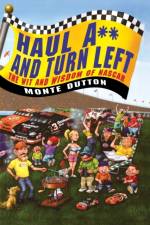
Straight from the mouths of the world's most famous drivers and entertainers comes a unique and hilarious volume of NASCARUs wit and wisdom. Contributors include Kyle Petty, Jeff Foxworthy, Jeff Gordon, and many others. Illustrations throughout.
The latest X Prize type contest is announced, but only among the rich. It promises to push automotive technology into the next era. To make the race more interesting a laser is installed on each car that can disable an opponent. What the billionaires planned as fun, becomes a life and death struggle to win or die trying.
It is based on the Automated Vehicles Symposium 2015 which was jointly organized by the Association of Unmanned Vehicle Systems International (AUVSI) and the Transportation Research Board (TRB) in Ann Arbor, Michigan, in July 2015.
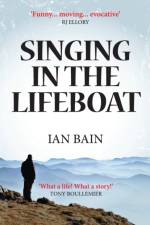
Former Fleet Street journalist Ian Bain tells an exceptionally readable and often very funny tale of a life full of adventure and memorable characters. A traumatic childhood led to alcoholism. It nearly killed him, but after drying out he founded one of the most successful PR companies in the Middle East. A story of a man searching for himself.
No power, and batteries used up? This book and a Mark 3 sextant lets you carry on. It's a short book, mostly tables. You can read it in an hour or two, master the sights in less than that, and find your position the next time you see the sun at noon.
This expansive reference on the use of clean energy technologies in the aviation industry focuses on tools and solutions for maximizing the energy efficiency of aircrafts, airports, and other auxiliary components of air transit.
REVISED AND UPDATED 2021¿A senior citizen's look at the new, fascinating and ever-changing world of rollators, adult bikes, mobile scooters, recumbent trikes, and electric bikes. The book's message is simple and direct: get up, get out, and keep on rolling down life's highway. Smart advice for seniors and physically disabled people who want to stay mobile and active. - - - This book chronicles one senior citizen's struggle to maintain his independence when he is forced, at age 85, to stop driving. In an effort to maintain his mobility and avoid the ever-threatening wheelchair, he plunges into a search for something -- be it a rollator, recumbent bike or adult trike -- to substitute for the loss of his beloved car, his personal chariot. He knows that bikes of all sorts are used for transportation and commuting in Europe. Why not here? In the process he creates a beginner's guide to alternatives to driving for the millions of folks worldwide faced with the problem of slowly declining health. What choices are before them if they wish to keep moving, stay active and remain in close communion with nature and the great outdoors?
"50 Tales of Flight" captures the magic of flight from the ground up.The flight deck door has now been opened, taking the reader aloft in everything from biplanes to Boeings. From the alarm clock buzzing to begin the airline pilot's day to the threatening sound of silence when a light aircraft's engine fails and all that lies beneath are trees and cliffs.There are moments of pulse-racing tension and others of humorous relief to be found amongst this collection of stories from Owen Zupp's thirty years of flying. Interspersed are tales of combat veterans of wars passed and of those who lost their lives pursuing their passion in times of peace.For anyone interested in the world amongst the clouds, or just intrigued by this amazing field of endeavour, there is much to be seen through these "50 Tales of Flight".
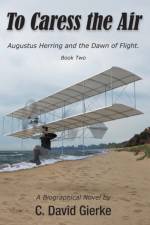
To Caress the Air continues to track the progress of Augustus Herring as he prepares to fly his revolutionary powered aeroplane. Gus, still optimistic after a series of nagging technical setbacks, believes that the upcoming trials will be the "next great step" in unraveling the problems of manned, heavier-than-air flight. A series of tragic events pushed Herring to the brink of financial ruin. Moving his family back East, Gus helps to establish the Aero Club of America, where he met Glenn H. Curtiss. The men agree to combine their talents and form the Herring-Curtiss Company, to capitalize on the fledgling U.S. aeroplane market. A combination of greed and ego on Curtiss's part soon drives the business into bankruptcy. Freed from the partnership with Herring, Curtiss and his new companies make millions from the sale of aeroplanes to foreign countries during WWI - machines that incorporated many of Herring's innovations. At war's end, Gus files suit in the New York State Supreme Court, where he petitions for fair compensation on behalf of the investors in the Herring-Curtiss Company. As the trial continues, witnesses for the plaintiff offer in-depth accounts of the Curtiss swindle, present sordid tales regarding the Wright brothers, and describe events involving aviation's master manipulator… Octave Chanute. Herring's wealthy benefactor, Matthias Arnot, and Professor Langley's principal engineer, Charles Manley, add vigor to an already impressive collection of aeronautical personalities who appear throughout Book 2. Acrimony in the courtroom takes a violent turn as hostility builds between the litigants and their respective lawyers; the stress ravages Herring's health and puts the legal proceedings at risk. Will a mistrial be declared? How will the judge rule? An extraordinary, genuine quirk of fate leads to the final resolution of the case. Herring's story stirs controversy and breathes new life into the debate about "Who really invented the aeroplane?"
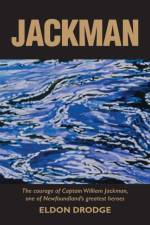
At the height of the devastating October gale of 1867, a small schooner, the Sea Clipper, was driven onto a reef at Spotted Island, Labrador. Already seriously damaged from an earlier collision with another schooner, she was being pounded to pieces by the raging sea. The twenty-seven people on board faced certain doom. Miraculously, a young sea-captain from Renews, William Jackman, appeared on the scene to undertake one of the most amazing sea rescues ever known, and to earn for himself the Silver Medal of the Royal Humane Society of London and the undying adulation of the people of Newfoundland and Labrador.
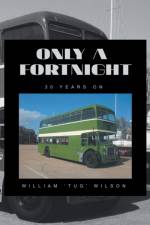
A story of life on the buses in Bristol in the sixties, seventies, eighties, and nineties. The amusing story is the viewpoint of a driver who progressed to inspector, working long hours and enjoying the variety of meeting the public. He observed many changes and fiddles over the thirty years in the job.
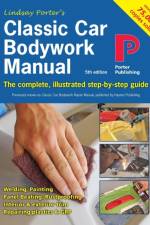
CLASSIC CAR BODYWORK MANUALLike any true classic, the book itself has been 'rebuilt' - and it's now better than ever!Lindsay Porter first wrote a workshop manual on car bodywork repairs for Haynes back in the '80s. Since that time, many techniques have changed, though even more remain the same. And now, Lindsay has republished the book, updated and revised where necessary as:Classic Car Bodywork Manual: The complete, illustrated step-by-step guideThis 306 page book is bigger and better than before, now with 1,450 B&W illustrations and printed on better quality paper. It covers every aspect of classic car bodywork repair and it's got every job you could need, including:• Mig and gas welding and brazing - latest techniques • Plasma and gas cutting • Stripping and preparing for paint • Masking and spraying techniques, including advice on which paint to use.• Panel beating • Rust treatment and proofing • Galvanising explained • Windscreens, window winders and door locks • Mixing and applying body fillers• Lead-loading• Repairing and rebuilding glassfibre bodywork• Making simple badges and fitting decals• Polishing and cleaning …and much more besides. This is a tremendous compendium of experience from Lindsay. Forty years of photos and facts from the '80s to the present day. Traditional skills to latest techniques. Panel beating and lead loading to plasma cutting and modern spray paints. All in Step-by-Step detail. PRICE ONLY £15.95 Lindsay Porter started writing how-to and easily understandable technical stuff way back in 1980 in Practical Classics magazine and now has more than 50 books and over 1,000 magazine articles to his credit, with more to come. "There's plenty of life in the old dog yet!" he says.This extensively revised and updated book was previously published, before additions and improvements, as Classic Car Bodywork Repair Manual by Haynes Publishing.
Everybody has a theory about the Titanic. But what actually happened? Here, in one fascinating volume, are detailed answers to the questions that have been asked time and again about that fateful night. Is it true there weren't enough lifeboats on board? Did the lookouts really miss spotting the iceberg because they weren't given binoculars? Did owner Ismay order the ship to go faster than normal because he was trying to break the transatlantic speed record? Should we believe the band went down playing Nearer, My God, To Thee?
Professor of Aviation Science and Flight Attendant Program Director, Carlin Laviolet Clarke, introduces you to the dream job of a Flight Attendant and what it takes to get hired in this competitive position. Get an insiders view about the Airline Industry, Crew Lifestyle, and Flight Attendant Job Outlook. Carlin explains the Flight Attendant Qualities that all airlines look for and outlines what todays airlines expect in an applicant, including furthered qualifications & skills in Customer Service, Professionalism, and more. Additionally, Carlin teaches you how to prepare an Airline Resume & Application that will get noticed and has included over 50 real questions asked in airline interviews. Take a peek into her classroom and get ready to get fired up as you learn from the best in the industry how to prepare yourself for success!
For many years a small book, FOGS AND CLOUDS by the same author, has occupied a unique position because it combined a simple-though thoroughly scientific-explanation of the various phenomena with a very complete collection of cloud photographs, finely reproduced. FOGS, CLOUDS, AND AVIATION again includes all this information (brought up to date) which is fascinating to the amateur as it is vital to the thousands who are teaching and studying meteorology for the benefit of aviation, commercial as well as military. In addition, the aviator find the significance of each type of fog and cloud noted-how thin, extensive, high and opaque they are, whether they provide fair or excellent one-way screens in combat, what the danger of icing is, etc. It is a distinct "Fog and Cloud" book, well rounded and detailed, not an unproportioned chapter from a general work on meteorology. It is indispensable to anyone interested in or dependent on sound interpretation of local weather signs and local weather forecasts.
The author aims to give 'a concise and practical presentation of the processes involved in designing a modern yacht'.... so that the operations can be grasped by men without a technical education. ...There are chapters on displacement, the lateral plane, design, stability, ballast, the sail plan, and construction. A thirty-foot cruiser is made the basis of the calculations, and a number of tables is appended to abridge the figuring of important details. The book is illustrated with numerous outline drawings and plates.The book will undoubtedly be serviceable to everyone interested in the subject and possessed of enough technical knowledge to understand it.-N. Y. Times
Abonner på vårt nyhetsbrev og få rabatter og inspirasjon til din neste leseopplevelse.
Ved å abonnere godtar du vår personvernerklæring.