














Gjør som tusenvis av andre bokelskere
Abonner på vårt nyhetsbrev og få rabatter og inspirasjon til din neste leseopplevelse.
Ved å abonnere godtar du vår personvernerklæring.Du kan når som helst melde deg av våre nyhetsbrev.

Founded in the 1830's, the Baldwin Locomotive Works rapidly became America's premier builder of steam engines for railway use. In the aftermath of the Civil War, a new standard emerged on the railroads of 4' 8.5". Yet this gauge proved prohibitively expensive in mountainous regionsand for mining operations. Thus a narrow gaugestandard was developed of three feet or, in Canada, three and one-half feet. This catalog shows Baldwin's full line of narrow gauge locomotives, and includes technical specifications and other data. This version of the book has been slightly enlarged and reformatted for readability, but care has been taken to preserve the integrity of the text.
The Ottawa Car Manufacturing Co. produced trolley cars, electric locomotives and motor coaches for nearly every transit system in Canada. Founded in the 1890s by Thomas Ahearn, Warren Soper and William Wylie, Ottawa produced streetcars, electric locomotives and self-propelled interurban cars under license from J.G. Brill. The Great Depression destroyed Ottawa Car's traction and railroad business and except for a few cars built in the late 1940's for the Ottawa Electric Railway, not a single piece of rolling stock was built by the company after 1933. The company continued selling transit buses through 1947, after which time it was sold and liquidated. This catalog, which dates from the early 1930's, shows the Ottawa Car Company at its zenith. It includes data on 52-passenger Peter Witt cars, 30-passenger Birney Safety Cars, gas-powered Brills, locomotives, buses, and detailed diagrams of various car components. This catalog has been slightly enlarged and reformatted for readability, but care has been taken to preserve the integrity of the text.
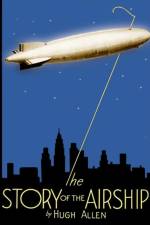
Originally published by the Goodyear Tire and Rubber Co. as a promotional, The Story of the Airship chronicles the history and development of these great "silver cruisers of the sky." Filled with photos and authoritative text, the book springs from an era when dirigibles, balloons andblimps competed against airplanes for public attention. Sadly, incidents such as those that befell the USS Macon, USS Akron and Hindenburg caused the public to lose faith in these craft. Published prior to these terrible tragedies, this book chronicles some of the stunning achievements made in the 10s, 20's and 30s. It can be seen as a testament to a golden era, when the sky was full of promise, and serene voyages of wonder were routinely made in these amazing aircraft.
Visionary designer Jack Northrop built a series of experimental "flying wing" aircraft both before and during WWII. The YB-35, a propeller-driven strategic bomber featuring the drag-reducing all-wing design, offered enormous payload capacity and terrific endurance. The YB-49, a turbojet-powered variant built on the YB-35 airframe, captured the imagination of the world when it first flew in 1947. It quickly set both an unofficial endurance record and a trans-continental speed record, and appeared poised for rapidly deployment. Tragically, in June of 1948 one of two flying prototypes was destroyed when the aircraft suffered a structural failure during a test flight. In hearings after the accident, evidence was presented that in certain circumstances the aircraft could become unstable and exceed the capabilities of a human pilot. Shortly thereafter the YB-49 program was canceled. Jack Northrop's radical design was shelved for a generation, only to re-emerge in the form of the B-2 Spirit Stealth bomber - an aircraft that relies upon computerized controls to ensure stability in flight. Originally printed by Northrop Aircraft in 1948, this YB-49 Flying Wing pilot's flight manual taught pilots everything they needed to know before entering the cockpit. Originally classified "Restricted", the manual was declassified long ago and is here reprinted in book form. This affordable facsimile has been slightly reformatted. Care has been taken however to preserve the integrity of the text.
Designed by Gloster's brilliant chief engineer George Carter, the Meteor was Britain's first operational jet, and the first such aircraft in Allied inventory. The Meteor was an outgrowth of intensive r&d work conducted by Frank Whittle, inventor of the turbojet in 1929. The Meteor featured an all-metal fuselage, and straight wings with mid-mounted engine pods. The F1 version could achieve a speed of 417 mph at 10,000 feet, and entered service in June 1944. During WWII, it flew primarily as an interceptor against German V-1 "buzz bombs". Australian pilots flew it in combat during the Korean War, and Israel employed it during the Suez Crisis. The Meteor, in one variant form or another, remained in active service as a recon and training aircraft into the 1970s. Originally printed by Gloster and the Royal Air Force in 1957, this Mark 7 handbook provides a fascinating glimpse inside the cockpit of the trainer version of the Meteor. Originally confidential military information, this manual was declassified long ago and is here reprinted in book form.
The legendary H-4 Hercules was designed and built by the Hughes Aircraft Company. Intended to defeat the German U-boat threat, the plane was intended to be a super transport that could ferry 750 troops from the USA to Europe, and serve as an aerial ambulance on the return flight. Owing to wartime restrictions on the use of aluminum, the prototype Hercules was built using laminated birch wood. Although company CEO Howard Hughes hated it, the name "Spruce Goose" was coined for the plane and it stuck. The Hercules would be the largest flying boat ever built, and one of history's largest and most expensive planes. Many questioned the practicality of the aircraft, and after the war ended and the project was roundly criticized as a boondoggle. To silence the critics, Howard Hughes decided to prove the plane could fly. On November 2, 1947 he and a crew of 21 conducted a series of taxi tests with the plane. On the last test, the plane became airborne for a brief time and flew just under two miles at an altitude of roughly 70 feet. It would never fly again, but Hughes had silenced his critics. This Hughes Flying Boat Manual was originally prepared for the U.S. Government's War Department, and made available through the Freedom of Information Act. It provides an overview of this massive plane's design and operation for the pilot and flight crew, and puts you right in the cockpit of one of history's great planes. Please note, because this document originated from an archival copy, legibility can vary.
An outgrowth of the Third Reich's Emergency Fighter Program, the Messerschmitt P.1101 jet fighter featured a radical new design in which the sweep of the wing could be altered in flight. Captured by the Allies before it could be completed, the P.1101 was sent to the United States where it inspired the Bell X-5. Produced by a team led by Robert J. Wood, the X-5 was a true "variable geometry" platform that offered in-flight wing positions of 20°, 40°, and 60°. Far more complex than the P.1101, the X-5 utilized a jackscrew to move the wings along horizontal rails, and disc brakes to lock the wing into position. Two X-5s were built, and almost 200 flights were made between 1951 and 1955. While the design initially showed promise, the X-5 had a tendency to go into a violent spin. That characteristic led to the crash of the second prototype in 1953, an accident that killed test pilot Capt. Ray Popson. The accident led to the cancellation of tentative plans to mass produce a modified design as a low-cost tactical fighter. Still, the X-5 successfully demonstrated the utility of a swept-wing design, and inspired a whole generation of aircraft from the F-111 and F-14 to the B-1. Originally produced in 1951 by the United States Air Force and NACA, this flight operating handbook was originally restricted. It has now been declassified and made available in its entirety. Please note, due to the age and rarity of this manual, some images may be substandard.
Ob Tuning, unrealistische Erwartungshaltung oder dreiste Geldforderungen mit Drohungen, Peter Lustig hat einen informativen, ehrlichen, ja manchmal sarkastischen Stil Fragen der Kunden, auch für Laien gut verständlich, zu beantworten. Neben dem Unterhaltungswert dieser vielfach von Emotionen geprägten Briefwechsel enthält dieses erste Buch des Autors auch viele bisher wenig bekannte Informationen über Technik, Gesetzgebung und Tipps zu Formulierungen bei Korrespondenzfällen rund ums Auto. Nicht nur ausgesprochene Autofans, sondern alle Leserinnen und Leser finden damit eine kurzweilige Lektüre.
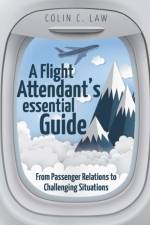
A Flight Attendant's Essential Guide is written for airline executives, university lecturers who specialize in the airline industry, and for undergraduate students preparing for a career as a flight attendant. Those working in passenger, aircraft, airport as well as general communications at an airport or aircraft can benefit from this book though a thorough understanding the responsibilities of flight attendants. This textbook focuses on the passenger aspect of in-flight service, including operations and communication skills, and how flight attendants interact with passengers at each phase of a flight.
There is something extremely troubling about driving down the freeway only to realize that the "check engine light" on your vehicle has come on. Especially for most women.Written with women in mind, this guide to troubleshooting common auto problems is written by a former female diesel mechanic with the U.S. Air Force who enjoys outperforming boys on their turf. Destiny Simon walks you through how to:understand the language of auto mechanics and auto parts staff;make simple repairs on your air conditioning system;overcome the fear of trying to fix vehicle problems on your own; andprolong the life of your vehicle with preventative maintenance.Simon also explains how to read dashboard gauges, the difference between synthetic and traditional oil, how to take care of a vehicle's transmission, and more.Working with mechanics and auto parts staff and doing simple repairs yourself should not be stressful or hard. Find out how to troubleshoot common vehicle problems and prolong the life of your ride with the tips and insights in Auto Education for Bling-Bling Women.
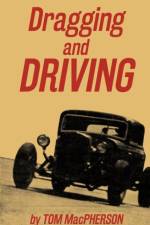
Do you know these special words used by the dragging and driving experts? DASH-POT: device on some stock cars that keeps the throttle from closing fast and stalling engine when foot is liften suddenly off gas pedal. JOHNSON ROD: there is no such rod. When you can't figure out what is wrong with your engine, you blame it on the Johnson rod. SQUIRREL: the type who guns his motor and burns his tires. VELOCITY STACKS: air funnels on carburetors which eliminate cleaners.
This vintage book contains a fascinating history of the steamboat, exploring its origin and evolution with a particular focus on American steamboats. A steamboat is a boat that that relies on steam power for its propulsion, usually powered by driving propellers or paddlewheels. With the increasing reliability of steam power, it was also eventually applied to larger vessels that travelled on the ocean. This volume is highly recommended for those with an interest in steam power and especially the history and evolution of boat design. Contents include: "A History of Steam Navigation", "Early Experiments", "Wm. Symington's Steam-tug, 1902", "Robert Fulton's French Experiments, 1802-4", "Inland Steam Navigation, United States, 1809", "The Savannah, the First Ocean Steamship, 1819", "David Napier Enterprise, 1819-22", "First Steamboats on the Missouri", "The Robert Fulton Steamship between New Orleans and New York", etc. Many vintage books such as this are increasingly scarce and expensive. It is with this in mind that we are republishing this volume now in an affordable, modern, high-quality edition complete with the original text and artwork.
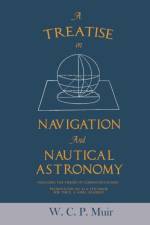
Celestial navigation refers to the ancient practice of position fixing that allows a navigator to move through a space without the need of estimated calculations to know what their position is. Usually, the Sun is used for this, but the Moon, Polaris, a planet, or one of the numerous other navigational stars can also be used. First published in 1918, this book contains a detailed guide to using astronomy for navigation at sea, originally published as a textbook to be used by the U. S. Naval Academy. Contents include: "General Definitions", "List of Navigational Instruments and Books Usually Provided", "The Compass", "The Earth's Magnetism and the Elements of that Magnetism", "Finding the Deviation by Reciprocal Bearings, by Bearings of a Distant Object, by Time Azimuths, by Ranges", "Mathematical Theory of Compass Deviations", etc. Many vintage books such as this are increasingly scarce and expensive. It is with this in mind that we are republishing this volume now in an affordable, modern, high-quality edition complete with the original text and artwork.
Scottish psychologist Doctor Kelly Ann Darrow loves her career and has never permitted her feelings to impact her professionalism, but when biker Cameron Iss arrives in her care, she finds herself inexplicably drawn to the unconscious man. His tattoos and the mysterious circumstances of his arrival intrigue her to distraction. Cameron Iss awakes in a strange country with no memory of how he got there and no knowledge of who he is. He takes out his frustrations at his amnesia on the sexy doctor enlisted with helping him unlock his mind. A mutual chemistry forms between them, and Kelly is plagued with guilt at her unethical and inappropriate attraction to this, her most perplexing patient yet. As his memories begin to return and they discover more about his violent past and his connection with a motorcycle club in America, the element of danger both excites and frightens Kelly, and nothing can douse the erotic fire he has sparked inside her. Will Kelly risk her career, her reputation, and all she is for the man who has ignited a dormant passion within her or will his returning memories steal him away for good?
Experience what it's like to spend over 4,000 miles riding across the country with the Women's Freedom Ride in Kickstands Up!Divorced, in her fifties and tired of watching other people living interesting lives on television, Paula O'Kray wanted something new to write about. With only a few hours experience on long motorcycle rides, Paula made the decision to ride across the United States with the Women's Freedom Ride. She found what she was looking for, and a whole lot more.Join Paula on a two-week odyssey as she rides across the states experiencing highs and lows, fun times and danger, sharing laughter, gifts, advice, and deep emotions in a learning curve that's more like a cliff. You'll also learn about the important bonds of new friendships and the support of readers, friends and family that allowed Paula to sustain the harsh conditions she faced on and off the road. You'll feel like you're right there with her on the bike!
Abonner på vårt nyhetsbrev og få rabatter og inspirasjon til din neste leseopplevelse.
Ved å abonnere godtar du vår personvernerklæring.