







Gjør som tusenvis av andre bokelskere
Abonner på vårt nyhetsbrev og få rabatter og inspirasjon til din neste leseopplevelse.
Ved å abonnere godtar du vår personvernerklæring.Du kan når som helst melde deg av våre nyhetsbrev.

Discover the key to RVing full time as a senior citizenHave you ever had the longing to explore the great outdoors and to live in an RV?Do you want a versatile method of living that will also enable you to visit your children and grandchildren comfortably and hassle-free, whenever you want?Are you in a dire financial situation that might force you to live in an RV in your old age?I, George Lee will share the secrets of living in an RV full time as a senior citizen.That's right folks. The RV lifestyle is a possibility for you and there are many others, like me, that live the same way. It is a very enjoyable lifestyle, that is also well suited for seniors.In this book you will discover:• The most cost-effective way to buy an RV, which can save you more than $1000• 1 key budgeting tip to help you manage RV living on a small income• How RVing can help you pay off debt and avoid it completely• The #1 state to register your RV• 4 different ways to receive mail, when you are living in an RV• How to choose the best healthcare options and plans as an RVing senior and retiree• The secrets of finding urgent healthcare on the road• 10 different working opportunities for senior citizens to earn money on the roadThis guide has an emphasis on covering the most fundamental aspects for elderly RVers. These are the topics of getting started RVing hassle-free, managing your health on the road and earning/ budgeting your money to suit your RV lifestyle.Whether you want to experience the dream of living on the road or simply want to downsize into an RV, this guide is here to help you achieve your plans with minimum hassle.Here are the answers to some questions you might have about this book:Q: Can I afford to do this?A: As a senior RVer myself, I understand that there will be budget constraints on people due to them being retired.Q: I've been retired for a few years now, will I be able to go on an RVing journey?A: Yes, it is possible for you to do this. Many senior citizens just like you are living this lifestyle right now.There is a large community of senior RVers, and there are even special campgrounds for seniors. It will be easy for you to start.Q: Will I be able to keep in touch with my family while on the road?A: RV living is one of the easiest and most versatile ways to constantly keep in touch with your friends and family. It gives you the freedom to go wherever you want and to visit anybody that you want.Therefore I have included a guide to budgeting inside this book that can be applied to a wide range of budgets. This way you can make the best out of your income to live the RV lifestyle.Give yourself the freedom to live wherever you want and to do whatever you want.Every day that you delay, is another day that you waste without starting a new and liberating chapter of your life.Take action and buy this book now!
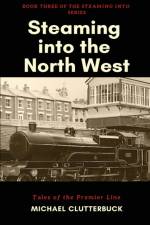
Originally published as a collection of ten short stories, Steaming into the North West has been developed to include a further ten tales from the rails.Now taking us back to the very early days of steam, in the 1800s, these stories about life on the great Premier Line provide an entertaining and often thought-provoking insight into the tough, physical work that being an engineman entailed.With early engines having no cab to speak of, life on the rails was open to all the elements. Danger came readily, from signalmen not paying attention to travelling through long, polluted tunnels.Nevertheless, work on the railways was something to be proud of and, as with all the books in Michael Clutterbuck's Steaming Into series, this is clearly portrayed through the cast of characters, attention to detail, and more than a little humour.
Illustrated drawings of trucks, big rigs and motorcycles. Intricate drawings in detailed pen and ink illustrations.
A modification of the 2-ton "deuce", the DUKW amphibious truck was designed in 1942 by a team that included a British sailor, an American yacht builder and an MIT engineer. Powered by a GMC Straight-6, 270 cubic inch engine, the DUKW's six drive wheels allowed it to move up to 50 mph on the road and at roughly 6 mph in water. It was the first vehicle ever designed to allow tire pressure to be adjusted from inside the cab, allowing it to operate easily and efficiently on sand, rock, gravel and paved roads. The vehicle lacked armor, but one in every four produced came equipped with a machine gun ring mount. Overall, the DUKW weighed 6.5 short tons empty and could carry 2.5 short tons or twelve soldiers. The DUKW's career in combat was unique, being used to ferry supplies and men from ship to shore, and operating in flooded environments. It was used in landings in the Pacific and European Theaters, including at D-Day, and many were also used during the Korean War at Inchon. Incidentally, the term "DUKW" is not a military term, but rather an acronym coined by General Motors. "D" stood for the year it was designed, 1942. "U" stood for "Utility", "K" for front wheel drive, and "W" for two powered rear axles. Over 21,000 DUKWs were built during WWII. Some remain in use today as amphibious tour buses. Originally created in 1945, this War Department technical manual contains a full description of the DUKW and shows how to operate and maintain it. Originally restricted, this manual was declassified long ago and is here reprinted in book form. Care has been taken to preserve the integrity of the text.
For almost a century, The Baldwin Locomotive Works was the world's premiere builder of steam locomotives. The years after WWII saw the company founder, as wartime production restrictions and poor planning delayed the company's entry into the diesel market. Baldwin eventually did produce a number of diesel locomotives, including transfer and cab units and the four-axle 750 and 1,000 hp switchers and road switchers profiled in this booklet. By 1956, the company could no longer compete with its rivals, and it stopped producing locomotives altogether. Its dissolution was a sad end for a once-mighty company, and symbolized the end of the steam era. Originally published by Baldwin in 1949, this historic operator's manual was standard issue for the engineers operating four-axle 750 and 1,000 hp switchers and road switchers. Within its pages you'll find information about the engine's fuel oil, air, and electrical systems as well as basic operating information and troubleshooting procedures.
Built by Piper Aircraft between 1937 and 1947, the J-3 Cub is one of history's best-known civil aircraft. The Cub's simplicity and affordability led to the plane being dubbed the "Model T of the Sky", and ushered in a new era in aviation in which anyone could fly. Just over 20,000 Cubs were built, including an enormous number as trainer aircraft during WWII. Originally printed in 1945, when all Piper production was restricted for military use, this "How to Fly a Piper Cub" booklet looked ahead to the post-war era. Printed in color with rich illustrations, spec sheets and b&w photos, it's a nostalgic piece of history that no Piper fan can resist.
Equipped with a more powerful engine and a larger, heavier airframe than primary training aircraft, Vultee's BT-13 served an important role as a secondary-level trainer for the U.S. Army Air Corps and Navy. Designed by Vultee's Richard Palmer, the BT-13 was adapted from plans fora fighter aircraft. The prototype first flew in May of 1939, and by August 300 were on order. By war's end over 11,500 BT-13s and variants would be produced, more than any other trainer. Featuring a cantilever low-wing and fixed landing gear, the BT-13 appeared to be of all-metal construction, but it actually relied on fabric-covered control surfaces. The powerplant was a Pratt & Whitney R-985 radial engine capable of producing 450hp. Nicknamed the "Vultee Vibrator" because of its tendency to shake as it approached stall speed, the BT-13 was nevertheless beloved by student pilots and instructors alike. Several variants of the aircraft were built including the BT-13A and BT-15 equipped with alternate powerplants. Roughly 2,000 BT-13As and BT-13Bs were transferred to the Navy, which designated them as SNV-1 and SNV-2 respectively. Originally created by the U.S. Army Air Force Training Command, this Basic Training Student Manual features the BT-13A throughout, and describes all aspects of flight training circa 1944. It puts you right in the cockpit of one of history's great planes.
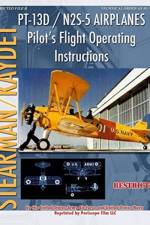
Stearman's Kaydet biplane first flew in 1934, and in 1935 the U.S. Navy acquired the aircraft for use as trainers. Within a year the U.S. Army Air Corps followed suit, buying 26 of the airplanes from Boeing (which had acquired Stearman in 1934). Designated the "Model 75", the Army dubbed the two-seat plane the PT-13 and the Navy the NS. With war looming on the horizon, the need for trainers became pronounced; orders in 1940 topped 3500 airframes. By conflict's end in 1945, over 10,000 were built. The Kaydets were simple, rugged aircraft equipped with a radial engine, fabric-covered wooden wings, and single-leg landing gear. The fuselage, which was also fabric-covered, was built of steel. Most models were equipped with either the Lycoming R-680 (PT-13) or Continental R-670 (PT-17) engine, producing a top speed of 124 mph with a 505-mile range. A 255-hp model received the designation PT-18. The Kaydet continued to fly in the post-WWII era as a trainer and cropduster. Approximately 1,000 "Stearmans" are still in service in the present day. Originally created during WWII by the U.S. Navy and Army Air Forces, this pilot manual was standard issue to all cadets. It is reproduced here in its entirety.
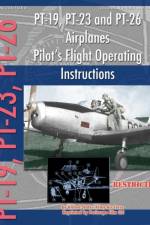
As late as 1940, the majority of Army Air Force trainees received flight lessons in biplanes such as the PT-17. The advent of high-performance combataircraft led the USAAF to seek a new plane for primary training, that would better simulate a modern fighter aircraft. Fairchild's M62, a two-seat monoplane with a higher stalling speedthat required careful flying, beat out 17 competitors for the job. Designated PT-19, the rugged aircraft was produced in large quantities beginning in 1941. The basic model was equipped with a 200 hp Ranger engine, had a 36'wingspan, and could achieve 132 mph in flight. Variants included the PT-19B designed for instrument training, the PT-23 which had a 220 hp Continental radial power-plant, and the PT-26 "Cornell" which featured an enclosed cockpit. By war's end PT-19s and variants were built by Fairchild, Aeronca, Howard, St. Louis Aircraft Corp. and Fleet Aircraft. The USAAF accepted over 6000 PT-19s and variants, and Cornells flew forthe air forces of Canada, Norway, Brazil, Ecuador, Chile and many other nations. This pilot's flight handbook dates from 1943, and covers the PT-19, PT-19A, PT-19B, PT-23 and PT-26. Originally restricted, it was declassified long ago, and is reprinted here in its entirety.
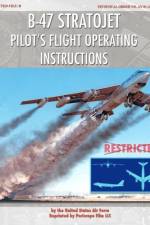
The U.S. Air Force's first all-jet strategic bomber, the swept-wing Boeing B-47 Stratojet had a range of 3,500 nautical miles and a payload capacity of 20,000 pounds. It served as the mainstay of Strategic Air Command in the 1950s into the mid 1960s. The B-47 was an outgrowth of WWII research and development efforts, and the prototype aircraft first flew in December of 1947. The unique six-jet design featured twin engine pods on the wing near the fuselage, and one outboard. It also incorporated an elegant bicycle-type landing gear with two-wheel struts on the forward and aft fuselage and outrigger wheels. In 1956, over 1300 B-47s and 250 RB-47s were on alert. It was the high water mark for the aircraft, which was fully supplanted by the B-52 by 1967. This B-47 pilot's flight operating manual was originally produced by the USAF. It has been slightly reformatted but is reproduced here in its entirety. It provides a fascinating view inside the cockpit of one of history's great planes.
The Boeing B-29 was one of the most sophisticated aircraft of WWII. It featured many innovations including guns that could be fired by remote control and pressurized crew compartments. It was also the heaviest production plane of the war with terrific range and bomb carrying capabilities. Carrying a crew of ten, the Superfortress devastated Japan in a series of gigantic raids in 1944-45. In the end it would be the B-29s "Enola Gay" and "Bock's Car" that dropped the atomic bombs and effectively ended the conflict. Originally printed by the United States Army Air Force in January of 1944, this B-29 Bomber Pilot's Flight Operating Manual taught pilots everything they needed to know about the "Superfort" Originally classified "Restricted", the manual was declassified long ago and is here reprinted in book form. This affordable facsimile has been reformatted, and color images appear as black and white. Care has been taken however to preserve the integrity of the text.
In April of 1942, sixteen American bombers raided Tokyo, Japan. The planes were land-based B-25 Mitchells, audaciously launched from the aircraft carrier USS Hornet, and led by Lt. Col. Jimmy Doolittle. The attack caused little actual damage, but dealt a serious blow to Japanese morale. More importantly, it gave hope to an American public still reeling from Pearl Harbor. Manufactured by North American Aviation, the B-25 saw service in every theatre of WWII. It carried a crew of six, and could loft a maximum load of 6,000 pounds of bombs. Originally printed by North American and the U.S. Army Air Force, this Flight Operating Handbook taught pilots everything they needed to know before entering the cockpit. Classified "Restricted", the manual was declassified and is here reprinted in book form. This affordable facsimile has been slightly reformatted. Care has been taken however to preserve the integrity of the text.
Flown by the American Volunteer Group in China known as the "Flying Tigers", the P-40 Warhawk earned a reputation for its toughness in combat. Facing odds of 6 to 1 in most combat situations, AVG pilots relied on their skill, daring and their aircraft's superior diving speed to achieve victory. By war's end the Tigers had destroyed more than 1200 Japanese planes, with another 700 listed as probables. Their own losses came to 573 aircraft. Originally printed by the U.S. Army Air Force for pilots transitioning to the P-40, this flight manual contains detailed information about one of history's great planes. Originally classified as "restricted", the manual was declassified long ago and is here reprinted in book form. Some color images appear in black and white, and some pages have been slightly reformatted. Care has been taken however to preserve the integrity of the text.
Abonner på vårt nyhetsbrev og få rabatter og inspirasjon til din neste leseopplevelse.
Ved å abonnere godtar du vår personvernerklæring.