












Gjør som tusenvis av andre bokelskere
Abonner på vårt nyhetsbrev og få rabatter og inspirasjon til din neste leseopplevelse.
Ved å abonnere godtar du vår personvernerklæring.Du kan når som helst melde deg av våre nyhetsbrev.

With a foreword by the Duke of Edinburgh, who travelled to the Antarctic on the maiden voyage of the RRS John Biscoe, this is the story of the ship's final voyage in the Antarctic to the British Antarctic Survey bases. Illustrated with fabulous photographs by the author, the book tells the story of the most famous of British Antarctic Survey vessels, the RRS John Biscoe.
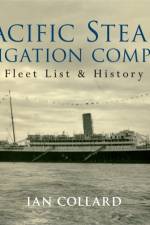
Founded in 1838 in Liverpool, the Pacific Steam Navigation Company was the first to operate steamships in the Pacific and primarily traded from the UK to the Pacific coasts of South America. Its most famous ships included the Reina del Pacifico and the Reina del Mar. With a line of notable firsts to its name, the Pacific Steam Navigation Company name had disappeared by 1984, part of the rationalization of Furness Withy Group. In 1990, Furness Withy itself was sold to Hamburg Sud, another line which had operated on the South Atlantic and Pacific routes. Many in Liverpool and in South and Central America, from Panama to Tierra del Fuego have fond memories of the Pacific Steam Navigation Company and this history and fleet list will bring back memories of those vessels of the line, both deep sea and coastal, which once operated on the South American run.
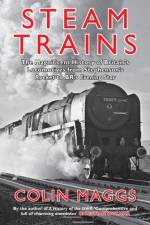
Most people are under a misapprehension: the Rocket was not the first steam engine. Quite a few were built before it, but Stephenson's engine was the first successful steam locomotive. Colin Maggs tells the story of the steam engine, from pre-Rocket days, to British Railways building the Evening Star - the last main-line locomotive - through to the preservation movement and the new-build locomotives of extinct classes such as the Tornado. In this comprehensive history, Colin Maggs, one of the country's foremost railway historians, tells of other, perhaps less well-known aspects of the history of steam in Great Britain. The first railway lines, the activities of the early railway companies, the design and manufacture of faster and faster engines and the lives of the men and women who drove the industry. These and other fascinating stories from the age of steam are all revealed in this accessible book, illustrated with over 150 photographs and period ephemera, many in colour.
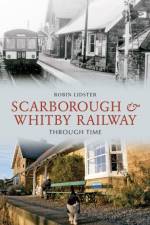
The Scarborough & Whitby Railway was opened in July 1885. The 21 miles of line traversed the picturesque coast between the two towns for eighty years. There were eight stations on the line all with their own distinctive character and serving the different needs of visitors and local people. All of the stations along the route are fully illustrated in this book. The line closed in March 1965 and the buildings were later sold into private ownership and have been put to a variety of uses since that time. The aim of this book is to illustrate the changes both before and after closure along this fascinating and historical railway which has become a very popular walking and cycling trail that passes through the spectacular and varied scenery of the North Yorkshire coast.
The four years between 1914 and 1918 saw an incredible growth in air power. Beginning with the flimsy early aircraft, seemingly held together just by string and fabric, the author paints a picture of a bygone era when nobody knew quite what could be achieved, or how aircraft could be used. From the early years of the First World War, when men took to the air without guns or parachutes, to the final stage of the conflict when huge, streamlined aeroplane fleets dominated the skies, this is a story of courage and dedication, of sudden death and public adulation for men whose life expectancy was measured in days rather than months. This book is an account of how the development of aerial warfare took place. Drawing on much original material such as diaries and combat reports, it charts the growth of air power during the war years. Original photographs and artwork add to the atmosphere of the time. The air aces, the castor oil and the sudden rattle of machine guns, the Dawn Patrol, Zeppelin raids, dogfights and acts of supreme valour are all here. In wonderful detail, this is the story of how brave young airmen took their lives in their hands and pushed the boundaries of courage and knowledge to the limits.
The beautiful hills of Northumberland hide the secrets of our almost forgotten recent history. The sites of many air crashes are difficult lt to locate, even though these aircraft and sometimes their crew met their fate relatively recently. Chris Davies has located and visited over 140 crash sites. In this thoroughly researched book, he discusses the location, history and stories surrounding thirty of these, from the German aircraft that crashed in the Cheviots during the Second World War to NATO exercises that went horribly wrong in the 1980s. Chris's work in discovering where these men lost their lives has provided closure for many families. Simon Colverson, the nephew of P/O M. W. Rivers, commented in a note of thanks, 'The sight of nearly forty people grouped together on a remote and windy hillside nearly seventy years after the crash to commemorate my uncle was deeply moving, and I will cherish the memory for the rest of my life.' Chris provides a major piece in the jigsaw of aviation history in Northumberland, recording an important part of Northumberland's local history that might otherwise have been lost in the mists of time.
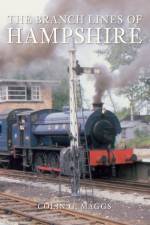
Although the majority of the branch lines of Hampshire belonged to the London & South Western Railway, they offered the opportunity to see a wide variety of locomotives serving both rural outposts and the major towns. In the west of the county, the railway centred on Bournemouth and Southampton. During the Second World War these two lines rose to become important arteries carrying men and materials to south coast ports. Other branches are interesting for their industrial and freight services; among them Fawley, which served and continues to serve the oil refinery. Some branches in Hampshire were shut down even before the Second World War: Ringwood - Bournemouth closed to all traffic in 1935, while the Hurstbourne - Fullerton line closed to passengers in 1931. Freight lingered on until 1956. Many branches have been lifted, but a few remain open today. A casualty in 1914 was the branch to the Royal Pier, Southampton, which connected with the Isle of Wight ferry, while another route to the Isle of Wight, that via Lymington, was eventually electrified. All the Hampshire branches are described in detail, and the text includes lively anecdotes of the trains and those who served them. The book is illustrated with over 150 black and white photographs, maps and ephemera, which capture the history of the county's railways.
The branch lines of Devon were particularly numerous and this volume covers those in Exeter and the south, central and eastern parts of the county. They were also tremendously varied, ranging from the Exmouth branch - the nearest the West Country comes to a suburban-type commuter line - and the Paignton line - which for many years of its life could be considered a main line - to the Culm Valley Light Railway - a curiosity which required locomotives with a short wheelbase and slight axle loading and restrictions on rolling stock. Many Devon branch lines were originally built to the broad gauge and were later narrowed, some lasting until its very end in May 1892. Three of the branches in the area have been preserved: part of the Seaton line is now a narrow-gauge electric tramway, the South Devon Railway at Buckfastleigh is a typical GWR branch, and the Dartmouth Steam Railway is capable of taking main-line engines. In this absorbing and well-researched book, Colin G. Maggs has provided a marvellously wideranging view of over 160 years of rail travel in the county. Well illustrated with over 200 fascinating photographs, ephemera and maps, The Branch Lines of Devon Part One: Exeter, South, Central & East Devon will appeal not only to railway enthusiasts, but local historians as well.
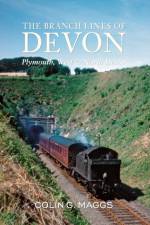
The branch lines of Devon were particularly numerous and this second volume on the county covers Plymouth, west and north Devon. They vary from the Turnchapel and Yealmpton commuter lines, to the Exeter and Barnstaple branch, which for many years of its life was a main line, becoming a branch line within the last forty years. One branch still open is the Plymouth to Gunnislake line, which remains because it offers the most direct route. Many of the branches have interesting histories. The Princetown branch was famous for being the highest station in England. The Torrington to Halwill Junction line began life as the 3-foot-gauge Marland Light Railway whose main purpose was to carry clay. In 1925, the line was rebuilt as a standard-gauge line and extended to become the North Devon & Cornwall Light Railway - the last major railway construction in the West of England. In this absorbing, entertaining and well-researched book, Colin G. Maggs, foremost railway historian, provides a marvellously wide-ranging view of over 170 years of rail travel. Profusely illustrated with over 200 fascinating photographs, maps and ephemera, this book will appeal not only to railway enthusiasts, but to local historians as well.
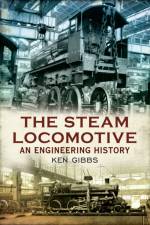
Books on railway history invariably start with the Stephenson's or with Richard Trevithick's locomotive of 1804., but the story begins much earlier with the development of steam engines for pumping out deep mines. Ken Gibbs, a retired engineer who served his apprenticeship in the Swindon Works of British Railways, takes a more practical approach to railway history, using its engineering developments to tell the story of the railways. From the first ideas to the development of better metals, manufacturing, technology in wheel casting, improved boilers and valve gears, his book is a refreshingly different approach to the plethora of picture books showing branch lines in days past. Ken's engineering background and love of railway technology gives us a book suited to the layman and engineer alike, explaining how each development made the railways better, faster or safer. It took over 150 years to develop the steam locomotive from a basic boiler on wheels weighing a couple of tons to the magnificent express passenger and freight locomotives weighing in excess of 100 tons and capable of speeds over 120mph. Read how the steam locomotive developed from those early days to the last days of steam.
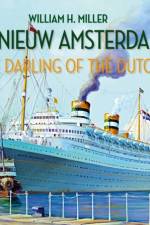
Entering service in 1938, the Nieuw Amsterdam was the Holland America Line flagship until the construction of the Rotterdam in the late 1950s. Her prewar life was short and she was used as a troopship during the Second World War, carrying many thousands of Allied troops to all corners of the world. Of 36,000 tons, she was the largest vessel built in Rotterdam and was launched by Queen Wilhelmina in April 1937. A perennial favourite of the Dutch and their finest Ship of State, Nieuw Amsterdam remained in Holland America Line service until 1974, the last ship to retain the Holland America Line's familiar green, yellow and white funnels. Despite boiler problems in 1967, she was refitted with US Navy-surplus boilers and sailed on, cruising, until withdrawn from service in 1974. Sailing to the breakers, the art deco 'Darling of the Dutch', as she was affectionately known, was broken up. Today, she still has a following, from those who sailed on her but also from those who have grown to appreciate the importance of the Nieuw Amsterdam in terms of ocean liner design.
This book describes the heritage and development of the entire Piper Cherokee family; its safety and ownership characteristics; internal and external details; and a range of special variants from STOL modifications and new engines to seaplanes and tailwheel conversions. The hugely successful Piper PA-28 was produced and sold as a direct competitor to the Cessna 172. Initially produced with a rectangular wing planform and fixed undercarriage, it was available with installed powers ranging from 140 to 235 hp. A retractable undercarriage resulted in the Arrow series. The closely related PA-32 Cherokee Six, Saratoga and Six X are larger high performance aircraft. Versions of the PA-32 fitted with retractable undercarriages are the Lance and the sophisticated Saratoga II series.
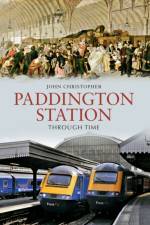
Paddington is part of a hub of underground stations and is home to the world's most famous bear, named after the station. Revel in the selection of images of Paddington Through Time and see how Brunel's masterpiece has stood the test of time. 'I am going to design, in a great hurry, and I believe to build, a station after my own fancy,' stated Isambard Kingdom Brunel in 1851. That station, the second to bear the name 'Paddington', was to be another Brunel masterpiece. His delight at the prospect of building a replacement and permanent station at Paddington is self-evident. The new station was to be built on the plot of land just south of the Bishop's Road Bridge, defined by Eastbourne Terrace and Praed Street on two sides, and by London Street and the canal on the northeast side. Because the new station would be located almost entirely within a cutting, there would be no grand exterior, and instead, Brunel impressed with his immense roof of iron and glass. Paddington is currently in the middle of a huge redevelopment that has seen it retain much of its nineteenth-century design, but updated to suit traffic flows of today. Millions pass through the station weekly, both to the West and Wales and to Heathrow on the Heathrow Express.
Intended for the British Army as a contract for a small, Jeep-like, air-portable vehicle, the Mini Moke was a failure at this role and found its success as a fun, sunshine toy, equally at home on the beach as in the mountains. Over 50,000 were made and many still survive. Its most famous role was in the cult TV series The Prisoner. The Moke was manufactured in Britain and later in Australia and Portugal. With Mini running gear, the Moke is a practical and fun vehicle for the summer and this explains why so many survive to the present day. John Christopher tells the story of the Moke and the varieties from development to preservation.
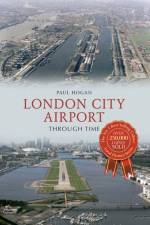
London City Airport was first conceived as part of the regeneration of the London Docklands at the start of the 1980s, a pilot landing on Heron Quays to prove it could be done. Built on the land between the Royal Albert Dock and the King George V Dock, the first commercial services operated from the airport in October 1987, with the official opening by HM The Queen in November of that year. The airport has since become a hub for people travelling to and from the City of London.Now in its twenty-fifth anniversary year, London City Airport is still looking at expansion, with a plan for phased expansion up to 2030. In London City Airport Through Time, Paul Hogan uses a wonderful collection of photographs as well as interviews with some of those involved, to show the development of this key player in British aviation.
The London & Birmingham Railway was the major project of its day, designed by Robert Stephenson, one of the great railway pioneers, who also supervised its construction and its opening in 1837. Camden Goods Station became the goods terminus and Euston Station the passenger terminus. For a few years trains were hauled by rope from Euston up the incline to Camden before the intensification of both passenger and goods services rendered such technology obsolete. The L&BR left a strong footprint on the landscape from Euston to Camden Town and Primrose Hill. The story moves from rapid economic growth to eventual decline and then to the recent regeneration. The historic features around the former Goods station are providing the basis of Camden's transformation through its markets, media, music, food and entertainment into a global brand. Join Peter Darley in unfolding this story from 1837 to the present day.
Alexander Korda's 1936 film The Shape of Things to Come predicted the nightmare of aerial bombing against London. Even as the storm clouds gathered, the government was woefully slow in protecting its civilian population. Some problems, such as the risk of a catastrophic flooding of the Underground network, were anticipated. But the enduring image of the Blitz is the spontaneous and community driven adoption of the Underground stations as a safe refuge from the raids. As Londoners settled into their new subterranean routine the government ordered the construction of purpose-built deep shelters and most of these still exist. In London Underground at War Nick Cooper examines the impact of the war on the running of the Tube and the plans to protect the system. He asks what life was like for those who sought safety underground and pays tribute to the many 'shelterers' who lost their lives in the raids. These cruel, wanton, indiscriminate bombings of London are, of course, a part of Hitler's invasion plans. He hopes, by killing large numbers of civilians, and women and children, that he will terrorize and cow the people of this mighty imperial city - Little does he know the spirit of the British nation, or the tough fibre of the Londoners. Winston Churchill, radio broadcast, Sept 1940
The Glasgow District Subway was second only to London in the UK and was the third underground system to be built anywhere in the world. Originally operated as a cable railway, it was later electrified and the rolling stock from that era continued to be used until it had become very dilapidated by the 1970s. Following a major modernization programme, it is now operated by the Strathclyde Partnership for Transport and the distinctive orange livery of the modern trains has earned it the local nickname of 'the clockwork orange'. The Underground is laid out as a circular route with the trains on a continuous loop, clockwise and anti-clockwise on the twin lines. It serves fifteen stations on both sides of the Clyde including the ornate St Enoch. Keith Anderson traces the development of Glasgow's Subway from its construction through its modification and up to the present day.
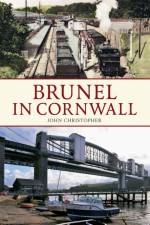
Cornwall marks the extreme south-western extent of Brunel's kingdom and the county is surprisingly rich in his works. The Royal Albert Bridge, which crosses the River Tamar, connected the broad gauge network with the Cornwall and West Cornwall railways - both engineered by Brunel - to take the trains coming from Paddington all the way to Penzance via a series of over sixty spectacular timber viaducts. The original viaducts have gone now, either modified or replaced over the years, but in many cases the masonry piers remain like rows of monolithic sentinels. As a result there is much to reward the Brunel hunter, including the branch line to Falmouth and many surviving examples of his railway stations. There are other connections, literally. His Great Eastern steamship was the first vessel to successfully lay a telegraphic cable to connect Europe and the USA - a story told at the historic Porthcurno Telegraph Museum near Land's End. John Christopher, an acknowledged expert on Brunel, takes us on a tour of Cornwall, exploring his works in the county. This is the latest in a series of books which are about rediscovering Brunel's works in your area.
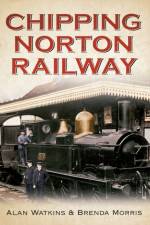
The Banbury & Cheltenham Direct Railway, which the Chipping Norton Railway is a part of, developed in several stages. The first section to open was the branch from Kingham to Chipping Norton on the Oxford, Worcester & Wolverhampton Railway in 1855. The section from Chipping Norton to King's Sutton (just south of Banbury on the Great Western Railway main line) was completed in 1881. The line ran through a number of stations, including Hook Norton, Bloxham, Adderbury and King's Sutton, before entering Banbury. In 1951, British Railways withdrew passenger services between Chipping Norton and King's Sutton. A landslide at Hook Norton in 1958 caused freight services to be halted between Hook Norton and Chipping Norton. Chipping Norton Railway is a fascinating account of the people who worked the line, those who rode it and those who remember it fondly still.
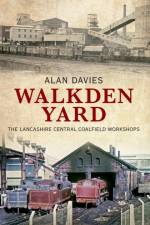
Located close to the Ellesmere Colliery, the Walkden Yard ultimately became the NCB Central Workshops for Lancashire. From here the workshops served the Bridgewater Trustees' collieries, providing engineering support as well as maintaining the numerous railway locomotives and the many hundreds of wagons that the company owned. Opened in 1878, Walkden Yard transferred to the National Coal Board upon nationalization after the Second World War and its importance grew as it served the other Lancashire collieries too. At Walkden there were a machine shop, joiners' shop, electricians' shop, paint shop, tinsmiths', locomotive repair shop, wagon sheds and wagon machine shop. The yard itself employed hundreds of men and boys but was closed in 1986 with the decline of the Lancashire coalfield. A housing estate now sits atop the site of the Walkden yard and it is hard to remember that the site once serviced the many locomotives that belonged to the NCB, or that the Coal Board and its predecessors operated many locomotives over their own lines as well as the railway company ones and that a huge industry was maintained at Walkden yard, repairing locomotives and rolling stock. In this book, Alan Davies tells the story of the Walkden yard and the locomotives of the Lancashire coalfield.
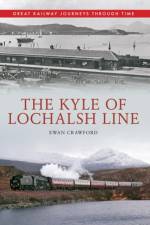
The Kyle of Lochalsh Line was opened in 1870 to connect the ferry terminus at Stromeferry on Scotland's west coast with Dingwall and Inverness on the east coast. It had been intended to reach Kyle of Lochalsh but the company ran out of money, and the Highland Railway would open an extension to the Kyle in 1897 to improve transport links for the fishing industry. At the time, the extension was mile for mile the most expensive railway ever built in Britain. The line passes through some of the most dramatic and beautiful scenery in Britain and although it was marked for closure by Doctor Beeching, its importance to the isolated communities it serves led to a reprieve and in 1980 it was featured by Michael Palin in Great Railway Journeys of the World. In this book, Ewan Crawford uses a mixture of contemporary and period images to bring the history of the line and its landscape to life.
The railway came to Peebles in July 1855. However, this small town in the Scottish Borders soon became the subject of a dispute between the North British Railway and the Caledonian Railway. The Peebles Railway, the first to reach the town, was taken over in 1876 by the North British. In 1855, however, the Symington, Biggar & Broughton Railway was authorised and, in 1861, formally absorbed by the Caledonian Railway. The North British responded with a new line from Peebles to Galashiels which blocked the Caledonian. In this book, Roy G. Perkins and Iain MacIntosh look at the two North British lines, from where the original Peebles Railway left the line south of Edinburgh to Galashiels, using a fascinating collection of modern and period photographs. Although the railways in the Borders were closed in the 1960s, sections of them are still in partial use as cycle paths and the new Borders Railway will also bring fresh life to parts.
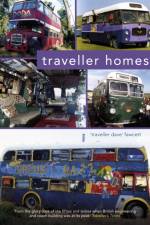
Living in a 1966 Albion Chieftain lorry, converted to a home, Traveller Dave has spent much of the past two decades in Europe, working on farms and travelling around, all the time taking photographs of the other interesting traveller homes he has seen. From mid-1980s Glastonbury to France and Portugal, all manner of vehicles are shown here, creatively converted to full-time homes. Making their homes from redundant buses and lorries, travellers have made a fantastic variety of one-off mobile homes using their own creativity and materials they have recycled or restored and Traveller Dave has managed to photograph and document these colourful vehicles from the early 1980s onwards. Inside the pages of Traveller Homes, Traveller Dave takes us on a journey through the years, showing us how this alternative lifestyle has created a multitude of unique vehicles, each tailored to its owner's personal style and taste. Be surprised and amazed at the variety, creativity and style to be found within.
Although there were many more Hawker Hurricanes than Supermarine Spitfires engaged in the epic conflict fought over southern England in the summer of 1940, the public's imagination was captured by the shapely and charismatic Spitfire. According to legend, however, the Hurricane executed far greater damage on the enemy than all other defenses combined, and was therefore the unsung hero of our 'Finest Hour'. New research, analysed and interpreted by Dilip Sarkar however, confirms that the Spitfire, although less in number, was in fact supreme, and destroyed an equal number of enemy machines to the more numerous Hurricane force. Featuring interviews with pilots who flew to war in both Spitfires and Hurricanes, and following a detailed analysis of combat reports and casualty records, Dilip Sarkar shatters the myth surrounding the Hurricane and argues that the Battle of Britain could have been won by Spitfires, but not Hurricanes, alone. A controversial thesis likely to provoke lively debate, the evidence presented by this retired police detective and expert aviation historian is nonetheless indisputable.
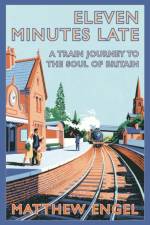
Britain gave railways to the world, yet its own network is the dearest (definitely) and the worst (probably) in Western Europe. Trains are deeply embedded in the national psyche and folklore - yet it is considered uncool to care about them. For Matthew Engel the railway system is the ultimate expression of Britishness. It represents all the nation's ingenuity, incompetence, nostalgia, corruption, humour, capacity for suffering and even sexual repression. To uncover its mysteries, Engel has travelled the system from Penzance to Thurso, exploring its history and talking to people from politicians to platform staff. Along the way Engel ('half-John Betjeman, half-Victor Meldrew') finds the most charmingly bizarre train in Britain, the most beautiful branch line, the rudest railwayman, and - after a quest lasting decades - an Individual Pot of Strawberry Jam. Eleven Minutes Late is both a polemic and a paean, and it is also very funny.
Palm oil is the quintessence of West Africa - it is complex, an acquired taste and reckoned to be rather unhealthy. Small chop is the addition of ingredients that make it palatable for European taste. From the unique perspective of working aboard merchant ships trading to the area, the author provides a viewpoint of the first 25 years of West African independence - it is simultaneously the story of the final years of many of the British Merchant Navy's liner trades where fortunes largely depended upon imperial routes. The author served in ships of three very different shipping companies, two British and one Nigerian, and from this unusual breadth of experience, a fascinating story of ships, their crews, their cargoes and the peoples from Senegal to Angola is told. The last of the famous surf ports, the navigation of the twisting waterways of the Niger Delta and the ascent of the great Congo River are vividly described. A colourful picture is painted of the astonishing variety of cargoes and how ships almost literally felt their way across treacherous mudbanks, picked their way through mangrove-bordered creeks with local pilots boarding from canoes. The reader also meets the local inhabitants who include hard-working men from the desert interior, their more wily brethren from the coastal regions, itinerant traders and plausible rogues, the cowed workers of Portuguese Angola and, above all, the famous Kroomen of Freetown who helped work the ships around this intriguing coast of crashing surf and foetid creeks. With the fortunes of the new nations faltering, the Palm Line ships are forced to find work in other trades. The author experiences daily life in Poland under martial law, later finding himself on voyages to Brazil, the Indian sub-continent and Australia aboard ships primarily designed for the West African ports. Told sympathetically, yet with a keen eye for the absurd and downright funny, this is a lively, informative story of ordinary people trying to make a living in a world where events, over which they have no control, change their lives irreversibly.
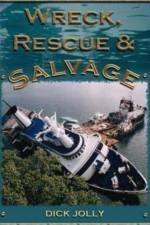
After joining the Australian Merchant Navy at the age of sixteen, Dick Jolly trained as an engineer before joining the Australian National Line as a cadet. After a four-year apprenticeship, he gradually gained promotion while travelling around the Australian coast. Fascinated by the world of commercial deep-sea tugs and salvage, his first real break came in Portsmouth in 1963 when he landed a job on RFA Typhoon. Relocating to Singapore and with a Foreign Going tugmaster's qualification under his belt, he went on to travel the oceans of the world, hauling derelict ships, dredgers, floating cranes and all manner of other craft. For four years he left the sea, trying to earn a living as an opal-miner in Andamooka in the Australian Outback where the vast majority of miners go bankrupt! It was an advert for the post of tugmaster in the Port of Eden which brought him to his senses, and he returned to the world of salvage. After further work in the Far East, his no-nonsense attitude was appreciated by the managing director of a new salvage company and the author was sent to Germany to purchase the company's tug, the Intergulf. Captain Jolly relates many fascinating stories from the hard-bitten world of commercial salvage: dragging blazing ships off rocky shorelines, rescuing crews from the middle of the ocean and avoiding hostile natives. On one occasion, he had to drive through the jungle at break-neck speed to avoid being taken hostage! These and many other gripping adventures are recounted in this exciting, true-life and humorous story, which is complemented by stunning colour and black & white photographs.
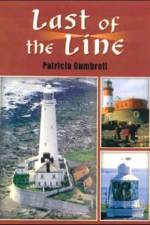
Now that lighthouse automation has been completed, what of the service and dedication to duty that was unfailingly provided by keepers, their associates and their families?Last of the Line is an account of four generations of lightkeepers, the first being John Hall, the author's great-great-grandfather, who was born in 1810. The memories of Harold Hall, the author's father, are recounted in great detail, including his childhood at Coquet Lighthouse during the First World War. Harold's records have allowed the author to provide a fascinating account of life in the service of Trinity House. It can be read how, in the post of Supernumerary Assistant Keeper for six years, Harold rarely spent more than four weeks at any lighthouse. However, once promoted to Assistant Keeper at South Bishop Lighthouse, he found some permanence, including a wife!Patricia also relates her own rich experiences of life as a lightkeeper's daughter, including her very early childhood at St. Mary's Lighthouse during the Second World War before Harold's transfer to the rock lighthouse of Beachy Head. The end result is a captivating story of the Hall, Knott and Darling families and their connections by marriage - the well-known Grace Darling being the author's great-great-great-aunt!
Abonner på vårt nyhetsbrev og få rabatter og inspirasjon til din neste leseopplevelse.
Ved å abonnere godtar du vår personvernerklæring.