











Gjør som tusenvis av andre bokelskere
Abonner på vårt nyhetsbrev og få rabatter og inspirasjon til din neste leseopplevelse.
Ved å abonnere godtar du vår personvernerklæring.Du kan når som helst melde deg av våre nyhetsbrev.

Examines why the nationalized railways were in such dire financial straits by 1963, how government work on future transport needs led to conclusions which would have cut Britain's railways down by thousands of miles, and, what difficulties eventually halted attempts by Conservative and Labour governments to implement these cuts.
This book establishes The Stockton and Darlington Railway's claim to recognition as a significant element in the maturing phase of Britain's industrialisation after 1830, through an examination of its critical role in the contemporary national debate on the merits of steam power.
Aircraft flight crews bear the brunt of all the errors and pitfalls of current aviation security systems. The authors explain how proper training, continuous education and individual study on the part of aircrews, is the absolute minimum needed to combat the threat of terrorism in the skies.
This work is about making the transition from co-pilot to airline captain. It is not a guide to the basic skills of flying, but a book about leadership and management. The author presents real-life situations, raises questions, poses options and offers some possible solutions.
A new title to add to our highly successful Companion series. It has all the information needed to ensure that diesel boat engines stay in tip-top condition.
The RAF's mighty delta-wing Vulcan jet bomber is an enduring image of the Cold War era. Newly restored with the help of Heritage Lottery Funding, the last airworthy Vulcan B2 XH558 in many ways fills the gap left by Concorde's retirement.
This comprehensive account of the past, present and future of the automobile examines the key trends, key technologies and key players involved in the race to develop clean, environmentally friendly vehicles that are affordable and that do not compromise on safety or design.
A straightforward text for all involved in air traffic control and air traffic control management, covering the basic aspects of psychology and economics as applied to the ATC environment.
This highly original work reveals the profound impact that the railroad and the cinema have had on Western society and modern urban industrial culture.
A set of readings that convey fundamental concepts, theory and methodologies of transport economics. The papers have been carefully selected for their usefulness in teaching by seven experienced professors of transport economics.
Offers information needed to rebuild a 2CV. This book covers body, trim and mechanical restoration. It provides advice on what to look for when buying a car or van.
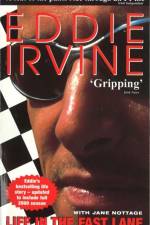
The first Grand Prix of 2000 ushers in a new era for the cavalier talent, international star and multi millionaire playboy that is Eddie Irvine. Fully updated to cover the full 2000 season, and the inside stories on the major F1 players from Schumacher to Coulthard to Eddie Jordan, this is one white-knuckle read.
The book is directed at those involved with accident analysis and system safety, such as managers of safety departments, risk and safety consultants, human factors professionals, and accident investigators.
This work centres on what are seen nowadays as the key issues in good airmanship - individual pilot judgement and balanced teamwork in the flightdeck (crew resource management) - for safe civil aviation.
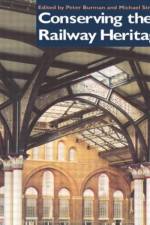
The key issues concerning railway heritage are examined in this timely publication. The scope of the book ranges from railway architecture and its preservation to the management of railway heritage.
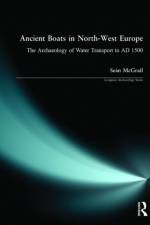
First published in 1987, this text has been revised for a student and non-specialist readership. It provides an authoritative and comprehensive survey of water transport across Northern Europe from the Late Palaeolithic to the later Middle Ages using a variety of primary sources and excavations.
By focusing on the consumer, this book investigates the relationship between the arts, entertainment and tourism industries and how this relationship can be developed to its best competitive advantage. It describes the general arts and tourism background, and discusses the arts and entertainment that feature in tourism.
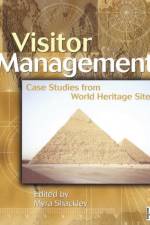
Presents a collection of case studies taken from cultural World Heritage Sites. Using examples of significant archaeological and architectural legacies, this book identifies the problems involved with site management. It shows models of good practice, looking at the functions of the organizations involved and the range of variation among sites.
Captures the high romance of aviation. This funny travel book offers insights into the thrills and perils of the pilot's seat - from a UN Cessna flying aid into a war zone, to aerobatics in a jet fighter, from chasing goats through NZ snowy mountains by helicopter, to touching the edge of the stratosphere in a Learjet.
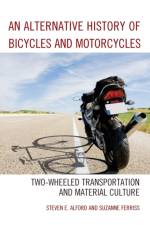
An Alternative History of Bicycles and Motorcycles: Two-Wheeled Transportation and Material Culture accounts for the nineteenth-century creation and development of two-wheeled vehicles, both human-powered and motorized. Specifically, the book focuses on the period from 1885 (which saw the appearance, simultaneously, of the Safety bicycle and the Einspur, the first motorcycle) to 1920, while exploring implications for later bicycling and motorcycling. We argue that invention of these vehicles, rather than the product of gifted individuals, should be seen as the consequence of a number of historical, economic, cultural and political forces that intersect so unpredictably that the notion of a genius inventor is reductive. The common evolutionary model of development from the bicycle to the motorcycle oversimplifies both the technology and its origins. Stripping the vehicles of all their material and cultural associations, such a model fails to advance our understanding of the devices, their creators, and their riders. Taking a contemporary vehicle and tracing its lineage creates a false sense of evolutionary necessity in its creation, and fails to account for the many possible developmental paths that were, for whatever reason, abandoned. By contrast, our book adopts a material culture approach, a form of inquiry that stresses the connections between artifacts and social relations. We consider not simply the bicycle and motorcycle as material objects but focus also on the complex socio-political and economic convergences that produced the materials, materials that in turn themselves shaped the vehicles' appearance, function, and adoption by riders.
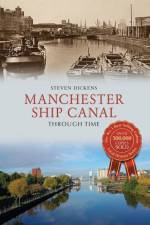
The Manchester Ship Canal was a huge engineering achievement. It included seven swing bridges and the aqueduct at Barton, and helped turn the cotton-producing capital of Great Britain into an inland seaport. This was a feat many at the time believed could not be achieved. One of the wonders of the modern industrial world, the Manchester Ship Canal, with its huge locks and ocean-going vessels, was a magnetic draw for enthusiastic Victorians who marvelled at its construction. This book looks at the changes and development of the Manchester Ship Canal through time, from its origins as a thriving economic hub in the late nineteenth century, to an important retail, leisure and media centre in the early twenty-first century and beyond. Join Steven Dickens as he explores the history of this 36-mile-long inland waterway in the north-west of England, which links Manchester to the Mersey Estuary and the Irish Sea.
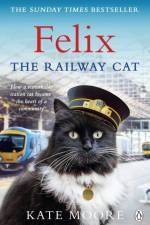
**THE SUNDAY TIMES BESTSELLER - AS SEEN ON THE ONE SHOW**It will make you laugh and it will make you cry: Felix The Railway Cat is the extraordinary tale of a close-knit community and its amazing bond with a very special cat. 'The global sensation' Daily Telegraph When Felix arrived at Yorkshire's Huddersfield Train Station as an eight-week-old kitten, no one knew just how important this little ball of fluff would become. Although she has a vital job to do as 'Senior Pest Controller', Felix is much more than just an employee of TransPennine Express. Felix changes lives in surprising ways. She is always ready to leap into action and save the day: from bringing a boy with autism out of his shell to providing comfort to a runaway child shivering on the platform one night. So when tragedy hits the team at Huddersfield, it is only Felix who can pull them back together. But a chance friendship with a commuter that she waits for her on the platform every morning finally gives Felix the recognition she deserves, catapulting her to international stardom . . . Royalties from the sale of this book will be donated to Prostate Cancer UK (registered charity 1005541, SC039332).
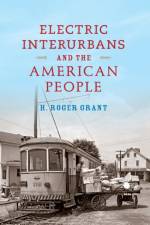
One of the most intriguing yet neglected pieces of American transportation history, electric interurban railroads were designed to assist shoppers, salesmen, farmers, commuters, and pleasure-seekers alike with short distance travel. At a time when most roads were unpaved and horse and buggy travel were costly and difficult, these streetcar-like electric cars were essential to economic growth. But why did interurban fever strike so suddenly and extensively in the Midwest and other areas? Why did thousands of people withdraw their savings to get onto what they believed to be a "e;gravy train?"e; How did officials of competing steam railroads respond to these challenges to their operations? H. Roger Grant explores the rise and fall of this fleeting form of transportation that started in the early 1900s and was defunct just 30 years later. Perfect for railfans, Electric Interurbans and the American People is a comprehensive contribution for those who love the flanged wheel.
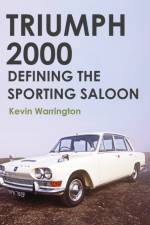
Encompassing the full development of the Triumph 2000, from the early Vanguard model to the Mark 2 models, this book covers the revolutionary aspects of Triumph engineering, including the small-capacity six-cylinder engine and independent suspension, as well as the iconic Michelotti design and quality cabin. Packed with detail, the full evolution of the Mark 1 model is described, along with the introduction of the Mark 2 version, which was to have considerable success as a rally car. The Triumph 2000 is also compared to its main British competitor, the Rover P6. The journey finishes with the takeover by British Leyland, and all the subsequent implications for Triumph. Kevin Warrington offers an essential guide to the Triumph 2000, with a wide range of photographs and features.
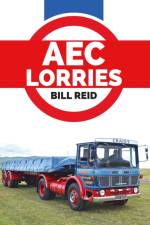
AEC Lorries explores the story of lorry use in the last fifty years, showing the diverse use of the vehicles and their configurations for many different types of work, with a focus on one of the great British manufacturers - AEC. AEC lorries have always been held in high esteem at home and abroad because of their powerful engines, and relative simplicity. They were to be found in many large and small fleets, capable of any type of work. A large proportion of AEC production was exported, particularly to British Commonwealth countries, where they endured hostile climates, severe overloading, and abuse on poor roads; nevertheless, they remained as good working equipment. It has been said by many in the transport sector that, if AEC engines had been developed, rather than other types within the British Leyland range, AEC vehicles would have become a range of lorries and buses that were second to none. Lorries are now the lifeblood of the nation and, without them, our lives would be much less rich. Railways have always been of great interest, but road transport, in its many forms and diverse liveries, has become an object of enthusiastic interest. This book looks to explore one of the most iconic and recognisable brands of British roads, using 180 rare and unpublished images.
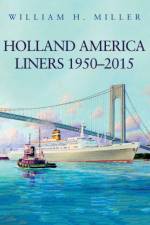
Founded in 1873, the Holland America Line provided services carrying passengers and freight between the Netherlands and North America. When the Second World War ended, only nine of Holland America Line's twenty-five ships had survived and the company set about rebuilding. The pride of HAL's post-war fleet was SS Rotterdam, completed in 1959, which was one of the first ships on the North Atlantic equipped to offer two-class transatlantic crossings and single-class luxury cruising. However, competition from the airlines meant that in the early 1970s Holland America ended their transatlantic passenger services; in 1973 the company sold its cargo-shipping division. Now owned by the American cruise line Carnival, Holland America offers round-the-world voyages and cruises in the Mediterranean, the Caribbean and Asia. In this book, renowned ocean liner historian and author William H. Miller takes a look at the Holland America Line and its post-war fleet up to 2015.
Abonner på vårt nyhetsbrev og få rabatter og inspirasjon til din neste leseopplevelse.
Ved å abonnere godtar du vår personvernerklæring.