
























Gjør som tusenvis av andre bokelskere
Abonner på vårt nyhetsbrev og få rabatter og inspirasjon til din neste leseopplevelse.
Ved å abonnere godtar du vår personvernerklæring.Du kan når som helst melde deg av våre nyhetsbrev.

Volkswagen's first mid-size car, was also its final new design in a 30-year air cooled odyssey. The Type 4 411 and 412 held to VW tradition, while introducing new engineering directions and refinements. VW's biggest ever car faced off against mainstream competition. Would Dr Porsche's ideals still hold out, for VW's transitional car?
When aircraft retire from active service, they are sent to "boneyards," usually in dry desert locations to limit damage from the elements. There the planes are stored, ready to be revamped for future use or eventually turned into scrap.
Charles Rolls was the first Englishman to be killed in an air crash. He was a pioneer in the British automotive and aviation industries who receives little credit for the legacy that he left behind. This biography quotes from his writings and from contemporary accounts of the events during those days of motoring and aviation.
Four issues of The Southern Way are published annually, usually in January, April, July and October and the regular issues of the journal are supplemented by occasional Southern Way Specials which focus in much greater depth on specific area of SR history, operations or traction.
A compelling and moving sports drama that revolves around Grand Prix driver Mike Hawthorn, played out in the bloody arena of the highly dangerous motor racing of the 50s. A real life story that matches the excitement and suspense of the very best fiction.
Having this book in your pocket is just like having a real marque expert by your side. Benefit from the author's years of Harley-Davidson experience, learn how to spot a bad bike quickly, and how to assess a promising one like a professional. Get the right bike at the right price!
The growth in global economies has led to a world that has become much more mobile in the last few decades. The number of enplanements has increased and is expected to continue to do so at an annual average rate of 1.8% through 2039 [1]. Prior to the COVID-19 pandemic, the number of aircraft in service was expected to increase annually to meet the travel demand. Next-generation, more-complex aircraft were scheduled to replace the older aircraft at a pace that still allowed sufficient capacity to meet the increasing demand. The events of 2020 have driven the industry to accelerate retirement of older aircraft while deferring the introduction of new aircraft. While the length of the industry recovery period cannot be predicted, most analysts believe that demand for travel will return once a vaccine is widely available. The impact to the design of next-generation aircraft will likely be shaped by technologies that are being accelerated for the post-COVID world as well as for new mobility platforms. Technologies, such as artificial intelligence and fault-tolerant and self-adapting control, will use integrated vehicle health management (IVHM) capabilities as part of the decision-making processes. This SAE EDGE¿ Research Report seeks to explore the unsettled issues surrounding embedding IVHM information into the active control loops of modern aircraft systems and in future generations of aircraft designs.NOTE: SAE EDGE¿ Research Reports are intended to identify and illuminate key issues in emerging, but still unsettled, technologies of interest to the mobility industry. The goal of SAE EDGE¿ Research Reports is to stimulate discussion and work in the hope of promoting and speeding resolution of identified issues. SAE EDGE¿ Research Reports are not intended to resolve the challenges they identify or close any topic to further scrutiny.
Unmanned aerial vehicles (UAVs) are an emerging technology with a large variety of commercial and military applications. In-flight icing occurs during flight in supercooled clouds or freezing precipitation and is a potential hazard to all aircraft. In-flight icing on UAVs imposes a major limitation on the operational envelope. This report describes the unsettled topics related to UAV icing. First, typical UAV applications and the general hazards of icing are described. Second, an overview of the special technical characteristics of icing on autonomous and unmanned aircraft is given. Third, the operational challenges for flight in icing conditions are discussed. Fourth, technologies for ice protection that mitigate the icing hazard are introduced. Fifth, the tools and methods required to understand UAV icing and to develop aircraft with cold-weather capabilities are presented. Finally, an assessment of the current and future regulations regarding icing on UAVs is provided.Icing is a key challenge that the UAV industry needs to address in order to unlock the full potential of this emerging technology. UAVs must be capable of safe and reliable operation in a wide range of weather conditions. This report outlines the most important challenges and gives short- and long-term recommendations on how to solve UAV icing issues.NOTE: SAE EDGE¿ Research Reports are intended to identify and illuminate key issues in emerging, but still unsettled, technologies of interest to the mobility industry. The goal of SAE EDGE¿ Research Reports is to stimulate discussion and work in the hope of promoting and speeding resolution of identified issues. SAE EDGE¿ Research Reports are not intended to resolve the challenges they identify or close any topic to further scrutiny.
Contemporary air traffic management (ATM) challenges are both (1) acute and (2) growing at rates far outpacing established ways for absorbing technological innovation. Lack of timely response will guarantee failure to meet demands. Immediately that creates a necessity to identify means of coping and judging new technologies based on possible speed of adoption. Paralleling the challenges are developments in capability, both recent and decades old. Some steps (e.g., Global Positioning System (GPS) backup) are well known and, in fact, should have progressed further long ago. Others (e.g., sharing raw measurements instead of position fixes) are equally well known and, if followed by further flight tests initiated (and successful) years ago, would have produced a wealth of in-flight experience by now if development had continued. Other possibilities (e.g., automated pilot override) are much less common and are considered largely experimental.This SAE EDGE¿ Research Report is aimed at focusing industry attention on unsettled ATM issues and activities that appear most likely to offer solutions, starting with the near term and continuing on toward increasing versatility and confidence as experience accumulates. In general, the more familiar developments tend to suggest quicker acceptance of test trial initiation, while comparatively unexplored techniques call for a more gradual assimilation. Flexibility for growth is needed in any event, without the pervasive delays that have obstructed progress for so long.NOTE: SAE EDGE¿ Research Reports are intended to identify and illuminate key issues in emerging, but still unsettled, technologies of interest to the mobility industry. The goal of SAE EDGE¿ Research Reports is to stimulate discussion and work in the hope of promoting and speeding resolution of identified issues. SAE EDGE¿ Research Reports are not intended to resolve the challenges they identify or close any topic to further scrutiny.
Battles With The Sea: Heroes Of The Lifeboat And RocketThis book is a result of an effort made by us towards making a contribution to the preservation and repair of original classic literature.In an attempt to preserve, improve and recreate the original content, we have worked towards:1. Type-setting & Reformatting: The complete work has been re-designed via professional layout, formatting and type-setting tools to re-create the same edition with rich typography, graphics, high quality images, and table elements, giving our readers the feel of holding a 'fresh and newly' reprinted and/or revised edition, as opposed to other scanned & printed (Optical Character Recognition - OCR) reproductions.2. Correction of imperfections: As the work was re-created from the scratch, therefore, it was vetted to rectify certain conventional norms with regard to typographical mistakes, hyphenations, punctuations, blurred images, missing content/pages, and/or other related subject matters, upon our consideration. Every attempt was made to rectify the imperfections related to omitted constructs in the original edition via other references. However, a few of such imperfections which could not be rectified due to intentional\unintentional omission of content in the original edition, were inherited and preserved from the original work to maintain the authenticity and construct, relevant to the work.We believe that this work holds historical, cultural and/or intellectual importance in the literary works community, therefore despite the oddities, we accounted the work for print as a part of our continuing effort towards preservation of literary work and our contribution towards the development of the society as a whole, driven by our beliefs. We are grateful to our readers for putting their faith in us and accepting our imperfections with regard to preservation of the historical content. HAPPY READING!
The open road was his passion, with twists and turns, high jinks and mayhen, in all kinds of weather, author Terry Bodine takes readers along for what, in his own words, was "A hell of a ride!"From life on his family's farm to recognizing the aspirations of a young man, one day owning and operating a succesful trucking business in Western New York
Beyond Blue Skies examines the thirty-year period after World War II during which aviation experienced an unprecedented era of progress that led the United States to the boundaries of outer space.
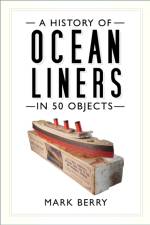
The story of ocean liners brought to life by objects and ephemera, revealing life on board, luxury and magnificence, and peril and disaster
Since the Victorian era, London's Underground has had played a vital role in the daily life of generations of Londoners. In The Subterranean Railway, Christian Wolmar celebrates the vision and determination of the nineteenth-century pioneers who made the world's first, and still the largest, underground passenger railway: one of the most impressive engineering achievements in history. From the early days of steam to electrification, via the Underground's contribution to twentieth-century industrial design and its role during two world wars, the story comes right up to the present with its sleek, driverless trains and the wrangles over the future of the system. The Subterranean Railway reveals London's hidden wonder in all its glory and shows how the railway beneath the streets helped create the city we know today.
Good Photographic Coverage, Useful to Modellers, Good Historical Narrative, New Historical Facts
Old cars seen through a new lens, Good factual text, Useful to modelers
Good Photographic Coverage, newly researched material, useful to modellers, Informative aptions
Abonner på vårt nyhetsbrev og få rabatter og inspirasjon til din neste leseopplevelse.
Ved å abonnere godtar du vår personvernerklæring.