








Gjør som tusenvis av andre bokelskere
Abonner på vårt nyhetsbrev og få rabatter og inspirasjon til din neste leseopplevelse.
Ved å abonnere godtar du vår personvernerklæring.Du kan når som helst melde deg av våre nyhetsbrev.

A memoir about inventing and building a new kind of car.
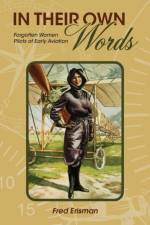
Amelia Earhart's prominence in American aviation during the 1930s obscures a crucial point: she was but one of a closely knit community of women pilots. In Their Own Words takes up the writings of eight women pilots as evidence of the ties between the growth of American aviation and the changing role of women.
Commemorating the anniversary of the end of steam railway traction in Britain 50 years ago
In Contrails over the Mojave George Marrett takes off where Tom Wolfes The Right Stuff ended in 1963. Marrett started the Air Force Test Pilot School at Edwards AFB only two weeks after the schools commander, Col. Chuck Yeager, ejected from a Lockheed NF-104 trying to set a world altitude record. He describes life as a space cadet experiencing 15 Gs in a human centrifuge, zero-G maneuvers in a KC-135 Vomit Comet, and a flight to 80,000 feet in the F-104A Starfighter. After graduating from Yeagers Charm School, he was assigned to the Fighter Branch of Flight Test Operations, where he flew the latest fighter aircraft and chased other test aircraft as they set world speed and altitude records.Marrett takes readers into the cockpit as he goes vertical in a T-38 Talon, completes high-G maneuvers in an F-4C Phantom, and conducts wet-runway landing tests in the accident-prone F-111A Aardvark. He writes about Col. Silver Fox Stephens setting a world speed record in the YF-12 Blackbird and Bob Gilliland testing speed stalls in the SR-71 spy plane, but he also relives stories of crashes that killed test pilot friends. He recounts dead-sticking a T-38 to a landing on Rogers Dry Lake after a twin-engine failure and conducting dangerous tail hook barrier testing in a fighter jet without a canopy. A mysterious UFO sighting in the night sky above the Mojave Desert, known as The Edwards Encounter, also receives Marretts attention. Whether the author is assessing a new aircrafts performance or describing the experiences of test pilots as they routinely faced the possibility of death, this look at the golden age of flight testing both thrills and informs.
How and why accidents happened ? How pilots handle emergencies ? How cabin crew deal with various challenges ?
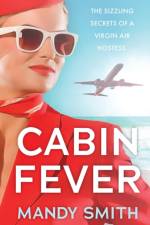
'This fun read dishes on what it's like to live with your head in the clouds - from in-flight fist fights to sneaky shenanigans' - CosmopolitanThe secrets of the Mile High Club revealed...Mandy Smith spent twelve years strutting down the aisles as one of Richard Branson's sexy and sassy flight attendants.From dealing with projectile vomit and celebrity tantrums to sipping Manhattans and shopping in New York, this inside account is riotous good fun. Set against a backdrop of exotic locations, the cast of zany characters includes everyone from Courtney Love to Sir Richard himself. Mandy's jet-setting job allowed her to search the globe for Mr Right, which led her to many steamy love affairs.In Cabin Fever Mandy Smith tells the good, the bad and the downright naughty tales of life in the air.
A witty and insightful account of the life and times of the automobile, by one of the world's great design writers.
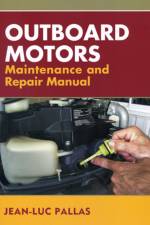
After reading this book, your outboard engine will no longer be a potential bother to you but an ally for better boating.
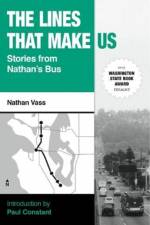
Thirty stories and 32 photos chronicle life on Seattle's No. 7 bus during the graveyard shift.
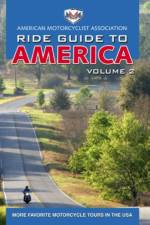
From the corkscrew roads of California to the scenic mountain notches of New England, this second AMA Ride Guide to America from the American Motorcyclist Association reveals more enticing backroads for motorcyclists everywhere to dream about. With topographic road maps and point-to-point route outlines for more than 40 trips nationwide, riders can explore rocky shorelines, breathtaking canyonlands, majestic mountain peaks, and everything in between. Each trip description is detailed with attractions along the way and recommendations for interesting places to stay and eat. Included are trips in:The Pacific NorthwestCaliforniaThe Rocky MountainsThe SouthwestThe MidwestTexasAppalachian MountainsThe American SouthThe mid-Atlantic regionNew EnglandThis is is a must-have travel book for any rider who dreams of taking two wheels on the best of America's open roads.
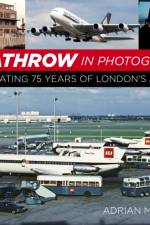
From canvas tents to Terminal 6 - charting the history of Heathrow Airport in photographs
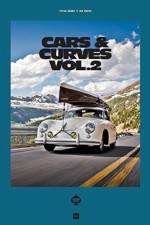
Dynamic on-the-road photographs for car lovers of an exquisite selection of the best and rarest Porsche models, including the 908, 962, 718 Spyder, and Carrera Abarth. Text in English and German.
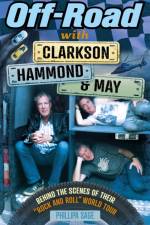
In Off-Road with Clarkson, Hammond & May, Phillipa shares the tour highs, lows and laughter of three clever, funny, and very stupid motoring journalists.
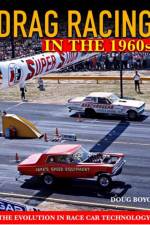
Drag racing has a long and storied history. Many have said that the first drag race occurred shortly after the second car was made. While that may or may not be true, racing prior to World War II was mostly centered around dry-lake activities and top-speed runs. After the war, drag racing became organized with the creation of the NHRA, and during the 1950s, many tracks were built across America to accommodate the racers. Technology in the 1950s centered on the manufacturers updating old flathead designs into newer overhead-valve designs, and the horsepower race really started to heat up.As with many forms of racing, the 1960s brought a technological evolution. The decade began with big engines in even bigger stock chassis and ended with purpose-built race-only chassis, fiberglass bodies, fuel injection, nitro methane, and blowers. Quarter-mile times that were in the 13-second range at the beginning of the decade were in the 7-second range by the end. New classes were formed, dedicated cars were built for them, and many racers themselves became recognized names in the sports landscape. In Drag Racing in the 1960s: Evolution in Race Car Technology, veteran author Doug Boyce takes you on a ride through the entire decade from a technological point of view rather than a results-based one. Covered are all the classes, including Super Stocks, Altered Wheelbase cars (which led to Funny Cars), Top Fuelers, Gassers, and more. An examination of the classes and how technology changed them (or in some cases, even created them) are thoroughly examined through interviews, quotes, and stunning vintage photography.
Good Photographic Coverage, Informative Long Captions, New Factual Information, Useful to Modellers.
Good Photographic Coverage, Informative Long Captions, New Factual Information, Useful to Modellers.
Good Photographic Coverage, Informative Long Captions, New Factual Information, Useful to Modellers.
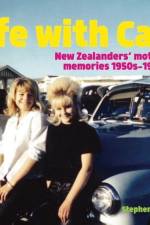
This is a heart-warming collection of memories and snapshots of ordinary New Zealanders and their cars from the 1950s through to the 1980s, forming a kind of national family photo album with its focus on the four-wheeled members. Here we are on camping trips with tents piled on roof racks; at family picnics; fixing flat tyres and bent over reluctant engines; and, time after time, pictured proudly alongside our motors. With captions that relay first-hand experiences, and an appendix giving the facts and history of the cars.
Aerodynamic design of aircraft presented with realistic applications, using CFD software. Tutorials, exercises, and mini-projects provided involve design of real aircraft. Using online resources and supplements, this text prepares last-year undergraduates and first-year graduate students for industrial aerospace design and analysis tasks.
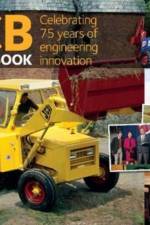
This book is an unabashed celebration of one of Great Britain's greatest engineering names and the remarkable machines that can be seen in action all over the world. From the first trailer, produced from post-war scrap metal in 1945 to the latest award-winning electric mini-digger - the story of JCB is told through a remarkable collection of images from the company's own archives.
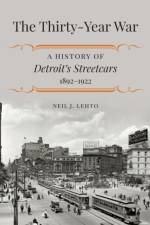
Streetcars played an especially important role in society around the turn of the twentieth century in Detroit, in part because of the downtown hub-and-spoke design of its main streets. During this period the streetcar was the main mode of transportation for the average citizen, as horse-drawn carriages and automobiles were not found outside of the upper class. Control over streetcar franchises was highly coveted-this control was simultaneous with having power over how and where people were transported throughout the city, making it an incredible political tool. The Thirty-Year War was a battle waged between 1892 and 1922 by the City of Detroit against the politically powerful and deeply entrenched corporations that owned streetcar franchises for control of the city's streetway system. This compelling history shows how and why the owners of monopoly franchises of great public utilities such as bridges, street railways, electricity, natural gas, and cable television will protect and defend their privilege against public ownership or control, and is an example of how one city successfully fought back.
Abonner på vårt nyhetsbrev og få rabatter og inspirasjon til din neste leseopplevelse.
Ved å abonnere godtar du vår personvernerklæring.