



Gjør som tusenvis av andre bokelskere
Abonner på vårt nyhetsbrev og få rabatter og inspirasjon til din neste leseopplevelse.
Ved å abonnere godtar du vår personvernerklæring.Du kan når som helst melde deg av våre nyhetsbrev.

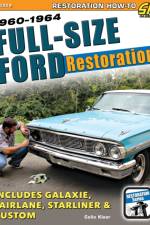
<p>The photos in this edition are black and white.</p><p>Return your 1960-1964 full-size Ford car back to its former glory with detailed restoration procedures from author Colin Kleer.<p>With more than 2.3 million full-size Fords produced from 1960 to 1964, a restoration book for these cars has been desperately needed, and Full-Size Ford Restoration: 1960-1964 fills that void! Colin, president of Pennsylvania''s Three Rivers chapter of the Galaxie Club puts his decades of experience restoring these cars into this single volume. Featuring step-by-step procedures on body, driveline, chassis, and interior components, Colin shows, with more than 400 photos and text, how to restore a full-size Ford. Crucial projects, such as rust repair and driveline maintenance, help guarantee that your Ford will be sound and solid for years to come after the restoration.<p>Ford''s full-size model change from 1959 to 1960 was seen as a big departure from the swerving lines of the 1950s. Slow to start on sales, Ford''s full-size production grew year after year, peaking with 648,010 units produced in 1963. It was an all-time best for the Galaxie line and its sister nameplates. Eight appearance and performance offerings were applied to the full-size Ford line including the Fairlane, Galaxie, Ranch Wagon, Country Sedan, Country Squire, Courier, 300, and Custom, which made each car unique.<p>The Galaxie and its full-size stablemates continue to be a strong force at car shows and in the marketplace; they create an even deeper following for these cars. Adding a detailed restoration book to the full-size restorer''s arsenal will surely aid in bringing more of these Fords back to life and back on the road.
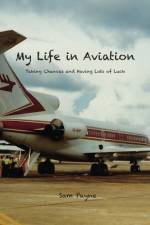
For years people had been telling Sam Payne to write a book about his adventures. My Life in Aviation, Taking Chances and Having Lots of Luck is his response. In "Taking Chances," he talks about starting to fly, going to Argentina, quitting helicopters and trying for the airlines, working overseas, and quitting TWA to work for Piedmont Airlines. In the "Lots of Luck" part, he tells about getting into the ROTC flight program, being sent to Korea, avoiding near mid-air collisions and engine failures and living through a hijacking. My Life in Aviation tells about all the places he's been, flying in formation with an Andes Condor, flying around the world four times, guarding the President of the United States, and lots of other interesting tales. Sam says flying was a great and fun way of making a living.Since retiring from U.S. Airways, he has been busy. He started playing golf, took up watercolor painting, and travels widely with his wife, Anna-Stina. They have been to all fifty states, have gone on several cruises and have traveled to Europe. Now they live in a great retirement community in West Windsor, NJ, very near where he grew up.
This innovative book explores the dynamic and contested interactions- including the mutually constitutive relationship- among sexualities, transnationalism, and globalization.
This book presents methodological approaches that can help explore the ways in which people develop emotional attachments to historic urban places.
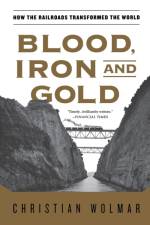
The opening of the world''s first railroad in Britain and America in 1830 marked the dawn of a new age. Within the course of a decade, tracks were being laid as far afield as Australia and Cuba, and by the outbreak of World War I, the United States alone boasted over a quarter of a million miles. With unrelenting determination, architectural innovation, and under gruesome labor conditions, a global railroad network was built that forever changed the way people lived. From Panama to Punjab, from Tasmania to Turin, Christian Wolmar shows how cultures were enriched, and destroyed, by one of the greatest global transport revolutions of our time, and celebrates the visionaries and laborers responsible for its creation.
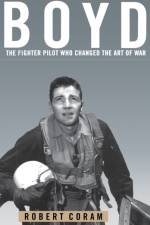
A larger-than-life fighter pilot and genius of aviation, engineering and military strategy, John Boyd dared to challenge the intractable military bureaucracy and its outmoded practices. Coram paints a colourful portrait of this unconventional man who locked horns with bureaucracy - and won.
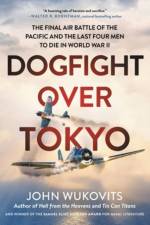
From an expert in the Pacific theater of World War II comes the tragic story of the pilots who fought the last fight of the war during the first hour of peace
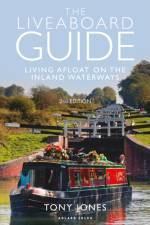
The essential guide to living on a boat on canals and rivers, focusing on the practical issues of how to manage every aspect of day to day living.
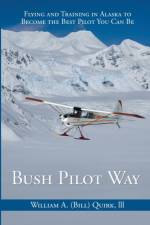
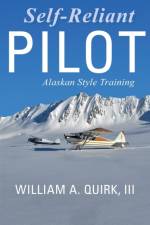
Color-illustrated, Bush Pilot Way, focuses on flying small taildragger aircraft and landing them in remote and challenging terrain in wild Alaska. It presents the author's explanation of his aviation journey in Alaska. The journey displays the inspiration of flying in Alaska, defining who are Alaska's modern-day bush pilots, and showing the training necessary to become the best pilot you can be. It also presents the causes for the elevated aircraft accident rate in Alaska and how to avoid such incidences. Bush Pilot Way serves as a primer for training the Alaska bush pilot way. Once a pilot learns how to train according to the book, additional or new training can be carried out, without difficulty, because the pilot has already learned the foundation for training. Bush Pilot Way is a classical training manual because it is written in a contemporary style that is always current. As time goes forward, the strategy for training will remain the same. Fifty-two distinctive narratives comprising the appendix, show general aviation topics and authenticated experiences of a skilled pilot flying Alaska's uninhabited backcountry. The narratives include the inspiration of flying Alaska's coastal mountains, glaciers, and fjords; flying and landing in Alaska's backcountry in winter on skis and in summer on Bushwheels; flying wildlife surveys and observing rare wildlife encounters.
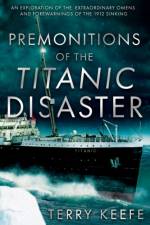
Passengers cancelling their tickets for Titanic's maiden voyage out of apprehension; a famous social reformer who died on Titanic, warned in 1911 that he would be in danger from water in April 1912; inhabitants of the capital of the remote islands of Fiji aware of the sinking before reports of the collision reached the Pacific
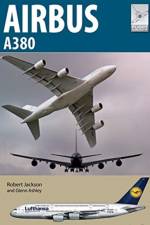
The Airbus A380 is the largest passenger aircraft in the world. This book contains a wealth of information for the modeller and the aviation enthusiast alike.
Good Photographic Coverage, Informative Long Captions, Useful To Modellers, New Factual Information, Informative Historical Text
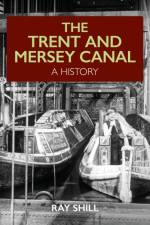
The Trent and Mersey Canal first came into use in 1777. A vital transport link for the industries of the midlands - indeed Josiah Wedgewood of the pottery was an early supporter - it carried coal, ironstone, limestone merchandise, pottery and salt. Despite the arrival of the railways and subsequently motorways, the carriage of freight continued up until 1970. After inevitable decline, various restoration programmes have been undertaken and the waterway is now popular with boaters. A working waterway for 250 years, the need to adapt to changing transport needs has been a constant factor in this canal's history. With over 100 archive and present-day photographs, maps and plans,Trent and Mersey Canal describes the need for the canal and the key personnel who were involved in its inception. Engineering and constructions of the canal and its branches are looked at in detail along with further improvements to the canal and how these boosted trade. A century of ownership by railway companies, subsequent nationalisation and later decline is discussed. The book also looks at the people who lived and worked on the canal. Finally, restoration, rejuvenation and the future of the canal is covered.
Unshakeable is the brilliant autobiography of Shane Byrne, the most successful motorcycle racer in the history of the British Superbike Championship.
'There's water in the engine,' he said. 'The engine has stopped.' This changed everything...
Rooting the university in a history of industrialisation, placemaking and city-building, this book examines contemporary debates about the role that urban universities should have in building economies, creating jobs and reshaping the politics and identities of their communities, using East London, a city in South Africa, as a case study.
Abonner på vårt nyhetsbrev og få rabatter og inspirasjon til din neste leseopplevelse.
Ved å abonnere godtar du vår personvernerklæring.