
























Gjør som tusenvis av andre bokelskere
Abonner på vårt nyhetsbrev og få rabatter og inspirasjon til din neste leseopplevelse.
Ved å abonnere godtar du vår personvernerklæring.Du kan når som helst melde deg av våre nyhetsbrev.

Cathy Salisbury et Dominique Serafini recherchent et explorent les epaves les plus spectaculaires des Caraibes. A travers leurs peintures, leurs photographies et leurs recits, ils capturent la beaute mysterieuse de ces epaves.
Proclaimed "the World's most travelled motorist", AE Filby undertook some breathtaking expeditions, including his 37,000-mile journey through Africa in a series of dilapidated motorcars.
178 pages, 203 illustrations, size 8.25 x 10.75 inches. A previously unpublished manual from the Floyd Clymer archives. This manual is a compilation of extremely scarce and difficult-to-find original factory publications for the Bridgestone 350GTR and 350GTO series of motorcycles. The factory publications included are: The 350GTR 'Technical Handbook' (Workshop Manual) publication number T7350E. The 350GTR 'Parts Catalogue' publication number P7350WO. The 350GTO 'Parts Catalogue' publication number P9350GTOWO, plus the appropriate pages from 'Tuning Up for Competition' publication number L8TUP. During the time they were in production, Bridgestone (Motorcycles) published 'Technical Handbooks' or, more appropriately, 'Workshop Manuals' for their various models. These factory issued workshop manuals were produced in small quantities and are scarce and difficult to find in today's market. In addition, the factory also published 'Parts Catalogues' which included exploded parts diagrams that are a useful tool for restoration work or even general maintenance tasks. These factory 'Parts Catalogues' were also re-printed by Rockford Motors but, unfortunately, many of the diagrams were reduced in size (some to less than a quarter page) making the details difficult to see. This manual also includes a re-print of the original factory 'Bridgestone350 GTR & 350GTO Parts Catalogues' with full page exploded parts diagrams. Rockford Motors also published repair 'manuals' but, unfortunately, the quality of the images were degraded in the re-print process (that was available at that time) and some of them are so poor that they are of little use. By utilizing both the original factory 'Technical Handbook' and 'Parts Catalogues' in the production of this combined manual, we have hopefully provided the reader with quality enhanced images that are far superior to those in the earlier Rockford reprints. As can be expected from a factory publication, there is adequate detailed text and diagrams to assist in major refurbishing or even a complete mechanical renovation making it an invaluable resource for collectors of these iconic motorcycles and we are pleased to be able to offer this reprint as a service to all Bridgestone 350GTR & 350GTO owners and enthusiasts worldwide.
The weekend is here, the sun is out...where to go?Plan your next bicycle adventure with this handy guide! 65 Trail Reviews, 152 pages Top 45 Park Paths + 20 Rail Trails66 New Trail Maps and Elevation Charts (all maps were updated in 2021)Most paths are 100% car-free, easy terrain, with few hillsConsistent review ratings, from one source - the authorTrail Reviews List - Length, Elevation, Terrain, Skill, Traffic, Maps, Facilities, Highlights, Phone#, Websites, Similar Trails, Local Clubs, Access & Parking LocationsBonus PDF eBook version included Discover new cycling destinations in Southern Ontario, Canada. Included are city Park and rural forest paths, plus Rail Trails. Most routes are flat, easy terrain, for safe, car-free cycling that all ages can enjoy. After many years of riding and scouting trails, Dan Roitner has compiled extensive information,detailed maps and photos for this guide. Start planning your next great bicycle ride today! After selling well, the author listened to readers and improved this book with more detailed trail maps and lists of parking locations in a 2021 minor update.
During the 1880s, Chesapeake Bay boatbuilders began constructing small wooden open boats, referred to as deadrise boats, out of planks with V-shaped bows. As boatbuilders created larger deadrise boats, decks were installed to provide more work and payload space; these deck boats also had a house/pilothouse near the stern and a mast closer to the bow of the boat. Deck boats were powered by gasoline engines but also utilized sails and wind. From the 1910s to the 1940s, auxiliary steadying sails were raised to help steady the boat when encountering adverse seas. More deck boats were built in the 1920s than in any other decade. Over the history of the boats, several thousand worked the bay in the freight business, were used to buy and plant oysters, worked in the bay's pound net fishery, and dredged for crabs and oysters. Approximately 40 boats are left on the bay. A few still work the water. Some have found new life as recreational yachts, and others are education boats owned by museums and nonprofits. In 2004, boat owners formed the Chesapeake Bay Buyboat Association, which holds an annual rendezvous at different ports as a way to educate the public about this unique aspect of Chesapeake Bay maritime history.
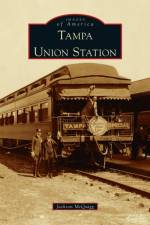
At well over 100 years old, Tampa Union Station is one of the few historic buildings in Tampa that still serves its original purpose. Designed by architect J.F. Leitner of Wilmington, North Carolina, Tampa Union Station has seen millions of travelers pass through its doors since its 1912 opening--from servicemen and women to flower children and from families on vacation to college kids setting out on their own. Once threatened with demolition, the train station reopened its doors to the traveling public in 1998 following a multimillion-dollar restoration. Through images from archives and individuals, Tampa Union Station captures moments in time related to this iconic building, including pictures of trains such as Seaboard Air Line's Silver Meteor and Atlantic Coast Line's Tampa Special, as well as other fascinating looks at life at the station.
Tells the misunderstood but fascinating period in the automotive industry, when creative importers found ways to put American motorists in new Ferraris while the EPA and DOT were backed up with mounds of paperwork.
Liminality in Tourism: Spatial and Temporal Considerations aims to build upon the tradition of liminality as expounded in social and anthropological disciplines, elaborating on the theoretical principles and concepts found within certain aspects of the tourist journey and tourist product.
The COVID-19 crisis has led to calls to reset tourism along more ethical and sustainable lines. It was in this context that calls to "socialise tourism" emerged. This book builds emplys the term as a broad conceptual focal point and guiding term for industry, activists and academics to rethink tourism for social and ecological justice.
Sets out with three main objectives: to clarify obscurities and grey areas of The Wave Principle that were present in Elliott's original writing; to incorporate the work of other analysts in order to allow the Wave Principle to have a broader application; and to show the correct conceptual approach that should be used with the Wave Principle.
Pressing On is an exploration of an aviation safety problem that has plagued commercial airline operators for years. Recent airline accidents like Asiana 214 at the San Francisco International Airport (see cover image) provide examples of this phenomenon, when pilots continue an unstable approach to a landing attempt. The risk of collision with terrain and/or a runway excursion has been identified by both governmental regulators and airlines alike, yet this risk to a catastrophe continues to exist on a regular basis in the National Airspace System.Find out why a pilot would risk an accident or incident when deciding to press on when faced with evidence of an unstable approach. Pressing On is filled with an in-depth technical and historical background on unstable approach risk and serves as a window into the issues associated with not only the reasons airline accidents of this type occur, but how to predict these events and prevent them from happening.Follow along as Captain Odisho puts you in the flight deck of a commercial airliner approaching a landing at a busy metropolitan airport. Learn how widespread the problem of pilot unstable approach risk is in the airline industry, how previous safety risk mitigation strategies have not been successful, and how his research provides a path forward to eliminate the problem of pilots pressing on to landing during an unstable approach.
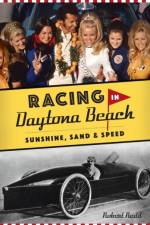
Long before the Speedway was even a glimmer in Bill France Sr.'s eye, racers in Daytona Beach were careening along at the fastest possible clip. Cars were still a novelty in 1903 when Daytona Beach drivers were pushing for land speed records on a track near today's Granada Avenue beach entrance. A reputation was born here early, drawing racing pioneers like Sara Christian, who famously raced her husband on the combination dirt and paved track in 1949. From the brave forerunners who tore up the hard-packed sand to the modern vehicles blasting away at nearly two hundred miles per hour on Daytona Beach International Speedway, Robert Redd explores the driving tradition that has made Daytona Beach a racing mecca.
The Conestoga River meanders for sixty miles through the fertile farmlands of Lancaster County. From early Native American inhabitants to the European settlers who made the Conestoga Valley their home, the river has provided sustenance and transportation for generations. Victorian-era resorts and hotels were built along the river, providing new recreational activities as steam power drove innovative forms of transportation. As the region developed and the population grew, the river paid a heavy price in increased pollution from sewage runoff and industry. Conservation efforts toward the end of the twentieth century through the present day have restored the river's beauty and recreational reputation. Join author and photographer Donald Kautz as he takes a journey on the historic waters of the Conestoga River.
"The construction of Pennsylvania Station (1904-1910) was a monumental undertaking ... for the voluminous earth displaced, incredible innovation, and brilliant French-influenced classical architecture, but it also was a quintessential archetype of the Gilded Age. The station reshaped the economic and social fabric of New York by dislodging scores of families and local businesses. It had been built for prestige and grandeur rather than sustainability and prolonged the rivalry with the New York Central and Hudson River Railroads, leading to the creation of Grand Central Terminal. Although the station was successful for increasing passenger journeys, the rise of independent travel after World War II and mounting financial losses culminated with its unfortunate demise and eventual destruction. Nevertheless, through the misfortune of demolition emerged the first historic preservation laws, which have saved countless historic buildings, including its Park Avenue rival"--Back cover.
"The Northeast Corridor between Boston and Washington is perhaps the single most significant stretch of railroad in the country, connecting dozens of cities like Baltimore, Philadelphia, and New York City. The line carries thousands of passengers daily on a mix of long-distance, regional, and commuter trains ... The images that help make up the visual history in this book come from some of the many libraries, museums, and organizations dedicated to preserving railroad history"--Back cover.
Having this book in your pocket is just like having a real marque expert by your side. Benefit from Phil Benfield's years of Morgan 4/4 experience, learn how to spot a bad car quickly and how to assess a promising one like a professional. Get the right car at the right price!
The Caesars Palace Grand Prix was an unholy alliance of the world capital of gambling, the mob and the international czar of Formula One. This book traces these intertwined threads through decades of accounts, extensive interviews, and the files of the FBI.
The 1928 quest for the Land Speed Record on the sands of Daytona Beach was a first for America, a singular mix of technology, thrills and tragedy. Tens of thousands lined the dunes along the beach, a crowd larger than any yet seen at Indianapolis 500. This book chronicles the high-speed drama.
Motoring and aviation enthusiast Vic Norman has led a remarkable life. A trip to the 1954 British Grand Prix left an indelible mark, and he went on to own some of the most coveted road and racing cars of all time. He also founded Rosso Racing, which restored and prepared competition Ferraris, but in the early 1980s his passion for aeroplanes took over and he became one of the UK's top aerobatic pilots.
Abonner på vårt nyhetsbrev og få rabatter og inspirasjon til din neste leseopplevelse.
Ved å abonnere godtar du vår personvernerklæring.