

















Gjør som tusenvis av andre bokelskere
Abonner på vårt nyhetsbrev og få rabatter og inspirasjon til din neste leseopplevelse.
Ved å abonnere godtar du vår personvernerklæring.Du kan når som helst melde deg av våre nyhetsbrev.

For the latest twenty to thirty years, a significant number of AUVs has been created for the solving of wide spectrum of scientific and applied tasks of ocean development and research. For the short time period the AUVs have shown the efficiency at performance of complex search and inspection works and opened a number of new important applications. Initially the information about AUVs had mainly review-advertising character but now more attention is paid to practical achievements, problems and systems technologies. AUVs are losing their prototype status and have become a fully operational, reliable and effective tool and modern multi-purpose AUVs represent the new class of underwater robotic objects with inherent tasks and practical applications, particular features of technology, systems structure and functional properties.
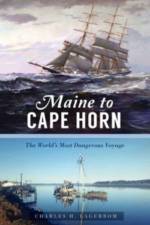
Cape Horn conjures up images of wind-whipped waters and desperate mariners in frozen rigging. Long recognized as a maritime touchstone for sailors, it marks the spot where the Pacific and Atlantic Oceans meet in one writhing mass. Doubling Cape Horn became the ultimate test, earning a prominent place in Maine maritime history. At the end of South America, it shares longitude 67 west exactly with Cutler, Maine, a direct north-south line of seven thousand miles. Maine Cape Horners were recognized by a golden earring. If they did not survive this most difficult journey in the world, the earring covered the costs of their funeral, should the body ever be found. Maritime historian Charles H. Lagerbom traveled to the end of the world to help research this exciting story of bold Mainers and their exhilarating and oftentimes deadly dance with danger.
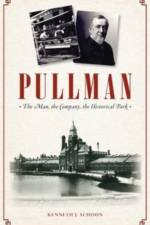
"George Pullman's legacy lies in the town that bears his name. As one of the first thoroughly planned model industrial communities, it was designed to give the comforts of a permanent home to the employees who built America's most elegant form of overnight railroad travel. But the town was more than just a residential wing of sleeper car manufacturing; its 1894 railroad strike led to the national Labor Day holiday. In the early twentieth century, the Pullman Company became the country's largest employer of African Americans, who then formed the nation's first successful Black labor union."--
On Christmas Eve 1917, an overcrowded, out-of-control streetcar exited the Mount Washington tunnel, crashing into pedestrians. Twenty-three were killed and more than eighty injured in the worst transit incident in Pittsburgh history. The crash scene on Carson Street was chaotic as physicians turned the railway offices into a makeshift hospital and bystanders frantically sought to remove the injured and strewn bodies from the wreckage. Most of the victims, many women and children, were from the close-knit neighborhoods of Knoxville, Beltzhoover and Mount Oliver. In the aftermath, public outrage over the tragedy led to criminal prosecution, civil suits and the bankruptcy of the Pittsburgh Railways Company, which operated the service. Author Mary Jane Kuffner Hirt explores the tragic history of the Mount Washington transit tunnel disaster.
Rapid City Army Air Base was constructed in 1942 and used as a training location for B-17 Flying Fortress heavy bomber aircrews throughout the duration of World War II. After the war, the newly renamed Rapid City Air Force Base (AFB) led the nation's strategic bombardment force, deploying B-29 Superfortresses to Britain during the Berlin Blockade and later flying the B-36 Peacemaker heavy bomber. In 1953, Pres. Dwight D. Eisenhower renamed the base for Brig. Gen. Richard E. Ellsworth, who was killed during a mission over Burgoyne's Cove, Newfoundland. From 1960 to 1994, Ellsworth AFB was a Strategic Air Command superbase containing two legs of the American Strategic Nuclear Triad--heavy bomber aircraft (B-52 Stratofortresses and B-1B Lancers) and land-based intercontinental ballistic missiles (Titan and Minuteman). Today, the personnel at Ellsworth AFB continue to build upon the storied legacy of the South Dakota base, projecting American airpower around the world.
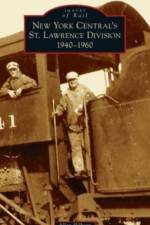
The New York Central System was a huge, 10,000-mile railroad in the Northeast, stretching from New York City to Chicago and Boston to St. Louis. This book focuses on the St. Lawrence Division as it was during the 1940s-1960s; this was the glory period of its greatest modern-day years. This non-main line division, located in Upstate New York, contained more than 600 miles of track, including branches and running rights. The mid-20th century was a time of enormous change in the railroad industry. New technology affording economy, competition in transportation, reduced labor, and politics would be some of the factors leading to the change. Neighboring division crews had great respect for their Hojack colleagues, as was the division's nickname.
During America's golden age of railroading, it was the smaller branch lines that were the most beloved by the people they served. Such was the case of Vermont's Woodstock Railroad, which faithfully served the daily needs of the local populace--farmers, mill owners, carpenters and general store proprietors. From 1875 to 1933, the line provided a vital link between the communities of White River Junction, Quechee and Woodstock. Local families such as the Deweys, Billingses and Williamses led the development of the railroad and contributed greatly to the local economy. Local author and historian Frank J. Barrett Jr. recounts the story of that proud line, its construction, daily operations, growth, triumphs and eventual demise.
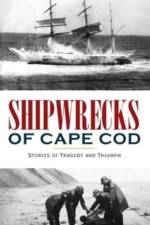
From the wreck of the Sparrow-Hawk in 1626 to the grounding of the Eldia in 1984, Cape Cod's outer beach--often referred to as the Graveyard of Ships--saw the demise of more than three thousand vessels along forty miles of shifting shoals. The October Gale of 1841 claimed the lives of fifty-seven sailors from Truro, a devastating toll for a small seaside community. Survivors from the 1896 wreck of the Monte Tabor in Provincetown were arrested for a suspected mutiny. Aboard the Castagna, which stranded off Wellfleet in 1914, several sailors froze to death in the masts, while the crew's cat survived. Local author Don Wilding revisits these and many other maritime disasters, along with the heroic, and sometimes tragic, rescue efforts of the U.S. Life-Saving Service and Coast Guard.
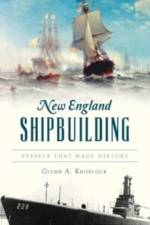
For more than four hundred years, New England shipyards have contributed significantly to America's maritime and naval supremacy. This compelling story is presented through the histories of seventy ships built from the colonial era down to modern times. Well-known vessels like the Constitution, the Nautilus, the Flying Cloud and the infamous whaleship Essex are included, but so, too, are lesser-known ships, including the ill-fated Wyoming and the far-ranging voyager Union. Every type of vessel is covered--their building or voyages making nautical news, often in exciting fashion, and their exploits filled with adventure, danger, tragedy and survival. Historian and author Glenn A. Knoblock explores the construction, life and demise of these ships and details their contribution to our nation's maritime heritage.
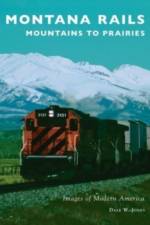
"For nearly 150 years, railroads have been transforming the Montana landscape, from Continental Divide peaks to windswept prairies. Steel rails arrived on May 9, 1880, when the narrow-gauge Utah & Northern reached Monida Pass south of Butte. At the zenith of rail line construction during the 1890s and early 20th century, all major transcontinental railroads crisscrossed Montana: the Union Pacific; Northern Pacific; Chicago, Burlington & Quincy (CB&Q); Great Northern; Chicago, Milwaukee & St. Paul (Milwaukee Road); and Soo Line. Through the years, many original railroads evolved into the Burlington Northern Railroad, Burlington Northern Santa Fe (BNSF), and Montana Rail Link with unique short lines along the way. Though routes and operations have changed, the scenery of Big Sky Country remains the same. Take a journey across Montana rails, from the mountains to the prairies."--
Join Thomas as he travels around meeting his friends, both old and new!
A new biography of Alfred Raworth, the engineer for the Southern Electric.
Traces the long development of the successor to the B-52 Stratofortress.
Featuring modern and preserved railway traction principally from the first two decades of the C 21st.
Midland Red in Retrospect covers the period during the 1960s when the Midland Red bus company dominated the Midlands, operating the lion's share of the bus services and also the express coach services from the Midlands to London and other locations.
Miriam Lawrence's evocative memoir describing the exciting voyage she made in 1848-50, aged 20, on a wooden three mast sailing ship, captained by her husband, to Australia, Hong Kong and other places in Asia. The book includes pictures of the ship and the places visited, maps, extracts from the captain's log and commentary.
Embarquez vers l'inconnu pour une grande aventure en vélo de la France au Vietnam sur plus de 16 000 kilomètres ! Thibault et Khanh Nguyen ont pris la décision la plus folle de leur vie : celle de passer leur lune de miel sur les routes du monde : de chez lui à chez elle. Khanh Nguyen n'avait jamais pédalé plus de quelques kilomètres avant ce voyage.... Partez avec eux à la conquête des montagnes suisses, échappez aux kalachnikovs au beau milieu du désert iranien, frayez-vous un chemin à travers les foules indiennes, survivez aux tigres népalais, réfugiez-vous dans les pagodes birmanes pour enfin retrouver les rizières vietnamiennes. Suivez ce couple singulier et leurs deux chapeaux coniques vietnamiens dans une aventure exceptionnelle tissée d'efforts, de dangers, de rencontres mémorables, de doutes et d'espoirs. Les moments forts et les digressions philosophiques ne manquent pas ! Sous le nom "Projet Non La" , Thibault et Khanh Nguyen ont traversé 18 pays : la France, la Suisse, l'Allemagne, l'Autriche, la République Tchèque, la Slovaquie, la Hongrie, la Serbie, la Bulgarie, la Géorgie, l'Azerbaïjan, l'Iran, l'Inde, le Népal, le Myanmar, la Thaïlande, le Laos et le Vietnam.
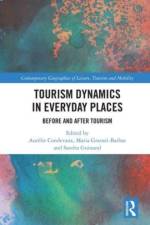
This engaging book presents nine empirical chapters that explore topics such as lifestyle entrepreneurship, lifestyle mobility, luxury experiences, and tourism-related well-being.
This title offers a dynamic understanding of tourism, usually defined in terms of clearly circumscribed places and temporalities, to grasp its changing spatial patterns. This edited volume will be of great interest to upper-level students, academics and researchers in tourism, urban studies, and land use planning.
Abonner på vårt nyhetsbrev og få rabatter og inspirasjon til din neste leseopplevelse.
Ved å abonnere godtar du vår personvernerklæring.