
























![Northern Alberta [microform]](https://cdnbackdoor.tales.as/thumbnail/150x225/products/00292/17163/northern-alberta-microform-including-the-edmonton-red-deer-buffalo-lake-beaver-lake-and-other-districts.jpg)
![Great Western Railway of Canada [microform] af Hugh Bowlby 1813-1880 Willson](https://cdnbackdoor.tales.as/thumbnail/150x225/products/00292/17040/great-western-railway-of-canada-microform-things-not-generally-known-in-england-or-the-true-policy-of-the-company-explained.jpg)
![Rules and Regulations for the Guidance of Employes [sic] [microform]](https://cdnbackdoor.tales.as/thumbnail/150x225/products/00292/17026/rules-and-regulations-for-the-guidance-of-employes-sic-microform-every-employe-sic-connected-with-the-running-of-trains-on-this-railway-must-hav.jpg)
Gjør som tusenvis av andre bokelskere
Abonner på vårt nyhetsbrev og få rabatter og inspirasjon til din neste leseopplevelse.
Ved å abonnere godtar du vår personvernerklæring.Du kan når som helst melde deg av våre nyhetsbrev.

Routledge Companion to Cycling presents a comprehensive overview of an artefact that throughout the modern era has been a bellwether indicator of the major social, economic and environmental trends that have permeated society.
A simple, straightforward guide to buying your first electric car. Concentrating on practical aspects, myth busting, and answering many commonly asked questions,the book also looks into the exotic side of electric vehicles. This is a comprehensive guide to the world of electric cars.
Between soaring mountains, across arid deserts, parched plains and bountiful valleys, down glittering coastlines and along viaducts towering above plunging ravines... there is no better way to see Spain than by train. Tom Chesshyre hits the tracks to take in the country on a series of clattering rides beyond the popular image of "holiday Spain".
Good Photographic CoverageInteresting New FactsUseful to ModellersCoverage of Industrial History
With 200 outstanding colour photographs, Rail Journeys takes the reader to some of the most historic, spectacular and remotest locations in the world, places where trains still offer romantic and astounding experiences of rail travel at its best.
The life of a classic motorcycle racer, who was fortunate enough to ride the best classic machines of the time at the highest level, and on some of the best-known courses in the world. Told in his own words, this book recounts his successes, friendships, and hardships, and gives a great insight into the world of motorcycle racing.
Offers details about Toyota's mid-engined sports car. This book includes specification guides, archive photos and photography. It is suitable for every MR2 owner and sports car enthusiast.
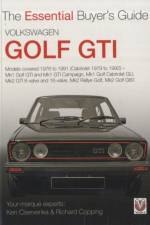
Charts the models that an enthusiast has to own, from the iconic late model MkI with its pocket rocket 1.8-litre engine and 5-speed box, through to the exclusive, extremely powerful and much sought after limited edition Rallye Golf. This book offers advice on what is worth restoring and what is likely to cost a new owner an un-recoupable fortune.
The first edition of British Canals was published in 1950 and was much admired as a pioneering work in transport history. Joseph Boughey, with the advice of Charles Hadfield, has previously revised and updated the perennially popular material to reflect more recent changes. For this ninth edition, Joseph Boughey discusses the many new discoveries and advances in the world of canals around Britain, inevitably focussing on the twentieth century to a far greater extent than in any previous edition of this book, while still within the context of Hadfield's original work.
The CUCV or Commercial Utility Cargo Vehicle is a US Military vehicle based on readily available commercial trucks. Originally intended to augment the purpose-built, but expensive GAMA Goat 6x6 and older Jeeps. The first generation was based on Dodge / Chrysler trucks. This book is focused on the M1008 series second generation CUCV which was General Motor''s first major light-truck military vehicle production since World War II. They began production in 1984 and ended production in 1996 with most units being produced as 1984 model year units. Later production was focused on replacements for existing CUCV''s. The majority of units were built from existing heavy duty light truck commercial parts. The M1009 was an upgraded/up-rated Chevy K5 Blazer with a 3/4 ton capacity. The M1008 series trucks were a 1-1/4 ton or 5/4 ton rated truck. In all 70,000 units were produced with three power trains. This manual is the Unit Maintenance Repair Parts and Special Tools List for these vehicles. Including the 6.5 liter and other models. It is published as a convenience to enthusiasts who may wish to have a quality professionally printed copy of the manual.
Motorcycle Coloring Book For Teens: Black BackgroundThis Motorcycle Coloring Book For Teens: Black Background by Art Therapy Coloring includes detailed and intricate motorcycle designs on a black background with geometric patterns. This collection of motorcycle designs is chosen especially for teens and tweens because teenagers like to color complex patterns and designs just like adults do! With images of motocross bikes, skeleton riders, motorcycle racing, and skulls on detailed geometric designs, teens and tweens will enjoy hours of coloring with over 30 detailed motorcycle designs.Coloring is a fun way to hang out with friends. You can also color alone if you feel like having some alone time. Coloring is considered to be similar to meditation. So engage your creativity and help yourself to relax and enjoy life! Not only will you be working on a beautiful work of art, but your brain will be more relaxed too! Buy your copy of Motorcycle Coloring Book For Teens: Black Background today and have fun coloring! Teens and tweens of all ages will enjoy coloring this coloring book, especially teen and tween boys. It makes a great Christmas or birthday gift for the motorcycle loving boy or girl!
From the author of High Performance and Racing Through the Dark, the story of how Italy rose from the ashes of the Second World War to lead the world with its beautiful fast cars.
Using an engaging question and answer format, Queen Mary expert David Ellery tells you everything you need to know about one of the most famous ships in the world: from her construction, to her wartime service, through to the haunting myths in her wake over her glorious 85 years.For 1930s Britain, the Queen Mary was a symbol of hope. Cunard had abandoned construction on what they had planned to be the grandest liner of all time in the depths of the Depression. Her half-finished hull sat on the Clyde for years, but when Cunard announced they were going to complete her, it was a sign, perhaps, that the darkest days were over, that the country was emerging from economic disaster and that Britannia would soon rule the waves once again.The Queen Mary would go on to be one of the most famous ships in the world for all the right reasons. The first British ship to be over 1,000 feet in length, launched by her namesake, she won the Blue Riband (the record for fastest Atlantic crossing) not once by twice ΓÇô and when she won it the second time in 1938 she held it until 1952.After wartime service carrying up to 16,000 US troops to Europe at a time, she finally retired to Long Beach, California, in 1967. There she remains, a perfectly preserved reminder of a bygone era, and a celebration of the golden age of the transatlantic liner.In this book David Ellery, maritime historian, TV presenter and documentary maker, answers all the questions you might have about this glorious ship ΓÇô and ones you might never have thought to ask too. This unique, accessible approach gives a fantastic introduction to the ship to anyone curious about her, but is also very detailed and comprehensive, covering everything from the ship''s design, construction, engineering and interior fittings to her naming, wartime service and more. He also addresses all the myths and rumours such a famous ship attracted over her decades in service.Packed with archival photographs and other original material, this is a fascinating and illuminating guide to the Queen Mary, looking beneath the sheen of her appointments to explore how her fame is well deserved.
A comprehensive look at the letters, documents and contemporary accounts of the Mary Rose - both in her prime and after she was lost
190 pages, and more than 120 illustrations and charts, size 8.25x10.75 inches. This manual is a compilation of three factory publications including the owner's instruction manual, the parts/spares manual and a set of service sheets. These publications cover all three variations of the 175cc two-stroke and the 250cc four-stroke and electric start models manufactured from 1959-1965. Neither BSA nor Triumph ever published a workshop manual for these models, however, the combination of these three publications provides the most comprehensive maintenance and repair information that was ever made available from the manufacturer.MANUALS & TECHNICAL PUBLICATIONS: Maintenance, repair and service information was issued under both the BSA and Triumph name. However, as the machines were identical in all aspects, any technical documentation can be applied to either manufacturer without hesitation.SERVICE SHEETS: Beginning in December 1959, both BSA and Triumph began publishing repair, overhaul and technical information in the form of individual (dealer only) 'Service Sheets'. It should be noted that it was never intended that these service sheets would be distributed to the general public. However, they were eventually combined into a single publication and released under both the BSA and Triumph names, the contents being identical in either case. INSTRUCTION MANUAL: Both BSA and Triumph published an identical 'Instruction Manual' the only difference being the name on the front cover. These publications were somewhat more detailed than typical 'owner's manuals' as they included overhaul information in addition to general maintenance and adjustments. As these instruction manuals were included with each new scooter purchased, there were a number of 'editions' published during the lifetime of the model, however, the contents remained basically unchanged. When combined with the 'Service Sheets' they are a reasonable substitute for a workshop manual. PARTS (or) SPARES MANUAL: The parts manuals are also identical and include exploded component diagrams that are extremely helpful in the rebuilding or restoration process.ADDITIONAL DATA: There is an addendum to the rear of this manual that contains a number of communications that were sent from the UK factory to their US distributors. These documents are somewhat rare and they may be of help in assisting in the maintenance of one of these machines.DESIGN & GENERAL SPECIFICATIONS: Designed by Edward Turner (Triumph) and sold under both BSA and Triumph brand names to take advantage of established distribution networks, this badge engineering was one of the last uses of the Sunbeam name. The differences between the BSA Sunbeam and Triumph Tigress were entirely cosmetic-the former in polychromatic green paint, also two-tone red and cream, with a BSA badge; the latter in a shell blue or mimosa and ivory (two-tone) with a Triumph badge.Introduced in late 1959, the scooter was available with a 250 cc four-stroke twin (10hp), or 175cc two-stroke single cylinder engine (7.5hp). Both engines were forced-air-cooled. The two-stroke was a development of the BSA Bantam engine but the four-stroke was a completely new parallel-twin with a gear drive to the gearbox. The contact-breaker fed two separate ignition coils, each of which connected directly to its own spark plug without the need for a distributor. Drive to the rear wheel was by a fully enclosed chain in an oil bath. Both versions had four, foot-operated gears. Some of the 250 twins were fitted with an electric starter and a 12 volt (not 6 volt) electrical system, they were identified as either B2S (Sunbeam) or TW2S (Triumph). The 250 cc four-stroke model was discontinued in 1964 and the 175cc two-stroke model in 1965.
More than 550 illustrations and charts, size 8.25x10.75 inches. In 1945, after the war had ended, BSA resumed production of their civilian line of motorcycles. However, they continued their pre-war practice of publishing repair, overhaul and technical information in the form of individual 'Service Sheets'. It should be noted that BSA never intended that these service sheets would be distributed to the general public, they were 'dealer only' publications and the print quality was at times somewhat questionable. It was not until the early 1960's that BSA eventually started publishing model specific workshop manuals that were available to the general public. Consequently, these 'Service Sheets' were the only publications available for the maintenance and repair of BSA models that were manufactured through the mid 1960's. The most complete compilation of the 1945 and onwards service sheets was issued by BSA in the form of a 'dealer only' ringbinder that contained 166 individual service sheets (516 pgs) for the entire range of 1945 thru 1967 motorcycles. It is extremely difficult to find. It is this ring-bound publication that was used to create this 'Service Sheets Master Catalogue'. It includes every service sheet issued/updated by BSA from 1945 until the Service Sheet program was discontinued in the mid 1960's, models covered are as follows: A7 & A10 1947-62B31-B32-B33 and B34 1945-60 (Inc. Gold Star & competition models)C10-C10L-C11-C11G and C12 1945-58C15-C15T-C15S-C15SS and B40 1958-67D1-D3-D5 and D7 (Bantam) 1948-66M20-M21 and M33 1945-63Dandy 1956-62 At some point in the 1930's, BSA adopted the practice of identifying their various model types by 'groups' and the models manufactured from 1945 through the mid 1960's were in Groups A, B, C, D and M. The service sheets that were associated to a particular group were identified numerically and, while there were some exceptions due to overlapping data between models, in general terms the numbers relate to a particular model group. They are as follows: The 200 series of service sheets were applicable to Group A models, the 300 series to Group B, the 400 series to Group C, the 500 series to Group D and the 600 series to Group M. In addition, there were a 700 series applicable to mechanical maintenance and an 800 series for electronic service and wiring diagrams. Both the 700 and 800 series of service sheets contained information that was not model specific but was applicable across multiple model groups. Finally, there were a 900 series for the BSA Dandy and a 1000 series for the BSA Sunbeam and Triumph Tigress scooter. The 1000 series sheets were published under the generic title, 'Scooter Service Sheet'. These sheets did not display either company logo and they were never intended to be included in the ring-bound dealer album. Unfortunately, as these service sheets were issued individually and at random times, the numbering sequence within any group is, at times, illogical and not necessarily consecutive. Consequently, owners of BSA motorcycles are subjected to considerable confusion surrounding the appropriate selection from the multitude of reprints that have recently flooded the online marketplace. Many of the reprints found on internet websites are from 'bedroom sellers' at enticingly low prices by individuals that really have no idea what they are selling. Many are nothing more than poor quality comb-bound photocopies that are scanned and printed complete with greasy pages and thumbprints and are deceptively described as 'pre-owned', 'used' or even 'refurbished'! In addition, they are often advertised for the incorrect series and/or model years of motorcycles.
Abonner på vårt nyhetsbrev og få rabatter og inspirasjon til din neste leseopplevelse.
Ved å abonnere godtar du vår personvernerklæring.