






Gjør som tusenvis av andre bokelskere
Abonner på vårt nyhetsbrev og få rabatter og inspirasjon til din neste leseopplevelse.
Ved å abonnere godtar du vår personvernerklæring.Du kan når som helst melde deg av våre nyhetsbrev.

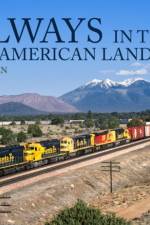
Windswept vistas. Scorched canyons. Glorious scenes of snow and ice. This book shows the North American landscape in all its breathtaking glory, cleaved by the continent's powerful locomotives and captured in a series of stunning original photographs by leading railway artist Mike Danneman. Evoking the romance, drama and beauty of the railways, this wonderful collection of images presents the full breadth of jaw-dropping backdrops offered by this vast expanse of land. The contrast between raw motive power and bucolic peace creates scenes that will delight anybody who wants to enjoy the full majesty of North America from their own home.
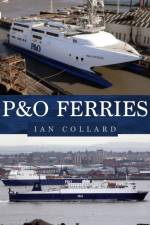
In the late 1960s, P&O established ferry services in the North Sea and English Channel. Roll-on/roll-off operations and containerisation were introduced and new ships, facilities and investment was needed to take advantage of developments. What followed was several decades of growth, buyouts and divisions. The twenty-first century saw the closure of several routes as the ferries saw increased competition from low-cost airline and the Channel Tunnel. Throughout this period, P&O attracted a loyal customer base and became one of the most recognisable names on the sea. Utilising a selection of rare and previously unpublished images, maritime historian Ian Collard delves into the story of this iconic company and its ships.
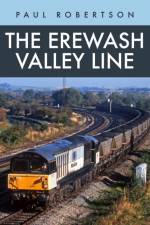
The Erewash Valley line, linking the busy railway junctions at Trent through the once bustling yards of the iconic railway location of Toton and to the main line at Clay Cross, has seen much in the way of change over the last half a century. Infrastructure, traffic types, wagon and locomotive classes have all seen a mixture of rationalisation, overhaul, replacement, withdrawal and investment. This changing scene has provided enthusiasts and photographers with outstanding variety and opportunities to record the changing times, and while the amount of traffic lost can be lamented, the modern-day photographer can still find good variety. With 180 previously unpublished photographs, this book provides a snapshot of diesels working over the route through this period of change, from the corporate British Rail era to the early years of privatisation and up to the present day.
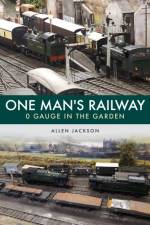
This book is about one ordinary person's efforts, largely carried out single-handedly and with limited funds, to build a model railway layout in his garden that runs just like the real thing. It is based on Brymbo in North Wales, where the GWR and LNER were joined by the LMS in the search for mineral wealth. Allen Jackson's recreation runs between three sheds and features empty and loaded coal trains travelling from colliery to steelworks; pickup goods; branch passenger and excursion traffic; and even its very own CCTV and system to aid signalling. Packed with wonderful illustrations including photographs and layout diagrams, this book is a wonderful tribute to a lifetime's hobby and will delight railway modellers both young and old.
Scania's first venture into the British double-decker bus market came in 1973, when with partner MCW, based in Birmingham, they produced the 'Metropolitan' double-decker. In 1980, after a brief hiatus, Scania re-entered the British double-decker market with a chassis for bodying by all the major UK builder. Featuring a wonderful array of previously unpublished images, this book is a fond tribute to forty years of Scania double-decker buses on Britain's roads.
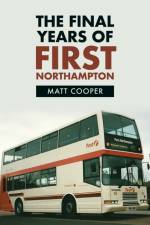
The transport scene in Northampton was dominated for many decades by Corporation-owned Northampton Transport. In August 1993 privatisation took place and the largely standardised fleet of red and cream buses began to change. By the end of the 1990s, the merging of GRT and Badgerline Groups had created Firstbus. The main focus of this book is the last twenty years of Firstbus, looking at their expansion, consolidation and contraction, with Northampton Depot eventually closed in September 2013. A wide range of vehicle types and a great variety of liveries featured during this period as the network and operating area seemed to change constantly. With a wealth of previously unpublished images, this is a nostalgic look back at the final years of the First Group in and around Northampton.
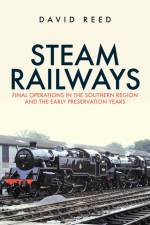
This book contains previously unpublished photographs from the collection of David Reed, who set out to record the end of steam trains on British Rail's Southern Region. Also recorded here are steam engines in the locomotive graveyards at Salisbury, Weymouth and Barry, as well as steam engines used by London Transport. The early steam preservation years are covered, including some locations that no longer exist: the Great Western Society at Taplow, Ashchurch, the Wallingford branch and the 'Marlow Donkey' Centenary all feature. The Longmoor Military Railway open days are pictured together with early years of the Dart Valley Railway at Buckfastleigh and Ashburton. The Didcot Railway Centre, Dinting Railway Centre, Ashford Steam Centre and the Sittingbourne & Kemsley Railway are also featured, along with the iconic Bluebell Railway.
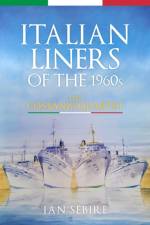
'Functionality is never an excuse for poor design' said the naval architect Nicolo Costanzi, a man whose synthesis of engineering and artistry created practical ships of sublime beauty. This book tells the story of the four large passenger ships conceived by Costanzi in the late 1950s and early 1960s. These designs incorporated the most celebrated elements of his work and perhaps reflect the man at the very height of his powers. The 'Costanzi Quartet' comprised Lloyd Triestino's stylish emigrant carriers Galileo Galilei and Guglielmo Marconi, Home Lines' groundbreaking Oceanic and Costa's speed queen, Eugenio C. Profusely illustrated throughout, this book considers their designs and varied careers, as well as offering an insight into life on board through the testimony of passengers and crew. It also sheds light on the man who created them and whose foresight and skill continues to influence contemporary cruise ship design.
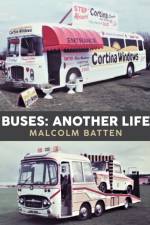
What happens to old buses at the end of their career, when they are replaced by newer vehicles? Some inevitably go to scrap, especially if they have been cannibalised for spares. Some see further service with other bus companies. A few lucky ones pass directly into preservation. But many find further employment with so-called 'Non-PSV' users; some of these may continue to carry passengers, perhaps as works transport or for a community group. Some may be used for driver training. However, others will be converted to fulfil a whole variety of roles - catering or hospitality vehicles; advertising promotional vehicles; ambulances; mobile homes; playbuses; horseboxes; vehicle transporters, and more. This book looks at a variety of old buses and coaches and the varied roles they have fulfilled over the last fifty years.
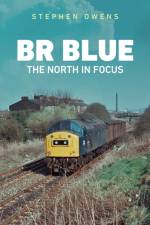
From 1978 onwards, during the period often referred to as BR Blue, Stephen Owens was able to photograph for posterity some of what he saw on the railway. Some might suggest the period didn't have the interest of the steam era - how could it? It was an era when the railway appeared neglected and threadbare; it was being run on a shoestring, and it looked and felt like it. Be that as it may, it had its devotees and supporters. Some rail enthusiasts instinctively recognised that the situation couldn't and wouldn't last. In a way it was similar to the end of steam: the clock was ticking, but this time no-one knew when it would stop, nor what would follow. With a wonderful selection of images, this nostalgic look back at the era of Rail Blue in northern England will delight rail enthusiasts both young and old.
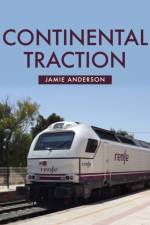
Although separated from the United Kingdom by the twenty-one miles of English Channel, the continental railway network has always been a draw for British rail enthusiasts. With a combined network covering some 202,000 km there is a huge network for the enthusiast to explore and a great variety of traction to photograph. Each country has its own national operator, such as SNCF in France and SJ in Sweden, and alongside these you can find a number of private operators, such as BlS in Switzerland and WLC in Austria. The Continent has something for everyone, whether it be high-speed trains racing across countries or humble multiple units going about their daily workings. The European continent also has a wide range of environments in which to photograph its traction, ranging from the mountains to the open countryside and city suburbs. This book collects a number of scenes in a range of different locales.
British Rail operated thousands of different shunt engines during its time, many being built by private companies and others by BR themselves. Sadly, most have now been withdrawn; however, a large number have been saved for posterity by many different preservation groups and sites. Here, Andrew Cole shows many of these saved shunters, capturing them in varying states from abandoned wrecks through to gleaming masterpieces. Many are still invaluable at the sites at which they are based. The book covers classes 01 to 14 and shows them in a wide variety of different liveries and at a wide variety of locations around the country. It also gives a brief outline of how the locomotives ended up in preservation. It is a tribute to the hard work and dedication of the organisations responsible for the upkeep and restoration of these valuable shunt engines, allowing future generations to enjoy and appreciate them.
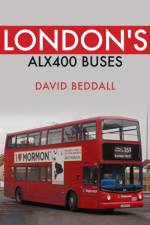
The Alexander ALX400 was the first low-floor bus body built in the United Kingdom, first appearing in 1997. The first ALX400s were placed on the DAF DB250LF chassis, closely followed by the Dennis Trident. 2000 saw the launch of the Volvo B7TL / ALX400 combination. The ALX400 soon became one of the more popular low-floor double-decks not only in London, but in the UK. The introduction of the Enviro 400 model in 2005 spelt the end of the ALX400, and in 2006 the model was discontinued. A large number of ALX400s were purchased by Arriva, Stagecoach and First, along with smaller orders from the Go-Ahead group. Utilising a number of superb images and informative captions, David Beddall documents the use of this bus in London.
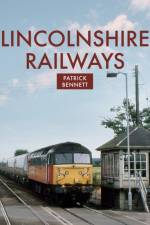
England's second largest county contains a wealth of railway history. The county was dominated by two companies - the Great Central in the north and the Great Northern in the centre and south. The county was also penetrated by the Midland Railway and there were no fewer than three joint lines. In the south the Midland & Great Northern Joint passed through from west to east, while the Great Northern & Great Eastern Joint ran north to south. In the far north-west of the county was the Isle of Axholme Railway, jointly owned by the North Eastern and the Lancashire & Yorkshire. The East Coast Main Line passes through the west of the county and this stretch includes the major railway centre of Grantham and Stoke Bank, where Mallard made its record-breaking run. Other important railway junctions are Sleaford, Boston, Spalding and Lincoln. On the coast are the seaside towns of Skegness, Mablethorpe, Sutton and Cleethorpes, which in the tourist season would see the arrival by train of thousands of holidaymakers. Further north is Grimsby, which provided numerous fish trains. So important was this traffic that the Great Central had a class of engine commonly used on these trains known as 'Fish Engines'. Next comes the important port of Immingham, Britain's busiest, which sees some 240 train movements per week. On the north Lincolnshire coast is New Holland, from where the railway-owned ferry used to cross to Hull. Further west is the steel-making town of Scunthorpe, which has its own railway system and is another important customer of the railway. There were other railways too: the Immingham Electric Railway, the Alford steam tram, and the potato railways - one system of which extended to more than twenty miles. RAF Cranwell had its own branch line. There are three tourist railways, one standard gauge and two narrow gauge. Using a wealth of rare and previously unseen photographs, Patrick Bennett documents Lincolnshire's railways.
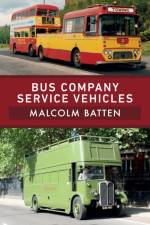
In the days before privatisation, many bus companies adapted old buses for a variety of specialist uses as service vehicles. Using the skills and ingenuity of their workshops, buses might become, among other things, stores vans, tree loppers or uniform stores. Trolleybuses may have been converted to tower wagons to maintain the overhead wires. Some bus operators converted old buses to towing lorries to rescue broken down vehicles. Others preferred ex-military trucks such as the AEC Matador. These came with somewhat austere cabs, but here again the body shop would often come up with a custom-built body using various bus parts. Buses would also be adapted to serve as information offices or publicity buses, promoting such things as holiday tours or special ticket offers. Since privatisation, such practices have died out for a variety of reasons. Expensive, in-house workshops have largely been closed. Construction and Use Regulations have been tightened up. Emissions zone restrictions may limit the use of older less clean engines in city centres. Furthermore the modern low-floor rear-engine buses are probably less suited to such conversions. Companies will use the services of specialist commercial bus and truck rescue services rather than retaining their own towing vehicles. This book looks at a variety of service vehicles from around the country over the last fifty years, including examples that have survived into preservation.
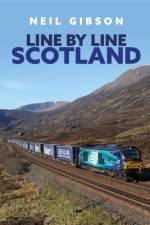
Line by Line: Scotland is an illustrated guide to the country's railway, showcasing a collection of images captured over around twenty years. A celebration of both beautiful scenery and elegant engineering, it documents a variety of interesting rail traffic and will appeal to both local enthusiasts and those further afield. Featuring previously unpublished images that pay testament to Neil Gibson's keen eye for a great shot, this is terrific record of the railways of Scotland.
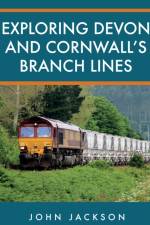
The two most westerly counties in England remain hugely popular for travellers looking for a break in the UK. Perhaps less well known is the fact that, against all the odds when faced by the Beeching Axe, a number of popular destinations can still be reached by today's railway. From Barnstaple to Gunnislake, Exmouth to Falmouth, John Jackson explores the variety of lines and stations that remain on the railway map in the counties of Devon and Cornwall. With much of the area's industry now consigned to history, there is little remaining freight traffic in the area. The main exception is the flow of Cornish china clay for export that is still carried by rail and centred on the area around Par and St Blazey. The author has spent countless hours chasing these somewhat elusive workings in recent years. From rolling countryside to seaside views, these two counties have it all.
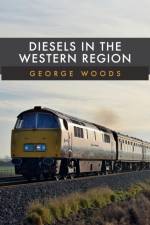
The Great Western Railway was always a little different to the rest of the railways, and that was still the position when in 1955 British Railways announced their Modernisation Plan that would see steam replaced by diesels and electrics. The rest of the railway regions opted for diesel-electric locos but the Western would be different, opting for diesel-hydraulics. The first entered service in 1957 and by 1964 six different classes were introduced. Unfortunately there were problems with them all, which were largely solved as experience was gained, but the BRB was in favour of standardisation using the diesel-electric type and they saw the Western hydraulics as non-standard, which resulted in their early withdrawal from service by 1977. This book of mostly unpublished colour pictures taken by George Woods shows them in service from 1966 to 2019, and also includes the Class 50 locos that became their replacements.
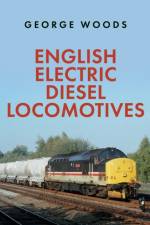
English Electric built their first diesel loco in 1936 and, before the company closed in 1968, built thousands of diesel and electric locos that saw service all over the world. They were among the companies chosen by BR to build prototype diesel locos for the Modernisation Scheme of 1955, which would see the replacement of steam traction by diesels and electrics. Locos were built to suit a wide variety of duties, some remaining in everyday service fifty years later. This book of mostly unpublished colour photographs from the collection of George Woods shows them in service all over the BR system from 1966 to 2019 working a wide variety of trains, both passenger and freight, in the great variety of liveries they wore both during their BR service and in later years under private ownership.
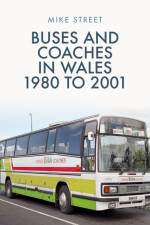
The final two decades of the twentieth century saw great changes in the bus and coach industry in Great Britain. In the early 1980s the National Bus Company reorganisation saw the Welsh operations of Crosville become Crosville Wales (and later Arriva Cymru); South Wales Transport be acquired by Badgerline, which became part of First Bus; and National Welsh being split to create new Rhondda Buses and Red & White companies, both of which eventually fell under the Stagecoach banner. The remaining part of National Welsh was the subject of a management buyout that failed spectacularly in 1992. In 1986 the remaining council-owned fleets were forced into being run as 'arms-length' companies, albeit at first controlled by their respective councils, with some later selling to larger companies and others closing down. In 2001 only Cardiff Buses, Islwyn Borough Transport (controlled by Caerphilly Borough Council) and Newport Transport remained. Some independent operators expanded and were either acquired by other operators or over-reached themselves and failed. Thus, the picture in 2001 was considerably different to that in 1980. This volume is an attempt to document some of the changes that occurred during those decades.
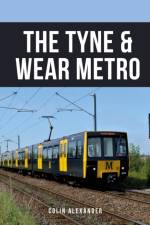
August 2020 marked the fortieth anniversary of the opening of the first section of the Tyne & Wear Metro between Haymarket and Tynemouth. It is an exciting time for the system, with a new fleet of trains about to be ordered, and extensions to the network being proposed. This book explores the decline of the BR suburban lines that were replaced, the phased opening of the new system from 1980, and subsequent extensions. It also looks at those being considered in the future. The successful integration of the Metro with bus and ferry services is considered, alongside the inclusivity of the railway's design, which allows disabled people unprecedented access to public transport. It also illustrates Metro's unique combination of brand-new tunnels, spectacular viaducts and underground stations, taking in the magnificent Victorian infrastructure of the former North Eastern Railway and Blyth & Tyne Railway.
This comprehensive and readable book covers the Rover models built on the R8 platform, including the Rover 200 and 400. The book begins with the transitional period after the demise of BL and the advent of first Austin Rover and then Rover as well as the early collaboration with Honda to develop a new series of cars. The author also examines the development of the successful K Series engine as well as the collaboration with Peugeot to develop diesel engines from 1992. The book goes on to explore the various models in detail, including the five-door and three-door Rover 200s, the Rover 200 Cabriolet, the Rover 400 saloons, the Rover 400 Tourer and the Rover 200 Tomcat coup Written by an acknowledged authority on Rover cars, this book provides the reader with everything they need to know about the development of this important series of cars at a critical moment in British motor manufacturing history.
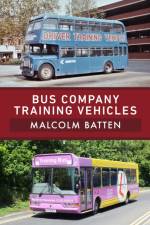
The larger bus operators, whether municipal or company owned, have traditionally trained their own new drivers. Normally older vehicles from the fleet were retained and adapted for training, adorned with 'L' plates. In earlier days they would usually just retain fleet livery. Sometimes they might receive a separate livery, to warn other road users. When the National Bus Company introduced corporate liveries of red or green for its fleets, many of their constituent companies used yellow for their training and service vehicles. Then, as recruitment became more difficult from around the 1980s, colourful liveries with invitational recruitment slogans tended to appear and this has continued since. Rather surprisingly, companies often bought in buses for training from other companies rather than converting their own, and these might be types not otherwise represented in their fleet. This book looks at a variety of training vehicles from around the country over the last fifty years, including examples that have survived into preservation.
The MG Z cars were produced at a pivotal time when the MG Rover Group separated from their previous owners BMW and stood alone in the highly competitive mass car market. In this readable book, motoring journalist and Austin Rover expert Craig Cheetham reveals the inside story of the development of the range of MG Z cars that were designed to save the company. The book explores the formation of the Phoenix Corporation, the holding company for the MG Rover Group. It also looks at the design and engineering initiatives that would make the MG Z cars more than just a clever rebranding exercise, producing cars with lasting appeal. The book describes the MG Z versions of the Rover 25, the Rover 45 and the Rover 75, providing insights into how each of the models was re-engineered to meet the demanding standards of MG's heritage. It also describes the fortunes of the Z cars in motorsport, in particular the British Touring Car Championship. The book reveals how, despite all these efforts, MG Rover eventually ran out of money, bringing an end the British-owned mass car industry. Complete with tips for owners and prospective buyers on what to look out for, this book is an essential guide to the MG Z cars.
ERF Limited was formed in 1933 when Edwin Richard Foden founded the company with his son Dennis. Under the guidance of design engineer Ernest Sherratt, the best components available at the time were assembled to create vehicles that soon earned a reputation as good lorries capable of earning good revenue with reasonable running costs. This approach continued, more or less, until the end of the company and proved to be a very successful and lucrative business plan with a lot of development costs being borne by the component suppliers. This book is a broad overview of the company, with almost 200 photos offering an insight into the range and model types that spanned the years. The majority of the images included here are previously unpublished and offer a wonderful tribute to this much-loved manufacturer.
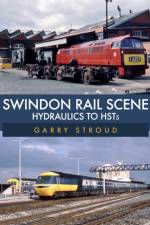
Swindon played an important role in the railway industry from its Victorian roots up to the sound of the final works hooter in 1986. This was without doubt the end of an era; today the works site is a shadow of its former past - gone is the mighty 'A' shop, along with the carriage and wagon shops east of the Gloucester line. With electrification now through the town, the railway landscape has been totally transformed. Covering two decades between the late 1960s to the late 1980s, the images in this book represent not just the works, station and yards during this period, but also the main line and local area to Stratton St Margaret in the east, Wootton Bassett to the west and Purton on the Gloucester line to the north. This was a period of transition when Western Region hydraulics were giving way to diesel electric power, with HSTs eventually arriving in the area.
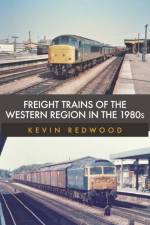
From coal trains in South Wales to clay trains in Cornwall, there were still large numbers of unfitted and vacuum-braked wagons of various types in use across the Western Region at the start of the 1980s. However changes were taking place, and by 1984 the traditional wagon-load freight network had disappeared, and with it many yards were closed or rationalised. The replacement Speedlink Network conveyed modern air-braked wagons, many of them privately owned. Company block trains also connected freight customers across the Region, hauled by a variety of loco classes. Between 1980 and 1986 Kevin Redwood was working in the Area Freight Centre at Bristol with a particular interest in freight traffic. On his days off he frequently travelled across the region to photograph the changing scene. His journeys took him to busy mainline locations like Didcot, as well as more obscure locations in South Wales and the West Country.
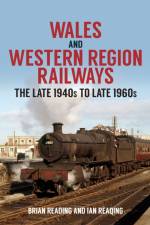
The 1950s and 1960s was a time of profound cultural and technological transformation. With images and vivid recollections, we journey back to post-war Wales and the Western Region of British Railways. We explore favourite routes and railway places, many now changed beyond recognition. Trackside, at busy stations, in and around depots, an evolving mood is revealed in pictures. In the 1950s railway pride and optimism overcame staff shortages, returning locomotives to pre-war performance and introducing modern BR standard classes. By the 1960s fiscal efficiency and the dawning diesel era turned pride to neglect. Sparkling steel, brass and tallow gave way to dust, rust and flaking paint. Though many locomotives were lost, some survived to be reborn as the stars of preserved railways; loved by dedicated volunteers and tourists alike. People, machines and landscapes are crystalized on film for future generations - reawakening memories for those who lived through this time of change and offering a fascinating insight for those who are too young to have been trackside during this intriguing period of railway history.
Abonner på vårt nyhetsbrev og få rabatter og inspirasjon til din neste leseopplevelse.
Ved å abonnere godtar du vår personvernerklæring.