






Gjør som tusenvis av andre bokelskere
Abonner på vårt nyhetsbrev og få rabatter og inspirasjon til din neste leseopplevelse.
Ved å abonnere godtar du vår personvernerklæring.Du kan når som helst melde deg av våre nyhetsbrev.

With success comes challenges, and Jamie has always had a target painted squarely on his rear spoiler. And it all started back in 1991, when his father put him behind the wheel of his first go-kart. With steely focus and a relentless desire to win, it was only a matter of time before Whincup made the leap to the Formula Ford circuit and on to the big show: Supercars. But there are ups and downs to life in the fast lane - sackings, loss of sponsors, the rivalries, the fans, the partnerships, the sacrifices and being true to the dream when everything looks like an off-ramp. There are freak accidents, split-second decisions that win the day, omens from the race gods, and a strong dose of self-made luck. In 2008, Jamie would seal his quest for the Supercar crown after several near-misses, and he wouldn't look back. Seven championships, four Bathurst 1000 victories and a Bathurst 12-hour win in the books, you'd be tempted to ride off into the sunset. But that's never been Jamie's style. It's just the start of his next act: team principal of Triple Eight Race Engineering and mentor to the next generation of champions. 'You have to make a decision: What do you want out of life? Where do you want to go? How do you want to live?'
Flying Camelot brings us back to the post-Vietnam era, when the US Air Force launched two new, state-of-the art fighter aircraft: the F-15 Eagle and the F-16 Fighting Falcon. It was an era when debates about aircraft superiority went public-and these were not uncontested discussions. Michael W. Hankins delves deep into the fighter pilot culture that gave rise to both designs, showing how a small but vocal group of pilots, engineers, and analysts in the Department of Defense weaponized their own culture to affect technological development and larger political change.The design and advancement of the F-15 and F-16 reflected this group's nostalgic desire to recapture the best of World War I air combat. Known as the "e;Fighter Mafia,"e; and later growing into the media savvy political powerhouse "e;Reform Movement,"e; it believed that American weapons systems were too complicated and expensive, and thus vulnerable. The group's leader was Colonel John Boyd, a contentious former fighter pilot heralded as a messianic figure by many in its ranks. He and his group advocated for a shift in focus from the multi-role interceptors the Air Force had designed in the early Cold War towards specialized air-to-air combat dogfighters. Their influence stretched beyond design and into larger politicized debates about US national security, debates that still resonate today. A biography of fighter pilot culture and the nostalgia that drove decision-making, Flying Camelot deftly engages both popular culture and archives to animate the movement that shook the foundations of the Pentagon and Congress.
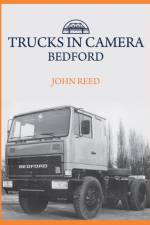
'You see them everywhere' was the slogan adopted by Bedford when advertising its commercial vehicles in the 1930s and it held true for many decades. The company set out to produce reliable vehicles at an economic price. Catering to the small trader with its 30cwt and 2 ton trucks, and 6cwt and 10/12cwt vans, the company was one of the leading manufacturers within its first seven years. During the war Bedford produced more than 250,000 lorries for the armed forces, such as the 15cwt 'pneumonia wagons' and the more solid 3-tonners. With a return to peacetime conditions, Bedford was able to produce new vehicles which it had been unable to launch during the war but regained market supremacy by 1947, when the company produced its 500,000th truck - the first British manufacturer to reach this figure. Bedford entered the market for heavier vehicles in 1950 and its one millionth truck was produced in 1958. Two years later the first of the TK range was announced and the concept of cab ahead of engine was introduced. This basic chassis layout has been followed ever since. The changes of design, use and loads carried in the course of 50 years of steady progress are illustrated in this book, which proves the truth of the slogan, 'You see them everywhere'.
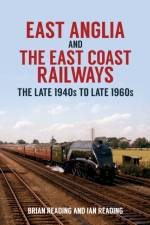
The 1950s and 1960s was a time of profound cultural and technological transformation. With images and vivid recollections, we journey back to post-war East Anglia and the East Coast Main Line with many locations changed beyond recognition. Trackside, at busy stations, and in and around depots, an evolving mood is revealed in pictures. In the 1950s, railway pride and optimism overcame staff shortages; returning locomotives to pre-war performance and introducing modern BR standard classes. By the 1960s, fiscal efficiency and the dawning diesel era turned pride to neglect of steam. Sparkling steel, brass and tallow gave way to dust, rust and flaking paint. Heroic workhorses were lost to scrap. As the mood turned to melancholy, just a few of these great workhorses became pets - polished, loved, and cared for by dedicated railway workers and a growing band of enthusiastic volunteers. People, machines and landscapes are crystalized on film for future generations; reawakening memories for those who lived through this time of change and offering a fascinating insight for those who are too young to have been trackside during this intriguing period of railway history.
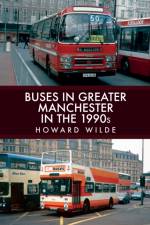
Like many of the conurbations across Britain, the Greater Manchester region in the 1990s offered a fascinating mixture of buses from operators both large and small, new and established. The deregulation of the bus industry that began in October 1986 created a lively if sometimes chaotic environment. Operators came and went; some were rather spectacular in their demise. As the 1990s progressed there was gradual consolidation, as increasing areas of operation came under the control of the emerging larger groups - the likes of First, Stagecoach and Arriva. In this book, Howard Wilde reflects on some of the choice moments of this eventful decade, with a wide selection of photographs from Manchester and the numerous surrounding towns to show a period that was fascinating for the enthusiast, if not always beneficial for the passenger.
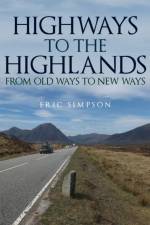
For centuries tourists and other travellers have been travelling north to the Highlands of Scotland. This book follows the main thoroughfares north, using vintage and contemporary images to illustrate how they and the people using them have changed over time. The book starts as many visitors to Scotland have done over the years, by following the Great North Road from Edinburgh to Inverness. The reader continues north from the Highland capital by the east coast, thus joining the highly popular North Coast 500 tourist route going around the North of Scotland from east to west. The return journey south follows the spectacular west coast route all the way to Glasgow. Many of the old picture postcards and other images feature the beautiful scenery and way of life of the people of the Highlands. Illustrating the changes that came about during the twentieth-century transport revolution, this is an affectionate lavishly illustrated tribute to how travel around the Highlands has changed over time.
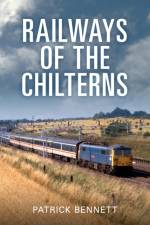
The Chilterns consist of a band of chalk hills to the north-west of London stretching from Oxfordshire to Hertfordshire. It so happened that these hills were directly on the routes of five major companies' routes to the North and Midlands. These were: the Great Northern, the Midland, the London & North Western, the Great Central and the Great Western. As well as the main lines there was a large number of branches, now nearly all closed. To complete the picture, to the north of the Chilterns was the Oxford to Cambridge transversal route, part of which remains open, and part of which is being actively restored. This book relates the story of these lines and their branches, through their construction and operation, the closures of the 1960s, to the situation today. Illustrated throughout with historic and modern photographs, maps, diagrams and timetables.
Often regarded as a quiet holiday county, in fact Dorset has many aviation connections. As early as 1908 Bleriots were being built by Bournemouth businessmen, the Royal Navy undertook first landing on a warship at Weymouth in 1910, the Schneider Race was held at Bournemouth in 1913, Dorset was at the front line of the early days of the Battle of Britain with attacks on Portland Naval Base, the Dam Busters bouncing bomb was tested on Dorset ranges in 1943, and aircraft production factories at Christchurch and Bournemouth existed in the 1940 and 1950s. With a wealth of previously unpublished images, Mike Phipp tells this remarkable story.
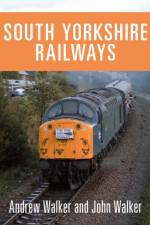
Coal and iron making first brought railways to what is now called South Yorkshire. The industrial towns of Sheffield, Rotherham, Barnsley and Doncaster attracted the Victorian pioneers, who built a myriad of often competing lines to the collieries and factories. The carriage of people was almost an afterthought, but once there was demonstrable demand, the passenger routes followed, linking the growing centres of population and connecting with the major cities in adjoining counties and further afield. Perhaps most historically of all, the immense challenge of piercing the Pennines at Woodhead was met with the construction of the Great Central's line from Sheffield to Manchester, later famously electrified and then regrettably closed. This photographic collection presents a selection of images from across this diverse county from the 1970s to the present day, from the dying days of the pits to the era of the internet-enabled trains of the twenty-first century. Many of these pictures feature infrastructure and locations that have long since disappeared from the railway map.
The Blackburn, later Hawker Siddeley, Buccaneer enjoyed an incredible service career that lasted over four decades. Designed as a carrier-borne attack aircraft, the Buccaneer was a solid aircraft designed to take the punishment of carrier operations and the constant stresses to the airframe caused by low-level flying. The aircraft entered service with the Royal Navy in 1962 in place of the Supermarine Scimitar and would continue with the senior service until 1978. The RAF received their first aircraft in 1969 - a legacy of the cancelled TSR.2 and F-111K, which resulted in a capability gap that had to be closed. The Buccaneer went on to serve the RAF in the low-level strike and reconnaissance role until 1994, serving with distinction during the Gulf War of early 1991. A robust and reliable aircraft that was popular with both its air and ground crews, the Buccaneer was a breed apart. A truly great British piece of engineering.
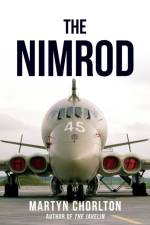
With its roots dating back to the late 1940s and the de Havilland Comet airliner, the Nimrod already had pedigree when it first appeared in the late 1960s in place of the Avro Shackleton in the Maritime Reconnaissance role. Fewer than fifty were built for the RAF, the type being steadily upgraded throughout its career right up to its retirement in 2011. Compared to the Shackleton, the Nimrod brought comfort and reliability to its multi-role long-range activities, including anti-submarine warfare, maritime surveillance and anti-surface warfare. The Nimrod saw action during the Falklands War, the Gulf Wars, Afghanistan and a continued contribution (since 1977) to Operation Tapestry - the protection of the UK's Sovereign Sea Areas. Specialist versions of the Nimrod also served in the signals intelligence role while other attempted developments failed, such as the Airborne Early Warning role and the final, costly MRA.4 versions, neither of which entered RAF service. This book tells the story of this remarkable aircraft.
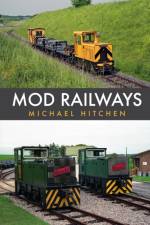
Across the country at numerous locations the government operated another railway, hidden from the public, behind high wire fences. These were the railways serving the Ministry of Defence. A fascinating collection of sites, with differing gauges, origins and functions. At its peak in the 1950 and 1960s the nation was covered with rail-served military locations, varying from a siding right up to huge storage locations, with self-contained internal networks. Each military service had its individual rail command, operating independently, with different locos types and even gauges. Recent history has seen these brought together, amalgamated as the Defence Rail Organisation. Unlike many industrial rail systems, a feature of military rail sites was the high standard of maintenance, not only of the rolling stock, but of the surrounding environment, well kept track formations were a usual order. Part of the fascination of these railways was the mystery that naturally surrounded their operation, use and stock. Some locations remain in use, but the large majority have been taken out of use, mainly as units have closed down, but in some case the abandonment of rail in favour of internal road transport. This book looks at rolling stock used at a number of locations, both standard and narrow gauge, and where appropriate the locations served by these largely unknown systems.
Humber Cars date back to 1899, when Thomas Humber produced his Humber Phaeton model. The company went on to manufacture various quality motor vehicles, but financial difficulties during the 1920s led to it being bought out in 1928. The company became part of the Rootes Group, which would also include Hillman, Sunbeam, Singer, Commer and Karrier. The Rootes brothers were keen to promote the Humber marque as a prestige brand to place it alongside Rover and Jaguar. This book takes up the story of Humber cars at the end of Second World War, looking at the Hawk, Super Snipe and Sceptre, as well as the marque's association with royalty and government. The marque's eventual demise came in 1976, and Stephen Lewis utilises an array of fascinating rare and previously unpublished images to tell the full story of Humber's post-war era.
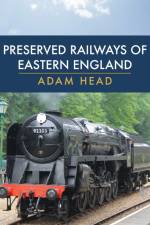
Among the many lines that branch all around the East of England, there are some that can be seen diverging from stations that are never used by the train operating companies. These lines head to hidden gems within the East of England known as preserved railways. These provide their own different views and panoramas across the East, and with their range of classic steam and diesel locomotives are a mecca for the railway enthusiast. In this book there are seven preserved railways that can be found in the East of England, all of which vary in length and in featured locomotives. Perfect for both local visitors and those from further afield considering a trip, this is an affectionate tribute to an important part of our national heritage.
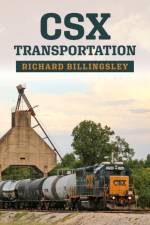
CSX Transportation came to being in 1980 with the merger of Seaboard Coast Lines and the Chessie System, producing a system of over 21,000 route miles in twenty-four states, with incursions into two Canadian provinces. The system runs from Beauharnois, Quebec in the north to Miami, Florida in the south and covers much of the industrial north-east of the States, as well as the more rural areas that lead to the south-east of the country. Most of the locomotive fleet are now painted in a dark blue and yellow paint scheme, with earlier grey and blue schemes now almost extinct. Included in the book are images mainly from the southern division of the company's operations. These feature all manner of freight operations, along with areas with trackage rights, short line railroads fed by the CSX system and Amtrak, and commuter rail operations that use CSX tracks and assets.
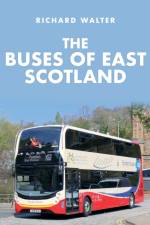
The exact definition of east Scotland can be difficult to define due to its wide geographical areas, but for the purpose of this book the bus services covered are from a wide range of destinations including Aberdeen, Dundee, Edinburgh, Perth, Fife, the Borders and the Lothians. Each of the areas covered are unique and require a complex network of routes through smaller towns and villages as well as larger cities, as well as linking railway stations, park and ride facilities, airports, shopping centres and hospitals. Not only do large well-known operators such as Stagecoach, First and National Express serve the communities here, but so do companies such as Borders Buses (part of the Craig of Campbeltown West Coast Motors group), Lothian Buses, Lothian Country Buses, East Coast Buses, Moffat & Williamson, Rennies, Prentice, Eve's, Ratho Coaches and Edinburgh Coachlines. In this book, Richard Walter illustrates the scenic and contrasting areas that these buses operate in. The bus remains an essential lifeline in many of the smaller towns and villages and vehicles change and adapt as necessary, from the provision of contactless payment and USB ports to the carrying of bikes.
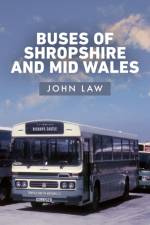
Two large bus companies once ruled this rural part of the United Kingdom. Midland Red had the territory around Shrewsbury and Eastern Shropshire, while Crosville operated from Oswestry to Aberystwyth and all the places in between. Prior to privatisation both companies were split, with Midland Red North and Crosville Wales taking over. These eventually became part of British Bus and were later incorporated into Deutsche Bahn-owned Arriva. Despite the domination of the big boys, there has always been room for the independent sector and even today a good number of small firms running bus services can be found. Minsterley Motors, Owen's Coaches, Lloyd's of Machynlleth and Tanat Valley are just a few of the present-day operators. Names from the past include Vagg's Coaches, Mid Wales Motorways and Williamsons, plus a host of others. John Law has been photographing the buses of the area since the early 1970s and has built up a vast collection, the best and most interesting of which are included here. He takes us to Llanrhaedr-yn-Mochnant, Bishops Castle, Knockin Heath and Stiperstones, as well as the major towns on his journey through this fascinating area.
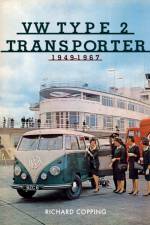
In this fascinating and engrossing book, VW expert Richard Copping covers the complete history of the first generation VW Transporter or 'Camper', probably the most famous commercial and leisure van of all time. Beginning with the prototype vehicles produced in 1949, the author covers the development of the innovative but utilitarian Kombi and the more upmarket Micro Bus, followed by the De Luxe Micro Bus, the Ambulance and the Pick-up. He covers the highlights of each vehicle and analyses the success of the range as a whole. The book covers the revamped model line from 1955, when the success of the VW Transporter called for the building of a whole new factory in Hanover. At this time, due to popular demand, Volkswagen authorised a whole series of coach built variations on the Transporter theme with vehicles as diverse as mobile shops, refrigerated vans and police mobile offices. The author also covers the revised model introduced in 1963 with its more powerful engine and revised tailgate and rear window as well as the ongoing success of the model in the United States. By the time German production ended in July 1967, over 1.8 million split-screen, first generation Transporters had been built.
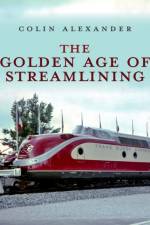
Between the two world wars there was a golden era of industrial design when the benefits of streamlining were realised, allowing for reduced wind resistance, faster transportation and a more efficient economy. The Art Deco-influenced style was also a huge public relations exercise in the glamour-obsessed 1920s and 1930s. Its most obvious manifestations were on the railways, with beautiful streamlined locomotives in daring colour schemes on prestigious named expresses, especially in Europe and North America. They included the Fliegender Hamburger diesel train in Germany, the American Mercury trains and of course Sir Nigel Gresley's A4 Class, on which the streamlined casing and internal streamlining allowed Mallard to break the world speed record. The idea of streamlining made even more sense in the air, where the great airships were crossing the Atlantic, and aircraft like the Douglas DC3 cut through the air more easily than anything that came before. Meanwhile, on the world's roads, buses and cars lost their perpendicular looks and marques like Cord and Bugatti led the way with increasingly aerodynamic, wind-tunnel-tested profiles. Designers like Raymond Loewy, as well as designing streamlined locomotives, began to apply the same style to products for which wind resistance was irrelevant, such as buildings, refrigerators and even pencil sharpeners. This book tells the story of the streamline era - its designers, its successes and failures, its inspiration and its legacy.
Second Generation DMUs in Scotland covers the modern diesel multiple units introduced by BR from 1981. It features locations from across Scotland, and also looks at Carlisle. This book covers units from the experimental Class 140s, introduced in 1981, to contemporary examples including Class 185s still in use with TransPennine Express. Possibly the best unit introduced to Scotland are the Class 156 units based at Corkerhill depot in Glasgow. These units can be found working from Newcastle to Mallaig. The new generation of DMU fleets can go faster and travel further and have generated a huge following. Here, Colin J. Howat combines previously unseen historical black-and-white photography with modern digital examples to tell their story.
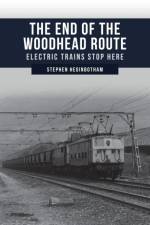
In The End of the Woodhead Route: Electric Trains Stop Here, transport historian Stephen Heginbotham takes a fresh look at this famous and much mourned route. Perhaps the most keenly missed stretch of track in the entire country, the possibility of the Woodhead Route being reopened remains an ever present issue when the state of the nation's railways is discussed. Utilising a superb selection of previously unpublished photographs from the camera of Ian Blackburn, the true story behind this iconic part of the British landscape is told.
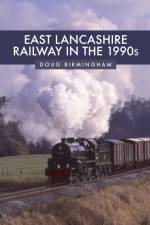
The East Lancashire Railway is a well-established and popular 12.5 mile preserved line travelling from Heywood to Rawtenstall via Bury and Ramsbottom. The East Lancashire Railway Preservation Society decided to reopen the Bury to Rawtenstall line after its closure by British Rail, and under the auspices of the East Lancashire Railway Trust it finally reopened the line between Bury and Ramsbottom to passenger trains in 1987, and eventually to Rawtenstall in 1991. From around 1989, Doug Birmingham started to record the line and documented the change from operating small industrial locomotives to using ex-British Railways steam locomotives to haul passengers up and down this 8-mile section of the former Bury to Bacup line. The images in this book covers the line during the four seasons of the year and primarily feature the many ex-BR steam locomotives, though various ex-BR diesel locomotives that operated on the line during the 1990s can also be found. This book shows the railway progressing thanks to the enthusiasm and efforts of the members and volunteers, ultimately becoming one of the premier preserved railway lines in the country for both steam and diesel enthusiasts, as well as a stellar tourist attraction.
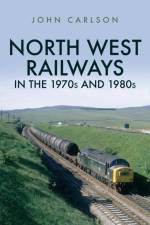
John Carlson takes a new look at the north-western rail scene. Focusing mainly on the years 1975 to 1985, this collection of around 180 colour and black-and white-images, almost all previously unpublished, takes a look the regions railways in the 1970s and 1980s. Captured here are images that encapsulate intercity expresses at speed and rest, show freight being shunted and hauled in yards and on main lines, and portray the enthusiasts and passengers that photograph and ride them. Although focusing on the region's major railway centres, such as Carlisle, Preston and Manchester, branch lines and out of the way vantage points have not been neglected.
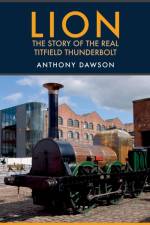
Best known as the Titfield Thunderbolt, Lion is one of the most beloved locomotives in railway preservation - transformed from humble luggage engine to film star, this is a Cinderella story. Built in Leeds in 1838 by Todd, Kitson & Laird, Lion is the only surviving locomotive built for the pioneering Liverpool & Manchester Railway. After a mainline working life of nineteen years, Lion was sold into industrial use in 1859. Drawing on extensive archival research and a detailed study of the original locomotive, this book explores the design and construction of Lion, as well as its career on the Liverpool & Manchester Railway and eventual preservation and restoration, including her several film roles. Finally, the question is asked 'How much of Lion is original?'
In the early 1990s, British Rail introduced the 182-strong Class 158 fleet, followed by the 22-strong Class 159s. These units heralded a new era in long-distance travel at the time, replacing 1950s-designed locomotive-hauled coaches on long secondary and inter-city routesWith all 204 units still in service today, this title aims to examine their varied operations, from Scotland to the south-west, from Wales to East Anglia, where they can still be found all across our rail network.
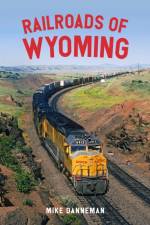
Long before Wyoming was officially part of the union, the Wyoming Territory played a crucial role in westward expansion of the United States as the first transcontinental railroad was built into the area by Union Pacific in 1862, bound for a meeting with Central Pacific in Utah in 1869. Modernised, this 'Overland Route' today bustles with traffic, as trains thunder across the state on main lines destined for California and Pacific Northwest. More recently, Wyoming's expansive Powder River Basin has provided gargantuan amounts of coal tonnage for both UP/Chicago & North Western and Burlington Northern/BNSF. Even though it appears that this prodigious coal traffic has peaked, there is still plenty of trains to be seen moving out of the basin. Additionally, BNSF has a secondary main line that traverses through some extraordinary scenery as it heads north and west toward connections in Montana. All in all, railroads crossing the wonderful Rocky Mountains and High Plains of the 'Cowboy State' are certainly a beholder's delight.
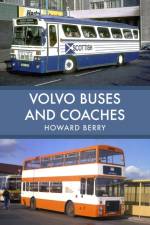
It seems impossible to think that a company who imported their first passenger vehicle into Britain in 1972 would, less than twenty years later, take over what was once Britain's largest passenger and commercial vehicle manufacturer. It is a testament to the quality of Volvo's products that they are one of the most popular chassis on the road today. Covering Volvo from their entry into the UK market, this book gives an overview of all the models to enter the UK market. With a brief description of each chassis type and 180 photographs, all in colour and with informative captions, it showcases Volvo's products in their operating heyday.
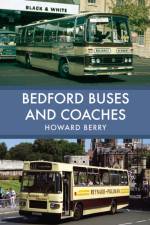
Until production ceased in 1986, Bedford buses and coaches were a familiar sight on roads across the world. From the ubiquitous Bedford OB and the distinctive six-wheeled Bedford VAL right up to the final model, the air-suspended turbocharged Venturer, the advertising slogan 'You see them everywhere' was perfectly suited to the company. Covering the period from 1960 until the end of production, this book gives an overview of the majority of models produced during this period including the VAM, VAL and Y types. Containing a brief description of each chassis type and 180 photographs, most in colour and all with informative captions, it showcases the products of the Dunstable factory in their operating heyday.
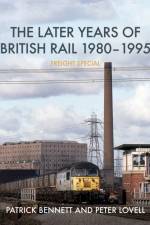
1980 to 1995 was an extraordinary time for the railways of Britain, especially the freight sector. In 1980 there was a unified, monochrome railway. Freight traffic was still abundant, with marshalling yards active and many branch lines still operating. There were hundreds of collieries. In the early 1980s, Sectorisation arrived. The freight division was separated from the passenger side and further sub-divided into different freight sectors. New locomotives were introduced, and the older types started to disappear. As the eighties progressed, the freight sector was constantly changing. The mixed freight train became a thing of the past but new traffic flows developed, particularly in containers and aggregates. The coal sector steadily declined and branch lines became disused. In the early nineties three new freight companies were created in anticipation of privatisation and then finally privatisation itself arrived, with all freight traffic being taken over by an American company. It was a period of enormous change and adaptation, and the story is told here through the images of two photographers who were keen observers of the railway scene throughout the whole of this fascinating period.
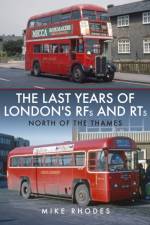
The AEC Regal IVs and Regent IIIs, or to give them their class prefix letters RFs and RTs, are among the most revered buses to have served London over the years. The RFs were maids of all work and were tailored for private hire, Green Line coach work and ordinary stage bus work in both the central and country areas. The first of the type were introduced in October 1951 and a total of 700 vehicles were built for the London Transport Executive. They replaced virtually all the other types of single-deckers then operating in the metropolis. The RT was first introduced to service in 1939 and production ran to 151 vehicles before construction ceased in early 1942. Following the war, the Park Royal factory recommenced building the type in 1947, with the last new chassis being rolled out in 1954, taking the bonnet number RT4825. Both types soldiered on throughout the 1970s as LTE encountered severe problems with their 'OPO' replacements before both finally bowed out within a week of each other in March/April 1979. This account charts the last years of operation of both types from the mid-1970s onward, focusing on North London.
Abonner på vårt nyhetsbrev og få rabatter og inspirasjon til din neste leseopplevelse.
Ved å abonnere godtar du vår personvernerklæring.