























Gjør som tusenvis av andre bokelskere
Abonner på vårt nyhetsbrev og få rabatter og inspirasjon til din neste leseopplevelse.
Ved å abonnere godtar du vår personvernerklæring.Du kan når som helst melde deg av våre nyhetsbrev.

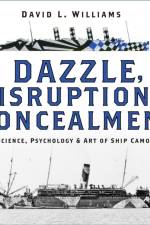
Exploring the origins and influences of maritime camouflage
In 1917 eight wooden-hull, steam-powered fishing boats from the Northern Neck of Virginia were "conscripted" into service by the U. S. Navy, equipped with cannons, and sent on a journey across the Atlantic Ocean to France, where they patrolled for submarines, swept for mines, and rescued fellow ships and sailors under dangerous conditions. Although it seems too incredible to be true, it is a factual, amazing, and little-known piece of history.This is an authentic and exciting account of the small, extensively modified Chesapeake Bay Menhaden fishing boats and their brave crews, who dutifully performed hazardous tasks in the dangerous waters of France under perilous wartime conditions in an operation few people have ever even heard of. This book provides documentation of an actual U. S. Department of the Navy operation that originated simply because the Navy didn't have adequate minesweepers and patrol boats to send to France when the U. S. entered WWI. This book uses Naval Department records to present the who, what, when, where, how, and why of the massive endeavor.The Norfolk Navy Yard performed nothing less than a miracle in making the extensive modifications necessary for turning the fishboats into warships. Although these boats were rugged in construction, they were designed for commercial fishing in the Chesapeake Bay and were never intended for ocean crossings or military use. Remarkably, those vulnerable boats, designated Squadron Four Atlantic Fleet Patrol, made the risky journey from Boston to Brest, France in just 22 days, arriving safely in September 1917. The boats and crew completed their orders admirably. Only one of the boats sank while in service; however, three boats sank in a storm during a disastrous attempt to return to the United States. Two of the boats that sank belonged to the author's grandfather, Otis W. Douglas. This book includes interesting personal accounts from crew members, 26 pictures of the iconic wooden-hulled, coal-fired steamers that were used to fish in the Bay, as well as information about all the boats that comprised the Northern Neck menhaden fishing fleet in 1917, including those that were not commissioned into service. If you have an interest in boats, naval history, WWI history, and Chesapeake Bay history, this is the book for you.(8.5" x 11", 66 pages, 16,300 words, 26 photos, 16 document images, 97 footnotes)
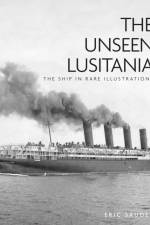
Lost to a German torpedo on 7 May 1915, Cunard's RMS Lusitania captured the world's imagination when she entered service in 1907.
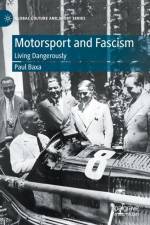
This book is the first English-language study of motorsport and Italian Fascism, arguing that a synergy existed between motor racing and Fascism that did not exist with other sports. Motorsport was able to bring together the two dominant, and often opposed, cultural roots of Fascism, the Futurism of F. T. Marinetti, and the Decadence associated with Gabriele D¿Annunzio. The book traces this cultural convergence through a topical study of motorsport in the 1920s and 1930s placing it in the context of the history of sport under Mussolini¿s regime. Chapters discuss the centrality of speed and death in Fascist culture, the attempt to transform Rome into a motorsport capital, the architectural and ideological function of the Monza and Tripoli and autodromes, and two chapters on the importance of the Mille Miglia, a genuine Fascist artefact that became one of the most legendary motor races of all time.
This edited book provides a broad collection of current critical reflections on heritage-making processes involving landscapes. It will appeal to researchers, academics and practitioners interested in heritage studies, cultural landscapes, conservation, geography and planning.
This edited book provides a broad collection of current critical reflections on heritage-making processes involving landscapes. It will appeal to researchers, academics and practitioners interested in heritage studies, cultural landscapes, conservation, geography and planning.
With photos, a rider's view provided by experienced racers, and details of notable events, course changes and where to watch the action, this is a guide for anyone interested in the most famous, unique and demanding road circuit in the world.
"Military life is a very demanding life to lead. Protecting America's freedom is perhaps one of the toughest jobs." Thus, begins Why We Fight, a timeless and very powerful book that speaks to the values American's hold dear but against which we must always be alert. Freedom and free speech. Living without fear of a knock on your door. Nearly every word in this book comes from active-duty military personal speaking about service to the nation, to which have been added powerful and often forgotten quotes about the need to protect our freedoms from leaders such as Abraham Lincoln, John F. Kennedy; Reagan. Nelson Mandela. Even Warren Buffett. "The world is a dangerous place, not because of those who do evil, but because of those who look on and do nothing," said Albert Einstein. Against the backdrop of the battles to protect their freedoms in Ukraine, there has never been a better time than now to have a book like this. "To me, the American Dream means that I can dream," said an emigree. "It doesn't mean a white picket fence. It means that we get to choose what our fence looks like." The book begins with WWI and continues through present day Ukraine. "For the first time in a long time, I felt like I had a purpose being in the Navy," said a sailor after returning from an overseas deployment. "It wasn't about money and rank and prestige. It was about raising the flag. We do what we do because no one else can or will do it. We fight so others can sleep at night." This timeless and very powerful book speaks to today, speaks to the values that are the absolute bedrock of our nation, and thus why we fight to protect them. Against the backdrop of the battles to protect their freedoms in Ukraine, there has never been a better time than now to have a book like this.
This book celebrates the sporting legacy behind the name Alfa Romeo, and is a unique record of every type of Alfa Romeo associated with Alfa sporting achievements from 1945 to the present.
On the evening of January 2, 2009, Captain Matteo Russo and crewman John Orlando got underway aboard the fifty-four-foot fishing vessel Patriot, from the iconic State Pier in Gloucester, Massachusetts, bound for nearby fishing grounds in search of cod. They never returned. What happened less than eight hours later on that bitter and dark winter early morning that caused the Patriot to sink? Why did the Coast Guard deliberate more than two hours before launching a rescue mission? Using official documents, numerous interviews and insight as a search and rescue commander, maritime historian Captain W. Russell Webster, USCG (Ret.), expertly documents the tragedy of the Patriot, with startling findings. He deftly explores the condition of normalcy bias linked to this heartbreaking case, which can cause people--including Coast Guard personnel--to deny and sometimes over-deliberate threats to human life.
Crossroads of a Continent: The Missouri Railroad tells the story of the state's railroads and their vital role in American history.
The story of the X-15, the pioneering research flight program in the fifties and sixties, and its pilots.
The Great Lakes were Americäs first superhighway before railroad lines and roads arrived in the late nineteenth century. This book tells the story of the ships and boats on which the United States, barely decades old, moved to the country¿s middle and beyond, established a robust industrial base, and became a world power, despite enduring a bloody Civil War. The ¿five sisters,¿ as the Great Lakes came to be called, would connect Americäs far-reaching regions in the century ahead, carrying streams of Irish, German, and Scandinavian settlers to new lives, as the young nation expanded west. Initially, schooner fleets delivered passengers and goods to settlements along the lakes, including Chicago, Milwaukee, and Green Bay, and returned east with grain, lumber, and iron ore. Steam-driven vessels, including the lavish ¿palace¿ passenger steamers, followed, along with those specially designed to carry coal, grain, and iron ore. The era also produced a flourishing shipbuilding industry and saw recreational boating advance. In words and photographs this book tells the story of a bygone era, of mariners and Mackinaw Boats, schooners and steamboats, all helping to advance the young nation westward
Abonner på vårt nyhetsbrev og få rabatter og inspirasjon til din neste leseopplevelse.
Ved å abonnere godtar du vår personvernerklæring.