













Gjør som tusenvis av andre bokelskere
Abonner på vårt nyhetsbrev og få rabatter og inspirasjon til din neste leseopplevelse.
Ved å abonnere godtar du vår personvernerklæring.Du kan når som helst melde deg av våre nyhetsbrev.

Format: 22,3 x 28,7 cm , 160 Seiten Sprache: Englisch Alles über das Kultmodell: von der Technik über Design, Lifestyle, Film, Celebrities und Zeitgeschichte Der Klassiker in sämtlichen Facetten: wie aus einem kleinen Auto eine große Legende wurde Neuer Blick und Nostalgie: das perfekte Geschenk, nicht nur für Oldtimer-Fans Klassiker, Kultobjekt - und viel mehr als nur ein Auto: Der VW-Käfer war für viele Besitzer fast ein Familienmitglied. 65 Jahre lang schrieb der Lieblingswagen mit dem freundlichen Äußeren ein bedeutsames Stück Mobilitätsgeschichte. Dieses faszinierende Buch ist eine wunderbare Zeitreise: emotional, nostalgisch, spannend. Vom ersten Modell anno 1938 bis zum letzten Käfer, der 2003 in Mexiko vom Band rollte, vom kultigen Film-Käfer Herbie bis zu kuriosen Designvariationen, vom Käfer-Amphibienfahrzeug bis zum Polizei-Cabrio verbinden wir alle mit dieser Auto-Ikone viele Erinnerungen und noch mehr Gefühle. Und wer lang genug durch diesen Band blättert, meint vielleicht ganz leise das markante Knattern des Boxermotors zu hören ...
Great photographs of locomotives on railways in the North East of England in the final years of steam traction. Compiled with thoroughly researched, informative captions.
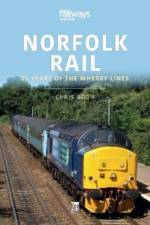
Norfolk enjoyed loco-hauled passenger trains for many years, with Great Yarmouth being a popular destination. A wide range of locos were used over the years. These culminated in the hugely popular Greater Anglia 'short set'. They finally ended in September 2019. With 180 color images, this title celebrates these workings over a 25-year period.
This volume of the popular Lost Lines series returns this once popular route to its heyday in the age of steam, travelling through what remains a very heavily visited part of the Cotswolds. Photo illustrated throughout.
An informative, accessible and portable resource for the train enthusiast as well as the general reader, and a superb souvenir or gift for visitors past and present. This book covers the history of Wye Valley Railway which ran from Tutshill Halt to Monmouth Troy. Photo illustrated throughout.
When the car was invented, it changed how we live. Learn about the first cars and how they changed the world.
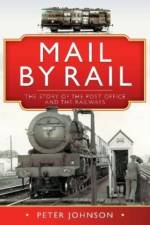
Railways have been used for the carriage of mail since soon after the Liverpool & Manchester Railway opened in 1830, the development of the first travelling post offices following, enabling the Post Office to achieve maximum efficiencies in mail transportation. As the rail network grew the mail network grew with it, reaching a peak with the dedicated mail trains that ran between London and Aberdeen.The Post Office also turned to railways when it sought a solution to the London traffic that hindered its operations in the Capital, obtaining powers to build its own narrow gauge, automatic underground railway under the streets to connect railway stations and sorting offices. Although construction and completion were delayed by the First World War, the Post Office (London) Railway was eventually brought into use and was an essential part of Post Office operations for many years.Changing circumstances brought an end to both the travelling post offices and the underground railway but mail is still carried, in bulk, by train and a part of the railway has found a new life as the Mail Rail tourist attraction.Author Peter Johnson has delved into the archives and old newspapers to uncover the inside story of the Post Office and its use of railways to carry the mail for nearly 200 years.
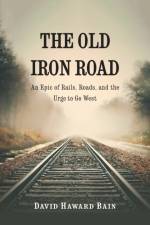
A combination of travelogue, history, and storytelling, this is the story of David Haward Bain's family's travels from their home in Vermont to the West in search of America's past.
A charming and characterful guidebook to the best of Britain's diverse and fascinating canal network for all waterway enthusiasts.Beautifully illustrated, this compendium uncovers the many extraordinary, notable and surprising places to be found on Britain's waterways. Our canals and rivers link into a diverse 3,000-mile-long network, and 101 Wonders of the Waterways shows you that wherever you find yourself in the country, there will be something nearby to give you a taste of this beautiful and nostalgia-infused world. Canal cruising experts Steve Haywood and Moira Haynes bring our waterways to life with their witty and lyrical prose, including many lesser-known and often ignored places - the best-kept secrets of Britain's canals and rivers. Some examples of wonders include:· Historic Hungerford in Berkshire, where William of Orange was staying when he was offered the crown after the Glorious Revolution· The world famous Pontcysyllte Aqueduct, soaring spectacularly on slender tapered columns 126 feet over the River Dee below· Hest Bank, with its stunning views and the only place where a canal runs so close to the seashore that you can smell the seaweed from the back of your boatAs well as lively personal anecdotes, and insightful commentary on Britain's heritage and history, this guide includes handy recommendations to help you make the most of your visit to each wonder. This is the book you will want to have in the back of your car, or stuffed into your backpack, so you can find an idyllic place for a picnic, or the perfect day trip for a long weekend.
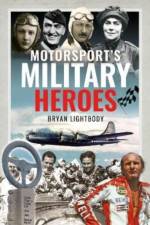
Motorsport has many iconic names attached to it. It has many that are celebrated as heroes in their chosen sport. However, what perhaps is less well known is how many of the motorsport icons of the twentieth century carried out acts of real-life bravery, many during war time, but some in selfless acts of bravery in saving the lives of their fellow competitors.Some of the iconic names of motorsport are linked to the great conflicts of the twentieth century. Enzo Ferrari served during World War One, the most revered of the 1920s Bentley Boys were all World War One veterans such as John Duff, Bernard Rubin, Woolf Barnato, Sammy Davis and Glen Kidston. World War One American flying ace Eddie Rickenbacker was an Indianapolis 500 racing driver. Muriel Thompson, Military Medal, who became a World War One ambulance driver, was not only a chauffeur for suffragette Emeline Pankhurst, but raced at Brooklands before the war.Commentator Murray Walker was a World War Two tank commander, fellow commentator Raymond Baxter was a Spitfire pilot who was mentioned in dispatches for bravery. Carroll Shelby was a United States Army Airforce pilot and instructor with a reputation for great leadership. His friend, engineer and racing driver Ken Miles, served throughout the war as a specialist in tank recovery, landing as part of the D-Day operations.These are just a few of the most notable names from a group of men and women who risked all in conflict, before risking all on the track profiled in this book.
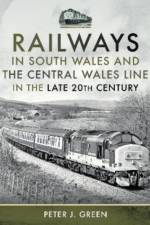
In the early 1980s, I began to visit South Wales on a regular basis to photograph the railway scene. At that time, the collieries and steelworks were generating a lot of rail traffic with Class 37 diesels being the usual motive power.Passenger trains were in the hands of Class 47s and 37s, while 'Peaks' and Class 50s would also appear on occasion. HSTs, DMUs, Sprinters and Pacers were, of course, also common.As time went on, collieries closed and the coal traffic reduced, but there always something new and interesting. Rugby Internationals at Cardiff regularly produced a number of special trains which arrived from various parts of the country, often bringing interesting motive power to the Welsh capital.The Class 37s were slowly replaced by Class 56s, and later Class 60s, on many duties in South Wales, but the Rhymney Valley saw Class 37 diesels working passenger trains into the twenty-first century, and on Rugby International days, privately-owned Class 50s were also used on occasion.I also visited the Central Wales line a number of times and particularly enjoyed the time I spent at the small country stations, before the semaphore signals were replaced.This book contains a selection of photographs taken in the latter part of the 20th and in the very early 21st Century, covering the railways of South Wales and the Welsh section of the Central Wales line. A few photographs of the principal heritage railways in more recent times are also included.
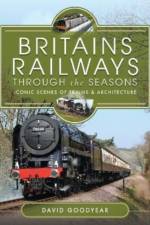
The four seasons pass by like a gliding ship, each signalled by a transformation of changing colors and hues of light, thus providing a form of marker to these passages of time. Living in the temperate zone we experience four distinct seasons. The railway scene reflects such in its own special character - cold winter air enhances the bountiful steam escaping from the hissing steam locomotive impatiently awaiting its departure, while autumn enchants with trees that exude a variety of hues which embellish any image of even the most mundane suburban train. Springtime blossom and wild flowers bestow railway cuttings with a bounty of generous bright colors while coastal railways often look most inviting on warm sunny days as they pass alongside azure seas and golden beaches. The seasons each add their own dimension for the photographer to encapsulate, and railways passing through the ever-changing landscape provide their own tribute to this inspirational tapestry. As readers travel through each season, so they are invited to share this awe and constant source of inspiration from nature's kaleidoscope of color.Photographs are provided with captions and reflective commentary to enlighten the knowledgeable rail enthusiast alongside those who equally enjoy such a portrait of landscape and scenery through the seasons. The range of photographs ranges from the mid -1980's to the present with the majority from the last two decades.
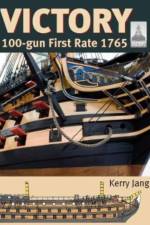
The 'ShipCraft' series provides in-depth information about building and modifying model kits of famous warships. Previously, these have generally covered plastic and resin models of 20th century subjects, but this volume is a radical departure - not only a period sailing ship but one for which kits are available in many different materials and scales. This requires some changes to the standard approach, but the main features of the series remain constant.Victory, Nelson's flagship at Trafalgar, is probably the world's most famous sailing warship, and survives in restored form at Portsmouth. With lavish illustration, this book takes the modeller through a brief history of the ship, highlighting differences in appearance over her long career. Detailed color profiles reveal decorative detail and changes to paint schemes over 250 years, and outline some of the debatable features experts still disagree about. The modelling section reviews the strengths and weaknesses of available kits, lists commercial accessory sets for super-detailing, and provides hints on modifying and improving the basic kit, including the complexities of rigging. This is followed by an extensive photographic gallery of selected high-quality models in a variety of scales, and coverage concludes with a section on research references - books, monographs, large-scale plans and relevant websites.Following the pattern of the series, this book provides an unparalleled level of visual information - paint schemes, models, line drawings and photographs - and is simply the best reference for anyone setting out to model this imposing three-decker.
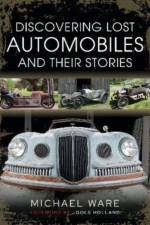
Many enthusiasts dream of finding a Bugatti or a Bentley in a barn or a long disused building. In reality, such finds are more likely to be an Austin 7, Ford Popular or a Mini. This book is stuffed with these so called "barn finds".
A fascinating collection of previously unpublished images documenting the Flying Scotsman in the United States, with a particular focus on the 1970 tour. Published to coincide with the hundredth anniversary of the locomotive being built.
A varied selection of images documenting the buses used as rail replacement services in London and south-east England.
A terrific collection of historic photographs documenting the story of Edinburgh, Granton and Leith railways.
Fascinating previously unpublished images of railways built by British companies with British locomotives, rolling stock and other infrastructure. This volume focuses on Africa.
Examining the modern rail scene of Derbyshire. Takes a whistle stop tour of the county's stations, looking at both the passenger and freight trains.
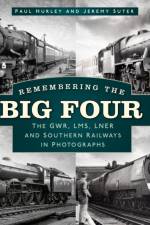
Commemorating the creation of the Big Four railway companies, 100 years ago
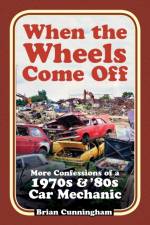
Brian Cunningham looks back once again at his adventures and misadventures in the mechanic trade
Abonner på vårt nyhetsbrev og få rabatter og inspirasjon til din neste leseopplevelse.
Ved å abonnere godtar du vår personvernerklæring.