








Gjør som tusenvis av andre bokelskere
Abonner på vårt nyhetsbrev og få rabatter og inspirasjon til din neste leseopplevelse.
Ved å abonnere godtar du vår personvernerklæring.Du kan når som helst melde deg av våre nyhetsbrev.

From Battle of Britain fighter station to commercial airport, this is the inspiring story of Biggin Hill.
Aside from Glasgow, there were a number of other tramways that served the west of Scotland. These included those that served the towns of Ayr and Kilmarnock, the north and south banks of the Clyde, Balloch, Greenock and Gourock. This book explores the history of these tramways.
In the second volume in the Lost Tramways series to feature Ireland, the history of the trams that served Dublin and its environs are recalled.
At the peak of Britain's first-generation tramways, it was possible to travel by tram all the way from Pier Head at Liverpool to the Pennines in Rochdale by tram. Amongst the chain of tramways that formed these links were the services that operated in Bolton, St Helens, Wigan and the company lines controlled by South Lancashire Tramways. Each of these systems had a fascinating history but all were to suffer greatly as a result of lack of maintenance during and after World War I and from bus competition, with the result that only one - Bolton - survived into the post-World War II era. Locations featured include: Farnworth, Dunscar, Tonge, Horwich, Halliwell, Montserrat, Bury, Huyton, Prescot, Worsley and Leigh. The Lost Tramways series documents the tram networks which were at the heart of many of Britain's growing towns and cities from the mid-19th century to the mid-20th century. An informative, accessible and portable resource for the tram enthusiast as well as the general reader, and a superb souvenir or gift for visitors past and present.
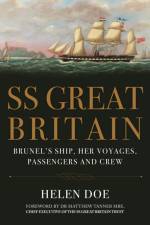
The story of Brunel's most famous ship and the people who knew her, using new archive sources
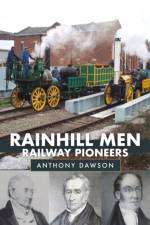
George and Robert Stephenson are well known names in the canon of railway history. Henry Booth (who designed Rocket's boiler) was the world's first railway manager and was instrumental in the adoption of Greenwich Mean Time. Timothy Hackworth, the Methodist engine-wright from Shildon, established his own engineering firm, which built one of the first locomotives to run in Russia. Although his locomotive Novelty was a failure, John Ericsson found fame as the designer of the USS Monitor. This book seeks to explore the social history of the Rainhill Trials, who these engineers were and the times they lived and worked in.
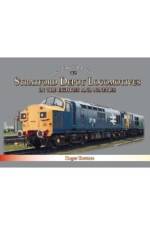
This is the second volume of previously unpublished photographs from the camera of David Reed, focusing on the electric and diesel traction of the late 1960s and 1970s. The photographs of locomotives and multiple units, none of which remain in regular service, feature a variety of locations. On the Eastern and London Midland regions they range from the London area to North Wales, Crewe, Carlisle, East Anglia, Bradford, Ilkley, Manchester and Liverpool. Areas of Scotland pictured include the Ayr coast, the far north, Inverness and Perth, and the renowned 'Glasgow Blue Trains'. On the Western Region, Paddington, Reading, and the West Country are featured. Many locomotive types no longer in service are pictured and some carry their original green liveries. Many of the locations captured have since changed considerably.
Long before Brexit, the Common Market and even the Commonwealth, Britannia truly did rule the waves. Perhaps more unsung is the fact that she also ruled the rails over much of the world, for Britain's engineers effectively exported the Industrial Revolution and specifically the railway around the globe. This was especially true in that forerunner of the Commonwealth, the British Empire. In those parts of the world that were coloured pink on schoolroom maps, the rapidly expanding colonial railways were supplied by British companies like Neilson Reid, Bagnall, Kitson, Cravens and Cammell-Laird. This book tells the story of the expansion of the railways of the British Empire in Australasia and other areas beyond the Indian subcontinent and Africa, featuring stunning photographs, contemporary maps, posters, travel brochures and extracts from other interesting documents.
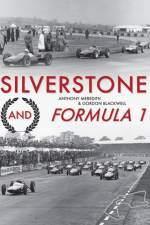
For fans all over the world the thrilling partnership of Silverstone and Formula 1 has long represented one of the pinnacles of motor sport. Here the broad sweep of Silverstone's Formula 1 history, a kaleidoscopic pageant of great cars and drivers, is explored in a new and highly accessible way through nine specific eras, each one delightfully and freshly illustrated: The First Grand Prix and International Trophy (1948-49) Forza, Alfa! Forza, Ferrari! (1950-51) The Front-Engined Finale (1952-59) Clark's Dark Golden Age (1960-68) The Stewart Dominance (1969-73) The Hunt-Lauda Epoch (1973-79) Three Titans: Prost, Mansell and Senna (1981-93) The Schumacher Era (1994-2006) New Heights: Hamilton and The Wing (2007 onwards)This photographic history of Silverstone and Formula 1 should appeal to motor racing fans everywhere, as it neatly captures the essence of what the highest level of a most demanding sport has meant to this very special venue.
The 1970 merger of Northern Pacific; Great Northern; Chicago, Burlington & Quincy; and Spokane, Portland & Seattle created a new super railroad spanning the northern and central United States over a 25,000-mile network. For twenty-five years, BN was one of United States' premier railroads. In its first decade BN had its hands full, paring down duplicate lines and forming a cohesive system from all the predecessor railroads, as well as investing in the explosive growth of Powder River Basin coal shipments. By the early 1980s though, BN had clearly become its own railroad, decked out in uniform Cascade green and black paint. The BN of the 1990s experienced continued growth in intermodal, grain and coal traffic, along with adding more hues to the company colours. With wonderful original photographs, Mike Danneman takes a look at the last dozen years of the Burlington Northern before the merger with Santa Fe to form BNSF in 1995.
Road tankers come in many forms, with certain goods very often dictating the type and shape. The transport industry has adapted many innovations over the years and a wide variety of examples have travelled on our roads over the years - powder tanks, tanks for liquids, and even specialised tanks for the carriage of a plethora of goods from live eels to animal feed, cement, plastic pellets and more. All of the images in this book were captured by the author over a number of years. They document an important part of our transport history and will delight enthusiasts and modellers alike.
A superb edition with 230 outstanding photographs and thoroughly researched, informative captions. Beautifully produced in hardback with rare and previously unseen images in colour and black and white.
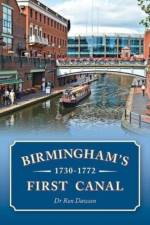
The development of Birmingham into a major modern industrial city can be said to have begun in 1772 with the opening of its first canal. At that time Birmingham was a small and largely rural town with a growing manufacturing base. The growth of manufacturing within the town, however, was severely constrained by the lack of a cheap, reliable and efficient means of transport for the goods it produced. These difficulties were largely overcome by the building of the canal, in that it provided a cheap and efficient means of transport to convey the town's manufactured goods to markets beyond its boundaries. The why, when and how this first canal came to be built is explored in this detailed and highly referenced account. It tells the fascinating story of how a small group of innovative, determined and ambitious entrepreneurs joined together to plan and secure its construction, and thereby also secure the City's future progress and prosperity.
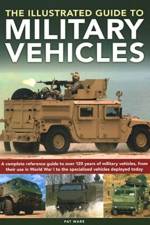
The story of the development and production of the military vehicle, from the first basic trucks, through the advances made in the inter-war years, to the specialized vehicles in World War II and beyond, with over 500 photographs.
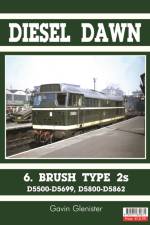
One of the main pillars of the new diesel fleet came in the form of the Brush company''s diesel locomotive for mixed traffic work, the ''Type 2'' referring to the power rating of their Mirrlees engines - 1,250hp.The name ''Brush'' it has to said is less than stirring after the fashion, say, of ''Deltics'' or ''Warships'' but an entire swath of British Railways, the Eastern Region, relied very heavily upon them for all manner of freight and passenger work; they were even suited to country branches in the wilds of East Anglia. In later years they were used much more widely, from the West Country to the far north of England. They were also long-lived, unlike many of their contemporaries that appeared in the ''Diesel Dawn'' of the 1950s and 1960s; the last was only withdrawn from service in 2017.
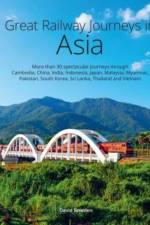
Great Railway Journeys in Asia showcases 34 of the best rail journeys in South, Southeast and North Asia. The journeys range from quirky trains used as essential travel for locals, such as the North Borneo Railway, to trains on which passengers can experience 5 star luxury as they travel through stunning scenery.
Abonner på vårt nyhetsbrev og få rabatter og inspirasjon til din neste leseopplevelse.
Ved å abonnere godtar du vår personvernerklæring.