




















Gjør som tusenvis av andre bokelskere
Abonner på vårt nyhetsbrev og få rabatter og inspirasjon til din neste leseopplevelse.
Ved å abonnere godtar du vår personvernerklæring.Du kan når som helst melde deg av våre nyhetsbrev.

The importance of our railways in the movement of sea containers cannot be overstressed. Industry figures suggest that one in four of all containers arriving at UK ports move onwards via the UK rail network. This is particularly significant to the railfreight sector given the dramatic downturn in coal traffic in recent years. Four of the country's major players in the freight sector - Freightliner, DB Cargo, GB Railfreight and Direct Rail Services - all move significant volumes of container traffic to almost all parts of the UK. This book takes a look at these movements, from the major ports of Felixstowe and Southampton to destinations as far afield as Bristol and the Scottish Highlands. John Jackson takes an in-depth look at the diversity of locomotives and container wagons used on these services provided by these key players on our twenty-first-century railway.
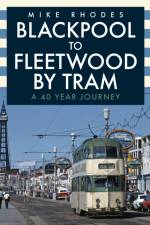
The Blackpool Electric Tramway Company commenced operation of a conduit system of railed vehicles along the Promenade between Cocker Street and Station Road on 29 September 1885. By the 1930s the rolling stock was becoming somewhat worn out and, following the appointment of Walter Luff as General Manager in November 1932, the fleet was revolutionised. Over the next few years Luff introduced a fleet of eighty-four streamlined cars and built a new depot at Rigby Road in which to house them. These formed the backbone of the fleet for several decades and a considerable number, although significantly altered, continued in service until the end of conventional tramway operation on 6 November 2011. Following a substantial injection of government funding in January 2008 the failing tramway was revitalised and like a phoenix from the ashes the whole system was modernised and reopened as a Light Rail Transit system in April 2012, with a fleet of new LRT articulated vehicles, which were housed in a new depot at Starr Gate. This book features a wide cross-section of trams that have operated at the seaside resort over the past forty years and follows the line from Starr Gate to Fleetwood, with many comparisons made between the old and new systems.
In 2018, five gas buses using Scania NU280D chassis with stylish AD E40D MMC City bodywork were presented by Nottingham City Council. Then 2019 saw the arrival of another sixty-seven new gas buses, working a variety of routes around the city. The 120 gas buses now operating in the city have impressive environmental credentials, offering an 80 per cent reduction in harmful pollutants. Passengers have also enjoyed greater comfort, with super-fast WiFi, USB charging sockets and audio and visual stop announcements. Here, Scott Poole offers an interesting selection of photographs illustrating these remarkable new buses.
The Stockton & Darlington Railway Company's takeover of half of the 1834 Stanhope & Tyne route, under the guise of the Wear & Derwent Railway, saw the most interesting period in the history of this part of the line. The route, which ran from the limestone quarries above Stanhope to Consett, was now joined to the Stockton & Darlington Railway's network, and the new operators wasted no time in converting the line to locomotive working where possible, building deviations to the original route to get rid of rope-hauled incline working and instead use the distinctive double-tender heavy goods locomotives. This work culminated with the opening of the 150-foot-high Hownes Gill Viaduct and the Burnhill deviation. This book covers the history of the line from 1845, detailing the drastic transformation of the line so that it could serve the mighty ironworks at Consett. It features a wide variety of historic and modern images.
Amid peaceful countryside, past historic towns and through the heart of London, the River Thames flows in an easterly direction for some 346 kilometres from its source in Gloucestershire until entering the North Sea. Over many centuries civilisations have traversed the ancient river by way of fords and early ferries, stone-built bridges, by locks, tunnels and railway lines and, most recently, by motorway crossings. Building methods and designs have changed dramatically over time yet, even now, bridges dating from medieval times still span the river, virtually unaltered since when they were built. Within London, bridges and tunnels, old and new, convey the capital's rail systems, road traffic and pedestrians across the Thames. The Thames and its crossings are ever changing and Geoff Lunn, as he travels downriver from source to sea, navigates the reader through their history and right up to the present day.
The 1960s saw the final hurrah of steam on the railways - the final period of steam-powered locomotives dominating the main line. This meant that a colourful array of traffic could be found across the length and breadth of Great Britain, and an army of enthusiasts both young and old dutifully recorded the nation's rail scene. Here, in the first of a new series of book celebrating the steam of 1960s Britain, Keith W. Platt looks back at the variety that could be found on the railways around Leeds. Packed with previously unpublished images, this is a book that will delight anybody with memories of steam around Leeds or an enthusiasm for the area's railways or history.
The design of buses and coaches is constantly changing as new technology is developed and environmentally friendly and emission-related legislation evolves. In addition to more traditional vehicles, there are now choices between hydrogen-powered hydroliners, all-electrics, vehicles with electric driving mirrors and fully autonomous buses. In this extremely colourful and diverse book, Richard Walter takes you on a photo-filled trip round the world to explore how buses and coaches are changing and how older vehicles have adapted to meet the demands of operators. Jump on board to explore how things are evolving in recent years from the wilds of the Western Isles and the big UK cities like London, York, Edinburgh, Newcastle and Glasgow to exotic locations such as pink-sanded Bermuda, sunny Tenerife, busy Hong Kong and spectacular New York. The book also looks at some of the many demonstrators that operators have evaluated and how new products have been launched at events such as the annual UK Coach Rally in Blackpool and the Euro Bus Expo.
As part of the National Bus Company, Hants & Dorset Motor Service once served a large diverse area, stretching from the remote chalk uplands of North Hampshire, across Salisbury Plain through rural East Dorset to the coastal resorts of Swanage, Poole and Bournemouth, and the heavily populated areas of Southampton and Winchester. Its Poppy Red buses were a common sight on the roads of central southern England through the 1970s and early 1980s. In 1972 with the introduction of its corporate image, the National Bus Company merged the Hants & Dorset and Wilts & Dorset fleets. This created one identity, with the Hants & Dorset name retained along with the red livery from Wilts & Dorset. It was the one of the most interesting NBC fleets, with vehicles in their former liveries, numerous non-standard coaches, associations with Gosport & Fareham (Provincial) and variety from the former King Alfred Motor Services of Winchester. An early division of an NBC company, 1983 saw the company separated into four operating units - Hampshire Bus, Wilts & Dorset, Provincial and Shamrock and Rambler.
Toton first saw railway yards built on the site in the 1850s to support the growing need to transport coal from the collieries of the Erewash Valley and, later, the Leen Valley area to towns and industry. Later, growth in wagonload traffic saw British Rail invest heavily in the yards, including mechanised hump shunting equipment and a modern diesel locomotive facility. However, wagonload traffic was soon to decline, and the transport of coal was revolutionised by the merry-go-round concept utilising new HAA wagons, sweeping away the numerous older vacuum-braked types. Toton was once the heart of coal on the railway, but the decline in use of fossil fuels in the UK has decimated the coal train from the national network, with Toton yards now partly abandoned and the remainder in use mostly as a base for engineering trains and traincrew relieving point. This book illustrates the changing scene at Toton from the last days of British Rail, through privatisation, up to the present day.
Though the famous bullet train launched in 1964, many steam engines were still operational in Japan before withdrawal in 1975. These wonders of narrow gauge railway engineering have often gone unappreciated in Western countries - until now. Japan's distinctive four seasons offer the perfect backdrop for the rail photographer, and allowed Yoshi Hashida to capture steam engines working against a variety of gorgeous backdrops and stunning settings, including mountain scenes and coastal views. This book showcases some of his best shots of steam engines hard at work from 1971 to 1975, focused mainly on Western Japan.
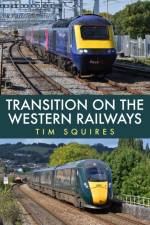
The Western Region has been going through a period of great transition, and this book aims to document these changes, such as the rebranding of First Great Western as Great Western Railway and the replacement of the High Speed Train (HST) fleet with the new Hitachi Intercity Express Train (IET) fleet. There has also been an extensive electrification and modernisation project on the Great Western Main Line between London, Bristol and South Wales, along with numerous rolling stock upgrades and changes. Also included are interesting workings around the region such as railtours and unusual visitors, as well a variety of freight workings and images taken on the heritage railways in the area, many of which have had changes of their own.
Nuneaton, the largest town in Warwickshire, sits on an important railway crossroads in the Midlands. At its Trent Valley station, the busy West Coast Main Line heads broadly north to south with the important link between Birmingham and Leicester crossing east to west. An equally important line heads south-east from the town, through Coventry and Leamington Spa, carrying local passengers as well as an important freight link with the docks at Southampton. This line to Coventry and beyond has had a chequered past and was one of many victims of the Beeching Axe before, fortunately, reopening to passengers in the late 1980s. The author has spent many thousands of hours watching and photographing rail movements through Nuneaton station. This publication takes a look at the considerable variety of both passenger and freight traffic on offer to the enthusiast, ranging from the everyday to the unexpected.
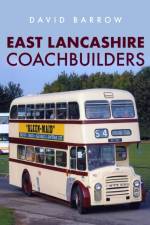
East Lancashire Coachbuilders was first registered in October 1934 when two former Massey Bros of Wigan employees decided to set up their own company in Blackburn. Their names were George Danson and Alfred Alcock. Over the next seven decades they supplied both single- and double-deck bodywork to most, if not all, Lancashire municipal bus operators, plus a number of south coast operators. The majority of photographs in this book have been taken by the author, and are mostly previously unpublished.
In the 1970s the introduction of the merry-go-round coal trains required a far more powerful loco, leading to the 3300 hp Class 56 being built. For general freight services, the Class 60 was developed. Both these types suffered from reliability problems in their early years. Several large stone companies in Somerset became frustrated with the constant loco problems that BR were having and decided to order their own locos, choosing General Motors in the USA to supply them. This resulted in the Class 59, which started service in 1986 and proved to be so effective that other Railfreight operators followed suit and ordered what became Class 66. Eventually, more than 400 entered service. This book of mostly unpublished colour photographs, taken by George Woods between 1966 until 2019, show the locos hauling a variety of trains all over the BR system.
Until the last quarter of the twentieth century Maltese buses had generally had locally constructed bodywork, often a modified chassis of UK or American origin. A variety of liveries was carried. By the mid-1970s, out went the traditional liveries to be replaced by a uniform 'spray green' with white roof for route buses, while coaches initially carried a livery of buff and white. The start of the 1980s saw the importation of complete vehicles from the UK. AEC Swifts were sourced from London Transport, while a variety of Bedford and Ford coaches started to appear carrying bodies by Plaxton and Duple. Other types included Bristol LH, AEC Reliance, Leyland Leopard, Tiger Cub and Panther Cub. In typical Maltese fashion vehicles were often modified with different axles, engines and gearboxes, bodies rebuilt and, in some cases, replaced totally. In 1995, the livery changed to yellow/white with an orange waistband and continued so until 2011.
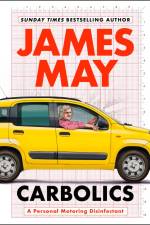
Why does a man with a Ferrari and a Porsche drive a Fiat Panda? Is going fast really necessary? Is it your fault if you get run over? Why will electric cars really save the planet (possibly)? In Carbolics the UK's favourite petrol head (after Clarkson and Hammond) James May answers these questions and more. Across 80 essays, James gives his quirky, entertaining take on cars, motorbikes, trucks - and explains why the bicycle might just be the best invention of all.Written with James's characteristic wit and humour, Carbolics is the perfect Christmas gift for petrolheads.
FROM THE SUNDAY TIMES BESTSELLERS, ALL ON THE BOARD, COMES YOUR DAILY COMPANION - BRINGING YOU COMFORT AND INSPIRATION FROM MORNING THROUGH TO NIGHT, FOR YOUR EVERY MOOD, EMOTION AND EVENTUALITY.All On The Board are continuing on their mission to lift spirits and spread happiness far and wide with their stunning new book, Your Daily Companion. With brand new, never-before-seen boards, poems, personal thoughts and stories, daily affirmations and much more, its positive messages offer comfort, reassurance and inspiration, celebrating the simple joys to be found on even the cloudiest of days. A friend when you need it, turn its pages for a virtual hug, and join Ian and Jeremy on this magical journey through the colourful chapters of life.
This book explores the history and politics of motor racing, one of the most popular and lucrative elements in the international sport industry. Written by a group of international scholars and motor racing specialists it discusses the sport¿s origins, the relationship of motor racing to nation building and modernity (noting its links to fascism and dictatorship), the links between motor racing and the automobile industry, motor racing and the politics both of gender and of race, motor racing, the media and postmodernity, and motor racing, the spatial and globalization. This book speaks to scholars in history, politics, sport studies, the sociology of sport, sport management and cultural studies, along with the many lay readers who are interested in the relationship between motor sport and society.
The trillions of miles we drive each year are just as destructive to our natural environment as any of the better known threats, such as habitat loss or intensive farming. Traffication does for road traffic what Silent Spring did for agrochemicals: awakening us from our collective road-blindness and opening up a whole new chapter in conservation.
Complete step-by-step repair and maintenance information, 700+ photos, and wiring diagrams all based on a full disassembly and reassembly of the vehicle.
With upgraded trains and technology, well-thought out experiences, and growing eco-consciousness, train travel is likely about to have a renaissance. Travel By Train offers those who are ready-to-go, 40 unique itineraries across five continents. Bonuses include insightful tips and practical advice for first-time train travellers.
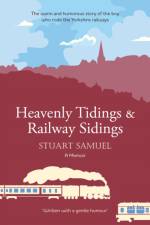
The warm and humorous story of the boy who rode the Yorkshire railways. Stuart Samuel's early adventures are on the lines around Halifax, riding in the driver's cab. Later, adulthood takes a turn towards a career as a parish priest, and he returns to his beloved Yorkshire. But life as a young curate in Golcar is never short of surprises
Packed with exquisite photographs, this delightful memoir immerses the reader in a bygone era of classic Ferraris, from Dinos to Daytonas, Boxers to Testarossas.
Abonner på vårt nyhetsbrev og få rabatter og inspirasjon til din neste leseopplevelse.
Ved å abonnere godtar du vår personvernerklæring.