




















Gjør som tusenvis av andre bokelskere
Abonner på vårt nyhetsbrev og få rabatter og inspirasjon til din neste leseopplevelse.
Ved å abonnere godtar du vår personvernerklæring.Du kan når som helst melde deg av våre nyhetsbrev.

Penny is not living her best life. Her job is far from thrilling and her long-term boyfriend shows no sign of wanting to commit. She has just turned fifty and is going nowhere. Wanting a new start, Penny applies for a job as cabin crew, to find out if she can push herself out of her comfort zone. Her new job brings the adventure she craves, even if she does keep bumping into impossibly handsome but deeply annoying pilot, Matt Garcia. Stuck in Paris on an unscheduled stopover, the chemistry between them grows. But the path of love never did fly smooth, as Matt's past threatens to come between them. Beside which, Penny is not looking for love. But what if love finds her?A romantic, uplifting and inspirational read all about taking chances later in life - fans of Milly Johnson and Sandy Barker will love this!Readers are falling in love with Fly Me to Paris:'Romantic, hilarious, beautifully written...I did not want it to finish...My happy book!...I loved it.' Reader Review'Delightful...relatable characters and issues. I loved the descriptions of Paris...made me feel like I was there. This was a brilliant, uplifting, light-hearted read' Reader Review'What a wonderful book this is. Helga writes from the heart and this book is set in Paris, the city of romance. A lovely, light summery read.' Reader Review'It was a very engaging book to read, and this author did something different with romance. I would pick up another book by Helga in a heartbeat.' Reader Review'What a lovely story about love, loss and finding yourself and never being too old to change anything. I loved how this story was about an older person ... This is a special story and would love to see these characters again, I love them.' Reader Review'Loved this book' Reader Review'This was a real feel-good read... I loved it.' Reader Review'It had a beautiful setting and the characters were relatable...The story made you think that it's not too late to make a fresh start, regardless of your age...I highly recommend' Reader ReviewPraise for Helga Jensen:'I simply couldn't put this down. I laughed out loud several times before I'd even finished the first chapter.' Jules Wake'A joyous tale of rediscovering your dreams, love and sense of self. Sheer fun and absolute UpLit!' Pernille Hughes'I love this book so much! All I wanted was for it not to end! It's right there on my top romcoms list now.' Natalie Normann'A charming, funny story... Ideal sunshine reading.' Reader Review'I loved every page and still think about the characters... lots of laugh-out-loud moments to be enjoyed' Reader Review'A beautiful story...well worth 5 stars and I recommend this great summer read.' Reader Review'Wow, just wow...It's funny, cute and romantic and that twist...What more can you ask for?' Reader Review'Such a cute read I read it in one sitting. This book had me smiling.' Reader Review'Whilst I'm feeling a bit lost now I've finished it, I'm left with a lovely warm feeling... I can't recommend it highly enough' Reader Review'What a beautiful story...An absolute gem, I couldn't put it down.' Reader Review
Mike Napier details the critical role of air power in the skies over Afghanistan, not only US and NATO over the last 20 years but also the ten-year occupation by the USSR in the 1980s.US and British forces, strongly supported by air power, invaded Afghanistan in late 2001 in response to the Al Qaida attacks on 9/11. What began as a small-scale operation of 2,500 troops with the limited objective of destroying Al Qaida became ever larger, growing to over 100,000 troops ten years later. This experience matched that of the Soviets after their invasion in late 1979, when they saw a massive increase in resistance by Mujahidin.Afghan Air Wars details how Soviet aircraft including the MiG-21, MiG-23, Su-17 and Su-25, as well as Mi-8 and Mi-24 helicopters supported Soviet offensives in the Panjshir Valley and other regions. Despite these high-octane operations and overwhelming air superiority, Soviet forces eventually withdrew.Some 20 years later, US and NATO air forces were deployed in similar roles. F-15E, F-16, F/A-18, A-10, Mirage, Harrier and Tornado aircraft all saw action in the skies over Afghanistan as did the CH-47 Chinook and AH-64 Apache helicopters. Mike Napier fully details their series of operations in a hostile environment as well as the advent of high-resolution targeting pods and Precision Guided Munitions (PGM) which enabled aircraft to stand off from threat areas and also to deploy their weapons with deadly accuracy. The conflict also saw the groundbreaking introduction of Remotely Piloted Vehicles (RPV) into routine air operations. Afghan Air Wars is richly illustrated with over 240 images - both official photos and privately taken, in-theatre images which have not been previously published. It also includes first-hand accounts by aircrews involved to create a unique and comprehensive picture of the part played by air power over Afghanistan in the last 40 years.
Historic, wildly dangerous, nerve-wracking, heroic and uniquely thrilling, the Isle of Man TT is one of the greatest sporting events in the world. Featuring input from past and present riders, TT teams, manufacturers and fans alike, James Driver-Fisher reveals why the Isle of Man's greatest ever races mean so much to so many TT devotees. The entire history of the races, from the first battle in 1907 through to the summer of 2019, is covered, focusing on an expert selection of the most memorable events of all. Famous road racers relive the closest of victories and heart-breaking defeats. Unbelievable comebacks from legendary riders sit alongside race weeks when records have tumbled, and events when the biggest names have first burst on to the scene. As well as the inside view from those directly involved in the thrills and spills, Memorable Isle of Man TT Races also draws on the memories and expertise of diehard fans who have grown up with TT in their blood - vividly bringing to life the iconic races' atmosphere through the years.
Set amid the glamour and bravado of 1980s Formula 1, The Power and the Glory tells the story of a rivalry unsurpassed in motor-racing history. By the mid-80s Alain Prost had firmly established himself as leader of the F1 pack. Winning Grands Prix almost at will, the French ace radiated invincibility. But then came the emergence of Ayrton Senna, sparking a decade-long battle for supremacy out on the track. Although chalk and cheese in terms of character and background, the two men were driven by the same burning desire: to become Formula 1's heavyweight champion of the world, its undisputed king. Senna and Prost would both go on to win multiple world championships in what was a golden era for F1 racing. Their Suzuka showdowns of 1988-90 attracted record worldwide audiences and popularised the sport as never before. An intimate portrait of two unique competitors, The Power and the Glory is a supercharged story of acrimony and sheer ambition.
Examining the evolution of the popular 1/2-ton American pickup truck, from a basic utility vehicle, to stylish icon and North America's best selling vehicle, this volume focuses on specifications, rarer makes and models, industry facts and figures, and optional equipment, via detailed text and previously unpublished images.
Railways presented nineteenth century governments with political as well as economic problems: their inherently monopolistic tendencies were recognized almost from the start. Hence the widely accepted notions of laissez-faire did not apply. The book traces government regulation of British railways from its beginnings in 1840. Based on departmental records, the private papers of politicians and administrators, and the archives of the companies themselves, it shows how far state intervention could go even in an age of individualism. For the student of government, it throws new light on the process of administrative decision-making, the sources of legislation and the workings of interest groups. Historians will find accounts of the origin of administrative law and the working of the civil service in the last days of patronage. For those interested primarily in railways, the book shows the influence of government on the development of such devices as interlocking signals, block working and continuous brakes.
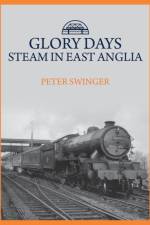
Steam in East Anglia recalls the era when steam ruled the tracks and the railways conveyed passengers and goods, from the commuter lines of Tilbury and Southend to the rural tranquillity of north Norfolk. There are sometimes conflicting ideas about which parts of Britain comprise East Anglia. This book describes and illustrates the steam trains which ran within Essex, Suffolk, Norfolk and parts of Cambridgeshire. The book concentrates on the years between the mid-1930s and the end of steam. Apart from the Pacifics, preservation has not been kind to the London & North Eastern Railway and its forbears. There are precious few locomotives left and it is a tragedy that no B17 or Claud was saved - but it is a relief that two Thompson B1s have been preserved.
The metre-gauge railways of South East Asia are a popular destination for railway enthusiasts from all over the world. In this book, Peter J. Green looks at the national railways of Thailand, Malaysia, Cambodia, Myanmar and Vietnam in the twenty-first century. While all these railways are modernising at varying rates, it is still possible to step back into the past and experience train travel behind diesel traction, often in carriages with windows that open, through varied and interesting landscapes. Semaphore signalling is disappearing rapidly but can still be seen in parts of Thailand, Myanmar and Malaysia. With a wealth of previously unpublished photographs, this book offers a fascinating insight into the railways of this rapidly changing area of the world.
Since the dawn of the railways, away from the glamour of the main line express, thousands of miles of industrial railway moved raw materials and finished products. From sewage works to sugar factories, all manner of industries were served. These sometimes employed dozens of locomotives, or in other cases simply a horse or a petrol tractor. The Beckton gas works in London ran a massive railway, complete with locomotive roundhouse and signals, while the ironstone industry of the East Midlands operated on the edge of fields. It can be said that one was never more than a mile or two from an industrial railway, though often its existence might not have been well known. A corncucopia of locomotives provided power, while a fantastic array of specialist wagons moved all manner of goods. A few industrial lines have survived as heritage attractions, and one is even a Scheduled Ancient Monument. This book is part of the Britain's Heritage series, which provides definitive introductions to the riches of Britain's past, and is the perfect way to get acquainted with Industrial Railways in all their variety.
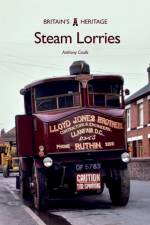
Steam power led the transport revolution in England throughout the nineteenth century, but was crippled on the road network by punitive legislation. As the century turned, the laws were altered in such a way that the development of the English Steam Lorry or Wagon became a viable transport proposition. For the best part of four decades, the steam lorry was a major player on the transport scene, being developed into a highly technical machine designed to beat competition from the petrol and diesel lorry. The most advanced machines were efficient and very fast. Made by a variety of builders, including the famous Sentinel company of Shrewsbury, who built waggons with a double 'g', and Foden, of Sandbach, steam lorries came in many shapes and sizes. This book looks at their birth, and the operation and engineering that set them aside from the traction engine and steam roller. This book is part of the Britain's Heritage series, which provides definitive introductions to the riches of Britain's past, and is the perfect way to get acquainted with steam lorries in all their variety.
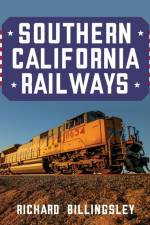
Southern California Railways looks at the operations of some of the many railroads that serve the southern half of the Golden State. These include the passenger operations of Amtrak, Metrolink and San Diego Coaster and the freight operations of the Union Pacific and BNSF Railway as well as some short-line operators. The book shows some of the huge variety of trains and locomotives that ply their trade in the area. Author Richard Billingsley focuses on the area south of San Luis Obispo and Bakersfield, including Los Angeles and San Diego, as well as the Mojave Desert and Salton Sea and includes 180 stunning images documenting the railway scene.
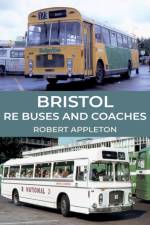
In 1961 the maximum length of single-deckers was increased to 36 feet. Bristol Commercial Vehicles and Eastern Coach Works designed their first rear-engined single-decker to take advantage of this new length. Two prototypes were built and tested in service in 1962. United Automobile Services had the RELL version with a low chassis frame for bus work. South Midland had the RELH version with a high frame for coach work. Production started in 1963, with Eastern Coach Works-bodied buses and coaches for the nationalised Tilling Group companies, plus some Alexander-bodied coaches for the nationalised Scottish Motor Traction Group companies. In this book the author illustrates the Bristol RE in service from 1970 to 1994 in England and North Wales. This includes Tilling Group companies, National Bus Company subsidiaries, municipal operators and independents, some of the new companies created from bus deregulation and privatisation from 1986, plus a few more recent photos of preserved Bristol REs.
Covering industrial steam throughout the British Isles over several decades, the terrific photographs featured here, captured by David Letcher, document a period of our industrial development that is now long gone. Steam-powered workhorses helped turn Britain into an industrial powerhouse, and these wonderful photographs show these locomotives in a variety of settings - a long way from the steam heritage railways of today. Published for the first time here in a selection curated by transport author Stephen Heginbotham, the photographs offer a richly rewarding and nostalgic tribute to the final years of steam on our industrial railways.
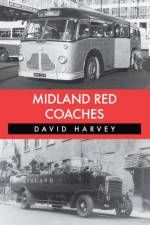
Throughout their existence from 1904 until 1981, the Birmingham & Midland Motor Omnibus Company were an idiosyncratic operator whose area of operations ranged from the Welsh Marches and Shropshire in the West to Northamptonshire and Rutland in the East and from Oxfordshire and Gloucestershire in the South to Staffordshire and Derbyshire in the North. Much of their area was distinctly rural but in Birmingham and the Black Country, Worcester and Hereford, Stafford and Leicester, intense urban services were operated mainly by double-decker buses and it is these buses that this volume examines. Looking at the coaches that formed a part of this iconic fleet, David Harvey utilises his collection of rare and unpublished images to explore the fascinating world of Midland Red coaches.
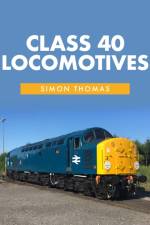
Mainly covering the mid-1960s to the mid-1980s, this collection of images offers a fascinating survey of one of the iconic locomotives of twentieth-century Britain: the Class 40. A common sight in Scotland and the north of England in the latter part of the century, the Class 40 continues to capture the imagination of railway enthusiasts everywhere. Used to haul both heavy freight and passenger trains, this book captures a locomotive at the peak of its powers, with previously unpublished images showing Class 40s both at work and rest. The vast majority of the photographs in this book were taken by the late Keith Holt. He was brought up in West Yorkshire and, like many youngsters at that time, developed an interest in railways as he cycled around the West Riding to visit places of interest. He always took photographs, including many of the iconic Class 40 locomotives. This book serves as a fitting tribute to his longstanding interest in the railways, and reflects the varied work carried out by the Class 40.
This book is a portrait of the period that became known as the era of BR Blue - the 1970s and 1980s. The railway appeared to be caught up in a world of its own. It was still recognisably the one from the steam era, and happy to be living in the past rather than making strides toward the future. As with most of the nationalised industries, labour relations were somewhat fraught. The railway invested in electrification and everything else was standardised to minimise costs. Unsurprisingly, stagnation haunted the network. Some would suggest the railway was doing a particularly fine job given the circumstances. It was fortunate to be blessed with a dedicated workforce and supported by thousands of people who travelled by train. For those of us who remember those days fondly, this is how we would prefer to remember that time.
When the Range Rover was launched in 1970 it immediately drew attention. Its elegant but practical design mixed with exceptional off-road handling, as well as comfort on metalled roads, seemed to introduce a whole new way of driving. The Louvre museum in Paris exhibited it as a model of industrial design. Fifty years later, the Range Rover continues to be in demand. In this comprehensive book, Rover expert James Taylor covers all of the Range Rover models from the 1970s 'classic' to the fifth generation Range Rover of today. The book covers the remarkable engineering achievements of Land Rover in developing a vehicle just as at home on rugged hillsides as it was on the streets of Chelsea. He follows the developments that made the Range Rover ever more in demand as a luxury status symbol. This book will appeal to all Range Rover enthusiasts, offering concise but comprehensive coverage of one of the most admired British cars.
Launched in 1961 as Renault's answer to the Citroen 2CV, the Renault 4 went on to become one of the most successful French cars ever made. In this readable and highly informative book, Renault 4 expert Mark Bradbury uncovers the history of the Renault 4, including the early design developments under Renault chairman Pierre Dreyfus and the ambition to build a car for the people when car ownership was soaring. This was to be a 'blue jeans car'. Apart from its practical design, the Renault 4 also incorporated several technical 'firsts', including a sealed cooling system. Building on its success, the Renault 4 went through several design changes and engineering improvements as well as a number of special editions. The author covers the motorsport successes, including the Paris to Dakar rally and a remarkable journey by four women in a Renault 4 through the Americas. The Renault 4 was also adapted into commercial variants such as small vans. As Renault prepares to unveil the first ever replacement for the Renault 4, and marking the sixtieth anniversary of its first launch, this book is a timely tribute to one of the most iconic French cars.
In 1973 there were approximately 150 Fire Brigades protecting the United Kingdom - all with their own ideas on how to design and specify fire engines. However, local government reorganisation the following year was about to change that. This book is a unique photographic record by distinguished fire engine photographers John Toomey, who came especially from New York, and Andrew Henry. It documents the amazing diversity of British post-war fire engines. Captions and an expert commentary are provided by the highly respected Fire Brigade author and historian Ron Henderson.
Inspired by the sight of RAF Lightning fighter interceptors climbing vertically into the sky at 50,000 feet per minute and by other British engineering and design achievements, Richard Noble, determined to put Britain back in the lead during the resurgence of national confidence of the 1980s, wanted Britain to regain the world land speed record. Thrust 2, driven by Richard Noble, broke the world land speed record on 4 October 1983 in the Black Rock desert in Nevada. Powered by a Rolls-Royce Avon turbo-jet engine, it reached a speed of 650.88 mph (1,047,49 km/h}. It would hold the land speed record until 25 September 1987. In this fascinating book, Richard Noble tells the inside story of the development of the car that would beat the world. The story takes the reader from the drawing board, through the considerable technical difficulties, including aerodynamics, mounting an engine designed for jet fighter aircraft, and maintaining stability with suspension and wheels at speeds of over 650 miles per hour. Despite the huge challenges, including recovery from a crash, they were overcome by the confidence and determination of Richard Noble and his team. Including unseen illustrations, this is the true inside story of the world-beating Thrust 2 project.
Gordon D. Webster's latest title examines the renewal - and revival - of railways in the north of England. In 2020, the Covid-19 pandemic changed the role of train travel in Britain forever. Gone were the swarms of rush-hour commuters to the city and the tourist season was dealt a very swift blow. New trains and new franchises signalled a new era on the East and West Coast main lines, only for trains to run empty as an emergency timetable took hold. Across the Pennines, the famous Settle & Carlisle line was devoid of its usual summer charter traffic, though 'Staycation Express' loco-hauled services proved a success. This photographic collection looks at the rails of the north before and after the pandemic in all their scenic glory. It also covers the heritage steam railways, which faced their biggest ever challenge during this extraordinary period in history.
Derbyshire is a county of contrasts, and the development of the railways reflect this. In Limestone Country in the west the LNW held sway with its railways from Ashbourne and Cromford to Buxton involved in the extraction of limestone. Meanwhile, in the east of the county, no fewer than four different companies fought over the lucrative business of coal carrying in the huge North Midlands Coalfield. From the historic railway town of Derby, the Midland Railway had routes south to London, west to Birmingham and north to Sheffield. In the north of the county was the MR's Hope Valley route, which included two of the longest tunnels in Britain. Further north still was the Great Central's Woodhead route carving its way through the gritstone. Altogether no fewer than six railway companies were represented in the county, including the Great Northern penetrating from the east, the North Staffordshire in the south-west and the Lancashire, Derbyshire & East Coast Railway with its transversal Chesterfield-Lincoln line. A complex but fascinating story, told using previously unpublished photographs, this book charts the development of the county's railways from the earliest days.
The first cranes mounted on railway wheels were hand-operated, but by the mid-nineteenth century several builders had fitted steam engines and boilers to enhance lifting capabilities, though initially these machines were not self-propelled, but merely portable. By the 1860s self-propelled cranes were offered and gradually designs were developed for more specialised uses, such as dealing with accidents or for quarrying. A crane locomotive is a conventional steam locomotive, built or subsequently fitted with a crane jib. The first example was a locomotive converted by the London & North Western Railway in 1866. Other railways followed with their own conversions, and three main line companies even built a small number new. These were all mainly employed for shunting and loading in workshop areas. Private firms also designed and built specialist crane locomotives for use in heavy industry, such as shipyards and steelworks, where they proved to be extremely versatile, with the last examples working into the early 1970s. While over 200 were built in the UK, for both domestic service and export, these fascinating machines have been largely overlooked by the railway historian and enthusiast.
Known as the Prairies, these tank engines of the 2-6-2T variety were some of Churchward's earliest designs and were the precursor for successful variations of one of the classes - numbered 51XX until 1949. There were two basic types, the smaller type for branch lines and the larger type mostly for outer suburban work in London and Birmingham, but also used as banking engines at Sapperton, Rattery, Hemerdon and Dainton inclines. The smaller 45XX class started off as a class of seventy-five engines, but were eventually developed by Collett into a class more than double the size. They saw service on the St Ives portion of the Cornish Riviera Express and the Pwllheli portion of the Cambrian Coast Express. Profusely illustrated throughout and packed with technical detail, Allen Jackson tells the story of the Great Western Railway's Prairie class locomotives.
Flying up the Edgware Road tells the story of how an area of what is now north-west London became a hub of the British aircraft industry in the very early years of the twentieth century. From the Edwardian suburb of Cricklewood out towards the semi-rural hamlets of Colindale and Kingsbury, a collection of factories were established to produce some of the most important warplanes that served in the First World War. The author takes the reader through the early days of flying at Hendon, introduces the owners and workers of once-mighty companies, such as Airco, Handley Page and de Havilland, and chronicles the decline and reuse of the factories for a new post-war economy. It is a book that will appeal to those keen to know more about London's industrial, social and economic past, as well as those with an interest in early aviation history.
During the mid-1990s Nottingham's scene was dominated by Nottingham City Transport and the Wellglade group that included Trent buses and Barton buses. Notable independents had been purchased by Wellglade and Nottingham City Transport respectively, with evidence of their existence still very much on the road. Other players included Kinch, Nottingham Omnibus and Delta bus, who tried to make a mark on the scene but were eventually swept away. By the end of decade low-floor buses would start to become the new normal, and new operating practices began to change. This nostalgic look back at buses in Nottingham in the 1990s presents a picture of an interesting and varied bus scene.
Abonner på vårt nyhetsbrev og få rabatter og inspirasjon til din neste leseopplevelse.
Ved å abonnere godtar du vår personvernerklæring.