















Gjør som tusenvis av andre bokelskere
Abonner på vårt nyhetsbrev og få rabatter og inspirasjon til din neste leseopplevelse.
Ved å abonnere godtar du vår personvernerklæring.Du kan når som helst melde deg av våre nyhetsbrev.

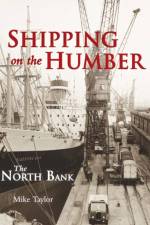
Over the years, several books featuring shipping on the River Humber have been published, but few have viewed their subject from an inland waterway viewpoint. This book, together with its companion volume "Shipping on the Humber - The South Bank", attempts to fill that gap, though sea-going traffic has not been ignored.
Built on a modified Jaguar XJR-14 chassis by Tom Walkinshaw Racing (TWR) with Porsche engine and project approval to compete in the IMSA championship run according to WSC rules. Cancelled due to regulation changes, Joest Racing Team took over the project and claimed back-to-back victories overall in 1996 and '97.
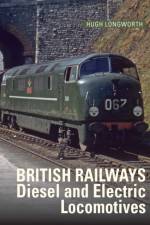
Hugh Longworth has published a number of very successful volumes on British Railways'' steam locos, DMUs and coaching stock. His thorough and detailed research has focused on the operation history and allocations of the rolling stock types covered in these books.In this completely new work, in the style of those previously published, he covers in detail all the classes of diesel and electrics locomotives that were introduced by BR from the modernisation plan of 1955 to the present day. Each class, which operated over this lengthy period, is covered in the book. The headlong rush to eliminate steam traction and modernise the railways from the 1950s onwards produced very mixed results. Some of the locomotives introduced were very successful and long lived with examples still in service well into the twenty first century whilst others were found seriously wanting and withdrawn completely after only a few years in service. For each class, a concise history is provided giving construction details and full technical specifications. For every individual locomotive, a full listing is provided including all numbers applied throughout its career, names where they were allocated, details of entry into service, full allocation details over their operational life as well as withdrawal and scrapping dates.The book is illustrated throughout predominantly using colour photos and drawings and the data it contains is fully cross referenced. Comprehensive in its coverage, this book will be referred to again and again by all those interested in the diesel and electric era on Britain''s railways.
The design and production of the airborne signals intelligence (SIGINT) aircraft of the USAAF during World War Two was an example of a rapid wartime evolutionary process. In three short years, the USAAF went from hand-built prototypes to full scale production of an aircraft type that had not previously existed in the US inventory. Government partnered with universities to form research laboratories focused on radar countermeasures (RCM) while US airline maintenance facilities were requisitioned to form production centres for modifications to allow rapid insertion of the technology. The USAAF pushed the bounds of systems integration and programme management, learning how to rapidly develop, field and operate aircraft in the ever evolving war in the electromagnetic spectrum.Just as the technical design changed, so did the operational employment of these 'ferret' aircraft. Ferrets started as an adjunct to bombing missions but quickly evolved into aircraft flying their own missions off the enemy coast. New schools were developed to train personnel to operate these aircraft, and when output was lagging, squadrons set up their own schools in theatre. Technical representatives from US and Allied universities helped modify aircraft as tactics changed, providing feedback for later production equipment and aircraft. The story of these 'ferret' aircraft is one of talented people across all walks of life pulling together to solve a complex problem under trying conditions.Each chapter in this new study of the beginnings of US SIGINT operations is profusely illustrated with an introductory essay placing the aircraft in context of the war in the theatre and includes expansive captions, maps, and operational details. The author William Cahill, a former USAF officer with a reconnaissance background, offers unique historical insights into the development and operation of these vital airborne signals intelligence assets.
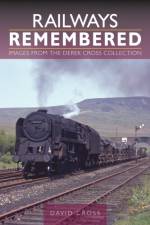
Over the years, Derek Cross'' photographs have graced the pages of many magazines and several photographic albums featuring his work have been published, recalling railway scenes which have changed radically in the space of a few short decades.Drawing upon his extensive collection of colour images taken from the late 1950s through to the early 1980s, this new collection of the photos of Derek Cross focuses on those years which saw the elimination the steam locomotive and its replacement by the first generation diesel and electric traction, a period which is of so much interest for many railway enthusiasts.The photos are arranged geographically and whilst they range across many parts of Britain, many were taken in those areas with which is work is synonymous including the south-west of Scotland, the Somerset & Dorset line and Kent and the south east. The book will include more than 200 colour photos and has been complied by Derek Cross'' son David who has also written the captions. These that have been compiled drawing on his father''s notes. This new album is a visual delight and a fitting tribute to one of the great railway photographers of his era.
Arguably, since the 1920s but markedly since the 1960s, the railways have been fighting a losing battle with the road transport to retain their share of freight traffic. Gone are the days when almost every British passenger station had its own goods yard, handling all kinds of freight in wagonload quantities for distribution in the local area. That network of general freight terminals was gradually reduced and, eventually, eliminated, as the railway lost out to its main competitor, the lorry, with British Rail effectively throwing in the towel in relation to wagonload traffic with the demise of the Speedlink network in the 1990s. At the same time, rail freight has developed new markets for heavy trainload operations. That growth has led to the setting up of specialised terminals for aggregates, cement, steel, deep-sea containers and other bulk cargoes. The move from traditional wagonload traffic to lengthy and heavy block trains conveying only type of freight has been fully accomplished. This book illustrates and describes the huge transition that has taken place across the British railway network over the last 60 years in relation to the handling of goods traffic. It provides views of long-forgotten operations forming a stark contrast with the streamlined facilities of today. The book also looks at the range of traction and rolling-stock which was used to handle the nation''s railway freight traffic over the decades ranging from steam-hauled pick-up goods trains to today''s uniform loads of 2,000 tonnes and more.
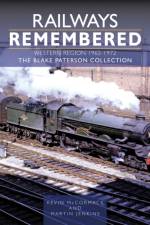
Blake Paterson was both a career railwayman and a railway enthusiast who worked for the Western Region, based at Paddington and Reading. He was also a passionate and very accomplished photographer. Aware of the great changes to the railway network which were underway, even before the publication of Dr Beeching''s notorious report, he resolved to record as much of the changing railway scene, as was possible. To do this, he set himself demanding schedules and would often travel great distances, sometimes using overnight trains, to reach the more remote corners of the network. During this intense period of photographic activity he took thousands of images, normally only taking a photo when the sun was shining and aiming to capture the trains in picturesque settings. He sought innovative angles and unlike many railway photographers of the era, he made a particular point of including people, particularly railway employees, in his photographs. It is believed that none of the images in this volume have been previously published.
This is an account of a fascinating but largely unknown aspect of post World War 2 US military aviation history, the conversion and use of former frontline aircraft to serve as remotely piloted drones. This story begins as far back as the 1920s, gains momentum during World War 2 and peaks with the postwar glut of airframes during the Cold War era.The list of manned aircraft converted to drones over the decades is long and includes at least the following: P-12, B-17, PB4Y-2, SB2C, F-80, T-33, F6F, F-86, B-29, B-47, F9F Panther and Cougar, F-100, F-102, F-104, F-106, F-4, F-16, P-39 and Boeing 720. These aircraft were used in a wide range of capacities; as test beds, flying bombs and targets for missiles and other aircraft to intercept and shoot down. One example of the sort of secret projects covered by this book, was a postwar scheme to use remotely controlled B-29s as one-way nuclear delivery devices under the code name Banshee.Since the 1970s the author has visited a number of drone sites, including the plant that converted F-100s and F-102s as well as ranges where drones were used. His files include many photographs, mostly never previously published of the many and varied types of drone which were created including the last B-17G Boeing that rolled out the door in Seattle and was ultimately consumed as a QB-17 drone.Aviation historians and enthusiasts will find so much of interest in this genuinely original, thoroughly researched, well-illustrated and utterly absorbing book which explores in detail a neglected but compelling aspect of recent US military aviation history.
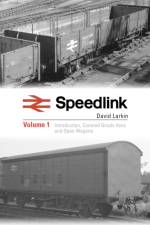
Speedlink was launched in 1977 as an attempt to arrest the decline in British Rail''s wagonload freight business. One of the things that distinguished Speedlink workings from almost all of the freight services that had preceded it, was that all the wagons used were air braked. At its peak in the mid 1980s, it carried over 8 million tonnes annually. However, despite this, Speedlink was never profitable and in the run up to railway privatisation, the service was abandoned in 1991. This is the first of short series of four books, each one complete in itself, which will provide a comprehensive survey of the whole Speedlink wagon fleet. This first volume begins by setting the scene from which Speedlink emerged. It explores the background to BR''s lossmaking wagonload business from the 1960s onwards and examines the circumstances which led to the creation of Speedlink as the solution to these problems. Having dealt with the background to its emergence, the book moves on to look at existing air braked stock owned by British Rail prior to the launch of Speedlink including that built in the 1960s for use on train ferries and vehicles converted to air braking. All the many types of existing covered vans and open wagons that could be used on Speedlink are thus featured in this volume.Written by wagon expert David Larkin and heavily illustrated throughout, this series will be an invaluable source of reference for all those interested in the post steam era on Britain''s railways. Those modeling the railway scene from the 1970s to the 1990s will also find these books essential reading.
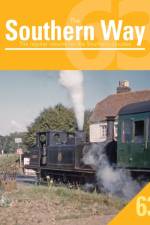
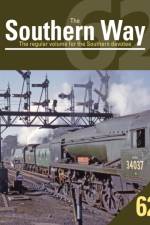
The quarterly periodical has now reached issue number 62 with 63 to follow in November. It continues to be the ''go-to'' reference for all those interested in the UK''s Southern Railways. Each issue contains a variety of articles and photo features, each offering an in-depth exploration of a historical aspect of the railways, rolling stock, infrastructure, incidents, events and people associated with The Southern Way.Features in the new 62nd edition include:- Locomotives at Nationalisation- Class 456 Farewell- Southern Snippets: Second World WaR- The Wimbledon & Croydon Railway- Southampton Pacifics- Southern Engine Sheds in Sussex- A Day in the Life- Dorking Greystone Lime Co.
Gibson Technology has grown into the most prolific winner at Le Mans and across global sports-prototype racing, but it can trace its roots all the way back to one man making electrical components on his kitchen table. This new book from Porter Press International tells the full story of how a small British engineering company founded by Bill Gibson ended up taking on and beating major manufacturers such as Peugeot and Toyota.
The incredible, little-known story of one of the most promising race car drivers in the United States who defied the odds as a Black woman in the sport of auto racing.Early in her career, Cheryl Glass looked like a lock to become the first Black woman to compete in the Indianapolis 500. She had everything she could need to be successful in the sport of auto racing. But after being repeatedly injured and pushing for too much too soon, her racing career ended, and the rest of her life crashed with it.In The First Lady of Dirt: The Triumphs and Tragedy of Racing Pioneer Cheryl Glass, Bill Poehler follows Cheryl Glass¿s meteoric rise in the world. As a child Cheryl had a brilliant mind and blew through school at a rapid pace, graduating from high school at age 16. When she started modeling, she was quickly in demand. And when Cheryl started driving race cars, she was immediately one of the best. Poehler recounts how Cheryl soon became a pioneer in the field as one of the few Black women in the sport, including the first to win the Skagit Speedway season finale as an 18-year-old rookie. But no matter how perfect her life seemed from the outside, there was more going on under the surface. She dealt with racist and sexist taunts from other drivers and fans throughout her career. She suffered major injuries, including repeated concussions. She had frequent encounters with neighbors and law enforcement. Overwhelmed by depression and mental illness, Cheryl committed suicide at age 35. Featuring exclusive interviews with Cheryl¿s mother, friends, and competitors, The First Lady of Dirt tells for the first time Cheryl¿s story in its entirety, from her highest highs as a race car driver to the debilitating circumstances around her death. It¿s the inspiring story of a racing pioneer and a tragic tale of the pressures that are often hidden from public view until it¿s too late.
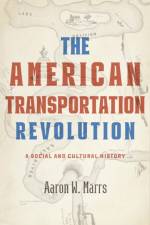
"This book highlights the rich social and cultural history of the transportation revolution"--
A fascinating collection of images revealing the lives of those who have chosen to escape land-dwelling to live on Britain's historic waterways.
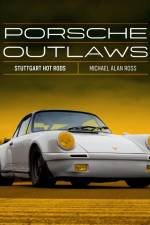
Porsche Outlaw cars are hugely popular in the Porsche and German-car enthusiast realm, and this is the first book to take the reader inside this irreverent, rule-breaking subculture. The book covers the history, inspiration, and definition of this unique Porsche aesthetic. The book includes a combination of historic images, new images shot for the book, and interviews with key figures in the scene, as well as high-profile builders
Abonner på vårt nyhetsbrev og få rabatter og inspirasjon til din neste leseopplevelse.
Ved å abonnere godtar du vår personvernerklæring.