











Gjør som tusenvis av andre bokelskere
Abonner på vårt nyhetsbrev og få rabatter og inspirasjon til din neste leseopplevelse.
Ved å abonnere godtar du vår personvernerklæring.Du kan når som helst melde deg av våre nyhetsbrev.

The book is all about faith and how all the old prophets had to endure by going through test today we as human must havetest so little rahab must go through so much to endure to get to her destination but through all the trial and tribulation shefinally gets to her destiny and find the fountain of faith she must go through the creepy forest she must get help from theangel fairy she must go through so much just to get to the fountain of faith and learn lesson after lesson but finally get toher destination of the the fountain of faith and once she sip the water her dreams come true from all the long struggles.
Contents - Foreword - Introduction - List of Plates- - I Greenhouse and Plant Frames - 2 The Garden Room or Annex - 3 Bottle Gardening - 4 Ventilating, Watering, Feeding and Potting - 5 Methods of Propagation - 6 Warm Greenhouse (Stove) Plants - 7 Cool Greenhouse Plants (Soft-wooded) - 8 Hard-wooded Greenhouse Plants - 9 Annuals for the Cool Greenhouse - 10 Cacti and Other Free-flowering Succulents - 11 Attractive Greenhouse Climbers - 12 Greenhouse Plants which grow from Bulbs, Corms and Rhizomes - 13 Free-flowering Orchids for the Beginner - 14 Greenhouse Plants with Attractive Berries - 15 Ornamental-leaved Plants (including Ferns) - 16 Forcing Hardy Plants - 17 Colourful Plants for the Unheated Greenhouse - 18 Pests, Diseases and Insecticides - Index - Preface - Professor of Botany - I have written this book for the benefit of those who wish to grow suitable plants to provide flowers in a greenhouse or conservatory or to use for room decoration, during all seasons of the year. Plants which do not flower freely and are not of great decorative value have been omitted, and only those which I have found to be ideal for the purpose have been dealt with in this book. There is a vast number of greenhouse plants to be seen in botanical gardens and large private establishments, but only a limited number are offered for sale by nurserymen. From these plant catalogues, which they issue free of charge, I have selected the most decorative kinds and have given the fullest details of their cultivation. Therefore, by choosing plants from the "lists of flowering plants for every season of the year" given on p. 203, it will be found possible to provide a continuous display of flowers in the heated or unheated greenhouse. I am indebted to Messrs. T. Bath & Co., Ltd., Greenhouse Specialists, 14 Norwood Road, Herne Hill, London, S.E. 24, for supplying the photographs of types of greenhouses, ventilators and heating appliances. I am also grateful to Dr. A. J. Willis, Reader in Botany in the University of Bristol, for advice and assistance in the preparation of this book. G. F. GARDINER
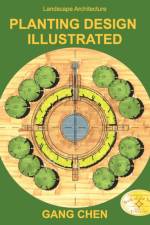
Absolutely fascinating! Informative, enlightening, and entertaining!This is one of the most comprehensive books on Planting Design. It fills in the blanks in this field and introduces poetry, painting, and symbolism into Planting Design. It covers in detail the two major systems in Planting Design: Formal Planting Design and Naturalistic Planting Design. It has numerous line drawings and photos to illustrate the Planting Design concepts and principles. Through in-depth discussions of historical precedents and practical case studies, it uncovers the fundamental design principles and concepts as well as underpinning philosophy for Planting Design. It is an indispensable reference book for Landscape Architecture students, designers, architects, urban planners, and ordinary garden lovers.What Others Are Saying About Planting Design Illustrated... "I found this book to be absolutely fascinating. You will need to concentrate while reading it but the effort will be well worth your time." -Bobbie Schwartz, Former President of APLD (Association of Professional Landscape Designers) and Author of The Design Puzzle: Putting the Pieces Together "This is a book that you have to read, and it is more than well worth your time. Gang Chen takes you well beyond what you'll learn in other books about basic principles like color, texture, and mass."-Jane Berger, Editor & Publisher of gardendesignonline "As a longtime consumer of gardening books, I am impressed with Gang Chen's inclusion of new information on planting design theory for Chinese and Japanese gardens. Many gardening books discuss the beauty of Japanese gardens, and a few discuss the unique charms of Chinese gardens, but this one explains how Japanese and Chinese history, geography, and artistic traditions bear on the development of each country's style. The material on traditional Western garden planting is thorough and inspiring, too. Planting Design Illustrated definitely rewards repeated reading and study; any garden designer will read it with profit." -Jan Whitner, Editor of the Washington Park Arboretum Bulletin "Enhanced with an annotated bibliography and informative appendices, Planting Design Illustrated offers an especially "reader friendly" and practical guide that makes it a very strongly recommended addition to personal, professional, academic, and community library Gardening & Landscaping reference collections and supplemental reading lists." -Midwest Book Review "Where to start? Planting Design Illustrated is, above all, fascinating and refreshing! Not something the lay reader encounters every day, the book presents an unlikely topic in an easily digestible, easy to follow way. It is superbly organized, with a comprehensive table of contents, bibliography, and appendices. The writing, though expertly informative, maintains its accessibility throughout and is a joy to read. The detailed and beautiful illustrations expanding on the concepts presented were my favorite portion. One of the finest books I've encountered in this contest in the past five years." -Writer's Digest 16th Annual International Self-Published Book Awards Judge's commentary "The work in my view has incredible application to planting design generally and a system approach to what is a very difficult subject to teach, at least in my experience. Also featured is very beautiful philosophy of garden design principles bordering poetry. It's my strong conviction that this work needs to see the light of day by being published for the use of professionals, students & garden enthusiasts."-Donald C Brinkerhoff, FASLA, Chairman and CEO of Lifescapes International, Inc.
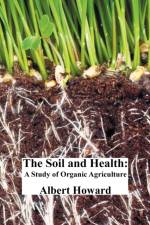
The Soil and Health, a classic of organic farming, is an essential introduction to organic gardening and farming."The health of soil, plant, animal and man is one and indivisible." - Albert Howard.At the turn of the twentieth century, chemical fertilizers seemed to offer limitless potential in agriculture. However, when British agriculturalist Albert Howard travelled to India as Imperial Economic Botanist to the Government of India, he observed Vedic agriculture as practiced by India peasant farmers, and noted the health benefits to plants, animals and humans from what we now call organic agriculture. Albert Howard, Rudolph Steiner and Lady Eve Balfour are considered the first proponents of organic agriculture.In his own words: "The soil is, as a matter of fact, full of live organisms. It is essential to conceive of it as something pulsating with life, not as a dead or inert mass. There could be no greater misconception than to regard the earth as dead: a handful of soil is teeming with life. The living fungi, bacteria, and protozoa, invisibly present in the soil complex, are known as the soil population. This population of millions and millions of minute existences, quite invisible to our eyes of course, pursue their own lives.""The first duty of the agriculturalist must always be to understand that he is a part of Nature and cannot escape from his environment. He must therefore obey Nature's rules," Howard wrote. He believed that the farmer must work with nature instead of with chemical fertilizers and pesticides for long-term sustained yields. Howard's belief in the importance of manures, compost and mycorrhizal fungi is now generally accepted, and is echoed in the organic gardening motto, "Feed the soil not the plant."Sir Albert Howard presents a summary of his life's work in this book. Howard states "This law is true for soil, plant, animal, and man: the health of these four is one connected chain."Anyone interested in organic gardening and farming will find this a fascinating book.Sir Albert Howard (1873 - 1947) was an English botanist. He studied at Cambridge University as a Foundation Scholar and lectured in the West Indies and the United Kingdom. From 1905 to 1924 he was Imperial Economic Botanist in India. He promoted organic methods through the Rodale Institute in the USA and the Soil Association in the UK and is one of the pioneers in the field.
A collection of essays on the American collecting of Italian Baroque paintings in the nineteenth and twentieth centuries. Looks at the influence of art exhibitions and exhibition catalogues on the understanding and popularity of Italian Baroque art.
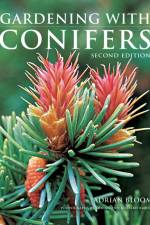
Revised expanded edition of the acclaimed reference by a renowned British nurseryman, a thorough and beautiful guide to coniferous trees and shrubs of the world available to British and European gardeners.
Then this is the book for you. With stunning photography and expert step-by-step tips, Bring The Outside In reveals everything you need to know to help your plants thrive, from dramatic statement foliage and miniature citrus trees to table-top terrariums and hanging planters.
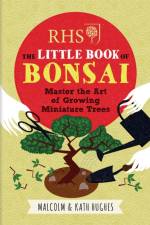
Master the art of growing miniature trees with this fun, jargon-free guide to bonsai.
This book presents a comprehensive, research-based overview of the various features, benefits and values associated with urban allotment gardening in Europe.
The Middle East is well-known for its historic gardens that have developed over more than two millenniums. The role of urban landscape projects in Middle Eastern cities has grown in prominence, with a gradual shift in emphasis from gardens for the private sphere to an increasingly public function. The contemporary landscape projects, either designed as public plazas or public parks, have played a significant role in transferring the modern Middle Eastern cities to a new era and also in transforming to a newly shaped social culture in which the public has a voice. This book considers what ties these projects to their historical context, and what regional and local elements and concepts have been used in their design.
From simple 18th- and early 19th-century gardens to the lavish estates of the Gilded Age, the gardens started by 1930s inmates at Alcatraz in San Francisco Bay to the centuries-old camellias at Middleton Place near Charleston, South Carolina - Rescuing Eden celebrates the history of garden design in the United States, with 28 examples that have been saved by ardent conservationists and generous private owners, and opened to the public. The United States has a rich tradition of landscape design, with gardens on a scale that rivaled the great gardens of Europe, but in the absence of specific institutions dedicated to their preservation, many of these "ephemeral collaborations between man and nature" were lost - during the wars, economic depressions, and social upheavals that swept the country in the mid-20th-century, or to creeping development and urban sprawl. The surviving gardens presented here were selected for the drama of their original creation and rescue and for their historical and horticultural importance. Ranging from wonderful to woebegone, each has its own character, and each has been brought back from the brink through a combination of imagination and tenacity. Discover The Kampong in Miami, Florida, planted with hundreds of tropical rarities from Southeast Asia by legendary plant explorer Dr. David Fairchild; Barnsley Gardens in Georgia, one of the few antebellum gardens surviving in the South, planted with 200 varieties of roses; the Lynchburg, Virginia garden created by Harlem Renaissance poet and civil rights activist Anne Spencer; the eccentric Ladew Topiary Gardens, with 15 garden rooms and a topiary foxhunt; the Belle Epoque grandeur of the Untermyer Garden in Yonkers, New York; and many others across the country, in Kentucky, Texas, Michigan, Maine, Rhode Island, and California. Each garden has been specially photographed by noted landscape and garden photographer Curtice Taylor, and introduced with authoritative and engaging text from design historian Caroline Seebohm, encouraging readers to appreciate the landscapes that serve not only as windows on American history, but living, flourishing pleasure grounds for botanists, horticulturalists, and nature lovers throughout the United States.
This stunning and original British travel guide charts lesser known gardens, spectacular meadows, the best kitchen garden food, plus wild places to camp and stay. From traditional cottage gardens and walled-gardens, to newly designed gardens planted for bees and nature, this timely book which will appeal to garden-lovers, foodies and nature-lovers.
An illustrated handbook on cultivating asparagus, celery, globe artichokes, rhubarb, seakale, peas, runner beans and more.
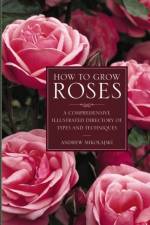
Includes wild roses, albas, bourbons, centifolias, china and tea roses, damasks, gallicas, floribundas, ramblers, climbers and miniature roses, with botanical information on the history, growth, hue and size of each one.
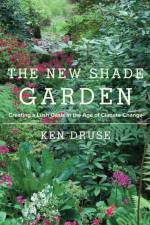
A guide to planting, designing, and caring for shade gardens from the author of the bestseller The Natural Shade Garden
Abonner på vårt nyhetsbrev og få rabatter og inspirasjon til din neste leseopplevelse.
Ved å abonnere godtar du vår personvernerklæring.