










Gjør som tusenvis av andre bokelskere
Abonner på vårt nyhetsbrev og få rabatter og inspirasjon til din neste leseopplevelse.
Ved å abonnere godtar du vår personvernerklæring.Du kan når som helst melde deg av våre nyhetsbrev.

The book will serve as the essential reference for collectors of Mid Century modern furniture, curators of museum collections and house museums with 20th century furniture, and for the hundreds of dealers, gallery owners, auctioneers, and appraisers who specialize in 20th and 21st century design.
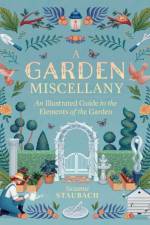
A Garden Miscellany is a fun and informative visual exploration of the main features commonly found in gardens. Fully illustrated by Julia Yellow, it is a gorgeous gift for every kind of garden lover.
First full biography of Richard Woods, the landscape designer, examining his work and restoring him to the attention he merits.
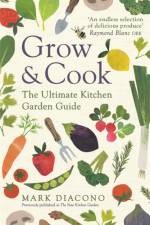
Your pocket-friendly growing guide. Including over 180 edible varieties of fruit, vegetables, herbs, nuts and spices.
The intimate Monk's Garden at the Isabella Stewart Gardner Museum in Boston embodies the design principles that inform the work of noted landscape architect Michael Van Valkenburgh.In Designing a Garden, Van Valkenburgh presents the design of the Monk's Garden at the Isabella Stewart Gardner Museum, an intimate, walled garden that Laurie Olin has described as "a masterpiece, and not a minor one." The book documents the evolution of the garden's design, which is based on the concept of meandering paths through a dreamlike woodland to create a contemplative space. Sketches and models show how the idea was worked out, and lush photographs reveal the completed garden through the seasons.Van Valkenburgh's text explores the origins of his love of landscape and plants in his family farm in Upstate New York and how this has influenced his intuitions as a designer. He shares the full background story of the Monk's Garden, focusing on the experimental nature of design work as well as the challenges and satisfactions of the small scale and the historic and cultural context. Designing a Garden provides a unique first-person account of the design process from the most prominent landscape architects in the country.
The Elderberry Book deepens appreciation for a plant that has played a crucial role for thousands of years. This inspiring, and educational resource guides you through the elderberry's history, how to cultivate and forage from the balcony to the backyard, and its preparation in traditional foods, medicines, wines, crafts, and tools.
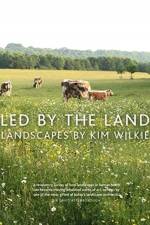
An updated and expanded edition of Kim Wilkie's classic work, widely acclaimed as a major contribution to the literature on landscape, sustainability, regeneration and design
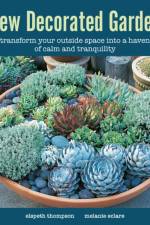
Use this practical guide to imbue your garden with artistic expression, no matter the size.
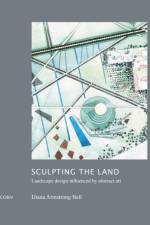
In Sculpting the Land, award-winning landscape architect Diana Armstrong Bell explores her unique interpretation of the possibilities of landscape design. Influenced by the work of the Russian avant-garde artists Kazimir Malevich and El Lissitzky, Bell's distinctive approach to contemporary design is primarily informed by the abstract. Known for distinctive, innovative designs that are site-specific and sensitive to context, Bell has designed and built projects all over the world, and in Sculpting the Land she reveals the process and inspiration behind her work. Drawn to earthworks, lines, and patterns, Bell gathers clues about a landscape's past and lets them inform a new story in her work. Sculpting the Land explores many of Bell's large-scale public landscapes in the urban realm, which are sculptural in their conception and modern in style, including Parco Franco Verga in Milan, Proche du Lac de Carré Sénart in France, Rochester Riverside Park in Kent, and Electra Park in London. With more than 150 color illustrations--including landscape plans, schemes, and hand-drawn pencil, ink, collage, and watercolor pieces--the book showcases a remarkable collection of art which is used to convey Bell's design process and present her ideas.
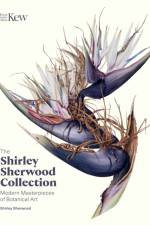
This book is a celebration of the Shirley Sherwood Collection of contemporary botanical art, made over a period of 30 years by Dr Shirley Sherwood and considered the most important private collection of its kind in the world.
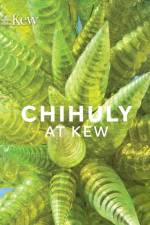
Chihuly at Kew: Reflections on nature is a celebration of the work of iconic artist Dale Chihuly, who once again is exhibiting his luminous artworks in Kew's spectacular landscape, featuring pieces never seen before in the UK.
A beautifully written, highly personal account of the gardening year
Fenugreek presents an in-depth review on the genus Trigonella, with an emphasis on the species T. foenum-graecum L. (fenugreek). Written by experts, the book discusses the chemical constituents of the species of Trigonella, their pharmacological properties, and the marketing of fenugreek seed. It includes chapters describing the genus' botany, physiology, cultivation, breeding, nutrition, pest-disease, and weed control, as well as a detailed presentation on the usefulness of fenugreek seed as food, spice, perfume. This book is ideal for those concerned with the study, cultivation, and use of medicinal and aromatic plants, and particularly of fenugreek.
St. John's wort (Hypericum perforatum) is one of the best-selling herbal medicines in the world. Hypericum: The Genus Hypericum summarizes the current knowledge, including plant infections, cultivation, manufacturing, standardization, quality control, biochemistry and pharmacology. This landmark book discusses topics not previously addressed, such as selection of the pharmacologically active compounds, application for severe depression, long-term effects and risks, marketing concerns, and comparison to synthetic drugs. With many updated references, Hypericum is invaluable to industry and academia alike, including researchers, producers, processors, importers and end users.
Everything you need to know to grow good food without a yard
Having it "made in the shade" can be a challenge, if you''re a gardener. Lawns, roses, and some flowering plants may not thrive or bloom as well there as in full sun. But there are many colorful foliage and flowering plants that absolutely love the shade. Learn what you can plant in different kinds of shade--deep, dappled, or somewhere in between--and how to maintain your trees and landscape to keep the level of shade you want, whether your goal is to create a garden that evokes a tropical jungle or a woodland forest. Plant directory with color photos, bibliography, index.
This ''little green book'' is clear, concise, well-organized and comprehensive. Mac Perry, a former horticultural agent, covers it all - how to design an attractive landscape, how to have a lush, green lawn, how to keep pests and weeds at bay, how to care for fruit and shade trees, improve your soil, fertilize your plants, and much more. One excellent feature of this book is its many lists: ''Seven Native Shade Trees'', ''Fifteen Disease Symptoms'', ''Ten Common Lawn Insects'', ''Eight Popular Berry Fruits'', etc. Simply written and easy to understand, this book is jam packed with useful advice and information! Line illustrations and b&w photos throughout.
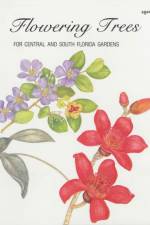
Add oxygen to the environment, shade to your patio, and color and beauty to your life - plant a flowering tree! Forty-eight trees are illustrated with sketches and 30 pages of colorful blossoms, original paintings by the author. Gives descriptions, history, blooming season, water, soil and temperature requirements.
From quizmaster Dr Gareth Moore, creator of the bestselling The Ordnance Survey Puzzle Book, working with the RHS and garden expert Simon Akeroyd, comes 100 quizzes and puzzles to entertain and inform, testing your horticultural and botanical knowledge in fun, creative ways.
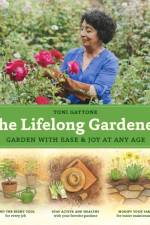
Packed with dozens of tips and tricks for making gardening less physically demanding and more gratifying, this empowering guide is for avid gardeners who want to continue enjoying their favourite hobby at any age.
Private Gardens: Design Secrets to Creating Beautiful Outdoor Living Spaces includes 37 fantastic private gardens design works all over the world. Hundreds of beautiful color pictures are taken by professional photographers, so that readers can carefully taste the charm.
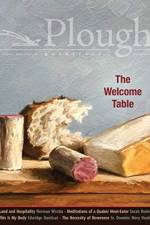
Food - how it's grown, how it's shared - makes us who we are. This issue traces the connections between farm and food, between humus and human. According to the first book of the Bible, tending the earth was humankind's first task: "The Lord God planted a garden in Eden, in the east; and there he put the man whom he had formed" (Gen. 2:8). The desire to get one's hands dirty raising one's own food, then, doesn't just come from modern romanticism, but is built into human nature.The title, "The Welcome Table," comes from a spiritual first sung by enslaved African-Americans. The song refers to the Bible's closing scene, the wedding feast of the Lamb described in the Book of Revelation, to which every race, tribe, and tongue are invited - a divine pledge of a day of freedom and freely shared plenty, of earth renewed and humanity restored. In the case of food, the symbol is the substance. Every meal, if shared generously and with radical hospitality, is already now a taste of the feast to come.Also in this issue: poetry by Luci Shaw; reviews of books by Julia Child, Robert Farrar Capon, Peter Mayle, Albert Woodfox, and Maria von Trapp; and art by Michael Naples, Sieger Köder, Carl Juste, André Chung, Ángel Bracho, Winslow Homer, Raymond Logan, Sybil Andrews, Cameron Davidson, and Jason Landsel.Plough Quarterly features stories, ideas, and culture for people eager to put their faith into action. Each issue brings you in-depth articles, interviews, poetry, book reviews, and art to help you put Jesus' message into practice and find common cause with others.
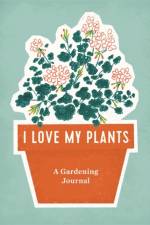
Aimed at today's hip gardeners, this playful, attractive and informative guided journal is perfect for dreaming, planning and tracking indoor and outdoor gardens. I Love My Plants is a perfect gift, or self-purchase, for anyone looking to cultivate a green thumb!
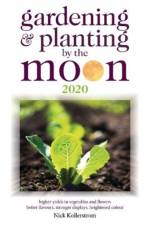
Country folk know that planning their work in harmony with the rhythms of the moon produces better crops. This guide computes everything you need to know about the daily influence of the moon and the planets, creating an essential gardening timetable for the year ahead. It is also a fine means of self-discipline for keen gardeners.
Charmingly told, this is the story of how Yvette designed and planted a meadow and watched in wonder as it developed. It encourages us all to create similar wildlife habitats.
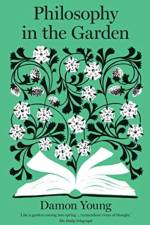
Why did Marcel Proust have bonsai beside his bed? What was Jane Austen doing, coveting an apricot? How was Friedrich Nietzsche inspired by his 'thought tree'?In Philosophy in the Garden, Damon Young explores one of literature's most intimate relationships: authors and their gardens. For some, the garden provided a retreat from workaday labour; for others, solitude's quiet counsel. For all, it played a philosophical role: giving their ideas a new life. Philosophy in the Garden reveals the profound thoughts discovered in parks, backyards, and pot-plants. It does not provide tips for mowing overgrown couch grass, or mulching a dry Japanese maple. It is a philosophical companion to the garden's labours and joys.
Focuses on the development of effective data-computing operations on agricultural advancements that are fully supported by IoT, cloud computing, and wireless sensor network systems, and explores prospective applications of computing, analytics, and networking in various interdisciplinary domains of engineering.
Abonner på vårt nyhetsbrev og få rabatter og inspirasjon til din neste leseopplevelse.
Ved å abonnere godtar du vår personvernerklæring.