








Gjør som tusenvis av andre bokelskere
Abonner på vårt nyhetsbrev og få rabatter og inspirasjon til din neste leseopplevelse.
Ved å abonnere godtar du vår personvernerklæring.Du kan når som helst melde deg av våre nyhetsbrev.

First published in 1978, Image and Pilgrimage in Christian Culture is a classic work examining the theological doctrines, popular notions, and corresponding symbols and images promoting and sustaining Christian pilgrimage. The book examines two major aspects of pilgrimage practice: the significance of context, or the theological conditions giving rise to pilgrimage and the folk traditions enabling worshippers to absorb the meaning of the event; and the images and symbols embodying the experience of pilgrimage and transmitting its visions in varying ways. Retelling its own tales of "e;mere mortals"e; confronted by potent visions, such as the man Juan Diego who found redemption with the Lady of Guadalupe and the poor French shepherdess Bernadette whose encounter with the Lady at Lourdes inspired Christians across the globe, this text treats religious visions as both paradox and empowering phenomena, tying them explicitly to the times in which they occurred. Offering vivid vignettes of social history, it extends their importance beyond the realm of the religious to our own conceptions of reality.Extensively revised throughout, this edition includes a new introduction by the theologian Deborah Ross situating the book within the work of Victor and Edith Turner and among the movements of contemporary culture. She addresses the study's legacy within the discipline, especially its hermeneutical framework, which introduced a novel method of describing and interpreting pilgrimage. She also credits the Turners with cementing the link between mysticism, popular devotion, and Christian culture, as well as their recognition of the relationship between pilgrimage and the deep spiritual needs of human beings. She concludes with various critiques of the Turners' work and suggests future directions for research.
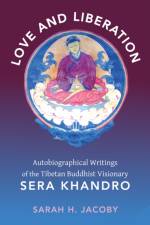
Love and Liberation reads the autobiographical and biographical writings of one of the few Tibetan Buddhist women to record the story of her life. Sera Khandro Kunzang Dekyong Chonyi Wangmo (also called Dewe Dorje, 1892-1940) was extraordinary not only for achieving religious mastery as a Tibetan Buddhist visionary and guru to many lamas, monastics, and laity in the Golok region of eastern Tibet, but also for her candor. This book listens to Sera Khandro's conversations with land deities, dakinis, bodhisattvas, lamas, and fellow religious community members whose voices interweave with her own to narrate what is a story of both love between Sera Khandro and her guru, Drime Ozer, and spiritual liberation. Sarah H. Jacoby's analysis focuses on the status of the female body in Sera Khandro's texts, the virtue of celibacy versus the expediency of sexuality for religious purposes, and the difference between profane lust and sacred love between male and female tantric partners. Her findings add new dimensions to our understanding of Tibetan Buddhist consort practices, complicating standard scriptural presentations of male subject and female aide. Sera Khandro depicts herself and Drime Ozer as inseparable embodiments of insight and method that together form the Vajrayana Buddhist vision of complete buddhahood. By advancing this complementary sacred partnership, Sera Khandro carved a place for herself as a female virtuoso in the male-dominated sphere of early twentieth-century Tibetan religion.
The descriptions of each tarot card are very reliable and very complete. Of particular interest are the alchemical associations and the authors work on the gematria or numerology of each card. For the first time a complete alchemical system is given for the whole deck. There is also a good deal of added astrological information and divinatory meanings and interpretations. Several excellent suggestions for studying and meditating on the cards are provided by the authors. This book is a balanced combination of both historical and new material presented by the Zalewskis that stands firmly rooted in Golden Dawn teachings and ritual practice. There are many interesting new innovations in this book. Fully illustrated with 78 all new tarot cards by Golden Dawn member and professional artist, Skip Dudchous.
The nornir or norns were a group of female supernatural beings closely related to ideas about fate in Old Norse tradition. Karen Bek-Pedersen provides a thorough understanding of the role played by norns and other beings like them in the relevant sources. Although they are well known, even to people who have only a superficial knowledge of Old Norse mythology, this is the first detailed discussion of the norns to be published amongst the literature dealing with Old Norse beliefs. Surprisingly little has been written specifically about the norns. Although often mentioned in scholarship treating Old Norse culture, the norns are all too often dealt with in overly superficial ways. The research presented in this book goes much deeper in order to properly understand the nature and role of the norns in the Old Norse world view. The conclusions reached by the author overturn a number of stereotypical conceptions that have long dominated our understanding of these beings. The book has a natural focus on Old Norse culture and is especially relevant to those interested in or studying Old Norse culture and tradition. However, comparative material from Celtic, Anglo-Saxon and Classical traditions is also employed and the book is therefore of interest also to those with a broader interest in European mythologies.
'Truth is simple only for those who first wrestle their way through multiplicity. It is like a thread of many pearls.' - Rudolf SteinerLike pearls in the oyster, pearls of thought are easily overlooked. Lying hidden in texts, they keep their light under a bushel, serving the greater framework and context. But if we draw them out they begin to shine, revealing their translucent facets and intrinsic harmony.In this meditative treasure, the editor has harvested and threaded together such pearls from Rudolf Steiner's books, creating new textures and striking panoramas. Dynamic constellations of thought arise, allowing us unusual and surprising access to Steiner's spiritual and philosophical thinking. In contrast to the prevailing view that meaning arises only in context, these self-sufficient verbal universes show us that the opposite can also be true. The pearls of thought in this compact pocket book acquire enhanced meaning in isolation, mysteriously becoming independent of the thoughts and phrases that precede or follow them. This collection of quotations, free of jargon or technical terminology, is accessible to all readers interested in developing a meaningful understanding of the human being's place in the world and cosmos.
Steiner describes polarities of illness and courses of treatment from a comprehensive analysis. He considers many cases and gives indications on therapeutic exercises, diet and medicine, how the 'I' relates directly to the physical body, and spirit and soul need to be taken into consideration when making diagnoses. Revolutionary in its approach, the far-reaching perspectives of these lectures are a living source of inspiration to both professionals, parents and others seeking spiritual insight.
'When we know how to enter deeply into the realm of the soul, we reach understanding of the harmony that exists between successive lives on earth and the whole of the physical world outside us.' - Rudolf Steiner. In these eight lectures, given during the Great War as thousands of young men were being killed in battle, Rudolf Steiner - the great initiate of the twentieth century - describes the dramatic reality of the spiritual worlds encountered by human beings after death. He speaks of the joys and sufferings experienced in those worlds by people of different character; the vision of the 'ideal human being' that souls experience; the cosmic 'midnight hour'; the processes leading to rebirth in the world of the senses; the deeper causes behind such phenomena as materialism and criminality; and why, in the flesh, we lose our instinctive perception of the spiritual worlds. Steiner describes how knowledge of the spiritual realms, as well as the life beyond death and before birth, can be built on the foundations of modern science. Indeed, he speaks of mankind's involvement in science and its many achievements as necessary steps on the path towards a modern spirituality and true understanding of the soul, and describes in detail some of the methods by which direct perception of the worlds of soul and spirit can be developed.
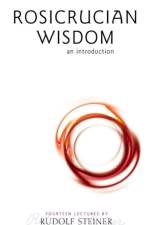
The work of Rudolf Steiner is unique in the way it combines esoteric teaching with practical suggestions for the development of social life. Indeed, Steiner is best known today for the application of his ideas in areas such as education, medicine and agriculture. But none of this could have developed without the coherent and profound body of spiritual knowledge which stands at the very core of Steiner's work. In Rosicrucian Wisdom - one of his most complete introductions to modern spirituality - Steiner speaks out of the stream of Rosicrucian teaching. But rather than borrowing old ideas from historical tradition, Steiner presents a wholly new contribution arising from the results of his own experiential research. He talks of the Rosicrucian path as being appropriate for the modern spiritual seeker, but warns that Rosicrucian teaching should not be taken as abstract theory. Rather than remaining in the head or even the heart, spiritual ideas should reach into daily action, transforming all aspects of life. Steiner goes on to describe many facets of spiritual truth, including the law of destiny, the fact of life after death, ways of developing spiritual vision, humanity's past and future evolution, and much more.
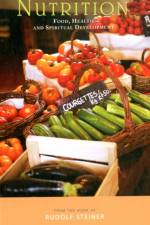
Our instinctive knowledge of which foods are helpful and which are harmful appears increasingly to be fading. We are bombarded with advice, information and prescriptions as to what we should eat and drink, but the issues surrounding nutrition - questions of health, diet, taste, even ecology and sustainability - remain largely unresolved.Unlike most commentators on this subject, Rudolf Steiner tackles the theme of nutrition in a refreshingly open way. At no point does he try to tell us what we should or should not be putting into our bodies - whether with regard to an omnivorous or vegetarian diet, smoking, drinking alcohol, and so on. The job of the scientist, he says, is to explain how things act and what effect they have; what people do with that information is up to them. However, he emphasizes that our diet not only determines our physical wellbeing, but can also promote or hinder our inner spiritual development.In this carefully collated anthology, with an introduction, commentary and notes by Christian von Arnim, Rudolf Steiner considers nutrition in the light of his spiritual-scientific research. He explains the impact of raw food, vegetarian and meat diets, the effects of protein, fats, carbohydrates and salts, individual foodstuffs such as potatoes, beetroots and radishes, as well as the impact of alcohol and nicotine. His insights are vital to anybody with a serious interest in health, diet and spiritual development.
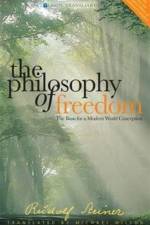
Are we free, whether we know it or not? Or is our sense of freedom merely an illusion? Rudolf Steiner tackles this age-old problem in a new way. He shows that by taking account of our own activity of thinking, we can know the reasons for our actions. And if these reasons are taken from our world of ideals, then our actions are free, because we alone determine them. But this freedom cannot be settled for us by philosophical argument. It is not simply granted to us. If we want to become free, we have to strive through our own inner activity to overcome our unconscious urges and habits of thought. In order to do this we must reach a point of view that recognises no limits to knowledge, sees through all illusions, and opens the door to an experience of the reality of the spiritual world. Then we can achieve the highest level of evolution. We can recognise ourselves as free spirits. This special reprint, featuring the acclaimed translation by Michael Wilson, is being made available in response to public demand.
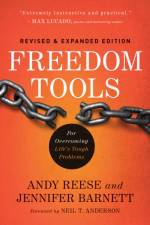
What do you say to someone who is hurting?How many times in everyday conversation do we struggle to comfort others in a troubled world? Christians should be "first responders," say Andy Reese and Jennifer Barnett, yet we lack the tools and confidence to reach out. We end up frustrated by our own inability to connect meaningfully and make a difference.But what would happen if we had the ability and courage to speak out in love?In these pages Andy and Jennifer give you the practical understanding and simple tools to do just that. You can fill even your casual conversations with the gentle yet transforming power of Jesus Christ. Here is what you need to confidently step out to bring peace, give grace and help others experience renewal.Visit www.freedomprayer.org for more information."Extremely instructive and practical."--Max Lucado, pastor and bestselling author"This book will change lives--maybe even yours."--Rich Stearns, president, World Vision U.S."Solidly based on the Gospel and immensely practical. It has helped our leaders walk in increased freedom while we help many know the truth that sets them free."--David McQueen, senior pastor, Beltway Park Baptist Church, Abilene, Texas"Our leadership team is fully on board and delighted with the simple effectiveness of this ministry."--Michael Swecker, pastor of Prayer and Freedom Ministries, Hosanna! Church, Lakeville, Minnesota"For many people a ministry like Freedom Prayer is the best place to start . . and I am most impressed with the team at the Freedom Resource."--Stephen Mory, M.D., assistant clinical professor of psychiatry, Vanderbilt University; psychiatrist, Mental Health Cooperative "Freedom Tools offers piercing insights with keen discernment to empower the reader to be set free at last. . . .A great tool for your spiritual warfare arsenal."--James W. Goll, founder, Encounters Network, Prayer Storm and GET eSchool; author, The Lifestyle of a Prophet and many more"Freedom Prayer has been invaluable to me as a counselor.."--Wendy Barnes, LPC, San Antonio"Freedom Tools is both practical and profound. It does a masterful job of taking a potentially complex subject and bringing it into everyone's reach."--Bill Johnson, senior leader, Bethel Church, Redding, California; author, When Heaven Invades Earth and more"Through the partnership of truths from the world of psychology and those from the world of inner healing, we can see powerful healing and transformation. By integrating the two, we will see more people live abundant lives as they heal their connection with God and are restored body, soul and spirit."--Margaret Nagib, Timberline Knolls Clinical Development Institute"Freedom Tools gave me a biblical manual for helping people experience freedom.."--Kirk Freeman, lead pastor, CrossBridge Community Church, San Antonio, Texas"Professional counseling and prayer ministries work hand in hand as essential partners to facilitate inner healing in wounded lives. Working together we can maximize the freedom, recovery and renewing of all those in need."--Dr. Mark Jones, LMFT director, Liberty Alliance"This powerful book gives you the Freedom Tools you need to demolish the adversary's obstacles to freedom and prosperity. Use them and you, too, can experience the super-abundant life that God desires for you!"--C. Peter Wagner, chancellor, Wagner Leadership Institute "A great need has long existed for someone to reduce inner healing to simpler, everyday language and tools. Our friend Andy Reese has done that admirably in Freedom Tools."--John Loren Sandford, co-founder, Elijah House Ministries "This is ministry from the heart and by the Spirit--so simple and natural that you'll ask yourself, 'Why didn't I know this before?'"--David Kyle Foster, founder and exec utive director, Mastering Life Ministries
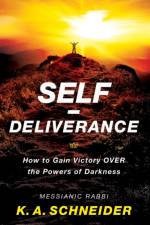
Demons Are RealIf you find this hard to believe, you are not alone.Yet many of the problems you deal with come directly from the realm of darkness. They are demonic.But this is no cause for fear. In fact, there's freedom in knowing you can overcome these problems! Help is available for you. And you do not have to wait for somebody else to deliver you. With Jesus' help, you can free yourself.Join Rabbi Schneider as he walks you through every aspect of the biblical self-deliverance process, including how to· determine which thoughts and actions are inspired by demons· speak specific commands that force demons to leave· win against persistent spirits· close demonic access gained through generational sins, fear and trauma· experience God's healing presence· and much more!As you move into Yeshua's freedom, you will see darkness dissipate--and you will find yourself surrounded by a peace and clarity you have never known.Let's get started.Includes discussion questions for personal or group use!"Expect to be set free as you read this book!"--Rabbi Jonathan Bernis, president and CEO, Jewish Voice Ministries International"Rabbi Schneider unsheathes the weapons every believer must use to win our individual battles against demonic powers."--Pat Boone, entertainer and author
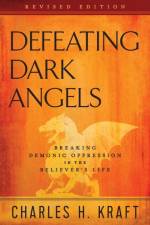
Defeating Dark Angels includes firsthand accounts of demonic activity in the lives of "ordinary" people, giving readers a biblical understanding of why and how dark forces come against God's people. Dr. Kraft approaches this often-sensationalized topic with a unique mix of scholarly research and practicality, coaching readers to address underlying emotional and mental problems with clinical therapy and pastoral counseling. This is the practical and spiritual help readers need to defeat dark angels in their own lives and to minister God's freedom and healing to others. Demonic oppression is a reality, but it is not always the only problem.
Revised and Expanded Edition of a Life-Changing BookRecovering nice guy Paul Coughlin points the way for all men who yearn to live a life of boldness and conviction--like Jesus. Using anecdotes from his own life, powerful and poignant stories, and vivid examples from our culture, Coughlin shows how men can say no to the "nice guy" syndrome and yes to a life of purpose, passion, and vitality.In this revised and expanded edition, Coughlin adds vital insights on the changes he's seen in churches and the greater culture in the decade since No More Christian Nice Guy was first published. This radical and hopeful message elevates the true biblical model of manhood and now includes testimonials from men and women whose lives have been altered by this book. Coughlin also looks at the shifting expectations men face in relationships and in the workplace, and how younger Christians, in particular, are subject to harmful views about masculinity. Part inspiration, part instruction, and part manifesto, this book gives men the courage to move from passivity to assertiveness.
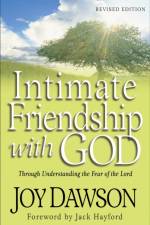
It can sound like a contradiction: fear God, but consider him a close friend. How does a Christian find the balance between reverence and communion? For decades Joy Dawson has been helping readers reconcile diverse approaches to the throne of God. She shows them how to have God's attitude toward sin, overcome the fear of what people think, attain godly wisdom, and fulfill their destinies. With personal examples and biblical truths, Dawson invites readers on a fascinating adventure into a place of intimate friendship with almighty God. This 20th anniversary edition includes fresh illustrations and a new foreword from Jack Hayford.
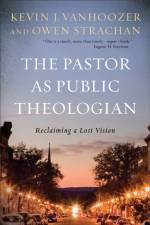
Many pastors today see themselves primarily as counselors, leaders, and motivators. Yet this often comes at the expense of the fundamental reality of the pastorate as a theological office. The most important role is to be a theologian mediating God to the people. The church needs pastors who can contextualize biblical wisdom in Christian living to help their congregations think theologically about all aspects of their lives, such as work, end-of-life decisions, political involvement, and entertainment choices.Drawing on the Bible, key figures from church history, and Christian theology, this book offers a clarion call for pastors to serve as public theologians in their congregations and communities. It is designed to be engaging reading for busy pastors and includes pastoral reflections on the theological task from twelve working pastors, including Kevin DeYoung and Cornelius Plantinga.
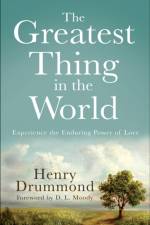
Based on 1 Corinthians 13, this well-loved classic provides life-changing insight into the nine components of love: patience, kindness, humility, generosity, courtesy, unselfishness, good temper, guilelessness, and sincerity. The simple beauty and positive truths of this dynamic message will encourage readers to practice the power and blessing of love in every area of life.
Shows in simple terms what it takes to be a successful husband and father and to bless those closest to you--your wife and children.
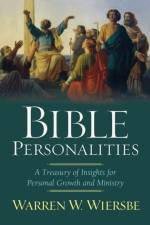
By incorporating biblical characters that have struggled with the same obstacles of faith, pastors, speakers, and teachers make it easier for their listeners to personally apply sermons and lessons.More than just a dictionary of biblical characters, Bible Personalities gives speakers historical context for their messages and simplifies research. Warren W. Wiersbe presents people from Aaron to Zedekiah, offering selected quotes from respected Bible scholars on each character. By putting the thoughts and experiences of these great contributors to work, Wiersbe cracks open complex Bible characters and gives overworked pastors and teachers a simple starting point for effective communication.
Many of us believe that we are saved by grace--but for too many, that's the last time grace defines our life. Instead of clinging to grace, we strive for good and believe that the Christian life means hard work and a sweet disposition. As good girls, we focus on the things we can handle, our disciplined lives, and our unshakable good moods. When we fail to measure up to our own impossible standards, we hide behind our good girl masks, determined to keep our weakness a secret.In Grace for the Good Girl, Emily Freeman invites women to let go of the try-hard life and realize that in Christ we are free to receive from him rather than constantly try to achieve for him. With an open hand and a whimsical style, Emily uncovers the truth about the hiding, encouraging women to move from hiding behind girl-made masks and do-good performances to a life hidden with Christ in God.
In an unassuming apartment building in Brooklyn, New York, three lives intersect as the reality of war invades each aspect of their lives. Young Esther is heartbroken when her father decides to enlist in the army shortly after the death of her mother. Penny Goodrich has been in love with Eddie Shaffer for as long as she can remember; now that Eddie's wife is dead, Penny feels she has been given a second chance and offers to care for his children in the hope that he will finally notice her and marry her after the war. And elderly Mr. Mendel, the landlord, waits for the war to end to hear what has happened to his son trapped in war-torn Hungary. But during the long, endless wait for victory overseas, life on the home front will go from bad to worse. Yet these characters will find themselves growing and changing in ways they never expected--and ultimately discovering truths about God's love...even when He is silent.
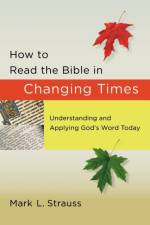
Many find it difficult to take words that were written thousands of years ago and apply them to twenty-first-century life in the Western world. How do we read God's unchanging Word in a world that is increasingly defined by change?How to Read the Bible in Changing Times shows everyday Christians how to interpret and apply the Scriptures regardless of time and culture. Rather than seeing the Bible as a magic answer book, a list of commands to obey, or a series of promises to claim, this insightful book allows the Bible to retain its identity as a complex, inspired document while showing that the truth it contains is relevant and life-changing. It shows the reader how todetermine the meaning of the text in its original contextidentify culturally relative featuresunderstand what the text teaches about God, his will, and his purposesapply the truths discovered to contemporary life situationsIt even shows readers how to discern God's will on the many modern issues that the Bible does not directly address.
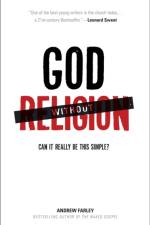
Andrew Farley's experience as a Christian was first characterized by self-effort as he tried to please God at any cost. His ruthless religion resulted in spiritual burnout and disillusionment with church. Only then did he discover what relaxing in Jesus means and how enjoying God's intimate presence can transform everyday life.Using a unique story-driven format, God without Religion dismantles common religious misconceptions, revealingthe true meaning of being filled with the Spiritthe facts about judgment, rewards, and God's disciplinethe simple truth behind predestination and the divisions it causesthe problem with the popular challenge to "live radical"Pulling no punches, Farley shows how the truth about these controversial issues can liberate and unify believers as we discover how to rest in the unconditional love of God.
Updated and Expanded Edition of a Landmark Text on an Urgent TopicNow updated and expanded, this landmark text reveals God's purposes for his covenant people in these times--and how this revelation is impacting the church. Unlike Ruth in the Old Testament, many of us have turned our backs on the Jewish people, the relatives of the Messiah, and we share the collective guilt for centuries of their persecution. These pages remind us that now, more than ever, we must confess, embrace, and intercede for the chosen people of God, aligning our prayers with God's plan.Once again, Israel and her people are center stage at a crucial moment in world history, and this book shows why the church must effect reconciliation and why our prayers are vital in this hour. If we will make the same covenant pledge to Israel that Ruth made to Naomi, the church will never be the same!
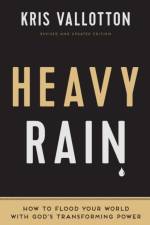
Practical Keys to Transforming the World around YouIn a world where evil dominates the headlines, we are often left wondering, Will good really triumph over evil? Or are we hurtling toward oblivion?It's here, during this very hour--when political chaos seems to reign and the media persecutes anyone who disagrees with them--that God is searching for men and women who long for an infusion of boldness that possesses their souls, who will take a stand and be a voice for the Kingdom. His vision for the future is not bleak, and he is readying a heavy rain of transformation and revival. Here is the guidance and inspiration you need to become a vessel that catches the downpour of the Spirit's rain--and helps release God's Kingdom like a flood.
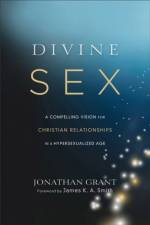
The digital revolution has ushered in a series of sexual revolutions, all contributing to a perfect storm for modern relationships. Online dating, social media, internet pornography, and the phenomenon of the smartphone generation have created an avalanche of change with far-reaching consequences for sexuality today. The church has struggled to address this new moral ecology because it has focused on clarity of belief rather than quality of formation. The real challenge for spiritual formation lies in addressing the underlying moral intuitions we carry subconsciously, which are shaped by the convictions of our age.In this book, a fresh new voice offers a persuasive Christian vision of sex and relationships, calling young adults to faithful discipleship in a hypersexualized world. Drawing from his pastoral experience with young people and from cutting-edge research across multiple disciplines, Jonathan Grant helps Christian leaders understand the cultural forces that make the church's teaching on sex and relationships ineffective in the lives of today's young adults. He also sets forth pastoral strategies for addressing the underlying fault lines in modern sexuality.
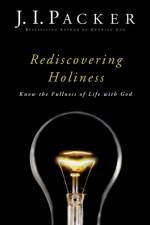
"There was a time," writes renowned theologian J. I. Packer in this classic book on biblical holiness, "when all Christians laid great emphasis on God's call to holiness. But how different it is today! To listen to our sermons and to read the books we write, and then to watch the zany, worldly, quarrelsome way we behave, you would never imagine that once the highway of holiness was clearly marked out for Bible-believers." In this revised and updated edition of Rediscovering Holiness, the highway is once more clearly marked out for a new generation of readers, pointing to true freedom and joy, both now and in eternity.
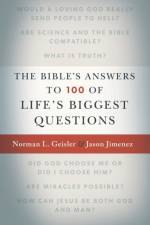
Every believer has questions about God, the Bible, Jesus, and the purpose and meaning of life. The vexing problem is that so few believers are able to answer even the most basic ones. Without answers, doubt creeps in and the future of the church is in jeopardy.With insight and precision, Geisler and Jimenez address one hundred penetrating questions that the culture asks and Christians must be prepared to answer, including both controversial questions raging in the public sphere and personal questions about family issues, the purpose and meaning of life, and the future of the world. Christians from every walk of life, especially young believers, youth workers, and parents, will treasure this comprehensive resource. Foreword by Josh and Sean McDowell.
Who would have guessed that something as austere as Calvinism would become a hot topic in today's postmodern culture? At the 500th anniversary of John Calvin's birth, new generations have discovered and embraced a "New Calvinism," finding in the Reformed tradition a rich theological vision. In fact, Time cited New Calvinism as one of "10 Ideas Changing the World Right Now." This book provides pastoral and theological counsel, inviting converts to this tradition to find in Calvin a vision that's even bigger than the New Calvinism might suggest. Offering wisdom at the intersection of theology and culture, noted Reformed philosopher James K. A. Smith also provides pastoral caution about pride and maturity. The creative letter format invites young Calvinists into a faithful conversation that reaches back to Paul and Augustine, through Calvin and Edwards, extending to Kuyper and Wolterstorff. Together they sketch a comprehensive vision of Calvinism that is generous, winsome, and imaginative.
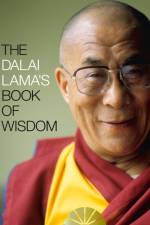
A little book for those in search of words to calm and inspire. In this gift book His Holiness the Dalai Lama imparts his message: the importance of love, compassion and forgiveness.His Holiness the Dalai Lama describes how to bring wisdom and compassion into our busy, stressful everyday lives.A beautiful selection of words from His Holiness that will help you to face difficult emotions such as anger in yourself and in others with genuine acceptance and understanding.The only little gift book based on the words of His Holiness the Dalai Lama, this book should have tremendous appeal especially during the holiday season.
Abonner på vårt nyhetsbrev og få rabatter og inspirasjon til din neste leseopplevelse.
Ved å abonnere godtar du vår personvernerklæring.