
Gjør som tusenvis av andre bokelskere
Abonner på vårt nyhetsbrev og få rabatter og inspirasjon til din neste leseopplevelse.
Ved å abonnere godtar du vår personvernerklæring.Du kan når som helst melde deg av våre nyhetsbrev.

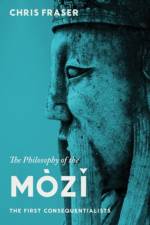
Mohism was an ancient Chinese philosophical movement founded in the fifth century BCE by the charismatic artisan Mozi, or "e;Master Mo."e; Its practitioners advanced a consequentialist ethics, along with fascinating political, logical, and epistemological theories, that set the terms of philosophical argumentation and reflection in China for generations to come. Mohism faded away in the imperial era, leaving the impression that it was not as vital as other Chinese philosophical traditions, yet a complete understanding of Confucianism or Daoism is impossible without appreciating the seminal contribution of Mohist thought. The Philosophy of the Mozi is an extensive study of Mohism, situating the movement's rise and decline within Chinese history. The book also emphasizes Mohism's relevance to modern systems of thought. Mohism anticipated Western utilitarianism by more than two thousand years. Its political theory is the earliest to outline a just war doctrine and locate the origins of government in a state of nature. Its epistemology, logic, and psychology provide compelling alternatives to contemporary Western mentalism. More than a straightforward account of Mohist principles and practice, this volume immerses readers in the Mohist mindset and clarifies its underpinning of Chinese philosophical discourse.
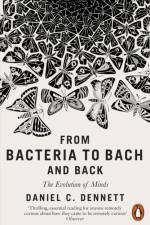
'Required reading for anyone remotely curious about how they came to be remotely curious' Observer'Enthralling' Spectator What is human consciousness and how is it possible? These questions fascinate thinking people from poets and painters to physicists, psychologists, and philosophers. This is Daniel C. Dennett's brilliant answer, extending perspectives from his earlier work in surprising directions, exploring the deep interactions of evolution, brains and human culture. Part philosophical whodunnit, part bold scientific conjecture, this landmark work enlarges themes that have sustained Dennett's career at the forefront of philosophical thought. In his inimitable style, laced with wit and thought experiments, Dennett shows how culture enables reflection by installing a profusion of thinking tools, or memes, in our brains, and how language turbocharges this process. The result: a mind that can comprehend the questions it poses, has emerged from a process of cultural evolution. An agenda-setting book for a new generation of philosophers and thinkers, From Bacteria to Bach and Back is essential for anyone who hopes to understand human creativity in all its applications.
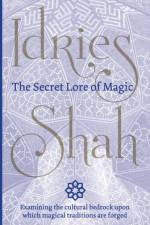
First published in 1957, The Secret Lore of Magic contains within it a series of major source-books of magical arts. Many of them translated into English for the first time, these works are annotated and fully illustrated.The book's title in itself signalled the fact that the bulk of material in this bibliographical study had never been published openly before.Together with Oriental Magic which appeared in the preceding year, it provided a complete survey of fundamental magical literature, and thus a comprehensive reference system for psychologists, ethnologists and others interested in the rise and development of human beliefs. Both books also introduced the general reader to dependable information about what was a shadowy and confusing subject.
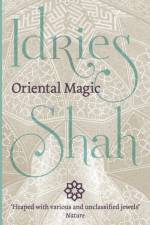
Oriental Magic is recognized as a brilliant study of how, what and why people think, in territories extending from North Africa to Japan.Profusely illustrated, the book is the product of years of research and field-work in a dozen different cultural regions.Its scholarly accuracy and genuine contribution to cultural understanding have made it a key text for anyone interested in informal beliefs, and esoteric practices.The work includes material on Indian alchemy, the Arabian Abjad system, on divination and talismanic charms, and it even contains an ancient Brahmin spell for immortality.
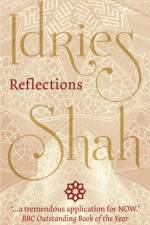
Small in size, but with a powerful punch, Idries Shah's Reflections is a collection of fables, aphorisms, and statements that challenge the conditioned mind. The book confronts the reader with unaccustomed perspectives and ideas, in an attempt to set the mind free, to see how things really are. As the book's foreword states, 'Do you imagine that fables exist only to amuse or to instruct, and are based upon fiction? The best ones are delineations of what happens in real life, in the community and in the individual's mental processes'.
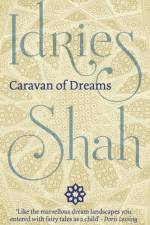
Caravan of Dreams distills the essence of Eastern thought in a feast of Sufi stories, sayings, poems and allegories, collected by one of the world's leading experts in Oriental philosophy and Sufism. Idries Shah builds up a complete picture of a single consciousness, relating Eastern mythology to reality, illuminating historical patterns, and presenting philosophical legends in this unique anthology.Its title is inspired from the couplet written by the Sufi mystic Bahaudin:'Here we are, all of us: in a dream-caravan,A caravan, but a dream - a dream, but a caravan.And we know which are the dreams.Therein lies the hope.'
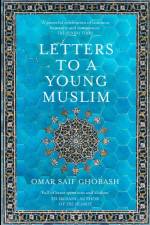
'A powerful celebration of common humanity and compassion . . . deserves to be read widely by people of all faiths and none' - Sunday TimesIn a series of personal and insightful letters to his sons, Omar Saif Ghobash offers a vital manifesto that tackles the dilemmas facing not only young Muslims but everyone navigating the complexities of today's world.Full of wisdom and thoughtful reflections on faith, culture and society. This is a courageous and essential book that celebrates individuality whilst recognising it is our shared humanity that brings us together.Written with the experience of a diplomat and the personal responsibility of a father; Ghobash's letters offer understanding and balance in a world that rarely offers any. An intimate and hopeful glimpse into a sphere many are unfamiliar with; it provides an understanding of the everyday struggles Muslims face around the globe.
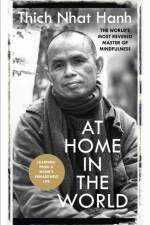
This collection of autobiographical and teaching stories from peace activist and Zen Master Thich Nhat Hanh is thought provoking and inspiring. Collected here for the first time, these stories span his life. There are stories from his childhood and the traditions of rural Vietnam. There are stories from his years as a teenage novice, as a young teacher and writer in war torn Vietnam, and of his travels around the world to teach mindfulness, make pilgrimages to sacred sites and influence world leaders. The tradition of Zen teaching stories goes back at least to the time of the Buddha. Like the Buddha, Thich Nhat Hanh uses story telling to engage people s interest so he can share important teachings, insights and life lessons.
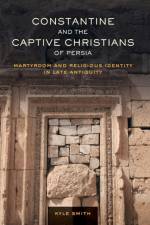
It is widely believed that the Emperor Constantine's conversion to Christianity politicized religious allegiances, dividing the Christian Roman Empire from the Zoroastrian Sasanian Empire and leading to the persecution of Christians in Persia. This account, however, is based on Greek ecclesiastical histories and Syriac martyrdom narratives that date to centuries after the fact. In this groundbreaking study, Kyle Smith analyzes diverse Greek, Latin, and Syriac sources to show that there was not a single history of fourth-century Mesopotamia. By examining the conflicting hagiographical and historical evidence, Constantine and the Captive Christians of Persia presents an evocative and evolving portrait of the first Christian emperor, uncovering how Syriac Christians manipulated the image of their western Christian counterparts to fashion their own political and religious identities during this century of radical change.
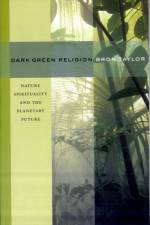
In this innovative and deeply felt work, Bron Taylor examines the evolution of "e;green religions"e; in North America and beyond: spiritual practices that hold nature as sacred and have in many cases replaced traditional religions. Tracing a wide range of groups-radical environmental activists, lifestyle-focused bioregionalists, surfers, new-agers involved in "e;ecopsychology,"e; and groups that hold scientific narratives as sacred-Taylor addresses a central theoretical question: How can environmentally oriented, spiritually motivated individuals and movements be understood as religious when many of them reject religious and supernatural worldviews? The "e;dark"e; of the title further expands this idea by emphasizing the depth of believers' passion and also suggesting a potential shadow side: besides uplifting and inspiring, such religion might mislead, deceive, or in some cases precipitate violence. This book provides a fascinating global tour of the green religious phenomenon, enabling readers to evaluate its worldwide emergence and to assess its role in a critically important religious revolution.
How and why is Christianity's center of gravity shifting to the developing world? To understand this rapidly growing phenomenon, Donald E. Miller and Tetsunao Yamamori spent four years traveling the globe conducting extensive on-the-ground research in twenty different countries in Africa, Asia, Latin America, and Europe. The result is this vividly detailed book which provides the most comprehensive information available on Pentecostalism, the fastest-growing religion in the world. Rich with scenes from everyday life, the book dispel many stereotypes about this religion as they build a wide-ranging, nuanced portrait of a major new social movement.
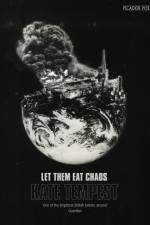
SHORTLISTED FOR THE 2017 MERCURY MUSIC PRIZELet Them Eat Chaos, Kate Tempest's new long poem written for live performance and heard on the album release of the same name, is both a powerful sermon and a moving play for voices. Seven neighbours inhabit the same London street, but are all unknown to each other. The clock freezes in the small hours, and, one by one, we see directly into their lives: lives that are damaged, disenfranchised, lonely, broken, addicted, and all, apparently, without hope. Then a great storm breaks over London, and brings them out into the night to face each other - and their last chance to connect. Tempest argues that our alienation from one another has bred a terrible indifference to our own fate, but she counters this with a plea to challenge the forces of greed which have conspired to divide us, and mend the broken home of our own planet while we still have time. Let Them Eat Chaos is a cri de coeur and a call to action, and, both on the page and in Tempest's electric performance, one of the most powerful poetic statements of the year.
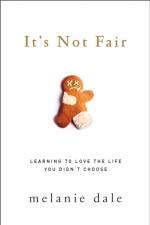
Hey, you. Are you debating whether to destroy something with your bare hands or curl up on the couch for a decade or two? This book will solve all of your problems. (Sheesh, that's aiming a bit high.) This book is a cup of hot coffee, a ginormous bar of chocolate, or the magical fairy that comes over and does your dishes while you lie in the fetal position clutching a fluffy pillow. Sometimes when life falls apart the only acceptable response is hysterical laughter. When things get so far gone, so spectacularly a world away from any plans you made or dreams you dreamed, you feel it bubbling up inside of you and you scream, ';It's not fair!' And it isn't. Fair is an illusion, and life is weird. This book will help you laugh at life's absurd backhands. This book is an empathetic groan of our collective unfairnesses. You might want to throw it across the room, and you might want to hug it like your new best friend. This book is about us sitting down together in our shared mess, taking a deep breath, gripping hands, looking the hard stuff in its beady little eyeballs, and bahahahaaing at it. Life's not fair, but we can learn to love this life we didn't choose.
Analayo investigates the meditative practices of compassion and emptiness by examining and interpreting material from the early Buddhist discourses.
Six years ago, Neale Donald Walsch began a conversation - forging his own unique relationship with God - and the result was "e;Conversations with God"e; book 1, which has sold over 2 million copies worldwide. In that inspirational series, Neale Donald Walsch showed that it is up to us to begin our own conversation. The next stage, as he explained in "e;Friendship with God"e;, is to take this relationship one step further. Now, with the final book in this incredible series, we learn how to take the ultimate step towards communion with god.
From the French Abbey of St Wandrille to the abandoned and awesome Rock Monasteries of Cappadocia in Turkey, the celebrated travel writer Patrick Leigh Fermor studies the rigorous contemplative lives of the monks and the timeless beauty of their monastic surroundings. In his occasional retreats, the peaceful solitude and the calm enchantment of the monasteries was passed on as a kind of 'supernatural windfall' which A Time to Keep Silence so effortlessly records.
Islam is one of the world's great monotheistic religions. Islamic culture, spanning 1,500 years, has produced some of the finest achievements of humanity. Yet the religion followed by a fifth of humankind is too often seen in the West in terms of fundamentalism, bigotry and violence- a perception that couldn't be more wrong. Introducing Islam recounts the history of Islam from the birth of Prophet Muhammad in the 6th century to its status as a global culture and political force today. Charting the achievements of Muslim civilisation, it explains the nature and message of the Qur'an, outlines the basic features of Islamic law, and assesses the impact of colonialism on Muslim societies. Ziauddin Sardar and Zafar Abbas Malik show how Muslims everywhere are trying to live their faith and are shaping new Islamic ideas and ideals for a globalised world.
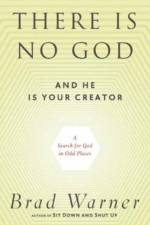
Can you be an atheist and still believe in God?Can you be a true believer and still doubt?Can Zen give us a way past our constant fighting about God?Brad Warner was initially interested in Buddhism because he wanted to find God, but Buddhism is usually thought of as godless. In the three decades since Warner began studying Zen, he has grappled with paradoxical questions about God and managed to come up with some answers. In this fascinating search for a way beyond the usual arguments between fundamentalists and skeptics, Warner offers a profoundly engaging and idiosyncratic take on the ineffable power of the "e;ground of all being."e;
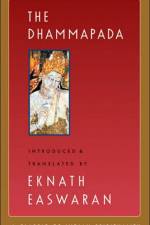
Easwaran's best-selling translation of this classic Buddhist text The Dhammapada is reliable, readable, and profound. Dhammapada means "e;the path of dharma,"e; the path of harmony and righteousness that anyone can follow to reach the highest good. The Dhammapada is a collection of verses, gathered probably from direct disciples who wanted to preserve what they had heard from the Buddha himself. Easwaran's comprehensive introduction to the Dhammapada gives an overview of the Buddha's teachings that is penetrating, and clear - accessible for readers new to Buddhism, but also with fresh insights and practical applications for readers familiar with this text. His translation is based on the original Pali. Chapter introductions, notes and a Sanskrit glossary place individual verses into the context of the broader Buddhist canon. Easwaran is a master storyteller, and the introduction includes many stories that make moving, memorable reading, bringing young Siddhartha and his heroic spiritual quest vividly to life. This faithful interpretation brings us closer to the compassionate heart of the Buddha.
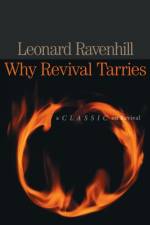
Leonard Ravenhill's call to revival is as timely now as it was when &supl;rst published over forty years ago. The message is fearless and often radical as he expounds on the disparity between the New Testament church and the church today. Why Revival Tarries contains the heart of his message. A.W. Tozer called Ravenhill "a man sent from God" who "appeared at [a] critical moment in history," just as the Old Testament prophets did. Included are questions for group and individual study. Ravi Zacharias refers to this as "the book that shaped me...more dramatically than any other..."
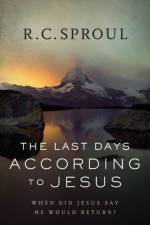
A trusted theologian analyzes what Jesus said about his return and the last days.
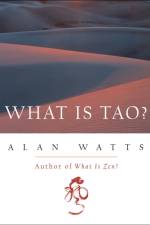
Alan Watts - noted author and respected authority on Far Eastern thought - studied Taoism extensively, and in his final years moved to a quiet cabin in the mountains and dedicated himself almost exclusively to meditating and writing on the Tao. This new book gives us an opportunity to not only understand the concept of the Tao but to experience the Tao as a personal practice of liberation from the limitations imposed by the common beliefs within our culture. The philosophy of the Tao offers a way to understand the value of ourselves as free-willed individuals enfolded within the ever-changing patterns of nature. The path of the Tao is perhaps the most puzzling way of liberation to come to us from the Far East in the last century. It is both practical and esoteric, and it has a surprisingly comfortable quality of thought that is often overlooked by Western readers who never venture beyond the unfamiliar quality of the word Tao (pronounced "e;dow"e;). But those who do soon discover a way of understanding and living with the world that has profound implications for us today in so-called modern societies. The word Tao means the Way - in the sense of a path, a way to go - but it also means nature, in the sense of one's true nature, and the nature of the universe. Often described as the philosophy of nature, we find the origins of Taoism in the shamanic world of pre-Dynastic China. Living close to the earth, one sees the wisdom of not interfering, and letting things go their way. It is the wisdom of swimming with the current, splitting wood along the grain, and seeking to understand human nature instead of changing it. Every creature finds it's way according to the laws of nature, and each of us has our own inner path - or Tao.
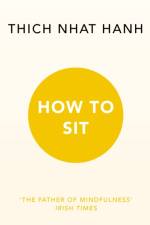
How to Sit is part of a charming series of books from Zen Master, Thich Nhat Hanh, exploring the essential foundations of mindful meditation and practise.How to Sit provides explicit, simple directions on the mechanics of posture and breathing, along with instructions for how best to achieve an awakened, relaxed state of clarity to cultivate concentration and compassion.
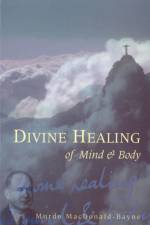
This book contains the lectures of a Great Master, offering the highest spiritual growth and understanding. Macdonald-Bayne himself describes how he became aware of sublime power, a conciousness far above his own. For the many people called to hear his lectures, it was an experience never to be forgotten.
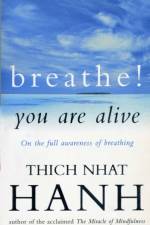
Breathing brings the secret joy of meditation to you. You become joyful, fresh and tolerant and everyone around you will benefit. The Sutra on the Full Awareness of Breathing is one of the three most essentialteachings of the Buddha. In Breathe! You Are Alive, scholar, poet and Zen master Thich Nhat Hanh unfolds this core teaching, showing how to apply it to everyday life. He explains the methods of conscious breathing that are presented in the sutra and offers exercises for practising those methods today. Moreover, his engaging commentary shows the profound nourishment that can be available to us when we slow down and get in touch with our breathing. Breathe! You AreAlive shows how we all begin to take in peace and happiness with each and every breath.
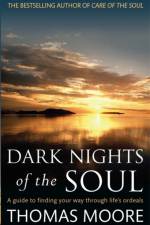
A 'dark night of the soul' is not a psychological syndrome, but a quest for meaning during life's darkest hours: the loss of a loved one, the end of a relationship, ageing and illness, career disappointments or just an ongoing dissatisfaction with life. Thomas Moore's extensive experience as a psychologist and theologian has taught him that the dark night is a challenge to restore ourselves and to become someone of substance, depth and soul. By using these trying times as an opportunity to reflect and delve into the soul's deepest needs, we can find a new understanding of life's meaning. Dark Nights of the Soul has its roots in a favourite chapter in Thomas Moore's million copy bestseller, Care of the Soul. In this beautifully-written and thought-provoking work he explores our contemporary anxieties and insecurities and shows how these metaphoric dark nights can become transforming rites of passage.
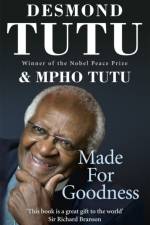
In Made for Goodness, Archbishop Desmond Tutu explains that, though we sometimes act out of depravity and despair, we do know in our heart of hearts that we are not as we were meant to be, and were created to be so much more. The truth of human goodness can get hidden under the fear that we cannot live up to its demands, or it can get buried under faults or failures, or it can just get forgotten. In this thoughtful and important book, the Archbishop (with his daughter, Mpho Tutu) shows how we can find our way back to goodness by changing our attitudes, by practising forgiveness, and by prayer. Then we will begin to see the goodness and beauty of others... If our view changes, this in turn alters the way we act. And how we act towards each other affects not only ourselves but everything in our world - for the better.
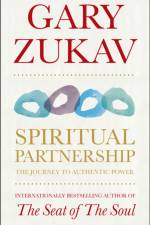
In his first major book since the phenomenal bestseller The Seat of the Soul, Gary Zukav reveals a revolutionary new path for spiritual growth.A great transformation is taking place. We are evolving beyond the limits of our five senses and increasingly able to access data that we could not previously detect. A new and surprising world is emerging, around us and within us. If we choose to realize its potential, we will forever alter our experiences of ourselves, our relationships and our surroundings.Gary Zukav explains how a powerful new dynamic is at play in human relationships. By focusing attention on the interior rather than the outer causes of suffering or joy, we can reach our full potential and generate authentic power, co-creating rewarding partnerships of substance and depth for the purposes of our mutual spiritual growth.Filled with fascinating examples as well as practical guidance, this remarkable book is the roadmap to profound change, pointing towards a fulfi lling, joyful way of life for us all.
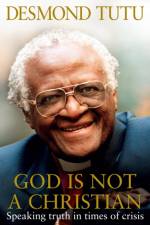
Archbishop Desmond Tutu is no stranger to controversy. From racism and social injustice, to the threat of AIDS, the continuing crisis in the Middle East and the importance today of 'ubuntu' (the concept of shared humanity), the Archbishop expresses his views powerfully and honestly, showing how faith and politics are inextricably linked. A forceful opponent of apartheid and later a compelling leader of the South African Truth and Reconciliation Commission, he was awarded the Nobel Peace Prize in 1984 and has remained a leading campaigner for human rights ever since. In 2009, he was awarded the highest civilian award in the United States, the Presidential Medal, by Barack Obama.This collection brings together some of the Archbishop's key speeches, sermons, lectures and exchanges from the past three decades, charting the trajectory of his extraordinary career and showing why he remains one of the world's best-loved and most outspoken religious figures. Edited by John Allen, a journalist and former aide of the Archbishop, God is Not a Christian reveals Archbishop Desmond Tutu in his own words.
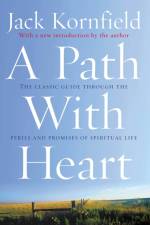
Perhaps the most important book yet written on meditation, the process of inner transformation, and the integration of spiritual practice into our Western way of life, A Path With Heart brings alive the possibilities of inner peace, wholeness and the achievement of happiness. Written by a teacher, psychologist and meditation master of international renown, this is a warm, inspiring and, above all, practical book. Its gentle Buddhist wisdom will guide you through the ups and downs of contemporary living, such as addiction, psychological and emotional healing, problems with relationships and the difficulties of achieving a balanced life of simplicity.
Abonner på vårt nyhetsbrev og få rabatter og inspirasjon til din neste leseopplevelse.
Ved å abonnere godtar du vår personvernerklæring.