







Gjør som tusenvis av andre bokelskere
Abonner på vårt nyhetsbrev og få rabatter og inspirasjon til din neste leseopplevelse.
Ved å abonnere godtar du vår personvernerklæring.Du kan når som helst melde deg av våre nyhetsbrev.

Meditate on meaningful sermons with Church Notes, a lovely guided journal. Through writing and reflection, Church Notes helps you remember your favorite sermons and fosters a deeper understanding of the Bible’s teachings. With guided prompts and uplifting Bible verses throughout, this beautifully designed journal provides a thoughtful way to connect with the teachings and apply them to your own life. Features include:Inspirational Bible versesGuided questionsNotes section for key points and writing space for personal reflectionsStrengthen your faith and connection to God with Church Notes. Take this journal with you to church or use it at home to meditate on God’s wisdom.
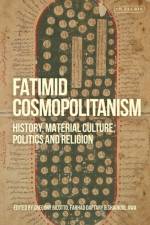
This book examines the diverse achievements of the Fatimid dynasty across religion, statecraft and art.
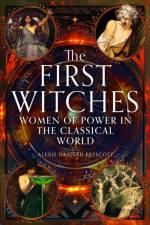
The First Witches: Women of Power in the Classical World takes you on a journey into the world of Classical literature, from the adventurous Homeric epic of the Odyssey to the grim warfare of Lucan's De Bello Civili. In doing so, you will be introduced to a handful of powerful women who will later be labelled as "witches". The chapters focus upon two specific groups of women from the Graeco-Roman world: the divine Hecate and the formidable yet beautiful Circe, who first feature in Greek texts, and the nefarious Thessalian witches and Erictho, who become marked antagonists in Roman literature. Both Hecate and Circe are fundamentally divine, yet early in their mythologies, they harbour characteristics that will become distinct tropes of witchcraft from being associated with the underworld, lunar lore and dangerous transformative powers. With the onset of increased social tensions in the late Roman Republican to early imperial periods, these divine women become increasingly more demonised within the literature, culminating in Hecate becoming a consort for witches and Circe a seductress and the epitome of the femme fatale. Simultaneous to these representations, Roman writers adopted a stock character within prose and verse of the hag-witch who was shocking in both appearance and character, displaying many elements of moral turpitude and a disturbing penchant for bestial activities such as cannibalism and the kidnapping and killing of infants. Thus, the hag-witch, most commonly associated with the world of the modern witch hunts and within the pages of modern fairy tale, was born. This book, therefore, provides a readable overview of how the Western witch originated. So profound was the impact of the classical witch upon Western thought and literature that she even lives on today as a prototype of the gruesome woman found in folklore, horror stories and movies. This is why the studying and reading of classical works is so relevant today as it was for our forebears since the literature contains the very ingredients that help to captivate our imaginations and our fears. The authors of the literature and the characters within it will continue to serve as powerful reminders of how the Western world came to be.
A classic in Christian literature, this book identifies numerous ancient and contemporary prejudices and stereotypes that work against women and reduce them to secondary roles in society in general and church communities in particular. The author, a world-renowned theologian, reveals the deep-rooted sources of these prejudices and brings them into the light for close examination. He presents the material in 28 chapters that take the form of short, thought-provoking meditations. He cites evidence from both the Old and New Testaments to make it clear why such prejudices are not in line with God's will. At the end of each chapter, he suggests ways in which both women and men can deal constructively with the problems associated with this culturally ingrained discrimination. The book also contains essays by top female scholars from five continents - Europe, Asia, Africa, North America and South America. They report on long-practiced church suppression of women in their respective countries - problems that exist today and have persisted since the Middle Ages and earlier.
Why the ancient evil of antisemitism has returned—and how to counter it. “Had we listened to Robert Spencer and taken heed twenty years ago or even ten years ago, the impact of the Islamists driven antisemitism would not have caught us by surprise. We would have had in place an institutional effort to counter it. “Here is another opportunity to pay attention to his important work. Read this book!” –Ayaan Hirsi Ali
"Using insights from neuroscience, theology, and experiences as pastor, professor, and activist, Santos explores how science and theology illuminate God's decolonizing effects on the brain and nervous system. Structures of injustice in the world must also be dismantled in us--and the future that God is birthing is taking shape within us"--
"Recognized as a saint by both Chalcedonian and non-Chalcedonian Christians alike, Jacob of Sarug (d. 521) produced many narrative poems that have rarely been translated into English. Of his reported 760 metrical homilies, only about half survive. In this homily, On the Entrance of Our Lord into Sheol, Jacob tells with great power the invincibility of Sheol and how Christ gave His life to enter into Sheol like any other dead human so that He might conquer it"--
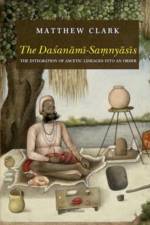
This is the first full-length study of the Dasanami-Samnyasis to be published since the 1970s, and will be particularly useful both for students of Hinduism and for readers with a particular interest in the religious history of mediaeval India.
Abonner på vårt nyhetsbrev og få rabatter og inspirasjon til din neste leseopplevelse.
Ved å abonnere godtar du vår personvernerklæring.