





Gjør som tusenvis av andre bokelskere
Abonner på vårt nyhetsbrev og få rabatter og inspirasjon til din neste leseopplevelse.
Ved å abonnere godtar du vår personvernerklæring.Du kan når som helst melde deg av våre nyhetsbrev.

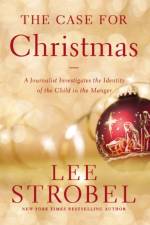
Who was in the manger that first Christmas morning? Some say he would become a great moral leader. Others, a social critic. Still others view Jesus as a profound philosopher, a rabbi, a feminist, a prophet, and more. Many are convinced he was the divine Son of God. Who was hereally? And how can you know for sure? Consulting experts on the Bible, archaeology, and messianic prophecy, Lee Strobel searches out the true identity of the child in the manger. Join him as he asks the tough, pointed questions you'd expect from an award-winning legal journalist. If Jesus really was God in the flesh, then there ought to be credible evidence, including Eyewitness EvidenceCan the biographies of Jesus be trusted? Scientific EvidenceWhat does archaeology reveal? Profile EvidenceDid Jesus fulfill the attributes of God? Fingerprint EvidenceDid Jesus uniquely match the identity of the Messiah? The Case for Christmas invites you to consider why Christmas matters in the first place. Somewhere beyond the traditions of the holiday lies the truth. It may be more compelling than you've realized. Weigh the facts . . . and decide for yourself.
This volume examines 1 Corinthians 1-4 within first-century politics, demonstrating the significance of Corinth's constitution to the interpretation of Paul's letter. Bradley J. Bitner shows that Paul carefully considered the Roman colonial context of Corinth, which underlay numerous ecclesial conflicts. Roman politics, however, cannot account for the entire shape of Paul's response. Bridging the Hellenism-Judaism divide that has characterised much of Pauline scholarship, Bitner argues that Paul also appropriated Jewish-biblical notions of covenant. Epigraphical and papyrological evidence indicates that his chosen content and manner are best understood with reference to an ecclesial politeia informed by a distinctively Christ-centred political theology. This emerges as a 'politics of thanksgiving' in 1 Corinthians 1:4-9 and as a 'politics of construction' in 3:5-4:5, where Paul redirects gratitude and glory to God in Christ. This innovative account of Paul's political theology offers fresh insight into his pastoral strategy among nascent Gentile-Jewish assemblies.
Abonner på vårt nyhetsbrev og få rabatter og inspirasjon til din neste leseopplevelse.
Ved å abonnere godtar du vår personvernerklæring.