




Gjør som tusenvis av andre bokelskere
Abonner på vårt nyhetsbrev og få rabatter og inspirasjon til din neste leseopplevelse.
Ved å abonnere godtar du vår personvernerklæring.Du kan når som helst melde deg av våre nyhetsbrev.

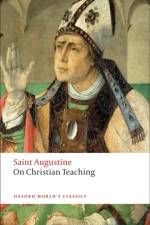
The De Doctrina Christiana ("On Christian Teaching") is one of Augustine's most important works on the classical tradition. Undertaken at the same time as the Confessions, it sheds light on the development of Augustine's thought, especially in the areas of ethics, hermeneutics, and sign-theory. This completely new translation gives a close but updated representation of Augustine's thought and expression, while a succinct introduction and select bibliography present the insights of recent research.
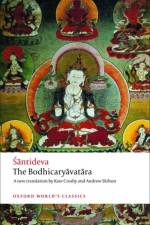
Written in India in the early eighth century AD, Santideva's Bodhicaryavatara became one of the most popular accounts of the Buddhist spiritual path. Important as a manual of training among Mahayana Buddhists, especially in the Tibetan Buddhist tradition, it continues to be used as the basis for teaching by modern Buddhist teachers. This is a new translation from the original Sanskrit, with detailed annotations explaining allusions and technical references. The Introductions set Santideva's work in context, and for the first time explain its structure.
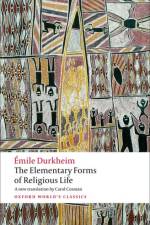
In The Elementary Forms of Religious Life, Durkheim investigated the enduring source of human social identity and fellowship by studying the simplest form of documented religion, totemism among the Aborigines of Australia. His book about the origin and nature of religion and society continues to enthrall sociologists, anthropologists, ethnographers, philosophers, and theologians.
This book gives the beginner and experienced practitioner alike a modern, 21st century view into the powerful and often misunderstood magical current called 'Chaos Magick'. Written in a clear and easily accessible style it examines the theory behind many techniques used in magical, artistic, religious and scientific systems of thought; then links and applies them towards desired goals. Separated into two volumes the book can be used by the reader as a workbook with rituals, techniques and exercises to be followed, as a window into contemporary magical thought at the turn of the century or simply as a rollercoaster of a good read! However you choose to use it, this book will leave you feeling positive, inspired and ready to apply any of the methods presented to your own life.
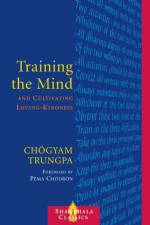
Warning: Using this book could be hazardous to your ego! The slogans it contains are designed to awaken the heart and cultivate love and kindness toward others. They are revolutionary in that practicing them fosters abandonment of personal territory in relating to others and in understanding the world as it is. The fifty-nine provocative slogans presented here-each with a commentary by the Tibetan meditation master Chögyam Trungpa-have been used by Tibetan Buddhists for eight centuries to help meditation students remember and focus on important principles and practices of mind training. They emphasize meeting the ordinary situations of life with intelligence and compassion under all circumstances. Slogans include, "Don't be swayed by external circumstances," "Be grateful to everyone," and "Always maintain only a joyful mind." This edition contains a new foreword by Pema Chödrön.
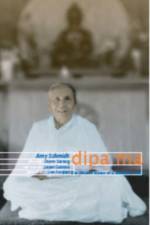
This biography of one of the few women in her generation to devote herself entirely to the pursuit of meditation also includes Dipa Ma's spiritual teachings, which have made her a major figure in contemporary Buddhism.
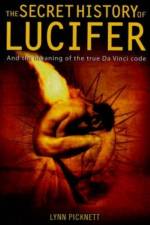
The darkness and the light and the real Da Vinci code
The NIV Application Commentary helps readers with the vital task of bringing the ancient message of the Bible into a contemporary context. It gives preachers and teachers the tools, ideas, and insights they need to communicate God's Word with the same powerful impact it had when it was first written.
The NIV Application Commentary helps readers with the vital task of bringing the ancient message of the Bible into a contemporary context. It gives preachers and teachers the tools, ideas, and insights they need to communicate God's Word with the same powerful impact it had when it was first written.
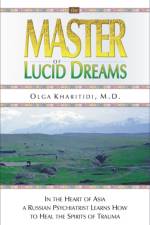
Why don't people heal? Why do they stay wounded--some even driven to suicide by their pain-despite the best that organic and psychological medicine can offer? To find the answers, Russian--born psychiatrist Olga Kharitidi traveled to exotic Samarkand, a major cultural and spiritual crossroads, and ancient capital of Uzbekistan, in the heart of Central Asia.No stranger to mystical and shamanic experiences, Dr. Kharitidi had already immersed herself in Siberian native traditions of seeing and healing. Now, at the invitation of an emissary from an ancient secret brotherhood, Dr. Kharitidi set out to learn first-hand the secrets of healing deep emotional wounds. As she quickly discovered, to master these methods she would first have to heal herself.Under the tutelage of the mysterious and charismatic Michael, the master of lucid dreams and protector of esoteric teachings first given millennia ago, Dr. Kharitidi entered another world altogether. There, she saw how our deepest emotional traumas are held in place by baleful spirits and can only be overcome by the technique of dreaming while awake.A major contribution to experiential psychology and a vivid revelation of little-known ancient teachings, The Master of Lucid Dreams describes a startlingly different and effective approach to inner healing.
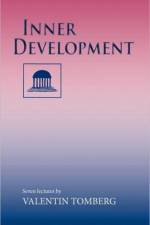
7 lectures, Rotterdam, August 15-22, 1938The focus of this book is the spiritual work in the "school" (or community) of Michael. What does this mean? At the end of the eighteenth century, the Archangel Michael revealed the new mystery that has manifested on Earth as spiritual science--Anthroposophy. Its essence involves the renewal of our knowledge of the mysteries of karma and human destiny. Those who are drawn to this school have a special relationship to the human faculty of thinking--their inner feeling for truth has the strength of iron. This feeling for truth helps them to become companions of Michael at the threshold of the spiritual world.These talks deal with the spiritual path of Anthroposophy in its Christian-Rosicrucian aspect. Tomberg speaks openly and honestly about meditation, the various stages of consciousness (imagination, inspiration, and intuition), the "guardian of the threshold," and the esoteric trials one encounters along the way. He concludes by describing the life of Rudolf Steiner as the life of a Christian initiate.This book was originally published in German as Sieben Vorträge über die innere Entwicklung des Menschen.
This book reveals the origin of self-hate, how self-hate works, how to identify it, and how to go beyond it. It provides examples of some of the forms self-hate takes, including taking blame but not credit, holding grudges, and trying to be perfect, and explores the many facets of self-hate, including its role in addiction, the battering cycle, and the illusion of control. After addressing these factors, it illustrates how a meditation practice can be developed and practised in efforts to free oneself from self-hating beliefs.
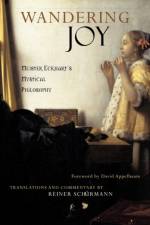
Both an exposition of Eckhart's mysticism and an exemplary work of contemporary philosophy.
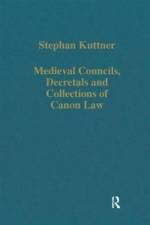
A collection of 11 articles - 9 in English and 2 in French - on the medieval councils, decretals and collections of canon law. There are additional notes and fully revised and detailed indexes for this second edition.
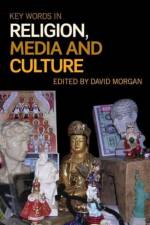
Highlighting the concepts guiding research into religion, media, and culture, this book offers a conceptual map of the field. It includes essays on the relationships between media and religion.
Martin Buber presents the essential teachings of Hasidism, the mystical Jewish movement which swept Eastern Europe in the 18th and 19th centuries.
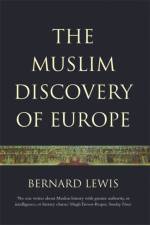
'The book covers every side of Muslim life . . . a remarkable collection of new information, which will be of deep interest to students of European history' R.W. Southern, NEW YORK REVIEW
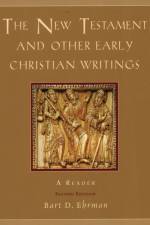
This second edition includes virtually every piece produced during the first 100 years of Christian history. Ehrman shows how the canon of the New Testament was formulated and how other texts were excluded from the canon. He also provides brief up-to-date introductions to each of the texts.
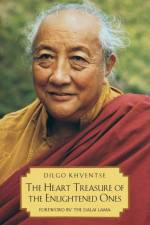
In this book, two great Tibetan Buddhist masters of the nineteenth and twentieth centuries challenge us to critically examine our materialistic preoccupations and think carefully about how we want to spend the rest of our lives. At the same time, they provide practical guidance in following the Buddhist path, starting from the most basic motivation and culminating in the direct experience of reality beyond the reach of conceptual mind. The root text is a teaching in verse written in the nineteenth century by Patrul Rinpoche, one of the outstanding teachers of his day. In the accompanying commentary, Dilgo Khyentse Rinpoche (1910–1991)—lineage holder of the Nyingma school and one of the great expounders of the Dharma in Europe and North America—expands upon the text with his characteristic compassion and uncompromising thoroughness. Patrul Rinpoche''s fresh and piercing verses combined with Khyentse Rinpoche''s down-to-earth comments offer a concise yet complete examination of the Buddhist path.
Is there a higher purpose behind the relationships we have with domesticated animals? The answer is a resounding "yes". This work explains the divine purpose of our association with domesticated animals, and the important role humanity has to play in their evolution.
The first volume of the Starseed Trilogy: Intuitive knowledge featuring a startling new view of human evolution.
Over 1700 entries cover mythology and religion of heathen Germanic tribes: Scandinavians, Goths, Angles and Saxons, 1500 BC-1000 AD.
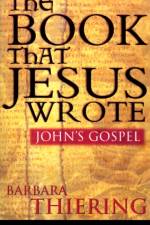
Barbara Thiering's previous works have been bestsellers in her native Australia, and Focus magazine said that the impact of her work '...may turn out to be as profound as that of Darwin's Origin of the Species'.
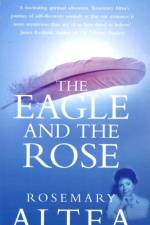
She also shows how she contacts the spirit world, predicts future events, performs 'spirit rescues' for those unable to continue their journey and, most of all, she illuminates a plane of infinite goodness, light and wonder beyond everyday life - a place accessible to us all.
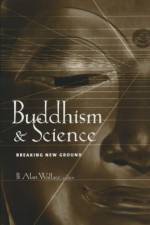
Distinguished philosophers, Buddhist scholars, physicists, and cognitive scientists examine the contrasts and connections between the worlds of Western science and Buddhism. Contributors, the Dalai Lama among them, assess not only the fruits of inquiry from East and West, they shed light on the underlying assumptions of these disparate world views.
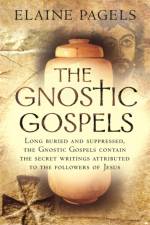
As discussed in The Da Vinci Code... Long buried and suppressed, the Gnostic Gospels contain the secret writings attributed to the followers of Jesus.
Abonner på vårt nyhetsbrev og få rabatter og inspirasjon til din neste leseopplevelse.
Ved å abonnere godtar du vår personvernerklæring.