












Gjør som tusenvis av andre bokelskere
Abonner på vårt nyhetsbrev og få rabatter og inspirasjon til din neste leseopplevelse.
Ved å abonnere godtar du vår personvernerklæring.Du kan når som helst melde deg av våre nyhetsbrev.

Treasures from Juniper Ridge combines meditation and pith practiceinstructions in a way that is easy to apply and comprehend. It is a compilationof discovered teachings, termas, by the greatest master of VajrayanaBuddhism, Padmasambhava, hidden by his female disciple, Yeshe Tsogyal.Treasures is replete with pieces that are direct, profound, fresh, and pertinentto our times.These various revelations are for all levels of practitioners. They provide indepth explanations of assorted aspects of practice, including: deity, deathand dying, non-conceptual meditation and recognizing mind nature. Thebook outlines ways to apply these teachings for the modern student, whileremaining true to traditional principles.Padmasambhava’s pith instructions are extremely important because heis not just a legendary figure or an ancient myth. He is an actual personwho continuously carries out spontaneous activities, including manifestingas treasure revealers, so that there is always a fresh, unimpaired teachingthat people can practice. This also ensures that Padmasambhava’s spiritualinfluence and blessings are unceasing.The special quality of these terma teachings is that they provide a methodfor accomplishment that is appropriate for each specific generation, periodof time, and individual person who meets them. The treasure teachingshe gave on the Juniper Ridge of Crystal Pearls contain the essential meaningof hundreds of such instructions.”Tulku Urgyen Rinpoche
A Grace book, or Book of Blessings, recognizes the free and open gift of God's grace. This small book however reaches out not only to believers, but to all people who may not define themselves as religious, yet who are open to the spirit and to the power of words.
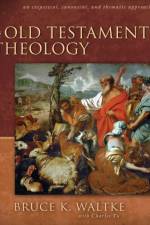
An Old Testament theology by a leading Old Testament scholar who combines a technical with a spiritual understanding of the Old Testament.
The first volume of the series addresses the more essential questions concerning Islamic faith: e.g. God and the nature of His existence; can islam solve every problem? Did Prophet Muhammad write the Qur'an Subjects like the Prophethood, Satan, etc. are also examined.
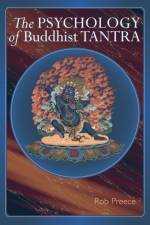
This book masterfully clarifies the nature of tantric practice. In contrast to the approaches of conventional religion, tantra does not attempt to soothe the turmoil of existence with consoling promises of heaven and salvation. The tantric practitioner chooses to confront the bewildering and chaotic forces of fear, aggression, desire, and pride, and to work with them in such a way that they are channeled into creative expression, loving relationships, and wisely engaged forms of life. In order to make the processes of tantra psychologically intelligible for a contemporary reader, Rob Preece makes judicious use of the work of modern psychotherapy, forging a compelling link between a Western tradition that hearkens back to the alchemical traditions of our own past and the comparably alchemical strategies of Tibetan Buddhist tantric practices. In keeping with the pragmatic and therapeutic aims of both psychotherapy and Buddhist meditation, The Psychology of Buddhist Tantra never loses sight of the central importance of applying these ideas to the concrete realities of day-to-day life. By illuminating the richly symbolic language of tantra through the intermediate language of psychology, The Psychology of Buddhist Tantra points to the transformative nature of tantric practices.
Reveals the meaning behind the cryptic codes and secret rituals of the medieval brotherhood of warrior monks known as the Knights Templar. This guide covers topics such as who the Knights Templar were, how they rose so high and fell so far, and why there is so much interest in them.
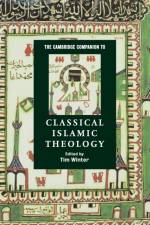
Devoting especial attention to questions of rationality, scriptural fidelity, and the construction of 'orthodoxy', this volume introduces key Muslim theories of revelation, creation, ethics, scriptural interpretation, law, mysticism, and eschatology. The treatment is firmly set in the historical, social and political context in which Islam's distinctive understanding of God evolved.
The book that launched a movement: "Wilson speaks with a humane eloquence which calls to us all" (Oliver Sacks).
One of the most beloved Buddhist books of all time-having inspired popular musicians, artists, a documentary film, and countless readers-is now in an expanded, new edition, loaded with extras. Absolutely absorbing from start to finish, this is a true story you might truly fall in love with. At only 24, Maura O''Halloran left her Irish-American family stateside and traveled to Japan, where she began studying under an inscrutable Zen master. She would herself become recognized as a Zen master-in an uncommonly brief amount of time. Pure Heart, Enlightened Mind is Maura''s beautifully-written account of her journey. These journal entries and letters home reveal astonishing, wise-beyond-her-years humor, compassion, wisdom, and commitment. This expanded edition includes never-before-seen entries and poems, the author''s unfinished novel, and an afterword that discusses the book''s cultural impact. It will be a must-have for Maura''s previous fans--and will surely find her thousands of new ones.
This is the way it has always been throughout history: Adam to Nuh, Ibrahrim, Musa, Isa, and Muahmmad (peace be upon them). It will happen to anyone who wants to stand up and proclaim the true message of Islam to the world.
Book two of Eugene Peterson's landmark Spiritual Theology series; foundational reading for the twenty-first century church.
Too many men see the biblical hero Samson as their model for manhood--a rugged individualist of the highest order. Yet, Samson's solitary successes were eventually overcome by moral weaknesses. Larkin, through the story of his own past and the stories of those in The Samson Society, offers a radical, refreshing alternative.
In Drawing Near, John Bevere invites readers to explore a life of intimacy with God. Study questions in each chapter offer opportunity for reflection, and a 'How to draw near to God' section offers practical steps toward developing true intimacy with Him.
The eleventh-century Muslim world was a great civilization while Europe lay slumbering in the Dark Ages. Slowly, inevitably, Europe and Islam came together, through trade and war, crusade and diplomacy. The ebb and flow between these two worlds for seven hundred years, illuminated here by a brilliant historian, is one of the great sagas of world history.
No.1 New York Times bestselling author Joel Osteen presents his signature multi-million-copy book in B-format paperback.
Only one of the world's mythologies has remained essentially unrecognized-the mythology of Judaism. As Howard Schwartz reveals in Tree of Souls, the first anthology of Jewish mythology in English, this mythical tradition is as rich and as fascinating as any in the world. Drawing from the Bible, the Pseudepigrapha, the Talmud and Midrash, the kabbalistic literature, medieval folklore, Hasidic texts, and oral lore collected in the modern era, Schwartz has gathered together nearly 700 of the key Jewish myths. The myths themselves are marvelous. We read of Adam's diamond and the Land of Eretz (where it is always dark), the fall of Lucifer and the quarrel of the sun and the moon, the Treasury of Souls and the Divine Chariot. We discover new tales about the greatfigures of the Hebrew Bible, from Adam to Moses; stories about God's Bride, the Shekhinah, and the evil temptress, Lilith; plus many tales about angels and demons, spirits and vampires, giant beasts and the Golem. Equally important, Schwartz provides a wealth of additional information. For eachmyth, he includes extensive commentary, revealing the source of the myth and explaining how it relates to other Jewish myths as well as to world literature (for instance, comparing Eve's release of evil into the world with Pandora's). For ease of use, Schwartz divides the volume into ten books: Myths of God, Myths of Creation, Myths of Heaven, Myths of Hell, Myths of the Holy Word, Myths of the Holy Time, Myths of the Holy People, Myths of the Holy Land, Myths of Exile, and Myths of theMessiah. Schwartz, a renowned collector and teller of traditional Jewish tales, now illuminates the previously unexplored territory of Jewish mythology. This pioneering anthology is essential for anyone interested in the Hebrew Bible, Jewish faith and culture, and world mythology.
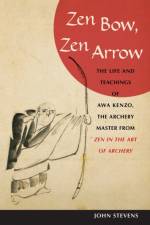
Here are the inspirational life and teachings of Awa Kenzo (1880-1939), the Zen and kyudo (archery) master who gained worldwide renown after the publication of Eugen Herrigel's cult classic Zen in the Art of Archery in 1953. Kenzo lived and taught at a pivotal time in Japan's history, when martial arts were practiced primarily for self-cultivation, and his wise and penetrating instructions for practice (and life)—including aphorisms, poetry, instructional lists, and calligraphy—are infused with the spirit of Zen. Kenzo uses the metaphor of the bow and arrow to challenge the practitioner to look deeply into his or her own true nature.
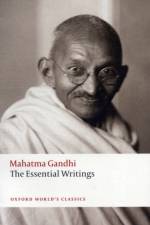
This new selection of Gandhi's writings taken from his books, articles, letters and interviews sets out his views on religion, politics, society, non-violence and civil disobedience. Judith M. Brown's excellent introduction and notes examines his philosophy and the political context in which he wrote.
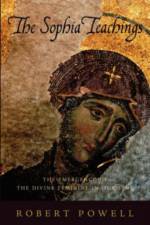
A survey of the teachings associated with the feminine principle of Sophia in Christianity's mystical past.
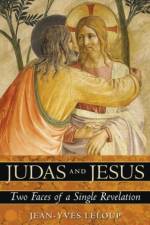
RELIGION / CHRISTIAN STUDIESThe familiar story of Judas, betrayer of Jesus, is striking because of its incomprehensibility. Why would one of Christ's disciples and companions of the heart deliver him up to his enemies and a barbarous, ignominious, and certain death for thirty pieces of silver? Jean-Yves Leloup's careful investigation of the gospels, various apocryphal texts, and most importantly the Coptic codex known as the Gospel of Judas leads him to conclude that there is more to the familiar story of Judas than a simple demonstration, viewed through one man, of humanity's inherent failings.In this reconstruction, based on these classic texts, Leloup offers an alternative explanation for Judas's actions, complete with illustrative dialogue. The betrayal of Jesus to the Romans was Jesus's idea, explains Leloup. Jesus persuaded Judas to play the role of "evil" in humankind by telling him that this enactment was crucial to God's plan and would set Judas by Jesus's side in eternity: "There where I am," spoke Jesus to Judas, "is where I wish you, too, to be."But to get there, Judas--a metaphorical representation of the darker side present in all human beings and the "shadow" counterpart to his Messiah dying on the cross--must first shed all his human qualities. His failings of greed, deceit, and cowardice--and even his faith and hope--are washed away in the despair that engulfs him. A parallel moment occurs for Jesus on the cross, when he comes to know the despair of separation from God. The moment Judas "loses" his life and all that gave it meaning--his God, his law, his justice, his Messiah--is the very moment he finds that which cannot be discarded--life eternal. Thus, in the moment of his ultimate extremity, Judas receives Jesus's true message and his intended gift.JEAN-YVES LELOUP is a theologian and founder of the Institute of Other Civilization Studies and the International College of Therapists. His other books include The Sacred Embrace of Jesus and Mary, The Gospel of Mary Magdalene, The Gospel of Philip, and The Gospel of Thomas. He lives in France.
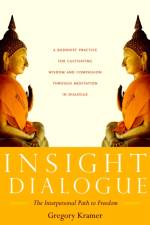
Insight Dialogue is a way of bringing the tranquility and insight attained in meditation directly into your interactions with other people. It's a practice that involves interacting with a partner in a retreat setting or on your own, as a way of accessing a profound kind of insight. Then, you take that insight on into the grind of everyday human interactions. Gregory Kramer has been teaching the practice (which he originated) for more than a decade in retreats around the world. It's something strikingly new in the world of Buddhist practice-yet it's completely grounded in traditional Buddhist teaching. Kramer begins with a detailed presentation of the central Buddhist teaching of the Four Noble Truths seen through an interpersonal lens. Because dukkha (suffering or unsatisfactoriness) is often most forcefully felt in our relations with others, interpersonal relationships are a wonderfully useful place to practice. He breaks the Noble Truths down into component parts to observe how they manifest particularly in relationship to others, using examples from his own life and practice, as well as from his students'. He then goes on to present the practice as it's taught in his workshops and retreats. There are a few basic steps to the practice, deceptively simple to describe: (1) pause, (2) relax, (3) open, (4) trust emergence, (5) listen deeply, and (6) speak the truth. The sequence begins following a period of meditation, and includes periods of speaking, listening, and mutual silence. Kramer includes numerous examples of people's experience with the practice from his retreats, and shows how the insight gained from the techniques can be brought into real life. More than just testimonials for how well the practice "works," the personal stories demonstrate the problems that arise, the different routes the practice can follow, and the sometimes surprising insights that are gained. To learn more about the author, Gregory Kramer, go to www.metta.org.
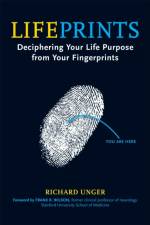
Unique, unchanging, and formed five months before birth, fingerprints have been an accepted and infallible means of personal identification for a century. In LIFEPRINTS, Richard Unger presents a groundbreaking method of self-discovery and offers a daily compass for meaning and fulfillment. Combining the science of dermatoglyphics (the study of fingerprints and related line and hand shape designations) with the ancient wisdom of palmistry, the LifePrints system is a simple yet profoundly accurate means of mapping one's life purpose. Like examining an acorn to know what kind of oak tree may one day emerge, reading our fingerprints reveals who we are meant to become. • A guide to discovering one's life purpose by decoding the map revealed in our unique combination of fingerprints. • This new system is based on the author's 25 years of research and fingerprint statistics for more than 52,000 hands. • Features step-by-step instructions for identifying the fingerprints and mapping the life lessons for reaching our full potential. • Includes detailed case studies plus fingerprint readings for Albert Einstein, John F. Kennedy, Amelia Earhart, Walt Disney, Susan B. Anthony, Martin Luther King, Charles Manson, and others.
A collection of Scripture-based readings that offer encouragement to individuals dealing with illness, loss, or other personal problems.
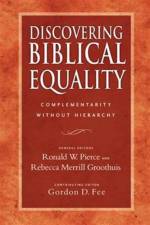
Includes essays on various issues relating to gender roles, written from an egalitarian standpoint.
Abonner på vårt nyhetsbrev og få rabatter og inspirasjon til din neste leseopplevelse.
Ved å abonnere godtar du vår personvernerklæring.