




Gjør som tusenvis av andre bokelskere
Abonner på vårt nyhetsbrev og få rabatter og inspirasjon til din neste leseopplevelse.
Ved å abonnere godtar du vår personvernerklæring.Du kan når som helst melde deg av våre nyhetsbrev.

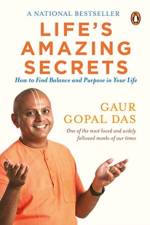
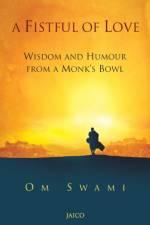
Stop going through life, Start growing through life!While navigating their way through Mumbai''s horrendous traffic, Gaur Gopal Das and his wealthy young friend Harry get talking, delving into concepts ranging from the human condition to finding one''s purpose in life and the key to lasting happiness. Whether you are looking at strengthening your relationships, discovering your true potential, understanding how to do well at work or even how you can give back to the world, Gaur Gopal Das takes us on an unforgettable journey with his precious insights on these areas of life. Das is one of the most popular and sought-after monks and life coaches in the world, having shared his wisdom with millions. His debut book, Life''s Amazing Secrets, distils his experiences and lessons about life into a light-hearted, thought-provoking book that will help you align yourself with the life you want to live.
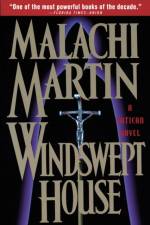
The Cold War has ended. With a scope and daring not possible until now, an unlikely international alliance of top-level political, financial, and religious interests sees the way clear at last to its ultimate goal: the establishment of a single global society. Utopia.These are men with nothing in common but immense power and a towering ambition for still more. With world unity and prosperity as their slogan--and with betrayal, scandal, and murder as their ready weapons--they have the means and the will to capture as their own the perfect global machinery for their plans: the oldest, wiliest, and most stable political chancery in the world--the Vatican.At the vortex of this lethal struggle stands the embattled Pope, a geopolitical genius whose elimination is the short-term solution to a long-term goal, and two American brothers, Paul and Christian Gladstone, one a lawyer and the other a priest, who appear to be the perfect pawns. One falls prey to the sharp teeth of greed for power. The other will become one of the Slavic Pontiff's closest allies...and will discover the darkest secrets at the very heart of papal Rome.From America to Europe to Russia, in broad landscapes and clandestine corridors, a rich and varied cast--presidents and politicos, simple saints and savvy sinners, popes and pope-makers--clash with one another amid dramatic and sometimes bloody events that will affect the destiny of every person alive today.
Popular, accurate and readable, the NRSV is the bible for all Catholics. The NRSV maintains the long tradition of accurate Bible translation. It is formal enough to convey the meaning of the original Greek and Hebrew text, yet contemporary enough to meet the needs of Catholics today.
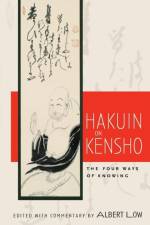
Kensho is the Zen experience of waking up to one’s own true nature—of understanding oneself to be not different from the Buddha-nature that pervades all existence. The Japanese Zen Master Hakuin (1689–1769) considered the experience to be essential. In his autobiography he says: “Anyone who would call himself a member of the Zen family must first achieve kensho-realization of the Buddha’s way. If a person who has not achieved kensho says he is a follower of Zen, he is an outrageous fraud. A swindler pure and simple.” Hakuin’s short text on kensho, “Four Ways of Knowing of an Awakened Person,” is a little-known Zen classic. The “four ways” he describes include the way of knowing of the Great Perfect Mirror, the way of knowing equality, the way of knowing by differentiation, and the way of the perfection of action. Rather than simply being methods for “checking” for enlightenment in oneself, these ways ultimately exemplify Zen practice. Albert Low has provided careful, line-by-line commentary for the text that illuminates its profound wisdom and makes it an inspiration for deeper spiritual practice.
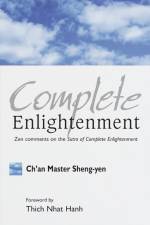
Complete Enlightenment is the first authoritative translation and commentary on The Sutra of Complete Enlightenment, a central text that shaped the development of East Asian Buddhism and Ch'an (Chinese Zen). The text is set in the form of a transcription of discussions between the Buddha and the twelve enlightened beings(bodhisattvas), who question him on all aspects of spiritual practice. This new translation preserves all the liveliness and nuance of the text in the original Chinese. The sutra's ancient wisdom is brought to life by the commentaries of Master Sheng-yen, one of the most revered living Buddhist masters in the Ch'an lineage. This is truly a manual for the spiritual journey toward complete enlightenment, providing the key to the deep, poetic, and practical meanings of the scripture.
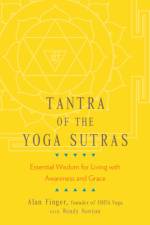
A readable, accessible version of the ancient classic primer on the practice of yoga--interpreted by a contemporary Tantric yoga master.The Yoga Sutras is Patanjali's classic text on how to experience oneness (samadhi) within yoga practice. Serious yoga students want to bring the wisdom of the Sutras to their practice but often find the text impenetrable and difficult to relate to. Here, yogi and Tantric master Alan Finger offers an interpretation of the Sutras that is clear and immediately relevant-and he shows contemporary practitioners that samadhi is something that they can experience here and now. Yoga is a process of spiritual evolution, and samadhi is as natural as breathing and available to all, because it is our true nature. Viewed through a Tantric framework, Finger shows us how the Sutras describe the yogic process that both leads us to the experience of samadhi and allows us to weave the wisdom and grace of that experience back into our everyday life.
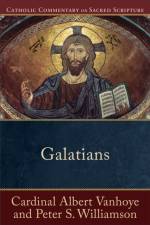
This Catholic commentary on Galatians interprets Scripture from within the living tradition of the Church for pastoral ministers, lay readers, and students.
Your prayers in the throne room live forever. The day will come when each of us will stand before God in His throne room.
Jesus said that the Bible contains new treasure as well as old. Why then do so few Christians study it? Is it too difficult to understand or is the issue in the way it is taught? Does the Bible have a middle-management problem? This updated edition of Haverim: How to Study Anything with Anyone offers a fresh approach to Bible study. It fulfills the needs of a society who want to pull information rather than have it pushed upon them. By researching the rabbinic method of education, author Paul Clayton Gibbs created a four-step method that equips you to study anything with anyone! You will learn how to explore the many facets of Scripture with those of no faith, little faith, or even another faith. Also serving as a companion guide to the popular Study Masterclass (studymasterclass.com), Haverim provides a practical way to create home groups that are inclusive rather than exclusive. It is a tool for friends who want to study together in order to know God and make Him known. Or, as the ancient Hebrews once referred to them . . . Haverim.
The Emerald Tablet is a cryptic and central piece of the Hermetica reputed to contain the secret of the prima materia and its transmutation. It was highly regarded by medieval alchemists as the foundation of their art and its Hermetic tradition. The original source of the Emerald Tablet is unknown. Although Hermes Trismegistus is the author named in the text, the text was first translated into Latin in the twelfth century. Numerous translations, interpretations, and commentaries followed.
Widely praised as a seminal contribution to the study of the Old Testament when it first appeared, Michael V. Fox's Character and Ideology in the Book of Esther is now available in a second edition, complete with an up-to-date critical review of recent Esther scholarship. Fox's commentary, based on his own translation of the Hebrew text, captures the meaning and artistry of Esther's inspiring story. After laying out the background information essential for properly reading Esther, Fox offers commentary on the text that clearly unpacks its message and relevance. Fox also looks in depth at each character in the story of Esther, showing how they were carefully shaped by the book's author to teach readers a new view of how to live as Jews in foreign lands.
Why has our society become so focused on money--and at what human cost? Carol Johnston explores the value assumptions of Western economic theory, revealing what economists contributed and what opportunities were missed as the theory kept narrowing--until only market decisions were considered and money became the only reality. She then offers a proposal to transform the focus of capitalism from wealth to community and national health.
As the world grows increasingly complex, human beings need more, not less, good counsel for Christian living. This book reaches into the treasury of Anglican spirituality and draws out pearls of wisdom for today's needs. The Anglican tradition has shown an abiding concern for a holy living that leads to a holy dying. Spiritual Counsel in the Anglican Tradition offers earnest, practical devotion to inspire and to instruct the Christian pilgrim in the path of discipleship. Here readers will find not a general collection of spiritual writings but direct words of spiritual counsel on such crucial subjects as discipleship, vocation, scripture, sacraments, vice and virtue, money, patience, forgiveness, perseverance, marriage and family, friendship, and the natural world. Readers will also encounter many passages selected for both authoritative content and surpassing beauty. Represented in these pages are fifty Anglican authors, including Lancelot Andrewes, John Donne, Austin Farrer, C. S. Lewis, Samuel Johnson, William Law, Hannah More, J. B. Phillips, Michael Ramsey, Frederick W. Robertson, Dorothy L. Sayers, Robert South, Geoffrey A. Studdert Kennedy, Jeremy Taylor, William Temple, Evelyn Underhill, and Olive Wyon. This book takes seriously the Anglican emphasis on a form of religion that quickens the mind, forms the conscience, guides the will, and lifts the spirit.""Probably every Christian who has led others through a crisis or rallied for a controversial issue knows what it's like to stand alone. For such times, as well as calmer ones, Spiritual Counsel in the Anglican Tradition offers friendship with wise counselors. Their deep familiarity with the vagaries of the spiritual life carries the reader from struggle to enlightened companionship with God in Jesus Christ, and to a wonderful, existentially felt participation in the Communion of Saints.""--Elisabeth KoenigProfessor of Ascetical TheologyThe General Theological Seminary""These pieces of thoughtful holiness touch all sides of the life of faith and will help those who use them carry divine wisdom into living practice. We owe David Hein and Charles Henery much gratitude for sifting several centuries of Anglican faith for these gems. I will use this volume for the rest of my life.""--Edward HendersonJaak Seynaeve Professor of Christian StudiesLouisiana State UniversityDavid Hein is Professor of Religion and Philosophy at Hood College. He is the author of Geoffrey Fisher: Archbishop of Canterbury, 1945-1961 (2007) and coauthor with Gardiner H. Shattuck Jr. of The Episcopalians (2005).Charles R. Henery is Director of Spiritual Life at St. John's Northwestern Military Academy and Priest-in-Charge of the Church of St. John Chrysostom in Delafield, Wisconsin. He is the editor of A Speaking Life: The Legacy of John Keble (1995) and of Beyond the Horizon: Frontiers for Mission (1986).
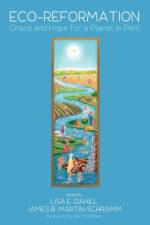
In 2017 Christians around the world will mark the five hundredth anniversary of the Reformation. In the midst of many appeals for reformation today, a growing number of theologians, scholars, and activists around the world believe Reformation celebrations in 2017 and beyond need to focus now on the urgent need for an Eco-Reformation. The rise of industrial, fossil fuel-driven capitalism and the explosive growth in human population endanger the fundamental planetary life-support systems on which life as we know it has evolved. The collective impact of human production, consumption, and reproduction is undermining the ecological systems that support human life on Earth. If human beings do not reform their relationship with God's creation, unspeakable suffering will befall many--especially the weakest and most vulnerable among all species. The conviction at the heart of this collection of essays is that a gospel call for ecological justice belongs at the heart of the five hundredth anniversary observance of the Reformation in 2017 and as a--if not the--central dimension of Christian conversion, faith, and practice into the foreseeable future. Like Luther's Ninety-Five Theses, this volume brings together critical biblical, pastoral, theological, historical, and ethical perspectives that constructively advance the vision of a socially and ecologically flourishing Earth.
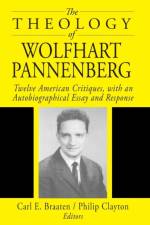
How deep has Pannenberg''s influence been on American theology? Which particular ideas or themes from his work have been most pervasive to Ameri­can thinkers, and which have encountered the greatest resistance? What implications does his work have beyond explicitly theo­logical contexts--e.g., for philosophy, ethics, environmental concerns, political ac­tion, and the natural sciences? What new forms have his ideas taken as they have been adapted to fit the very different context of American theology? The authors of the twelve critiques in this vol­ume represent a broad cross section of American thought on religion. The essays cover virtually all of the major areas in which Pannenberg has published. An intro­ductory survey provides a comprehensive overview of the critical literature on Pannenberg from the early 1960s to 1986. Together, the essays represent an ac­curate barometer of the influence Pannenberg has had in America, as well as the sorts of reservations that the English-speaking world brings to his work.It has now been many years since Pannenberg''s first visit to the United States. At that time the discussion with Pannenberg fo­cused on the radically historical character of his proposal for theology, centering around revelation and resurrection. In the meantime, Pannenberg''s thought has ex­panded almost encyclopedically into most of the major disciplines studied in a modern university. Without doubt the most comprehensive theologian at work today, his place in the history of twentieth-century theol­ogy is well assured.Carl E. Braaten, Professor of Theology at the Lutheran School of Theology at Chicago, is founding editor of Dialog: A Journey of Theology. Among his many books are Justification: The Article by which the Church Stands or Falls, Principles of Lutheran Theology, and, edited with Robert W. Jenson, Christian Dogmatics (2 vols.). Philip Clayton teaches in the Department of Philosophy at Williams college, Williamstown, Massachusetts.
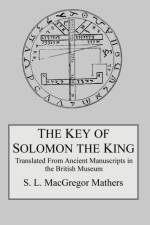
This is a hardrback reprint edition of S.L. MacGregor Mathers' The Key of Solomon the King first published in 1888. It contains the original text, all 91 illustrations, and over 80 footnotes composed by Mathers, which detail his original research and translation of ancient manuscripts located in British Museums. Also provided by Mathers is the Order of the Pentacles of Solomon, the Ancient Fragment of the Key of Solomon, The Qabalistic Invocation of Solomon, and 15 plates full of figures, seals and charts to aid the reader in their work. Beware of other editions that do not contain all of the original material, as the the book is rendered useless without them.The work is traditionally divided into two books detailing the Key of King Solomon. Book One explains the operation of conjurations, curses, spells and other magical works. Book Two instructs the practitioner on the proper attire, purification rituals and other means of obtaining the goals of the Goetia. Between these two books is the list of plates that contain numerous illustrations and secret seals of Solomon, including the Mystical Seal of Solomon, the Pentacles of Solomon, and the Mystical Alphabet, which impart the mechanisms and requirements for the invocation of spirits and demons and other magical works or spells.Sometimes referred to as the Greater Key of Solomon, this work should not be confused with the Lesser Key of Solomon or Clavicula Salomonis Regis, or Lemegeton, which is based on similar source material and was also researched by S. L. MacGregor Mathers with the aid of Aleister Crowley. It is thought that The Greater Key of Solomon later inspired The Lesser Key as a derivative work: one with its own substantial value through the addition of various illustrations and guides such as the Magic Circle of Solomon, the 72 Seals of Solomon or King Solomon Seals, and the Pentagram of Solomon. But, although both grimoires are inspired by the same material, they are separate and distinct works.It is important to note the Solomon Key is not any one particular book. The material has been collected in various forms and published by many authors, including Armand Delatte, and L. W. de Laurence. The earliest versions of the text can be found in ancient manuscripts in different languages all dating from the 16th century or later and spread across the globe in various libraries or private collections. For example, a Hebrew edition survives in the British Library, while a Latin version is kept at the University of Wisconsin. Various French editions as well as English translations are located throughout the world.According to the mythical history of the document, King Solomon wrote the book for his son Rehoboam and commanded him to hide the book in his sepulchre upon his death. After many years, the book was discovered by a group of Babylonian philosophers repairing Solomon's tomb. None could interpret the text until one of them, Iohé Grevis, suggested that they should entreat the Lord for understanding. The Angel of the Lord appeared to him and extracted a promise that he would keep the text hidden from the unworthy and the wicked, after which he was able to read it plainly. Iohé Grevis then placed a conjuration on the book preventing the unworthy, unwise, and godless from attaining the desired effect of its practices.Scholars however believe the work and its many iterations derive from the ancient practices of Jewish Kabbalah and Arab Alchemy. After time, it is thought Greek and Roman influences were added until, finally, the work was used and molded by high Renaissance magicians. This book, as well as other King Solomon books, such as the Magical Treatise of King Solomon and the Testament of Solomon, were brought back to modern times through the labors of occult practitioners such as S. L. MacGregor Mathers and others around the turn of the last century.
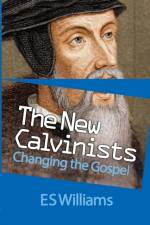
Enmity between the church and the world dates from the Fall of man, so God says in Genesis 3.15. Satan's major strategy is the overthrow of the church by the world, through infiltration and contamination. But seldom has this battle reached the proportions of this present hour, when worldliness threatens every believer and church. And so subtle is the enemy that fatal compromise now comes with an appearance of sound doctrine - in an apparent resurgence of the very best of Reformation and Puritan teaching. This book reveals the new 'gospel' of the so-called 'new Calvinism'. It is a gospel that changes the terms of salvation, and that loves the world and embraces its culture. Here are the objectives of the new Calvinists, taken from their own words. - Dr Peter Masters, Metropolitan Tabernacle [Dr E S Williams was Director of Public Health for Croydon Health Authority for many years. He is the author of The Dark Side of Christian Counselling, Christ or Therapy? and numerous research papers in medical journals.]
Abonner på vårt nyhetsbrev og få rabatter og inspirasjon til din neste leseopplevelse.
Ved å abonnere godtar du vår personvernerklæring.