






















Gjør som tusenvis av andre bokelskere
Abonner på vårt nyhetsbrev og få rabatter og inspirasjon til din neste leseopplevelse.
Ved å abonnere godtar du vår personvernerklæring.Du kan når som helst melde deg av våre nyhetsbrev.

This book is the first major biography of General Miguel Primo de Rivera, dictator of Spain between 1923 and 1930, who profoundly transformed Spain and played a key role in the shaping of a counterrevolutionary Europe in the interwar era.
Designing in Times of Crisis offers insights, visions, and strategies for architects and urban designers to question and respond to the crises and challenges of the contemporary anthropocentric world.
In an age continuously shaped and shocked by wars and societal crises, this book serves as an antidote to superficial media frenzy. Exploring the interplay between the insights from analytical psychology and global dynamics, invites readers to confront challenging truths shaping our world.
In an age continuously shaped and shocked by wars and societal crises, this book serves as an antidote to superficial media frenzy. Exploring the interplay between the insights from analytical psychology and global dynamics, invites readers to confront challenging truths shaping our world.
This book presents a multidimensional approach to understanding the effects of COVID-19 on the lifeworld of the marginalized communities in India.The volume will greatly interest scholars and researchers in governance, medical anthropology, public policy, politics, sociology, and South Asian studies.
How have Central Asians responded to China's growing role in their countries? Can Beijing maintain its dominant position in an increasingly hostile region?
A renowned social scientist reflects on democratisation theory as applied in the Middle East.
The virulent new brand of Islamic extremism threatening the WestIn November 2015, ISIS terrorists massacred scores of people in Paris with coordinated attacks on the Bataclan concert hall, cafes and restaurants, and the national sports stadium. On Bastille Day in 2016, an ISIS sympathizer drove a truck into crowds of vacationers at the beaches of Nice, and two weeks later an elderly French priest was murdered during morning Mass by two ISIS militants. Here is Gilles Kepel's explosive account of the radicalization of a segment of Muslim youth that led to those attacks-and of the failure of governments in France and across Europe to address it. It is a book everyone in the West must read.Terror in France shows how these atrocities represent a paroxysm of violence that has long been building. The turning point was in 2005, when the worst riots in modern French history erupted in the poor, largely Muslim suburbs of Paris after the accidental deaths of two boys who had been running from the police. The unrest-or "e;French intifada"e;-crystallized a new consciousness among young French Muslims. Some have fallen prey to the allure of "e;war of civilizations"e; rhetoric in ways never imagined by their parents and grandparents.This is the highly anticipated English edition of Kepel's sensational French bestseller, first published shortly after the Paris attacks. Now fully updated to reflect the latest developments and featuring a new introduction by the author, Terror in France reveals the truth about a virulent new wave of jihadism that has Europe as its main target. Its aim is to divide European societies from within by instilling fear, provoking backlash, and achieving the ISIS dream-shared by Europe's Far Right-of separating Europe's growing Muslim minority community from the rest of its citizens.
Originally published in 1958 this is a comprehensive account of European relations. 70% of the book is devoted to the twentieth century and the focus of the book is on diplomatic history, while an introduction to each section provides the background of factors and forces in which diplomacy operates.
Originally published in 1972, this work draws attention to the interaction between the external agents of change (super cargoes, missionaries and consuls) and the changes that were going on in the internal political, social and economic structure of Calabar society.
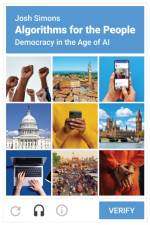
How to put democracy at the heart of AI governanceArtificial intelligence and machine learning are reshaping our world. Police forces use them to decide where to send police officers, judges to decide whom to release on bail, welfare agencies to decide which children are at risk of abuse, and Facebook and Google to rank content and distribute ads. In these spheres, and many others, powerful prediction tools are changing how decisions are made, narrowing opportunities for the exercise of judgment, empathy, and creativity. In Algorithms for the People, Josh Simons flips the narrative about how we govern these technologies. Instead of examining the impact of technology on democracy, he explores how to put democracy at the heart of AI governance.Drawing on his experience as a research fellow at Harvard University, a visiting research scientist on Facebook's Responsible AI team, and a policy advisor to the UK's Labour Party, Simons gets under the hood of predictive technologies, offering an accessible account of how they work, why they matter, and how to regulate the institutions that build and use them.He argues that prediction is political: human choices about how to design and use predictive tools shape their effects. Approaching predictive technologies through the lens of political theory casts new light on how democracies should govern political choices made outside the sphere of representative politics. Showing the connection between technology regulation and democratic reform, Simons argues that we must go beyond conventional theorizing of AI ethics to wrestle with fundamental moral and political questions about how the governance of technology can support the flourishing of democracy.
How Tocqueville's ideas can help us build resilient liberal democracies in a divided worldHow can today's liberal democracies withstand the illiberal wave sweeping the globe? What can revive our waning faith in constitutional democracy? Tocqueville's Dilemmas, and Ours argues that Alexis de Tocqueville, one of democracy's greatest champions and most incisive critics, can guide us forward.Drawing on Tocqueville's major works and lesser-known policy writings, Ewa Atanassow shines a bright light on the foundations of liberal democracy. She argues that its prospects depend on how we tackle three dilemmas that were as urgent in Tocqueville's day as they are in ours: how to institutionalize popular sovereignty, how to define nationhood, and how to grasp the possibility and limits of global governance. These are pivotal but often neglected dimensions of Tocqueville's work, and this fresh look at his writings provides a powerful framework for addressing the tensions between liberalism and democracy in the twenty-first century.Recovering a richer liberalism capable of weathering today's political storms, Tocqueville's Dilemmas, and Ours explains how we can reclaim nationalism as a liberal force and reimagine sovereignty in a global age-and do so with one of democracy's most discerning thinkers as our guide.
Offers a necessary intervention to help progressive educators and advocates take back public education. This book highlights how the broader Left are often talking about the "problem" in ways that were framed by forces counter to the goals of democracy and justice, and in so doing, advancing "solutions" that cannot help but be counterproductive.
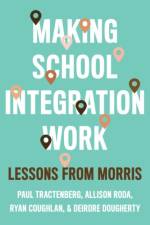
Many American schools continue to struggle with segregation. This important book tells the story of how two school districts - one a predominantly White and wealthy suburban community and the other a more diverse and urbanized community - were merged into a single district to work toward a solution for school segregation.
Abonner på vårt nyhetsbrev og få rabatter og inspirasjon til din neste leseopplevelse.
Ved å abonnere godtar du vår personvernerklæring.