











Gjør som tusenvis av andre bokelskere
Abonner på vårt nyhetsbrev og få rabatter og inspirasjon til din neste leseopplevelse.
Ved å abonnere godtar du vår personvernerklæring.Du kan når som helst melde deg av våre nyhetsbrev.

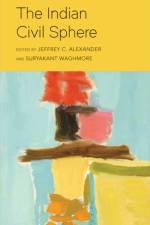
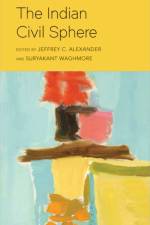
As India has become increasingly central to global politics, the fate of Indian democracy has become a matter of urgent concern. In the early glow of newly Independent India, democracy seemed a miraculous if hard won achievement. In recent decades, the very possibility of Indian democracy has been subjected to the withering pessimism of post-colonial critique. Building on the insights of civil sphere theory, this volume charts a new path, demonstrating that predictions of the death of Indian democracy have been greatly exaggerated. In the face of the Congress's frailties and fractures and the BJP's authoritarian reach, the civil sphere in India has remained powerfully resilient. For all its imperfections, India's court system has continued to institutionalize rights of free speech and association and to protect the independence of free and fair elections. Within this protected space, and despite threats from big business and big government, print and digital media have continued to broadcast powerful critical interpretations, speaking truth to power at critical junctures in the development of contemporary India, most recently during the 2024 elections. The continued vitality of India's civil sphere has nourished the vast waves of anti-caste movements that have energized Indian politics, creating civil repairs that have pushed it closer to realizing the promises of its founders to become a more equal and less hierarchical society. A powerful demonstration of both the richness of civil sphere theory and the vitality of Indian democracy, The Indian Civil Sphere will be of interest to students and scholars in sociology, politics and Asian studies and to anyone interested in the politics of the world's largest democracy.
As India has become increasingly central to global politics, the fate of Indian democracy has become a matter of urgent concern. In the early glow of newly Independent India, democracy seemed a miraculous if hard won achievement. In recent decades, the very possibility of Indian democracy has been subjected to the withering pessimism of post-colonial critique. Building on the insights of civil sphere theory, this volume charts a new path, demonstrating that predictions of the death of Indian democracy have been greatly exaggerated. In the face of the Congress's frailties and fractures and the BJP's authoritarian reach, the civil sphere in India has remained powerfully resilient. For all its imperfections, India's court system has continued to institutionalize rights of free speech and association and to protect the independence of free and fair elections. Within this protected space, and despite threats from big business and big government, print and digital media have continued to broadcast powerful critical interpretations, speaking truth to power at critical junctures in the development of contemporary India, most recently during the 2024 elections. The continued vitality of India's civil sphere has nourished the vast waves of anti-caste movements that have energized Indian politics, creating civil repairs that have pushed it closer to realizing the promises of its founders to become a more equal and less hierarchical society. A powerful demonstration of both the richness of civil sphere theory and the vitality of Indian democracy, The Indian Civil Sphere will be of interest to students and scholars in sociology, politics and Asian studies and to anyone interested in the politics of the world's largest democracy.
One of the world's first truly international humanitarian organisations, the United Nations Relief and Rehabilitation Administration (UNRRA) was championed as a beacon of postwar philanthropy that sought to rehabilitate as well as provide relief. This edited volume offers the first comprehensive study of the UNRRA and seeks to identify the key successes, limitations and enduring challenges it faced in the postwar period. Tracing the rehabilitation of displaced children in the camps of Germany and Austria, to mountainous Greek villages without access to food or medical supplies and refugees in postwar China, it will assess the immediate impact of UNRRA rehabilitation policy on postwar reconstruction, international development and broader humanitarian processes. Through these international case studies it will explore the ways in which a fundamental inability to define 'rehabilitation' made it seemingly impossible to meet its objectives. As a predecessor to modern specialised agencies such as UNESCO, WHO and UNICEF, studying the UNRRA is crucial for our understanding of the history of the United Nations, the circumstances that shaped its future policies and the foundations of modern humanitarianism.
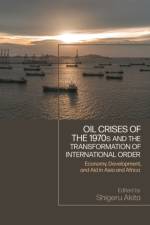
The 1970s are widely seen as a turning point for the world economy and a transformative decade for the international order. This volume explores the role played by the oil crises in this transformation, focusing particularly on their impact in previously little-studied regions such as Asia and Africa. Examining the intersection between the oil crises and the Third World project, their impact on Asian economic development and the contrasting responses of two African countries, this collection covers new ground on the global and regional effects of the crises, and ties them into the key transformations of the international economy and the Cold War order. Arguing that they were instrumental in reshaping the Asian economies, helping to instigate the boom known as the 'East Asian Miracle', it also demonstrates how the individual responses of countries reflected their own specific circumstances. With chapters from leading scholars such as David Painter and Dane Kennedy, this book shows how the origins, course and consequences of the oil crises of the 1970s are crucial to understanding the transformation of the international order in the late twentieth century.
This book offers an original perspective on the rule of law, development, and democracy in Latin America. With contributions from an international team of experts, the book outlines the main challenges in the pursuit of a developmental agenda in the region.
In Class Struggle, Dictatorship and Democracy: How the Common People Defeated Francoism (1939 - 1979) Xavier Domènech Sampere tells the story of Franco's dictatorship. Published for the first time in English, this book is a must read for all those interested in the history of fascism, social movements and political transitions.
James VI & I: Politics, Government and Religion brings together early career and established scholars with a range of approaches to the reign. Their original, research-based essays on a series of broad and interconnected topics invite us to consider Jacobean kingship afresh.
This book offers a systematic analysis of recent maritime disputes in the East and South China Seas, and introduces new perspectives on recent developments in notable disputes in the region.
Abonner på vårt nyhetsbrev og få rabatter og inspirasjon til din neste leseopplevelse.
Ved å abonnere godtar du vår personvernerklæring.