





















Gjør som tusenvis av andre bokelskere
Abonner på vårt nyhetsbrev og få rabatter og inspirasjon til din neste leseopplevelse.
Ved å abonnere godtar du vår personvernerklæring.Du kan når som helst melde deg av våre nyhetsbrev.

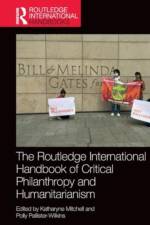
This handbook builds a shared understanding of the troubling politics of philanthropy and the disturbing history and practices of humanitarianism.
This book's essays seek to cleanse comparative law of some of the epistemic detritus it has been collecting and that has been cluttering its theory and practice to the point where this flotsam has effectively stultified 'good' comparison.
This volume contains two Open Access Chapters. This volume features contributions from activist scholars grappling to understand and alleviate the compound sufferings of women and LGBTIQA+ persons as they encounter criminal justice systems in Southeast Asia.
This book presents the views of various international law and human rights experts on the contested meaning, scope of application, value and viability of R2P; the principle of the Responsibility to Protect. This second edition comes with an updated Introduction and a new Afterword.
The Success of Small States in International Relations highlights the normality and power of small states in international relations.
Volume two of the acclaimed three-volume series on modern Japanese colonialism and imperialismThis book brings together essays by leading experts on the history of Japan to examine the period from 1895 to 1937 when Japan’s economic, social, political, and military influence in China expanded so rapidly that it supplanted the influence of competing Western powers. They discuss how Japan’s informal empire emerged in China after Japan entered the Treaty Port system in 1895 and how it shaped Japan’s own internal development. How did Japan’s informal empire expand in size and importance so that Japanese economic and security interests became heavily dependent on China? What influence did Japanese business groups, China experts, and military have on their government’s China policy? How did the Japanese in China deal with the threatening rise of Chinese nationalism? Exploring these and other questions, these essays show how the pursuit of an informal empire in China played a profound role in the emergence of modern Japan. The contributors are Banno Junji, Barbara J. Brooks, Alvin D. Coox, Peter Duus, Albert Feuerwerker, Kitaoka Shin’ichi, Sophia Lee, Mizoguchi Toshiyuki, Ramon H. Myers, Nakagane Katsuji, Mark R. Peattie, Douglas R. Reynolds, and William D. Wray.This is the second volume of a series on modern Japanese colonialism and imperialism. Volume one is The Japanese Colonial Empire, 1895–1945. Volume three is The Japanese Wartime Empire, 1931–1945.
Volume two of the acclaimed three-volume series on modern Japanese colonialism and imperialismThis book brings together essays by leading experts on the history of Japan to examine the period from 1895 to 1937 when Japan's economic, social, political, and military influence in China expanded so rapidly that it supplanted the influence of competing Western powers. They discuss how Japan's informal empire emerged in China after Japan entered the Treaty Port system in 1895 and how it shaped Japan's own internal development. How did Japan's informal empire expand in size and importance so that Japanese economic and security interests became heavily dependent on China? What influence did Japanese business groups, China experts, and military have on their government's China policy? How did the Japanese in China deal with the threatening rise of Chinese nationalism? Exploring these and other questions, these essays show how the pursuit of an informal empire in China played a profound role in the emergence of modern Japan. The contributors are Banno Junji, Barbara J. Brooks, Alvin D. Coox, Peter Duus, Albert Feuerwerker, Kitaoka Shin'ichi, Sophia Lee, Mizoguchi Toshiyuki, Ramon H. Myers, Nakagane Katsuji, Mark R. Peattie, Douglas R. Reynolds, and William D. Wray. This is the second volume of a series on modern Japanese colonialism and imperialism. Volume one is The Japanese Colonial Empire, 1895-1945. Volume three is The Japanese Wartime Empire, 1931-1945.
Originally published in English in 1929, this second volume of the German Diplomatic Documents covers a much shorter period: 1890-1898. During this period there was no war or revolution in Europe, but the sphere of German and indeed European politics became enlarged.
Originally published in 1930, this volume opens with some selections dealing with the situation created by the victory of Japan over China in 1904 which opened a new epoch in the history of the Far East. It includes two momentous conflicts profoundly affecting international relations - the Boer War and the Russo-Japanese War.
Originally published in English in 1928, this volume deals mainly with Anglo-German relations at the end of the 19th Century. Chancellor Otto von Bismarck's voice can be heard clearly in the documents which give an extensive picture of the alternating phases of relations between Great Britain and Germany.
This book studies how memes disrupt and reimagine politics in humorous ways. Memes create a playful activity that follows a shared set of rules and gives a (shared) voice, which may generate togetherness and political identities but also increase polarization.
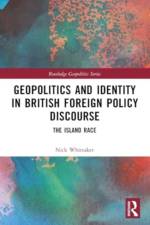
This is the first book to examine Britain's geopolitical identity and how it is expressed in foreign policy discourse. It demonstrates how British imperial thought, related to its island status, has remained important for British Members of Parliament in their debates of contemporary issues.
This book explains how judicialisation of politics leads to the politicisation of adjudication and further weaponisation of the law. Exploring the judicial-political dynamics of South Africa from 2009 onwards, the work traces the consequences of the judicialisation of politics for institutional resilience and broader constitutional stability.
This volume explores the theorization of transnational men in a global context, considering whether the experiences of men in relation to the economy, gendered expectations, politics and technologies contribute to the reimagination of local patterns of masculinity and femininity, or lead to reaffirmations of prescriptive gender roles.
In this edifying volume Sarah Corona and Claudia Zapata extrapolate the causes for the divisions between groups in Latin American society, bringing their years of experience investigating the conditions and consequences of heterogeneity in the region.
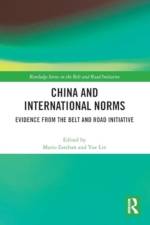
This book explores the relationship between China and international norms through the lens of The Belt and Road Initiative (BRI).
Abonner på vårt nyhetsbrev og få rabatter og inspirasjon til din neste leseopplevelse.
Ved å abonnere godtar du vår personvernerklæring.