












Gjør som tusenvis av andre bokelskere
Abonner på vårt nyhetsbrev og få rabatter og inspirasjon til din neste leseopplevelse.
Ved å abonnere godtar du vår personvernerklæring.Du kan når som helst melde deg av våre nyhetsbrev.

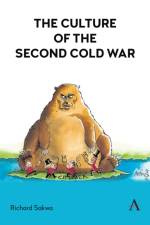
This title analyses the deeper structures and mindsets of the Second Cold War.
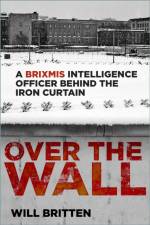
Former intelligence officer Will Britten lifts the lid on his work for BRIXMIS at the height of the Cold War
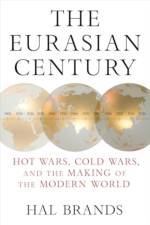
Eurasia is a strategic prize without equal-which is why the world has been roiled, reshaped, and nearly destroyed by clashes over that supercontinent and the oceans around it. Since the early twentieth century, autocratic land powers, from Germany under Kaiser Wilhelm II to the Soviet Union, have sought to seize commanding positions in the world's strategic heartland. And offshore sea powers, namely the United Kingdom and America, have sought to make the world safe for democracy by keeping Eurasia in balance.Now China and Russia lead a new axis of authoritarians that aims to create a radically revised international order. If they succeed, America and other democracies will be vulnerable and insecure. The Eurasian Century explains the revolutions in technology and warfare, and the rise of toxic ideologies of conquest, that made Eurasia the center of twentieth-century geopolitics-with pressing implications for the struggles that will define the twenty-first.
This innovative study challenges accounts of Turkey 's politics as driven by 'Islamist vs. secularist' competition, offering a new understanding which centres coalitions for and against pluralism. Utilising rich primary and secondary data, Nora Fisher-Onar introduces an analytical framework for capturing causal complexity in political contestation.
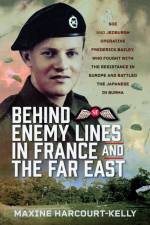
In October 1943, Frederick Bailey, a wireless operator who had trained with the Royal Armoured Corps, was selected for Special Operation Executive's wireless training centre at Fawley Court, Henley-on-Thames. It was the start of an incredible wartime career that saw Fred serve behind enemy lines in both the European and Far East theatres. With his training complete, and having adopted the fieldname Rétif, Sergeant Bailey became a member of one of the famous Jedburgh units, Team Citröen. The Jedburghs generally consisted of compact teams of three men, usually an officer, a radio operator and a soldier from the country the team was to be dropped into. Together with Major John Smallwood and Captain Pierre Bloch, a French Foreign Legionnaire, Bailey, as Team Citröen's radio operator, was dropped in into the Lagarde area of the Vaucluse region in German-occupied France by an American aircrew from Algiers during the night of 11/12 August 1944. Their mission was to support the local Resistance groups in the rear of the German units trying to hold back the Allied forces sweeping through France after D-Day. As Maxine Harcourt-Kelly reveals, the fear of Bailey's transmissions being intercepted by the Germans, as well as the constant danger of their location being revealed by informers, meant that Team Citröen was constantly on the move. Despite this, on one occasion the group knocked out an enemy tank with the help of an intrepid young Frenchman, who ran up to it armed only with a grenade and dropped it through the driver's viewing hatch. One morning, Bailey learnt that a large German convoy was moving along the road from Grenoble to Lyon. He sent a coded message to HQ in Algiers asking for an immediate air strike. A series of Mosquito fighter bombers attacked and destroyed the whole convoy. Fred also caused major disruption to German attempts to withdraw by calling in air support which destroyed a vital bridge. Fred was Mentioned in Despatches and awarded the Croix de Guerre with Bronze Star by the French. With his war in Europe over, Fed volunteered to serve with SOE's Force 136 in the Far East. He was duly sent out to Burma where he was dispatched into the Keren Hills to monitor the routes being used by the retreating Japanese. Fred was able to send regular reports on enemy troop movements and direct Allied air strikes. On one occasion, they ambushed a Japanese convoy. A fierce firefight developed, but they slipped back into the jungle before the Japanese could counter-attack. These attacks were so disruptive that the Japanese were forced to form a special force to hunt Fred's team down. As they could not be resupplied, Fred's team grew weaker. Before long, with nothing to eat but a handful of rice each day, the team was beginning to starve. It was left with no option but to evacuate. Even then, Fred's adventures were far from over. In August 1945, he was dropped into Malaya tasked with finding any American aircrew who had been shot down and taken prisoner south of Kuala Lumpur. This is the action-packed story of one man's remarkable war serving in Allied Special Forces units behind enemy lines in both Occupied Europe and the Far East.
Bringing together experts from across the social sciences, this book examines the consolidation of authoritarianism in Venezuela under the government of Nicolás Maduro. The book is relevant to scholars and students of Venezuela, as well as anyone interested in the pressing question of regime crisis survival and authoritarian consolidation.
Bringing together experts from across the social sciences, this book examines the consolidation of authoritarianism in Venezuela under the government of Nicolás Maduro. The book is relevant to scholars and students of Venezuela, as well as anyone interested in the pressing question of regime crisis survival and authoritarian consolidation.
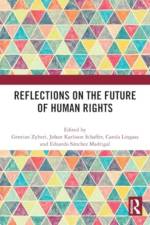
This book aims to prospectively conjecture about what the coming decades may hold for human rights. The authors in this volume discern where current trends are likely to lead and try to make sense of the future they herald. The chapters in this book were originally published as a special issue of Nordic Journal of Human Rights.
This book is a cultural history of post-Wall urban, social, political, and cultural transformations in Berlin.
This book focuses on India's foreign policy towards Sri Lanka before the Indo-Sri Lanka Accord (ISLA) in July 1987 and India's military intervention after the ISLA.
This book examines the changing roles and functions of the soybean throughout world history and discusses how this reflects the complex processes of agrofood globalization.
Like shifting sands of a desert, the global nuclear landscape changes every few years across its three main constituents - nuclear energy, non-proliferation and disarmament. This book offers a bird's eye view on all the three.
This edited volume explores the past, present, and future of the Korean Peninsula, with special focus on South Korea, by connecting developments in politics with those in international relations and diplomacy.
A just peaceful world. How can that be achieved? What sorts of relationships might be needed? Could the concept of friendship assist? Assembling the work of twenty scholars, this book creates a resource for those aiming to deal with conflict non-violently and promotes peaceful attitudes and outcomes in a troubled world.
Focusing on cross-border marriages within Asia, a region where collectivist and familistic values are still prevalent, this book points to the importance of going beyond the state-individual nexus to conceptualise and foreground the family as a strategic site where citizenship is mediated, negotiated and experienced.
Although relations between China and Europe are strained in many areas, including trade, human rights and views about political systems, nevertheless established linkages, development trajectories and intellectual cultures, offer good prospects for future progressive collaborative exchanges.
International law concerning maritime boundary dispute resolution reflects normative aspirations for peacefully managing some of the most intractable challenges in foreign affairs.
Contributors from Japan, Korea and China explore the reaction of the United Nations to emerging global issues. The areas explored and discussed include global governance, peace and security, global health governance, global citizenship, nuclear disarmament, and the Sustainable Development Goals.
This book comprehensively compares the development of population control policies in China and India, their implementations, and the population changes over the past seven decades.
Abonner på vårt nyhetsbrev og få rabatter og inspirasjon til din neste leseopplevelse.
Ved å abonnere godtar du vår personvernerklæring.