







Gjør som tusenvis av andre bokelskere
Abonner på vårt nyhetsbrev og få rabatter og inspirasjon til din neste leseopplevelse.
Ved å abonnere godtar du vår personvernerklæring.Du kan når som helst melde deg av våre nyhetsbrev.

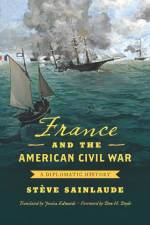
France's involvement in the American Civil War was critical to its unfolding, but the details of the European power's role remain little understood. Here, Steve Sainlaude offers the first comprehensive history of French diplomatic engagement with the Union and the Confederate States of America during the conflict.
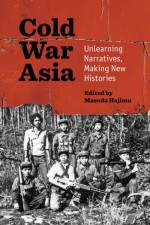
Conventional narratives of the Cold War revolve around high-level diplomats and state leaders in Washington, Beijing, and Moscow, but this anthology challenges those narratives by revealing how ordinary people across Asia experienced the era. Heavily rooted in oral history, this study takes readers to the villages of rural Java; the jungles of northern Thailand; the indigenous tribal communities of Kerala, India; and many other places in this vast region.The essays in this collection demonstrate how the world took shape far away from the voluminously analyzed epicenters of the Soviet Union, the United States, and China. Masuda organizes each chapter around the theme of "many Cold Wars," or, more precisely, many local and social wars that were imagined as part of the global Cold War. These histories raise fundamental questions about standard Cold War narratives, encouraging readers to rethink why the Cold War still matters. Contributors are Mary Grace Concepcion, Simon Creak, Cui Feng, David Engerman, Prasit Leepreecha, Luong Thi Hong, Muhammad Kunhi Mahin Udma, Masuda Hajimu, Alan McPherson, Imam Muhtarom, Sim Chi Yin, Kisho Tsuchiva, Odd Arne Westad, Matthew Woolgar, Kinuko Maehara Yamazato, Bin Yang, and Taomo Zhou.
Competition law is designed to promote a consumer-friendly economy, but for the law to work in practice, competition agencies - and the courts who oversee them - must enforce it effectively and impartially. Today, however, the rule of populist governments is challenging the foundations of competition law in unprecedented ways. In this comprehensive work, Maciej Bernatt analyses these challenges and describes how populist governments have influenced national and regional (EU) competition law systems. Using empirical findings from Poland and Hungary, Bernatt proposes a new theoretical framework that will allow the illiberal influence of populism on competition law systems to be better measured and understood. Populism and Antitrust will be of interest not only to antitrust and constitutional law scholars, but also to those concerned about the future of liberal democracy and free markets.
Patent rights on pharmaceutical products are one of the factors responsible for the lack of access to affordable medicines in developing countries. In this work, Emmanuel Kolawole Oke provides a systematic analysis of the tension between patent rights and human rights law, contending that, in order to preserve their patent policy space and secure access to affordable medicines for their citizens, developing countries should incorporate a model of human rights into the design, implementation, interpretation, and enforcement of their national patent laws. Through a comprehensive analysis of court decisions from three key developing countries (India, Kenya, and South Africa), Oke assesses the effectiveness of national courts in resolving conflicts between patent rights and the right to health, and demonstrates how a model of human rights can be incorporated into the adjudication of patent rights.
This book offers the first systematic account in English of the Spanish mass press coverage of 'jihadist terrorist' attacks in contemporary Spain.
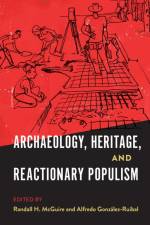
This volume explores how populist movements and politics present new challenges to public archaeologists, using global examples to propose practical forms of community engagement amid increasing polarization and extremism.
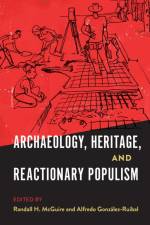
This volume explores how populist movements and politics present new challenges to public archaeologists, using global examples to propose practical forms of community engagement amid increasing polarization and extremism.
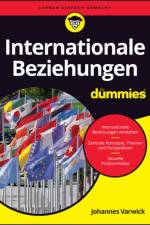
Internationale Politik hat heutzutage einen zentralen Stellenwert und beeinflusst aktiv den Alltag der Menschen - gleichzeitig ist sie sehr komplex und teilweise widersprüchlich. Johannes Varwick erklärt Ihnen, wie internationale Beziehungen zu verstehen sind und wer diese gestaltet. Sie erhalten einen Überblick über die zentralen Konzepte, Perspektiven und Themen des Fachs Internationale Beziehungen sowie über die aktuellen Spannungsfelder ? von der Globalisierung über Menschenrechte und Wirtschaftsbeziehungen bis hin zu Umweltproblemen und Kriegen.
A remarkable personal journey through the life and writings of the great Sardinian Marxist, Antonio Gramsci>The result is a stunning portrait that offers fresh insights into nearly every aspect of Gramsci's often tortured existence: a childhood scarred by severe health problems; his growing understanding of political economy; his generosity and kindness; his grasp of the culture of workers and peasants; his friendship with the economist Piero Sraffa; and his frustration trying to communicate with and be father to the son he never saw. Above all, Merrifield illuminates how Gramsci kept his humanity, suffering horribly in prison while writing a revolutionary classic, The Prison Notebooks. Personal, compassionate, moving--and illustrated with the author's photographs --Merrifield revives both the legacy and meaning of Gramsci's work and the dying art of belles lettres. Roses for Gramsci is an evocative and indelible book.
Love is a Journey is the remarkable story of Albino Luciani, known to the world as Pope John Paul I, or The Smiling Pope, from his harrowing birth to his tragic death just 33 days into his 1978 pontificate--the shortest pontificate in history.
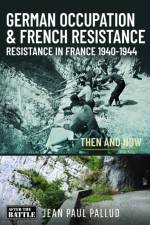
The French Resistance fought against Nazi occupation and Vichy collaboration, playing a pivotal role in France's liberation.Resistance was a refusal to accept the finality of the military defeat of 1940; a refusal to accept that Vichy was the legitimate voice of France; a refusal to accept Vichy policy of collaboration. 'Resisters' were those French men and women who decided to keep on fighting the Germans.Rare men and women joined the Resistance in 1940, soon after the signature of the armistice, individually or within small isolated groups, alone, with no links between them. Others placed themselves at the service of the British SOE networks or the Free French networks. In line with the Soviet-German Non-Aggression Pact of August 1939, the Communist Party first took a neutral stance, though uncompromisingly hostile toward the Vichy regime. The Party joined the Resistance at the end of June 1941, when Germany attacked the Soviet Union, and soon created a clandestine armed force, 'Francs Tireurs et Partisans' (FTP).The communists called for immediate action and on August 21, a two-man squad shot Fähnrich Alfons Moser, a clerk with the Kriegsmarine, in the underground Metro in Paris. Five days later, the Germans shot five communists in reprisal, the first hostages to be executed in France. Many more followed, and recent studies indicate that 834 hostages were killed by the Germans between 1941 and 1944, in addition to approximately 2,900 resistance fighters executed after trial.The resistance movements were gradually organised, in the Occupied Zone, as well as in the Free Zone south of the Demarcation Line. In January 1942, de Gaulle sent Jean Moulin to France with the mission of unifying the Resistance. Jean Moulin succeeded in this unification and a National Council of Resistance (CNR) was created in May 1943, with representatives of the resistance movements of the two zones, political parties, and unions. The Germans hit hard in June, arresting Moulin on the 21st. He was so badly tortured by his SD interrogators that he succumbed within a fortnight. He revealed nothing, and the Germans were unable to dismantle the CNR.At the beginning of 1944, the armed groups of the different resistance movements were unified within the French Forces of the Interior (FFI).Plans were developed to bring chaos behind the German lines during the Allied landing in Normandy, and the Resistance promptly went into action on D-Day. The rail-cutting program was extraordinarily effective with hundreds of individual operations carried out.The Germans became alarmed by the impressive increase of the Resistance actions all over France and from the beginning of 1944 they launched successive attacks, for example against Mont Mouchet in the Massif-Central and at Saint-Marcel in Brittany in June. In the Alps, the Resistance being too strong to be dealt with solely by the occupation forces, the Germans were compelled to switch the 157. Reserve-Division, nominally a training formation, to anti-guerrilla operations against the Glières in March, and against the Vercors in July.Resistance activities increased significantly after D-Day, and harried German units committed numerous atrocities and war crimes against the civilian population. The worst of their crimes was committed by the 2. SS-Panzer-Division which hanged 99 men in Tulle on June 9 and murdered 642 civilians, women and children included, in Oradour-sur-Glane the next day.In the summer of 1944, Resistance forces liberated most of south-west and centre of France. In Brittany, the FFI provided very valuable assistance to the rapid advance of the American Third Army in August while in the south-east they facilitated the advance of the forces of the 6th Army Group which landed in Provence. In Paris, the Resistance launched an insurrection which practically liberated the city on August 25, before the arrival of the forces of the V Corps.After the Liberation, resistance fighters joined the new French Army and continued the fight alongside the Allies, allowing France to be associated with the 1945 victory over Nazi Germany.Including the resistance fighters executed, those killed in combat and those who died in deportation, some 37,500 resistance fighters died for France. In addition, some 3,900 people engaged in civil resistance were killed, bringing the total death toll to approximately 41,500.
Abonner på vårt nyhetsbrev og få rabatter og inspirasjon til din neste leseopplevelse.
Ved å abonnere godtar du vår personvernerklæring.