

















Gjør som tusenvis av andre bokelskere
Abonner på vårt nyhetsbrev og få rabatter og inspirasjon til din neste leseopplevelse.
Ved å abonnere godtar du vår personvernerklæring.Du kan når som helst melde deg av våre nyhetsbrev.

This book explores the political dimensions of decentralization and (re)centralization policies in Turkey over the past century.
This book explores the opportunities and epistemological and structural challenges facing higher education in postcolonial South Africa, and argues for a fundamental transformation to meet the needs of the 21st century. This book will be an essential read for researchers and policy makers working on higher education in South Africa.
This atlas takes us on an exploration of the world, to encounter some of the brilliant and more obscure civilizations that have shaped history.
The religious beliefs of America's leaders and the role of religion in public life have long captivated the American public. In this book, historian Carl J. Richard looks at the many ways that the Bible has influenced America's leaders in their personal and political lives.
This book is an interdisciplinary project centering on the testimonios of survivors in order to understand experiences of violence arising from the armed conflict in Colombia. The concepts of Testimony, Narrative and Memory are mobilized across the chapters to explore how survivors reconstruct experiences and imagine new ways of knowing and being.
This book is an interdisciplinary project centering on the testimonios of survivors in order to understand experiences of violence arising from the armed conflict in Colombia. The concepts of Testimony, Narrative and Memory are mobilized across the chapters to explore how survivors reconstruct experiences and imagine new ways of knowing and being.
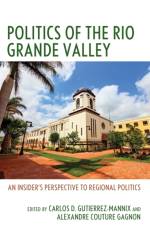
"A regional approach to politics in the U.S., Politics of the Rio Grande Valley: An Insider's Perspective to Regional Politics is the first book of its kind to directly address the intricate factors influencing how southern Texas continues to develop politically"--
"Echoes of Antiquity: Hellenistic Thought in a Politically Changing World invites readers to explore the philosophical schools of the Hellenistic era, including the Skeptics, Cynics, Epicureans, and Stoics, while connecting ancient thought to modern challenges through the complexities of Hellenistic philosophy"--
This book examines the European Universities Initiative from multiple angles and comparative studies.
This volume investigates the history of the parliamentary assemblies of Sweden, Poland and Hungary in the final period of the ancien régime, offering an analysis of these three representative assemblies in a systematic comparative framework for the first time.
This book investigates how combining AI and blockchain could transform military operations. For military personnel, defence academics, and cybersecurity specialists interested in learning about the use of AI and blockchain to defence, this book is essential.
This book consists of columns, originally written for the Kennan Institute's expert blog Focus Ukraine.
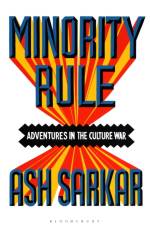
The explosive debut from political commentator Ash Sarkar, Minority Rule breaks down how the power of ordinary people is under attack by an elite minority - and how we can redirect our energy to the real problem at hand.
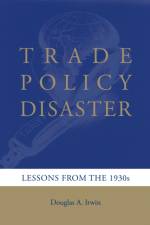
The extreme protectionism that contributed to a collapse of world trade in the 1930s is examined in light of the recent economic crisis. The recent economic crisis--with the plunge in the stock market, numerous bank failures and widespread financial distress, declining output and rising unemployment--has been reminiscent of the Great Depression. The Depression of the 1930s was marked by the spread of protectionist trade policies, which contributed to a collapse in world trade. Although policymakers today claim that they will resist the protectionist temptation, recessions are breeding grounds for economic nationalism, and countries may yet consider imposing higher trade barriers. In Trade Policy Disaster, Douglas Irwin examines what we know about trade policy during the traumatic decade of the 1930s and considers what we can learn from the policy missteps of the time. Irwin argues that the extreme protectionism of the 1930s emerged as a consequence of policymakers' reluctance to abandon the gold standard and allow their currencies to depreciate. By ruling out exchange rate changes as an adjustment mechanism, policymakers turned instead to higher tariffs and other means of restricting imports. He offers a clear and concise exposition of such topics as the effect of higher trade barriers on the implosion of world trade; the impact of the Smoot-Hawley tariff of 1930; the reasons some countries adopted draconian trade restrictions (including exchange controls and import quotas) but others did not; the effect of preferential trade arrangements and bilateral clearing agreements on the multilateral system of world trade; and lessons for avoiding future trade wars.
How do we manage to transition to a more sustainable world without the collapse of the economy?Capitalism has brought about many positive things. At the same time, however, it is ruining the climate and the environment, so that humanity's very existence is now at risk. 'Green growth' is supposed to be the saviour, but economics expert and bestselling author Ulrike Herrmann disagrees. In this book, she explains in a clear and razor-sharp manner why we need 'green shrinkage' instead. Greenhouse gases are increasing dramatically and unchecked. This failure is no coincidence, because the climate crisis goes to the heart of capitalism. Prosperity and growth are only possible if technology is used and energy is utilised. Unfortunately, however, green energy from the sun and wind will never be enough to fuel global growth. The industrialised countries must therefore bid farewell to capitalism and strive for a circular economy in which only what can be recycled is consumed. Herrmann makes a convincing argument that we won't get anywhere without personal restrictions and government planning. Her example for a solution is the British war economy of the 1940s. This is not a utopian scenario, but a comprehensive example of the restrictions and government-led plans needed now and in the future.
- Broken down into 60 bitesize topics that can be read in sequence or dipped into - perfect for the intelligent but time-poor reader - Highly visual, with an image to accompany each topic - One of the first titles in a growing series, Small Book, Big Idea, offering concise, intelligent and playful examinations of the pressing issues of our time Psilocybin. LSD. Ketamine. MDMA. These are the drugs that will change mental health treatment forever. We're on the cusp of a psychedelic revolution. But how did we get here? And if the drugs are so great, why aren't they legalized already? This book examines the long, turbulent history of psychedelics, from their ancient and spiritual significance to their astonishing medical potential, from Ancient India to 1960s San Francisco to the labs of today and tomorrow. It explores how they might prompt spiritual revelation, reveals their long cultural legacy and traces the development of psychedelic medicine, ultimately asking the question: how can these mind-altering substances alter the world for good?
- Broken down into 60 bitesize topics that can be read in sequence or dipped into - perfect for the intelligent but time-poor reader - Highly visual, with an image to accompany each topic - One of the first titles in a growing series, Small Book, Big Idea, offering concise, intelligent and playful examinations of the pressing issues of our time Anyone can go online, write something about what's going on the world, and share it with potentially millions of people. We are living in an era of radically democratized information. And it's a threat to democracy itself. Social media has made it easier than ever to spread falsehoods, amplified by its echo chambers and algorithms, and latched onto by politicians looking for convenient narratives. But fake news has a surprisingly long history. This book traces its evolution through rumor, conspiracy and misinformation, Ancient Greece to Donald Trump and beyond. It explores the origins of confirmation bias, some of the earliest instances of mass media manipulation, the deployment of fake news during war and the significance of the internet age, ultimately asking the question: how do we make sense of this post-truth world?
Discusses how Nevada's history has shaped its political culture, and how its government operates today. The Sagebrush State serves as a highly readable and accessible text for the study of Nevada's political history and constitution. This fifth edition is updated to 2017 and includes the full text of the state constitution.
Examines the relationship between early Christian thought and Hellenic philosophical traditions by considering the extent to which fundamental Christian beliefs were formulated in a Hellenic context, questioning Fr Georges Florovsky's claim of ""Hellenism"" being ""the perennial category and pattern of Christian thought and life."
Abonner på vårt nyhetsbrev og få rabatter og inspirasjon til din neste leseopplevelse.
Ved å abonnere godtar du vår personvernerklæring.