









Gjør som tusenvis av andre bokelskere
Abonner på vårt nyhetsbrev og få rabatter og inspirasjon til din neste leseopplevelse.
Ved å abonnere godtar du vår personvernerklæring.Du kan når som helst melde deg av våre nyhetsbrev.

This book provides a unique introduction to Bitcoin mining's energy use and environmental impacts. Innovative and insightful, this book will be of interest to students, scholars and industry professionals researching and working in the areas of cryptocurrencies, economics, business and finance, engineering, energy and environmental studies.
This companion comprises essays that analyze interactions between art and global imperial relationships from 1800 to World War II.
This book explores how states conduct their external economic relations, make domestic decisions, negotiate internationally, and how these processes interact. It provides the reader with an understanding of the processes of decision making and negotiation in international economic relations.
This book explores how states conduct their external economic relations, make domestic decisions, negotiate internationally, and how these processes interact. It provides the reader with an understanding of the processes of decision making and negotiation in international economic relations.
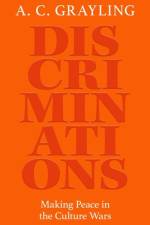
World-renowned philosopher A. C. Grayling explores the messy politics of the 'culture wars'
Why did the Allied leaders-Churchill, Roosevelt, and Stalin-largely keep quiet about the Holocaust? Richard Breitman examines the competing political and military considerations that drove their responses to Nazi mass murder, showing how and why all three leaders often prioritized wartime constraints over moral considerations.
This edited international collection explores the nature and extent of wrongful convictions, as well as examining the systems in place that attempt to exonerate the wrongly convicted.
Lindvall provides a uniquely accessible and truly global introduction to the principles and methodology of comparative politics, with learning features that build students' confidence in thinking critically about political systems and the data through which we can study them.
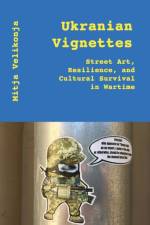
On his travels to wartime Ukraine, where even the feeling of relaxation is dangerous, Mitja Velikonja observed thousands of images of the culture of war in what he saw on the street and every day life, from bakeries, road signs, billboards and murals, to unsanctioned graffiti. This street iconography, invested with a patriotic vocabulary, was also informed by his conversations with people, the scenes of destruction, misery, and above all, the strong will to resist, from which everyday heroism emerges. The author went twice to the war zones of Ukraine and took more than 3,000 photographs of the street iconography of the state of war. Although all nationalists are equally foreign to him, when he talks to people, he asks himself how he would feel in their shoes, how he would react. When war creeps up to our front door, it affects everyone: leftists and right-wingers, nationalists and pacifists, patriots and those who don't care what flag they live under. "Thus, while driving or waiting anywhere, I took a small test: how long does it take to come across images of war, warrior iconography, vocabulary of emphatic patriotism, the sound of a national awakening song, footage from battlefields. Mostly it was a matter of seconds."Through these pieces of the culture and a people holding themselves together against an invader through a self-defensive nationalism, Velikonja sees that nationalism hides poverty - the more severe, the bigger the flags. In Ukrainian Vignettes, Velikonja compiles the images, words, impressions and voices of everyday life in war, to help us understand how clearly politics and ideology are displayed directly on the street. His philosophical approach of essays as vignettes allows him to have a critical eye even as he struggles to understand tragic events, and despite his affection for those closest to him. The author remains critical of both sides in his analysis, despite his sympathy for those closer to him.
This book investigates grassroots, community-led justice strategies - legal empowerment - being used to promote the human rights of people living in informal settlements. The book will interest researchers, practitioners, and policymakers, working in social and economic rights, access to justice, urban poverty and development.
Abonner på vårt nyhetsbrev og få rabatter og inspirasjon til din neste leseopplevelse.
Ved å abonnere godtar du vår personvernerklæring.