



Gjør som tusenvis av andre bokelskere
Abonner på vårt nyhetsbrev og få rabatter og inspirasjon til din neste leseopplevelse.
Ved å abonnere godtar du vår personvernerklæring.Du kan når som helst melde deg av våre nyhetsbrev.

"A historically-informed examination of the concept of freedom which recognises freedom as a fundamental social value that arose out of fights against slavery and oppression. This book will appeal to social and political philosophers and critical theorists interested in important political ideas and how they arise from historical contexts"--
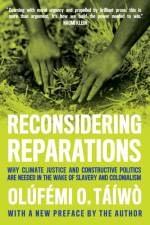
A pathbreaking book about world history, global justice, colonialism, and the climate "Coursing with moral urgency and propelled by brilliant prose, this is more than argument. It's how we build the power needed to win."-Naomi KleinA clear, new case for reparations as a "constructive," future-oriented project that responds to the weight of history's injustices with the equitable distribution of benefits and burdens. Centuries ago, Táíwò explains, European powers engineered the systems through which advantages and disadvantages still flow. Colonialism and transatlantic slavery forged schemes of injustice on an unprecedented scale, a world order he calls "global racial empire." The project of justice must meet the same scope.Táíwò's analysis not only discourages despair, it demands global resistance. Reconsidering Reparations suggests policies, goals, and organizing strategies. And it leaves readers with clear and powerful advice: act like an ancestor. Do what we can to shape the world we want our moral descendants to inherit, and have faith that they will continue the long struggle for justice. This understanding, Táíwò shows, has deep roots in the thought of Black political thinkers such as James Baldwin, Martin Luther King, Jr., Cedric Robinson, and Nkechi Taifa.Reconsidering Reparations is a book with profound implications for our views of justice, racism, the legacies of slavery and colonialism, and climate change policy.
Helps in understanding the democratisation of epistemics concerning Indian nationalism.
The book attempts to examine the modes by which orientalism and liberalism as colonial epistemologies and the ideological foundations of colonial power contributed to the making of the imperial history of modern South Asia.
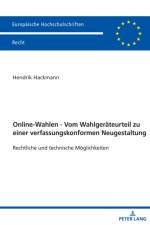
Das Buch behandelt die Prinzipien und Herausforderungen der elektronischen Wahlverfahren in Deutschland. Das Verfassungsgericht hat in seinem Urteil die Bedeutung von Publizität, Transparenz und Nachprüfbarkeit betont. Diese sind notwendig, um das Vertrauen der Wähler zu sichern und die Wahlbeteiligung zu erhöhen. Die Laienkontrolle wird als wesentlich für die Legitimation des Parlaments und das Vertrauen der Bürger beschrieben. Sicherheitsbedenken bei Wahlcomputern, wie Manipulationsmöglichkeiten und unzureichende Prüfungen, werden in diesem Band aufgezeigt. Diskutiert wird die Einführung von Blockchain-Technologie zur Sicherung der Wahlintegrität, wobei die Individualkontrolle durch den Wähler betont wird. Der Autor erläutert ebenfalls die rechtlichen Rahmenbedingungen und technischen Anforderungen für Online-Wahlen, welche die demokratische Legitimation und Beteiligung stärken sollen.
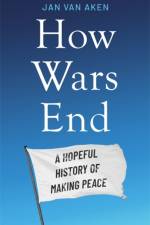
The invasion went ahead, and only years later, the world discovered that Iraq had had no biological weapons at that time. From this experience and the many others he has had as a weapons inspector, conflict analyst and activist, in How Wars End van Aken shows how conflict resolution really works.
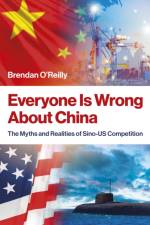
Dispelling the myths, presenting the facts, and offering predictions about the world's most important bilateral relationship.
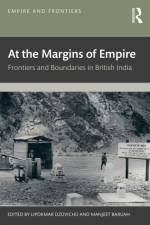
Empire building in British India was inseparably tied to the processes of frontier-making and the creation of boundaries. This book examines how the dynamics of frontier and boundary creation were shaped by a variety of agents.
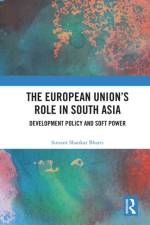
This book delineates the role and evolution of the European Union (EU) as an instrument of soft power in relation to South Asian countries. It explains the EU's development policy towards South Asia and examines its cooperation, while attempting to assess the extent to which EU's development policy can be an instrument of soft power.
Citizenship in Crisis in Athens explores the construction of citizen identity through embodied and mediated encounters with noncitizen migrants in the spatio-temporality of compounded crises.
This book expands our understanding of the so-far overlooked territorial dimension of the EU's knowledge policies crossing policy area boundaries.
Empire building in British India was inseparably tied to the processes of frontier-making and the creation of boundaries. This book examines how the dynamics of frontier and boundary creation were shaped by a variety of agents.
Abonner på vårt nyhetsbrev og få rabatter og inspirasjon til din neste leseopplevelse.
Ved å abonnere godtar du vår personvernerklæring.