




















Gjør som tusenvis av andre bokelskere
Abonner på vårt nyhetsbrev og få rabatter og inspirasjon til din neste leseopplevelse.
Ved å abonnere godtar du vår personvernerklæring.Du kan når som helst melde deg av våre nyhetsbrev.

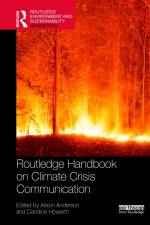
This Handbook provides a state-of-the-art review of leading research on climate change communication.
No thinking person can or does genuinely keep out of politics, in an age like the present oneThis stirring new collection brings together George Orwell's most cherished essays with lesser-known gems, all penned with the clarity, wit and charm which characterise his writing. Showcasing his vivid personal encounters and perceptive insights - from his musings on tree planting to his warnings against the threat of atomic destruction - this collection is sure to delight Orwell fans, both old and new.
This new collection suggests that we are experiencing an activist turn in music research. The idea is explored in a series of position papers and contemplative texts, where music researchers, music educators and artistic researchers reflect how their work and the position they occupy as professionals in society serves eco-social justice and equity.
Inspired by geopolitics and culture, this volume studies the link between geopolitical narratives, global and regional hierarchies, and popular cultural production in the Eastern European context.
Explores the US government's covert relations with the Iraqi Ba'th Party as it brutalised Iraqi communists.
The Politics of Broadcasting (1985) examines the state of broadcasting at a time when new telecommunications and information technology revolutionised television and radio. The book describes and analyses the problems faced by politicians and broadcasters in responding to these changing technological and political environments.
Satellite Technology in Education (1991) looks at the potential of satellite technology in education. It examines the uses of satellite technology in the teaching of geography and environmental studies, languages, science and information technology.
The consequences of America’s retreat from prosecuting elite-level corporate crimeThe United States is an exceptionally violent country, increasingly unable or unwilling to stem violence in its many forms. A growing corporate crime wave has gone unprosecuted and unpunished, with those in the C-suites largely escaping accountability. Meanwhile, the country has doubled down on pursuing people accused of street and drug crimes and immigration offenses. Corporate impunity, the financialization of the economy, militarized policing, the burgeoning carceral state, and the forever wars in Afghanistan, Iraq, and elsewhere all have fostered corporate, economic, and state violence in America. In Crime and No Punishment, Marie Gottschalk argues that these developments have undermined the legitimacy of American political and economic institutions. Gottschalk analyzes how the concentration of economic, political, and military power has siphoned off vital resources, preying on the most vulnerable communities and normalizing violence and death. It has kept America from attacking the root causes of violent street crime and curtailing “deaths of despair” from suicide, alcoholism, drug overdoses, and chronic diseases. The United States continues to incarcerate more of its people than nearly every other country even as it decriminalizes or turns a blind eye to elite-level corporate crime. Public and scholarly attention, however, remains fixated on violent street crime—although corporate and white-collar crime and state and economic violence directly and indirectly hurt far more people in the United States. Gottschalk contends that the US failure to protect its people from these harms has increased the fragility of democracy in America.
Britain's preeminent constitutional historian asks how well protected is our democracy from the threat of authoritarianism.
Investigating the functioning of travel in political culture by using early modern small states as a case study, this book examines the complex relationship between Jacobitism, educational travel, and small-state diplomacy. -- .
Abonner på vårt nyhetsbrev og få rabatter og inspirasjon til din neste leseopplevelse.
Ved å abonnere godtar du vår personvernerklæring.