










Gjør som tusenvis av andre bokelskere
Abonner på vårt nyhetsbrev og få rabatter og inspirasjon til din neste leseopplevelse.
Ved å abonnere godtar du vår personvernerklæring.Du kan når som helst melde deg av våre nyhetsbrev.

Poles, Polonia, and the Quest for Liberty provides a scholarly analysis of how Poles and Polish Americans have cherished liberty and democracy in Poland and struggled to achieve those ideals across the centuries.
This book explores the multi-dimensional aspects of satyagraha as a movement of being with and striving for and fighting for Truth and Truth realizations. It will be of interest to scholars and researchers of movement and resistance studies, Gandhi, Indian philosophy, cultural studies, literary studies, religious studies and sociology.
This important new handbook provides a comprehensive analysis of contemporary public policy and administration in the global south. This book presents varied perspectives and experiences, important for researchers and policy makers wishing to understand contemporary governance models, innovations, and challenges within the Global South.
Sheng-Hsun Lee develops a new way of understanding public health crisis communication through the lens of multimodal classification.The book is an essential read for public health practitioners and researchers and advanced students in discourse analysis and public health communication.
This volume examines how a new hybrid mediascape represents and contributes to the construction of facts and knowledge in relation to science, environment, and climate controversies. It will appeal to media, communication, journalism, cultural studies, science, environment, risk communication, digital media, sociology, political science.
This book examines how caseworkers are governed in today's street-level bureaucracies. It redefines our understanding of public sector governance by highlighting the subtle, informal, and everyday forms of organizational governance that shape caseworkers' subjectivities beyond formal policies and professional identities.
Civil society in Japan is a large and multifaceted sphere with a diversity of actors pursuing various social, political, and economic objectives. The sphere has experienced major waves of transformation in the post-1945 era, especially in the 1990s when volunteering and nonprofit activities came to the forefront of political and popular attention. This handbook brings together twenty-one leading experts to provide comprehensive and up-to-date analyses of civil society in Japan. What is the history of Japanese civil society and how has it evolved in recent decades? Who have been the key participants and what are their objectives? How have international actors and conditions influenced civil society in Japan? More broadly, what do recent developments in Japanese civil society tell us about the condition of democracy, state-society relations, and the public sphere in the country? And how might Japanese civil society develop into the future? The contributions to the handbook offer innovative perspectives based on the most-recent fieldwork and data available. The handbook is divided into three sections: Institutions, Justice and Transnationalism. Topics include nonprofit organizations, volunteering, philanthropy, new media, gender, pacifism, nuclear power, territorial politics, international cooperation and transnational solidarity. The volume will be valuable for scholars in both research and teaching as well as essential reading for anyone wanting to understand the diversity and vibrancy of Japanese civil society today.
In this book, I discuss the mishu (.., staff member, secretary) system and the operation of the Chinese Communist Party (CCP) between 1921 and 2022. In particular, I focus on the system's impact on high-level politics and decision making during four periods: the Revolutionary War (1921-1945), the founding of the People's Republic of China to the beginning of the Cultural Revolution (1950-1966), the Cultural Revolution period (1966-1976), and the period of reform and opening up to the present (1976-2022). This is, I believe, the first systematic analysis of the mishusystem, and as such will fill a gap in the literature on the CCP.
A landmark survey of how textiles have been used for protest in the 20th and 21st centuries, including banners, posters, flags, clothing and pieces from the world of fine art.
This new collection suggests that we are experiencing an activist turn in music research. The idea is explored in a series of position papers and contemplative texts, where music researchers, music educators and artistic researchers reflect how their work and the position they occupy as professionals in society serves eco-social justice and equity.
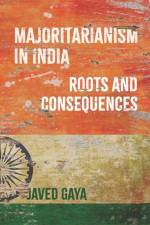
Whilst examining the new and strident nationalism in India, this book seeks to trace its roots in decisions made in the 1940s, particularly the partition and constitution making. India was poised to choose between liberty in terms of 'one man one vote' or equality, the equal political representation of minorities within a federal structure. The Congress party chose liberty and partition, but today we are reaching a position where there is neither liberty nor equality, as India's democracy is compromised and majoritarianism prevails. Partition divided two politically significant States, and elevated the 'cow belt'; the social and economic factors pervasive in this new geographical configuration have seriously impeded India and the sub-continent's progress by bringing communalism and casteism to the fore. It analyses the frailty of constitutional safeguards, the role of the judiciary, how federalism has been subverted as well as how history is being rewritten with an exclusionary intent and the futility of the quest for cultural purity in the 21st century. It is also an interrogation of the myths created to sustain this nativist ideology, relating to the causes of partition, personal laws and the alleged privileging of minorities, citizenship and the externalization of the Hindu-Muslim conflict.
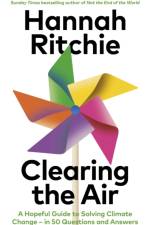
We can't afford to delay climate action, but with all the shouting and disagreement it's hard to know where to turn. In her new book, bestselling environmental star Hannah Ritchie answers 50 key climate questions once and for all, clearing the air so we can get on and fix things.With so many conflicting headlines out there, it's tough to sort fact from fiction when it comes to climate change and the solutions we need for a cleaner future.The first piece of good news is that data scientist Hannah Ritchie is here with answers, and the steps we need to take now. Using simple, clear data, she tackles questions such as, 'Is it too late?', 'Won't we run out of minerals?' and 'Are we too polarised?'. The second piece of good news: the truth is way more hopeful than you might think.We're at a critical moment for our planet, and getting the facts straight is step one. But even more crucial is feeling hopeful about what we can do next. The third piece of good news? We already have many of the solutions we need to create a more sustainable planet for future generations.Clearing the Air is your essential guide whenever you're feeling lost or overwhelmed about climate change. Dive in, get informed and be part of building a better world for everyone.
"A bestselling national security expert delivers a chilling analysis of how Western indecision and apathy made possible the return of brutal Russian expansionism - with catastrophic consequences. After the collapse of the Soviet Union, U.S. presidential administrations of both parties pursued policies for Russia, Ukraine, and Eurasia that boosted Putin's Russia and made U.S. relations with all-important Ukraine secondary to the Russia relationship, thus unwittingly playing into Russia's imperialist, centuries-long myth of its supposed regional hegemony. The result should have been foreseeable: Russia's 2014 invasion of Crimea and 2022 invasion of Ukraine. As leading national-security expert and bestselling author Alexander Vindman argues, this history of U.S. missteps is bound up in policymakers' fixation on immediate, short-term, and transactional thinking. He proposes instead a long-term, values-based approach, where forthright insistence on the fundamentals of liberal democracy and a rules-based world order build positive partnerships while refusing to submit to the emotional blackmail of authoritarians. Enlivened by behind-the scenes interviews with big-name Washington policymakers in four administrations and climaxing in the shocking brutality of Putin's invasion of Ukraine, the book exposes the sources of a dangerously stubborn problem and shows the way to a better world"--
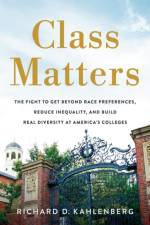
A powerful argument for a class-based approach to college admissions that "shows where we have gone wrong so far, and how we will get to justice, equality, and even diversity for real" (John McWhorter)For decades America's colleges and universities have been working to increase racial diversity. But they have been using the wrong approach, as Richard Kahlenberg persuasively shows in his highly personal and deeply researched book. Kahlenberg makes the definitive case that class disadvantage, rather than race, should be the determining factor for how a broader array of people "get in." While elite universities claim to be on the side of social justice, the dirty secret of higher education is that the perennial focus on racial diversity has provided cover for an admissions system that mostly benefits the wealthy and shuts out talented working-class students. By fixing the class bias in college admissions we can begin to rectify America's skyrocketing economic inequality and class antagonism, giving more people a better place at the table as they move through life and more opportunity to "swim in the river of power."Kahlenberg has long worked with prominent civil rights leaders on housing and school integration. But his recognition of class inequality in American higher education led to his making a controversial decision to go over to the "other side" and provide research and testimony in cases that helped lead to the controversial Supreme Court decision of 2023 that ended racial preferences. That conservative ruling could, Kahlenberg shows, paradoxically have a progressive policy outcome by cutting a new path for economic and racial diversity alike - and greater fairness.
This volume explores how maps can be approached to understand the making of European empires.
Abonner på vårt nyhetsbrev og få rabatter og inspirasjon til din neste leseopplevelse.
Ved å abonnere godtar du vår personvernerklæring.