













Gjør som tusenvis av andre bokelskere
Abonner på vårt nyhetsbrev og få rabatter og inspirasjon til din neste leseopplevelse.
Ved å abonnere godtar du vår personvernerklæring.Du kan når som helst melde deg av våre nyhetsbrev.

Following democracy's global advance in the late 20th century, recent patterns of democratic erosion or 'backsliding' have generated extensive scholarly debate. Backsliding towards autocracy is often the work of elected leaders operating within democratic institutions, challenging conventional thinking about the logic of democratic consolidation, the enforcement of institutional checks and balances, and the development and reproduction of democratic norms. This volume tackles these challenges head-on, drawing theoretical insights from classic literature on democratic transitions and consolidation to help explain contemporary challenges to democracy. It offers a comparative perspective on the dynamics of democratic backsliding, the changing character of authoritarian threats, and the sources of democratic resiliency around the world. It also integrates the institutional, civil society, and international dimensions of contemporary challenges to democracy, while providing coverage of Western and Eastern Europe, South and Southeast Asia, Africa, Latin America, and the United States.
Following democracy's global advance in the late 20th century, recent patterns of democratic erosion or 'backsliding' have generated extensive scholarly debate. Backsliding towards autocracy is often the work of elected leaders operating within democratic institutions, challenging conventional thinking about the logic of democratic consolidation, the enforcement of institutional checks and balances, and the development and reproduction of democratic norms. This volume tackles these challenges head-on, drawing theoretical insights from classic literature on democratic transitions and consolidation to help explain contemporary challenges to democracy. It offers a comparative perspective on the dynamics of democratic backsliding, the changing character of authoritarian threats, and the sources of democratic resiliency around the world. It also integrates the institutional, civil society, and international dimensions of contemporary challenges to democracy, while providing coverage of Western and Eastern Europe, South and Southeast Asia, Africa, Latin America, and the United States.
Adopting a decolonial and intersectional perspective, this book examines the post-migration condition, offering a new means of understanding the ways in which discourses of migration and citizenship intersect with experiences of loss, impacting upon feelings of belonging with respect to host communities and newcomers.
Cultural Appropriation: Wrongs and Rights will be of great interest to students and researchers in philosophy, politics and related subjects where cultural appropriation is an important issue, such as race and ethnic studies and anthropology.
This book on presidential age is not about Alzheimer's Disease and associated pathologies of the aging brain. It is instead about the normally aging brain. Brains don't simply develop and maintain their functionality into older adulthood unless otherwise impaired by neurocognitive disease. Were this the case, this book might be about leveraging prodromal biomarkers of neurodegenerative diseases to screen prospective presidential candidates. Instead, the normal decline age brings to all human brains begs a different type of book-and a broader and more blanketed warning about electing increasingly older presidents.
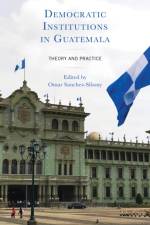
This book advances knowledge about Guatemala's democracy by embedding the country in recent conceptual and theoretical work in comparative politics and seeks to shed light upon the stubborn realities and challenges afflicting Guatemalan democracy today.
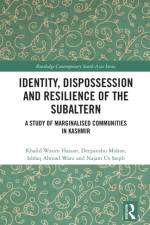
A comprehensive volume that will appeal to academics, scholars, policymakers in South Asian Studies, Social Sciences and Humanities especially those interested in the study of caste, ethnicity, nationalism and identity politics for the marginalized communities in Kashmir.
Engaging with a fundamental question at the heart of the Western tradition of political thought, namely the question of political action,the book discusses issues from resistance to political mobilization. It explores the nature of political activity by engaging with Giorgio Agamben and his key interlocutors.
Topacoglu and his contributors presents a comprehensive analysis of Asia that deepens our understanding of the complex interplay between these two nations in the global arena.
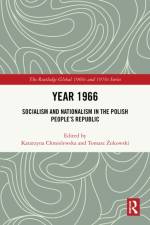
Year 1966 analyzes the breakthrough moment in the culture of the Polish People's Republic when revolutionary social and cultural changes slowed down in the mid-1960s, leading to a turn towards the idea of a nation as a field of ideological dispute between different social actors.
This book demonstrates that contracts, community intermediaries, and participatory processes are closely interlinked, and they can change urban politics.
This book outlines the importance of collective resilience for groups who have faced challenging or threatening circumstances, such as war and political violence.
This book explores the challenges small states face in navigating the complexities of modern warfare, particularly within the ambiguous Grey Zones where the boundaries between peace and conflict blur.
Abonner på vårt nyhetsbrev og få rabatter og inspirasjon til din neste leseopplevelse.
Ved å abonnere godtar du vår personvernerklæring.