













Gjør som tusenvis av andre bokelskere
Abonner på vårt nyhetsbrev og få rabatter og inspirasjon til din neste leseopplevelse.
Ved å abonnere godtar du vår personvernerklæring.Du kan når som helst melde deg av våre nyhetsbrev.

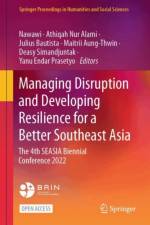
This open access book, stemming from the biennial Consortium for Southeast Asian Studies in Asia conference, confronts numerous contemporary issues in the Southeast Asia region, under the banner of the 2022 theme "Managing Disruption, Developing Resilience for a Better Southeast Asia." Providing a platform for discussion and collaboration in the fields of sociology, education, population studies, cultural studies, public health, international relations, and other humanities and social science disciplines, the range of interdisciplinary chapters focus their critical analyses vis-à-vis the interpellation of economic, social, historical, artistic, cultural, religious, and political viewpoints. Organized into three sections, the first looks at new models of economic development, the challenges to education quality, the labor market in the digital era, and the demographic changes and critical issues facing both the young and elderly in the region. The second examines disasters as a future challenge for risk management, understandings of contemporary society and culture, the digital humanities, social development in the time of COVID-19, and identities in relation to religion, minorities, and social harmony. The final section addresses diaspora, migration, the region in the pandemic, citizenship and human security, democracy, and human rights, as well as foreign policy, diplomacy, and state sovereignty in Southeast Asia. As ASEAN comes of age, there has never been a more compelling need to provide region-based perspectives to complement the deepening economic, social, and cultural integration in the region. For scholars working on Southeast Asia, "area" matters in geopolitical, economic, intellectual, institutional, social, cultural, and affective terms, and so this book transports the study of Southeast Asia from the periphery to the center, so as to enable scholars who live in and research the region to bring their research to a global readership. Relevant to scholars, public intellectuals, policy-makers, and activists working in all areas of the social sciences and humanities, this comprehensive book presents the very latest research on, and from, Southeast Asia.
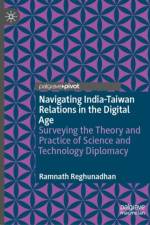
In the context of India-Taiwan relations, this book investigates the convergence of science, technology, and diplomacy (S&TD). It dives into the changing environment of digital breakthroughs and their influence on India-Taiwan bilateral collaboration. It explores existing problems, possibilities, and tactics involved in using science and technology (S&T) as major tools of diplomacy, with an emphasis on India-Taiwan diplomatic ties. The book primarily focuses on India-Taiwan bilateral ties in the framework of science, technology, and innovation (STI). It investigates how these two nations negotiate diplomatic channels and collaborate on scientific and technological projects in the digital age, with a case study on the linkages of adoption, competition, and diplomacy for 5G technology. It sheds light on the hurdles that must be overcome, the geopolitical influences at work, and the possibilities for mutually beneficial relationships in this quickly changing scene. The book's scope also includes policy analysis, case studies, and future projections to provide a thorough picture of India-Taiwan ties in science and technology diplomacy (S&TD). The goal is to provide a comprehensive resource for policymakers, scholars, diplomats, and anyone else interested in the dynamics of science and technology diplomacy (S&TD) between Taiwan and India in the digital era.Dr Ramnath Reghunadhan is an Assistant Professor at the Department of Social Sciences in School of Social Sciences and Languages (SSL), Vellore Institute of Technology (VIT) University, Vellore Campus, India. The areas of research and teaching include Science, Technology and Innovation (STI); International Relations; Public Policy; Administration and Governance; Cyber Politics; India-Taiwan; Digitalisation; Global Political Economy; and National Security.
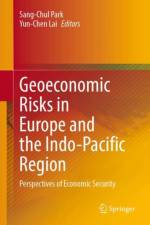
This book explores the evolving landscape of global political economy amidst a shifting global order, ushered in by the impacts of the COVID-19 pandemic, geopolitical conflicts in Ukraine and Gaza, and rising trade and political disputes between the US, China and the EU, leading to a rise in protectionist policies and disruptions in global supply chains leading to high inflation, and energy and food crises.Focusing on the relations between the European Union and the Indo-Pacific region, this book examines how recent protectionist policies are reshaping economic security and cooperation between the two actors.
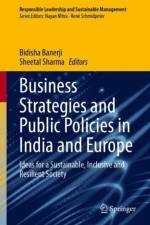
The book discusses public policy, business strategies, building diverse and inclusive societies, securing climate justice, and building business resilience for the future, analyzing India and Europe simultaneously with the help of comparative design along with dedicated chapters on single country or region from the two entities. Situated in the contemporary times, the book dives into some of the most pressing issues of our times in two entities known for their diverse societies and democratic outlook. The book delves into domestic and international aspects when looking at the formulation and implementation of public policy. It also deals with the changing geo-political realties and how that has impacted domestic concerns and policies. From literature and theoretical contributions, the book has quantitative and qualitative chapters suitable for expert as well as general reading.This book is a valuable resource not just for university students, but research community, think tanks and people in governance; largely those involved in public policy. Importantly, this book would also serve as an important resource for scholars of international studies. The scholars of comparative public policy would find this book a much need addition to the field as the book looks at public policy from a comparative lens apart from single-country cases studies. Finally, given the relevance, scope, and access of understanding, the book can be read by anyone interested in workings of public policy, India, or Europe.
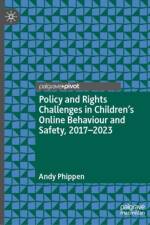
This book evidences the cyclical failures of online safety policy and challenge conventional policy and educational approaches to tackling online harms, and provide a robust argument for a critical, evidence-based approaches which align with the needs of those we claim to wish to protect. It argues for a move away from knee jerk, headline grabbing and subjective policy development. In drawing parallels from the drug policy world, contrasting the increasingly progressive and evidence based policy making in this space compared to prejudiced, emotive developments in online harms.Andy Phippen is Professor of Digital Rights at Bournemouth University, UK.
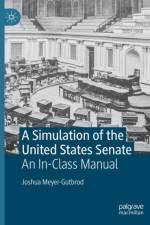
This book serves as a manual for students enrolled in semester-long US Senate simulations. The simulation tasks students with representing a particular state while inheriting a particular Senator's voting history. Students then engage with their peers to write, introduce, mark up, debate, and adopt legislation, within an environment where the instructional staff play the key roles of the House of Representatives, the President, the Press, and public interest groups. The manual and simulation experience are designed to supplement classes on Congress and the Presidency and the political process. Building on the innovation of experiential learning opportunities, this book facilitates the connection of complex theoretical concepts to real-world applications through student reflection.Joshua Meyer-Gutbrod is Teaching Faculty at the University of South Carolina.Meyer-Gutbrod makes a valuable contribution to political science pedagogy. This text will guide students through an open-ended simulation of the U.S. Senate. Meyer-Gutbrod's approach inspired my first attempt at incorporating simulation-based learning into my legislative politics course, and the result received rave reviews. I highly recommend to other instructors of legislative politics courses. - Frances Lee, Professor of Politics and Public Affairs, Princeton University
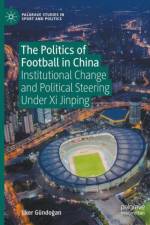
In recent years, football has become an important field for institutional change and political steering in China. Under the leadership of Xi Jinping, the Chinese Communist Party has placed football at the centre of its national rejuvenation agenda, seeking to transform the country into a powerful sports nation. However, this ambitious plan has triggered a series of contentious interactions between party-state actors, international and local socio-economic actors, who often have to strike a delicate balance between political expectations, market dynamics and human rights.The Politics of Football in the People's Republic of China delves into the intricate world of Chinese football politics and offers a comprehensive analysis of how the sport has become a locus for achieving broader social, economic and political goals. The book examines the implications of the Chinese party-state's institutional transformation efforts towards 'top-level design' in this policy field, which aim to centralise and hierarchise policy-making authorities. It also uses detailed case studies to investigate the Chinese party-state's attempts at political steering, including international sport diplomatic interactions as well as interactions with Chinese social and economic actors.From the spectacular rise and fall of Mesut Özil's popularity in China to the controversial campus football initiatives to nurture future generations, this book explores how the Chinese party-state's governing practices intersect with the global football industry. It critically assesses the successes and failures of the football reforms, the challenges faced by foreign actors engaging with Chinese football, and the evolving nature of the sport as an arena for playing out (geo)political conflicts.Whether you are interested in Chinese politics, football and sport, or the relationship between sport and politics, this book offers valuable insights into the multifaceted world of Chinese football in the Xi Jinping era.Ilker Gündöan is a postdoctoral researcher and lecturer at the Julius Maximilian University of Würzburg, Germany. He's also a fellow at the EU*Asia Institute of the ESSCA School of Management, France, and an affiliate researcher at the Centre for EU-Asia Connectivity at the Ruhr University Bochum, Germany.
This book explores new critical methods for interpreting the emergent, cross-genre counter-narrative techniques of trans* authors and allies. Jack outlines the roles that archives, exclusionary feminisms, medical rubrics, and national surveillance protocols have played in shaping the representation of gender-transing subjects.
Using Kenya as a case study, this book demonstrates the effects and limitations of foreign aid on development and human security in poor countries to reshape the processes for the benefit of both the donors and the intended beneficiaries.
The Yemenite Children Affair was a tragic crisis in which about 1,000 children died between 1949 and 1954. Over the years, rumors spread that the kids were not dead, but kidnapped. This book tells the story from the health crisis to the investigations and the conspiracy theories that have developed ever since.
This book focuses on the rhetorical dimensions, power, potentialities, and constraints of silent protest.
This book assesses the prevalence and intensity of intersecting security threats on the small island developing states of the Caribbean Community and explores the various ideologies and responses that impact Caribbean security.
The first comprehensive account of the Trump administrations efforts to destroy our government institutions, by the man Ralph Nader says writes authoritatively and with revealing detail about important topics that few others coverTom McGarity writes authoritatively and with revealing detail about important topics that few others cover. Ralph NaderKoch Industries spent $3.1 million in the first three months of the Trump administration, largely to ensure confirmation of Scott Pruitt as head of the EPA. By July 2018, more than sixteen federal inquiries were pending into Pruitts mismanagement and corruption. But Pruitt was just the first in a long line of industry-friendly, incompetent, and destructive agency heads put in place by the Trump administration in its effort to dismantle the federal governments protective edifice.Remember Secretary of the Interior Ryan Zinke, who, before he faced eighteen separate federal inquiries and was fired, made a deal with Halliburton to build a brewery on land that Zinke owned in Montana? Or how about Transportation Secretary Elaine Chao, who rescinded requirements that high-hazard trains install special braking systems, weakened standards for storing natural gas, and lengthened the hours that truck drivers could be on the road without a break, even as she failed for two years to divest her interest in a road materials manufacturer? And then there were Rick Perry, Betsy DeVos, Sonny Perdue, Andrew Puzder . . . the list goes on.In an original and compelling argument, Thomas McGarity shows how adding populists to the Republicans traditional base of free market ideologues and establishment Republicans allowed Trump to come dangerously close to achieving his goal of demolishing the programs that Congress put in place over the course of many decades to protect consumers, workers, communities, children, and the environment. Finally, McGarity offers a blueprint for rebuilding the protective edifice and restoring the power of the American government to offer all Americans better lives.
Abonner på vårt nyhetsbrev og få rabatter og inspirasjon til din neste leseopplevelse.
Ved å abonnere godtar du vår personvernerklæring.